






Seoul National University’s ‘secret forest’ to open after 58 years
Seoul National University Arboretum in Anyang, Gyeonggi Province, sometimes called a “secret forest” because it has been closed to the public for nearly six decades, will open in November.
Latest
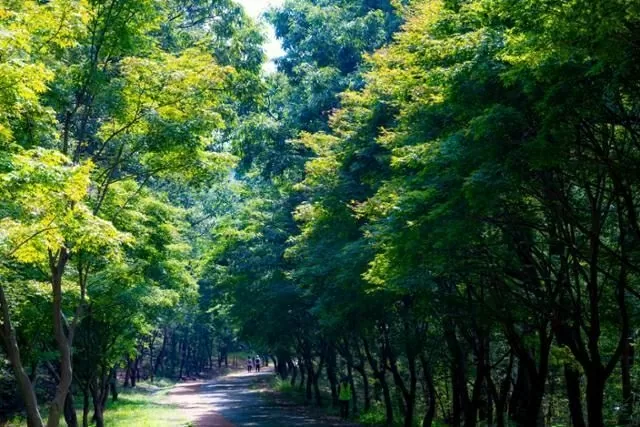 |
| A view of the forest from the azalea trail at Seoul National University Arboretum. The arboretum retains a more natural, less manicured landscape. Korea Times photo by Lee Han-ho |
First established in 1967 for research and conservation, the arboretum covers 1,554 hectares (3.8 million acres) and is home to more than 1,000 species of plants, including rare and endangered ones like Cimicifuga dahurica, which is native only to a few mountain regions in the southernmost provinces.
The arboretum was founded on barren hillsides left devastated after the 1950-1953 Korean War.
It was initiated by Lee Chang-bok, a professor of botany often referred to as the father of Korean plant taxonomy, who began planting trees with his colleagues and students. Since then, it has served as a key site for research, seed preservation and ecological education.
Entry was limited to small forest-healing programs of around 10 participants, with the government requiring permits for any plant material taken outside the arboretum.
The Ministry of Economy and Finance transferred ownership of the land to Seoul National University earlier this year, paving the way for public access.
What visitors can see
Unlike other arboretums designed with multiple exhibition paths, only two main routes are available: a 1.6-kilometer central road and a secondary path. Just 25 hectares are designated as exhibition space, while more than 1,400 hectares remain as untouched forest.
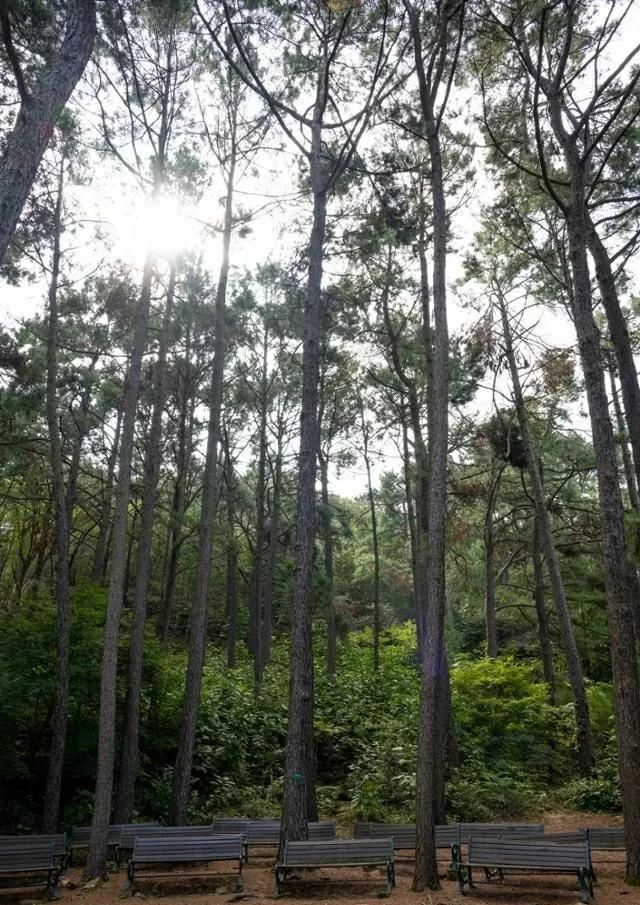 |
| A stand of rigida-pitch pine trees towers skyward at the arboretum. Korea Times photo by Lee Han-ho |
Highlights include a grove of hybrid pine trees planted in 1959, a trail lined with azaleas and cherry trees that burst into pink and white blossoms each spring, and a vast lawn where families can relax.
The arboretum also features a greenhouse and aquatic plant garden where visitors can see water lilies and native wetland species.
A major highlight is the maple tree road, where more than 50 species of maple turn a brilliant red in the fall, with this year's seasonal display coinciding with the arboretum’s opening.
The site also connects with nearby hiking trails on Mount Gwanak and Anyang Art Park, which features more than 50 public art installations.
The arboretum is expected to serve both as a conservation stronghold and as a new cultural and ecological destination near Seoul.
While only a fraction of its land is accessible, the forest’s unique character and history as Korea’s first arboretum for academic research are expected to set it apart from more tourist-oriented sites.
| 80 years of National Day: Austria celebration marks with a burst of colours, sounds, and culture WVR - On the evening of August 28, the Vietnamese Embassy in Austria held a grand ceremony in Vienna to commemorate the 80th National Day ... |
| National Boundary Commission – 50 years of a sacred mission WVR - The seminar 'National Boundary Commission – 50 years for the cause of territorial borders' not only raises awareness about the importance of border ... |

| Secret Garden to enchant Hanoi with first Vietnam concert this October Norwegian-Irish musical duo Secret Garden will perform in Vietnam for the first time on October 18 at the National Convention Centre in Hanoi, organisers announced ... |

| Introduction to Vietnam at Khon Kaen University, Thailand WVR - The program introducing Vietnam, organized by Khon Kaen University in collaboration with the Vietnamese Consulate General, attracted interest from many Thai lecturers and ... |
| Amendment to Nationality Law: Strengthening national unity for national development WVR - The amendment and supplementation of certain articles of the Vietnam Nationality Law contribute to strengthening national unity, promoting ethnic harmony policies, and attracting ... |
(Source: Korea Times)