



Preserving Vietnamese language from the family home
WVR - Through simple actions from family to community, Assoc. Prof. Dr. Nguyen Thi Thu Hien, a senior clinical scientist at Aalborg University Hospital (Denmark), is contributing to bringing the mother tongue closer to overseas Vietnamese children, ensuring that the Vietnamese language and culture continue to be passed down through generations.
Latest
Having lived abroad for over twenty years, Assoc. Prof. Dr. Nguyen Thi Thu Hien and her family have studied, worked, and built their lives in an international environment.
However, geographical distance has never made her feel detached from her roots. On the contrary, the longer she lives abroad, the more she realizes the value of the language, culture, and the elements that have shaped her identity.
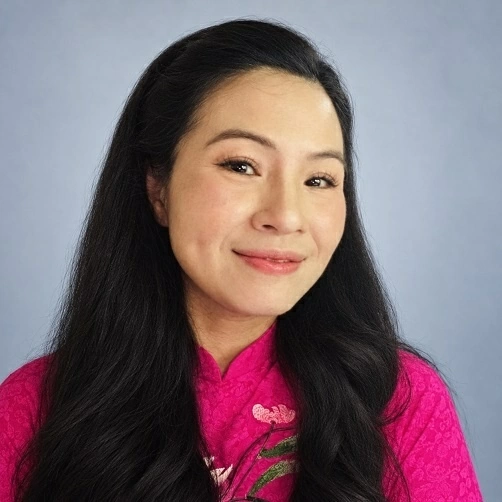 |
| Assoc. Prof. Dr. Nguyen Thi Thu Hien. |
Cultural roots begin at home
Her love for her homeland and awareness of her roots also motivate her to dedicate time to community activities, alongside her busy professional work.
While a PhD student in the Republic of Korea, she and her husband participated in founding the Vietnamese Student Association. After moving to Denmark, they continued to contribute to community activities, from organizing traditional Tet celebrations to establishing Vietnamese language classes for children.
These activities began naturally, from the desire for overseas Vietnamese to have a place to meet and share, while also allowing their children to experience the Vietnamese cultural space.
When they had children, this desire became even more profound. Even before their children were born, she and her husband agreed to teach them Vietnamese. The goal was not merely to help them learn another language, but to help them understand who they are, where they come from, and to naturally connect with their homeland.
“I always believe that a child with deep roots will have a solid foundation to grow confidently when stepping into the world,” she shares. The family hopes their children will integrate well into Danish society while being proud of their Vietnamese roots.
As a senior clinical scientist at Aalborg University Hospital, her professional work demands much time and focus. However, she does not view community activities as separate from her professional life. It is also a way to express responsibility and gratitude to her homeland, where she was born and raised.
What she wants to pass on to her children first is the example set by their parents: “Children learn more from what parents do than from what they say. If we want our children to love the Vietnamese language and Vietnam, parents need to show that love through concrete actions, from using the language at home to participating in cultural activities with their children.”
Making Vietnamese a joy for children
Raising children in a multilingual environment, Assoc. Prof. Dr. Nguyen Thi Thu Hien believes the biggest challenge for Vietnamese families abroad is not the ability to learn, but creating an environment for children to use their mother tongue regularly.
In Denmark, children study and communicate in Danish or English; books, films, and most of the information they receive daily are also in these languages.
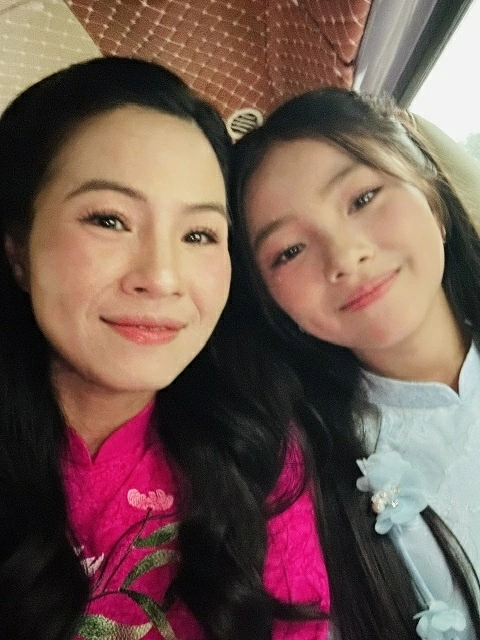 |
| Assoc. Prof. Dr. Nguyen Thi Thu Hien and her daughter Bao Han. (Photo: Courtesy by author) |
If Vietnamese at home becomes a mandatory subject with many assignments and pressure, children can easily feel fatigued. Therefore, she and her husband maintain Vietnamese in family activities from a young age, through conversations, reading, storytelling, cooking, and sharing daily joys and sorrows. The mother tongue naturally appears at the dinner table and even during disagreements between parents and children.
“Teaching the mother tongue to children is not a burden, but a gift,” she shares. It is a gift that helps children maintain their roots, understand their family, and form an identity while growing up in a multicultural environment.
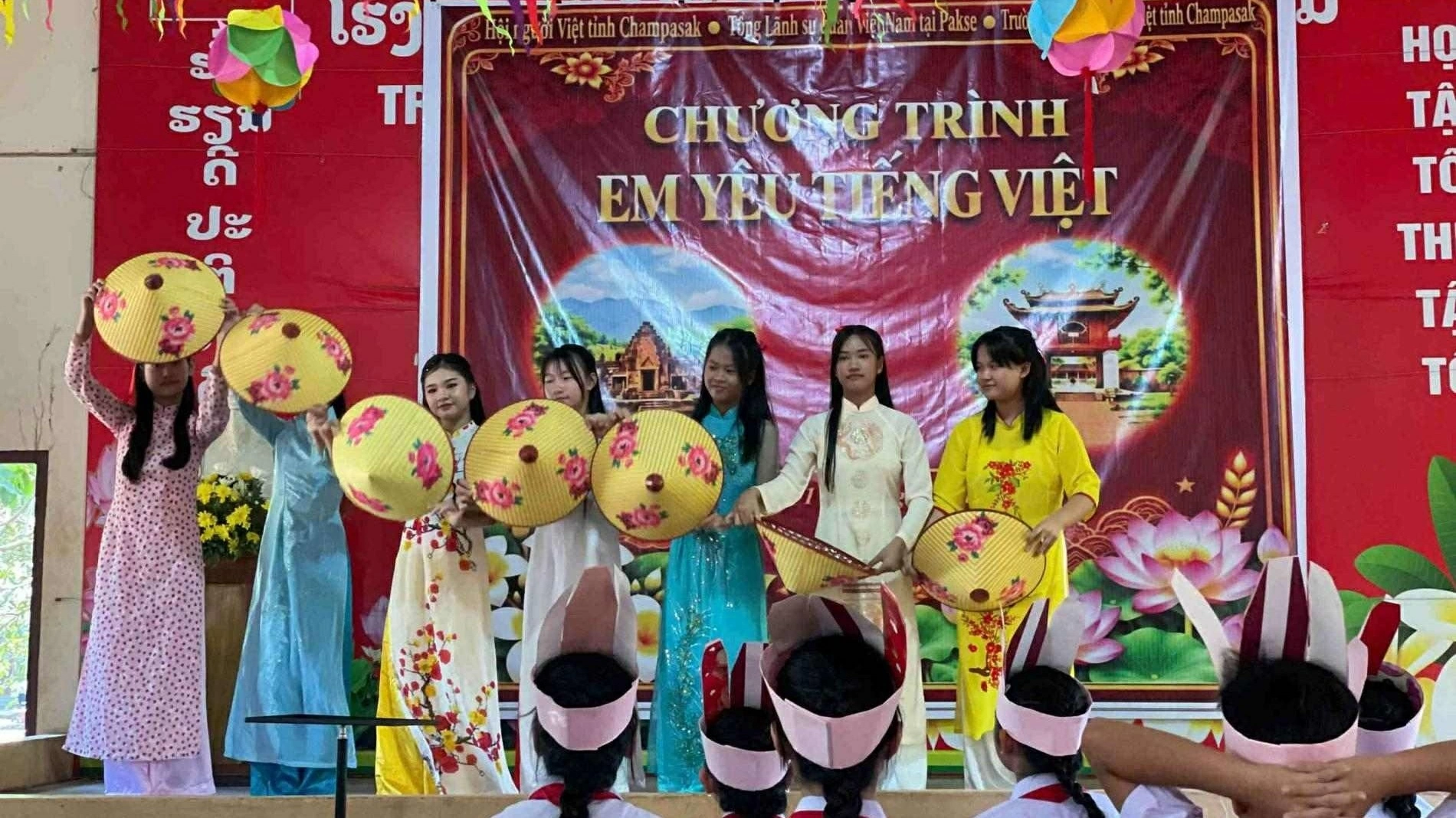
When their son was young, she and her husband, along with friends, organized Vietnamese classes for children in the community. Besides learning to read and write, the children also engaged in lion dancing, singing, reciting Tet poems, and participating in cultural activities. According to her, these joyful experiences help children create beautiful memories associated with Vietnamese, making the mother tongue a part of their childhood rather than just a lesson.
With her daughter Bao Han, she writes children's books in Vietnamese. This creative activity is maintained for about 20-30 minutes daily. After two years, Bao Han has expanded her vocabulary, learned to express thoughts and emotions in Vietnamese, and found joy in reading, writing, and storytelling.
From her family’s experience, she believes parents need to be patient but not exert pressure, incorporating Vietnamese into activities children enjoy, such as reading books, cooking Vietnamese dishes, listening to music, watching films, or telling stories about grandparents and the homeland. When language is associated with family bonds and positive experiences, children will naturally be motivated to use it.
She also emphasizes the importance of respecting children growing up in two cultures. They do not have to choose between Vietnam and Denmark but can love both countries, use multiple languages, and build their own identity. Preserving Vietnamese does not mean standing outside the local society. On the contrary, the family’s language and cultural foundation help them be more confident when integrating.
“The important thing is not to force children to speak Vietnamese, but to create a life where they have reasons, joy, and a desire to use Vietnamese,” she shares. When the mother tongue is linked with love, closeness, and beautiful experiences, children will have a natural motivation to preserve it.
A journey of passing down through generations
Being honored as one of the eight Vietnamese Language Ambassadors abroad in 2026 is a joy and honor for Hien and her family. However, she sees this not only as recognition of past efforts but also as an opportunity to share experiences and learn from the Vietnamese community preserving the mother tongue.
For her, preserving Vietnamese does not necessarily start with large projects but begins with simple actions: parents speaking Vietnamese with their children daily, reading stories, celebrating Tet, or doing things the whole family loves in their mother tongue. The title of Vietnamese Language Ambassador is tied to the responsibility of inspiring this spirit.
In the future, she hopes to connect with Vietnamese families abroad, especially young families, to exchange experiences in raising children in a multilingual environment. She also wants to develop reading activities, Vietnamese content, and connect young people with Vietnamese professionals in science, education, and culture.
According to her, a Vietnamese Language Ambassador does not necessarily have to teach but can connect and inspire families and communities to preserve Vietnamese in their own circumstances. Each small initiative, if maintained and shared, contributes to expanding the environment for using the mother tongue.
For the movement to develop, Hien hopes domestic agencies will focus on three directions: developing modern Vietnamese learning materials suitable for overseas Vietnamese children; supporting the training of teachers and parents to maintain community classes; expanding cultural experience activities, reading, creativity, and exchanges between domestic youth and overseas Vietnamese youth.
She hopes the Vietnamese Language Ambassador network will not only stop at annual recognition but become a long-term cooperative network. Ambassadors can share experiences, develop initiatives, and support each other in implementing activities suitable for each locality. Connections will turn individual experiences into a common resource, providing motivation for those preserving Vietnamese.
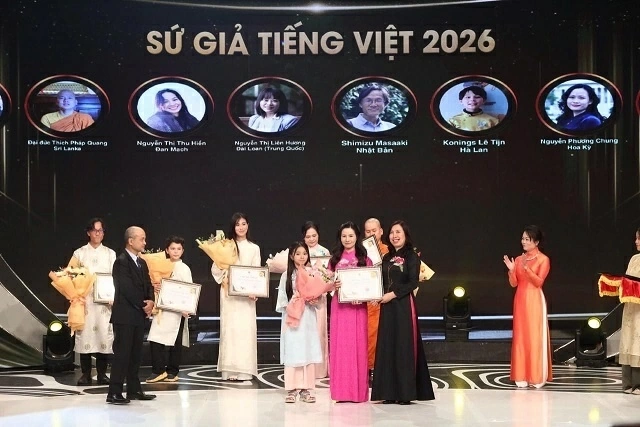 |
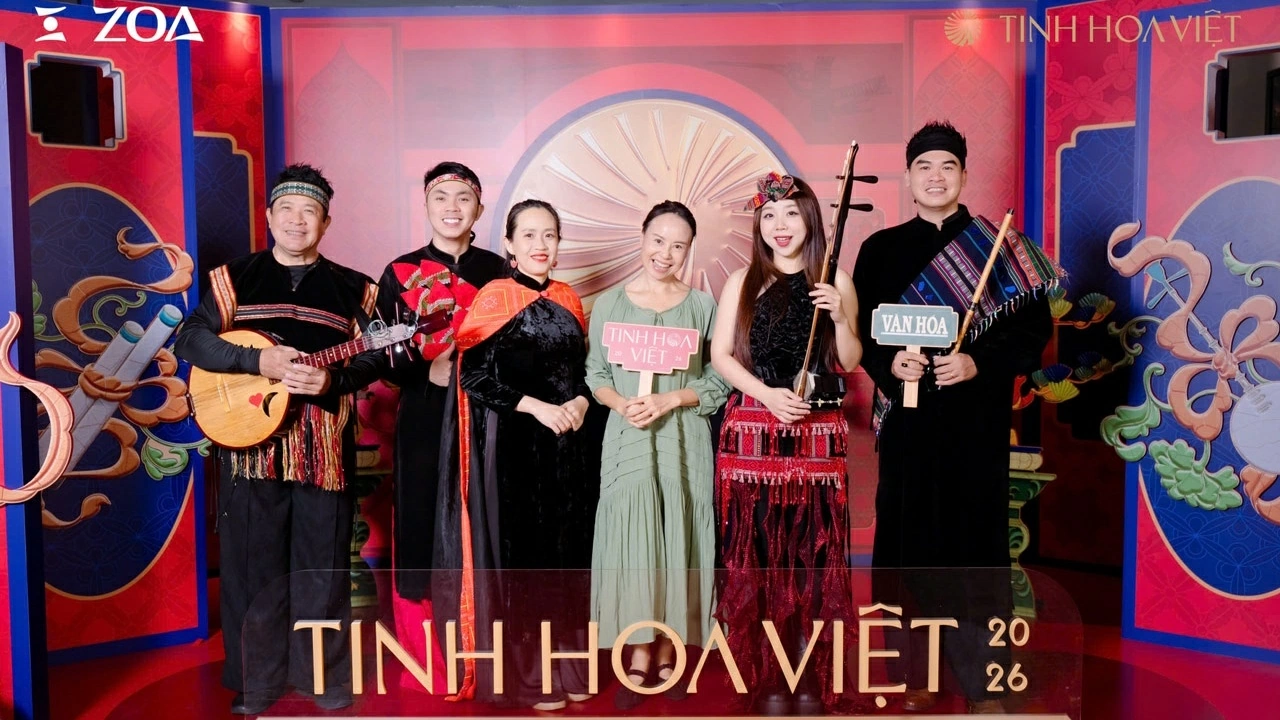
| Assoc. Prof. Dr. Nguyen Thi Thu Hien honored as a Vietnamese Language Ambassador abroad in 2026. (Photo: Courtesy by author) |
In this journey, she often recalls a question from her daughter Bao Han, then 11 years old: “Can you help me teach Vietnamese to my children in the future?” She smiled and said that they would be more than willing. That question also made her realize that the greatest gift the family can give their children is the ability to use Vietnamese and the awareness to preserve and pass on the language to the next generation.
“If a child growing up abroad wants to teach Vietnamese to their future children, then Vietnamese is not only being preserved but also being passed on, from generation to generation, through the love and willingness of each individual,” she shares.