




International Culinary Culture Festival 2026: Cultural diversity is a strength of the ASEAN Community, says Lao Ambassador Khamphao Ernthavanh
WVR - Lao Ambassador to Vietnam Khamphao Ernthavanh hopes the International Culinary Culture Festival 2026 will become a venue to honor national identity, foster Vietnam-Laos friendship, and spread the spirit of ASEAN Community solidarity.
Latest
With less than a day to go until the International Culinary Culture Festival 2026 officially opens, The World and Vietnam Report spoke with Lao Ambassador to Vietnam Khamphao Ernthavanh about the distinctive culinary traditions of the Land of a Million Elephants and the role of cultural exchanges in nurturing Vietnam-Laos friendship.
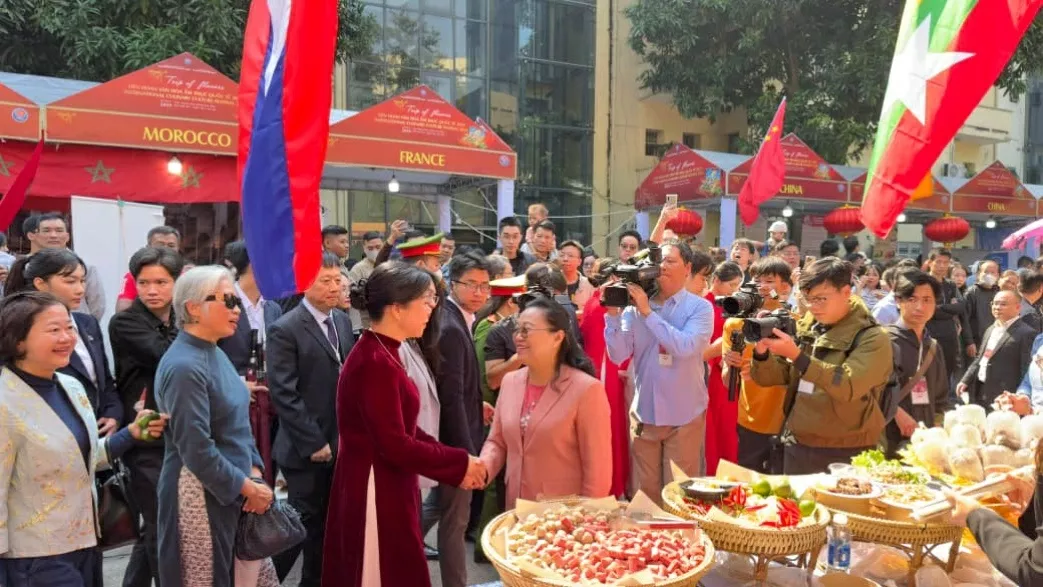 |
| Lao Ambassador to Vietnam Khamphao Ernthavanh welcomes Madame Ngo Phuong Ly, spouse of General Secretary To Lam, to the culinary stand of the Lao Embassy in Vietnam at the International Culinary Culture Festival 2025 on the morning of 22 November 2025. (Source: Lao Embassy in Vietnam) |
Vietnam and Laos enjoy a relationship of great friendship and special solidarity, nurtured over generations. Could you share some of the major achievements and highlights of cultural exchanges between the two countries in recent years, particularly in the culinary field?
It is fair to say that the great friendship, special solidarity, comprehensive cooperation and strategic cohesion between Vietnam and Laos constitute an invaluable asset, painstakingly nurtured by generations of leaders and people of both countries through blood, sweat and unwavering loyalty.
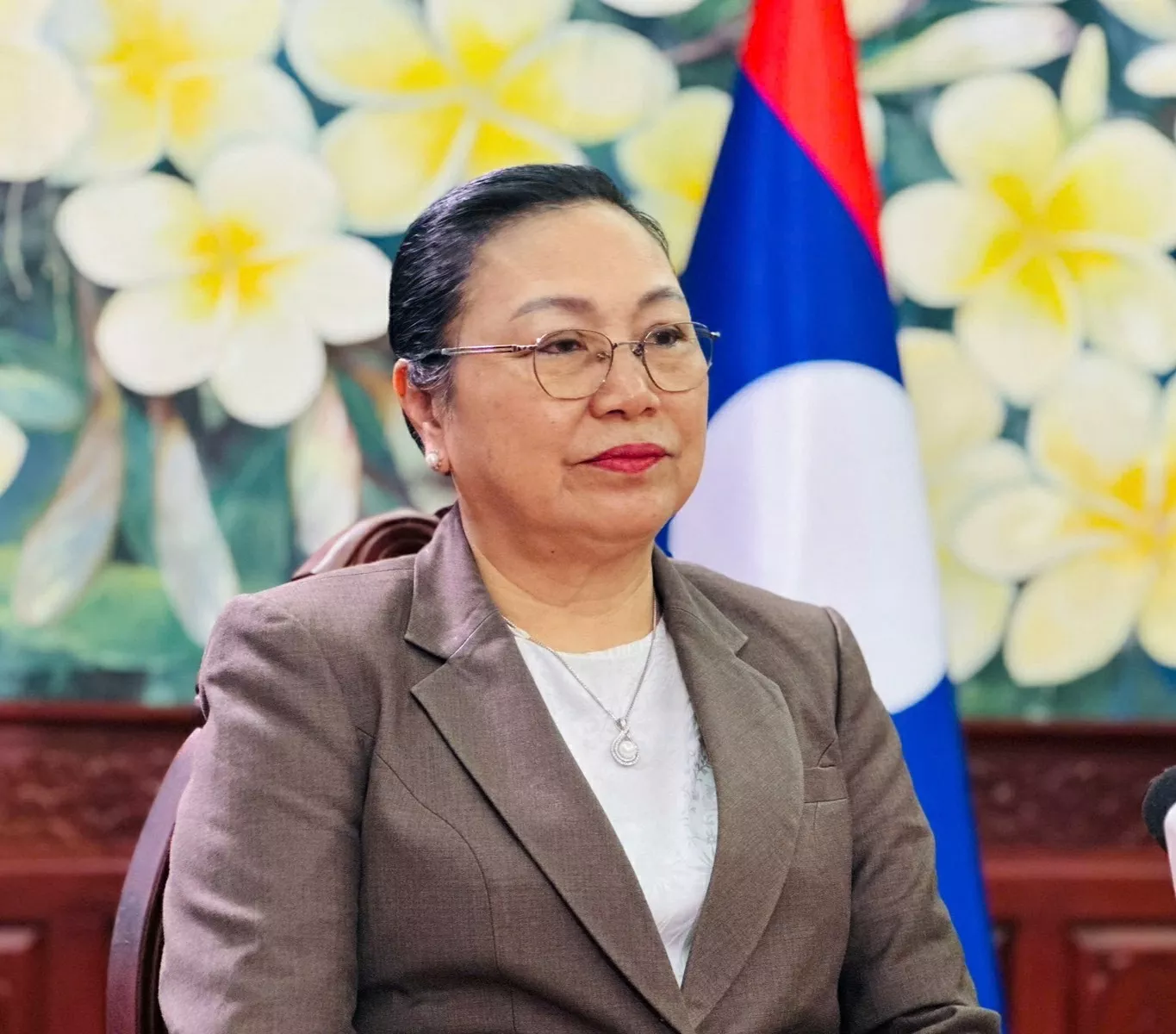 |
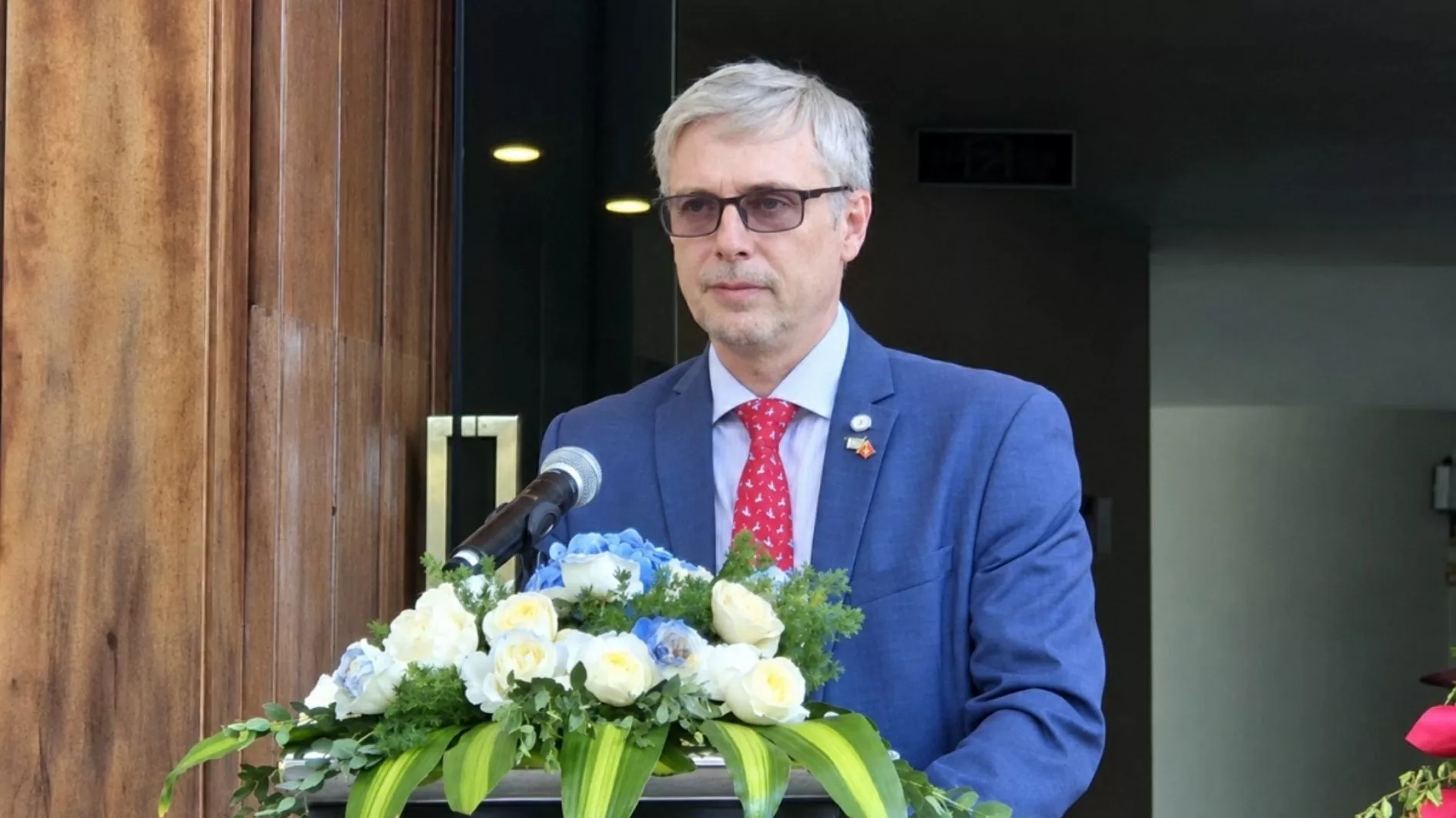
| Lao Ambassador to Vietnam Khamphao Ernthavanh. (Photo: Viet Duc) |
Within this special relationship, cultural cooperation has always been highly valued by the Parties, States and peoples of both countries as a solid spiritual foundation and a bridge strengthening the close bonds between our two nations.
In recent years, cultural exchanges have flourished in diverse forms at both central and local levels. From cultural weeks, exhibitions and artistic performances to academic exchanges and educational activities for younger generations, these initiatives have yielded achievements of which we can be proud.
In particular, beyond the enjoyment of food, cuisine has become an accessible, vibrant and effective form of people-to-people diplomacy.
Traditional Lao dishes such as sticky rice (khao niaw), minced meat salad (larb) and green papaya salad (tam mak hoong) have become familiar favourites among many Vietnamese people. Likewise, Vietnamese dishes such as pho (noodle soup), fried spring rolls and bun cha (grilled pork with rice noodles) have become part of everyday life in Laos.
Through the sincerity and warmth conveyed by traditional flavours, cuisine has helped bridge distances and bring our two cultures closer together.
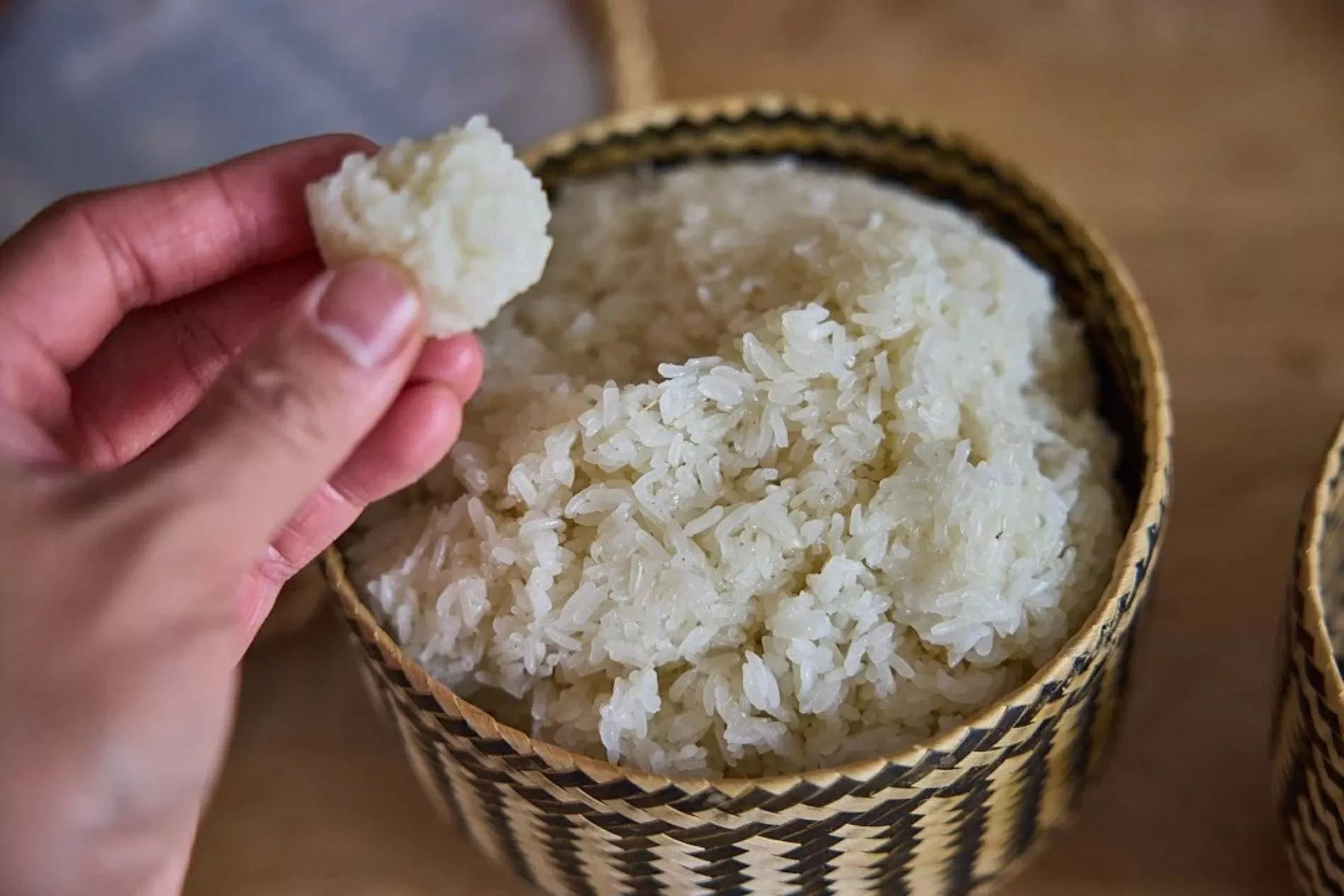 |
| Sticky rice (khao niaw) - a traditional staple of Lao cuisine. (Source: Saeng’s Kitchen) |
What traditional dishes will the Lao Embassy in Vietnam introduce at the International Culinary Culture Festival 2026? Through these offerings, what would you like to share with the Vietnamese public about Laos, its people and cultural identity?
For this year’s Festival, the Lao Embassy in Vietnam has devoted considerable effort to preparing a space rich in national identity to welcome the Vietnamese public and international friends.
We will introduce dishes that capture the essence of Lao cuisine. Among them is sticky rice (khao niaw) - an indispensable part of family meals and festive occasions, symbolising the unity and close bonds of the Lao people.
Another highlight is green papaya salad (tam mak hoong), whose harmonious blend of sour, spicy, salty and sweet flavours reflects, to some extent, the open-hearted and warm nature of the Lao people.
Our Embassy’s stand will also feature traditional sweets and confectionery infused with the aroma of natural herbs, alongside distinctive Lao beverages, including Beerlao.
Through this culinary space, we wish to convey the image of a peaceful Laos, rich in cultural traditions, open and hospitable.
Prepared with fresh, natural ingredients, each dish embodies the sincere affection and esteem that the Lao people hold for our dear Vietnamese brothers and sisters, as well as for international friends.
We hope that through these culinary experiences, visitors will gain a deeper appreciation of the way of life, spirit and distinctive cultural identity of Laos’ ethnic communities.
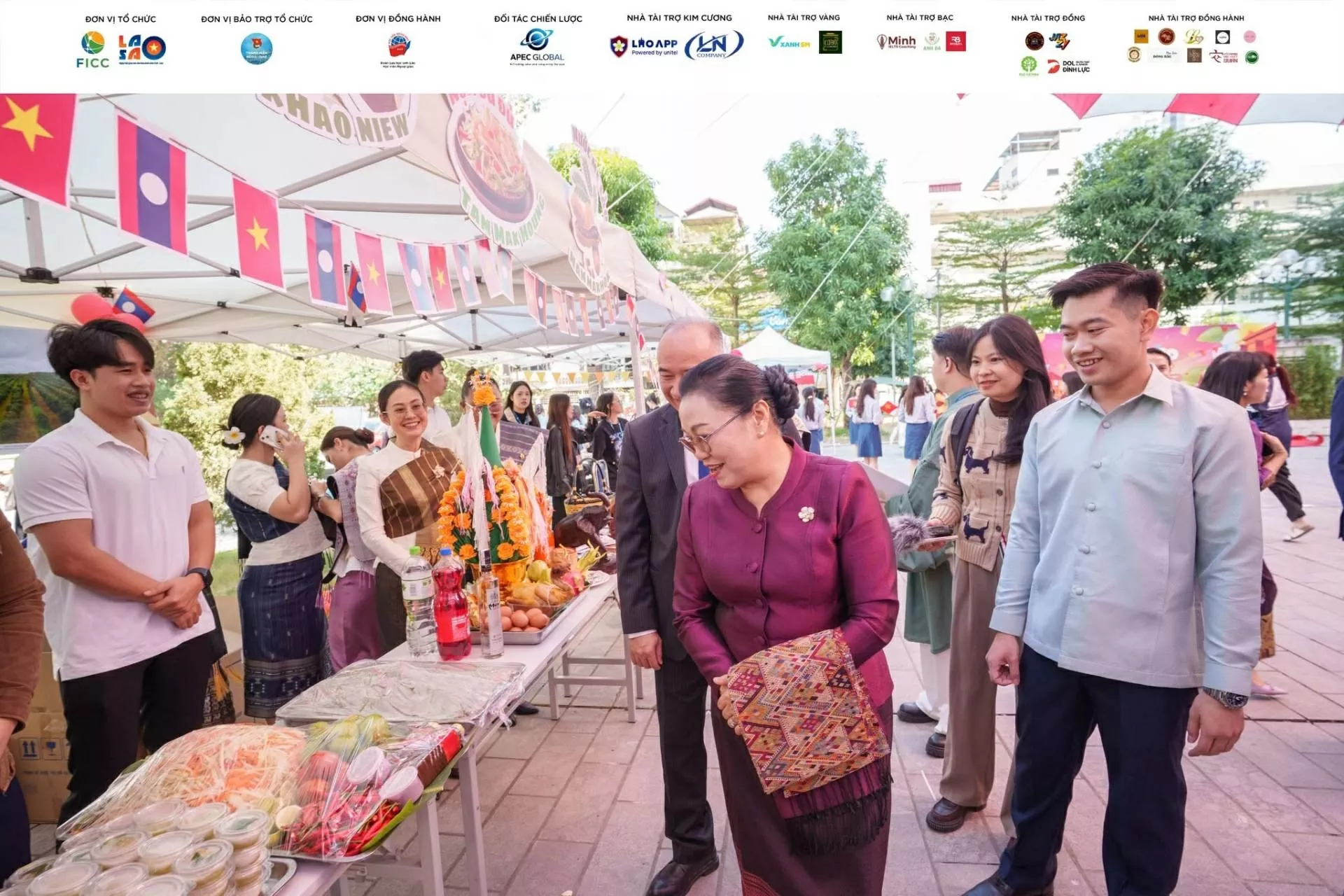 |
| Lao Ambassador to Vietnam Khamphao Ernthavanh visits a stand at the Vietnam-Laos Student Cultural Exchange Festival (LAOSAO FEST 2025), held at the Diplomatic Academy of Vietnam on 14 December 2025. (Source: LaoSao Fest - Ngày hội giao lưu văn hoá sinh viên Việt-Lào Facebook page) |
Vietnam and Laos share many similarities in culture, customs and culinary traditions. In your view, what are some of the most interesting common features of the two cuisines? How do these similarities help strengthen bonds and mutual understanding between the peoples of our two countries?
Connected by the Mekong River, a shared lifeline, a common border stretching over 2,000 kilometres, majestic mountain ranges and centuries-old ties, Vietnam and Laos share many similarities in culture, customs and ways of life, including culinary traditions.
First and foremost, both countries regard rice cultivation as the foundation of agricultural life. This is reflected in the tradition of eating sticky rice and dishes made from glutinous rice across many regions.
Another interesting similarity lies in the wide variety of fish and vegetable dishes, together with distinctive dipping sauces and seasonings. These common features reflect the similarities in our natural environments, histories and communal ways of life.
I believe that cuisine is a cultural language capable of bringing people together. When Vietnamese people enjoy Lao dishes and Lao people discover Vietnamese cuisine, it is also an opportunity for the peoples of both countries to explore, share and develop a greater appreciation of each other’s traditional values.
It is through such simple moments in everyday life that friendship, empathy and mutual understanding are nurtured naturally and sustainably.
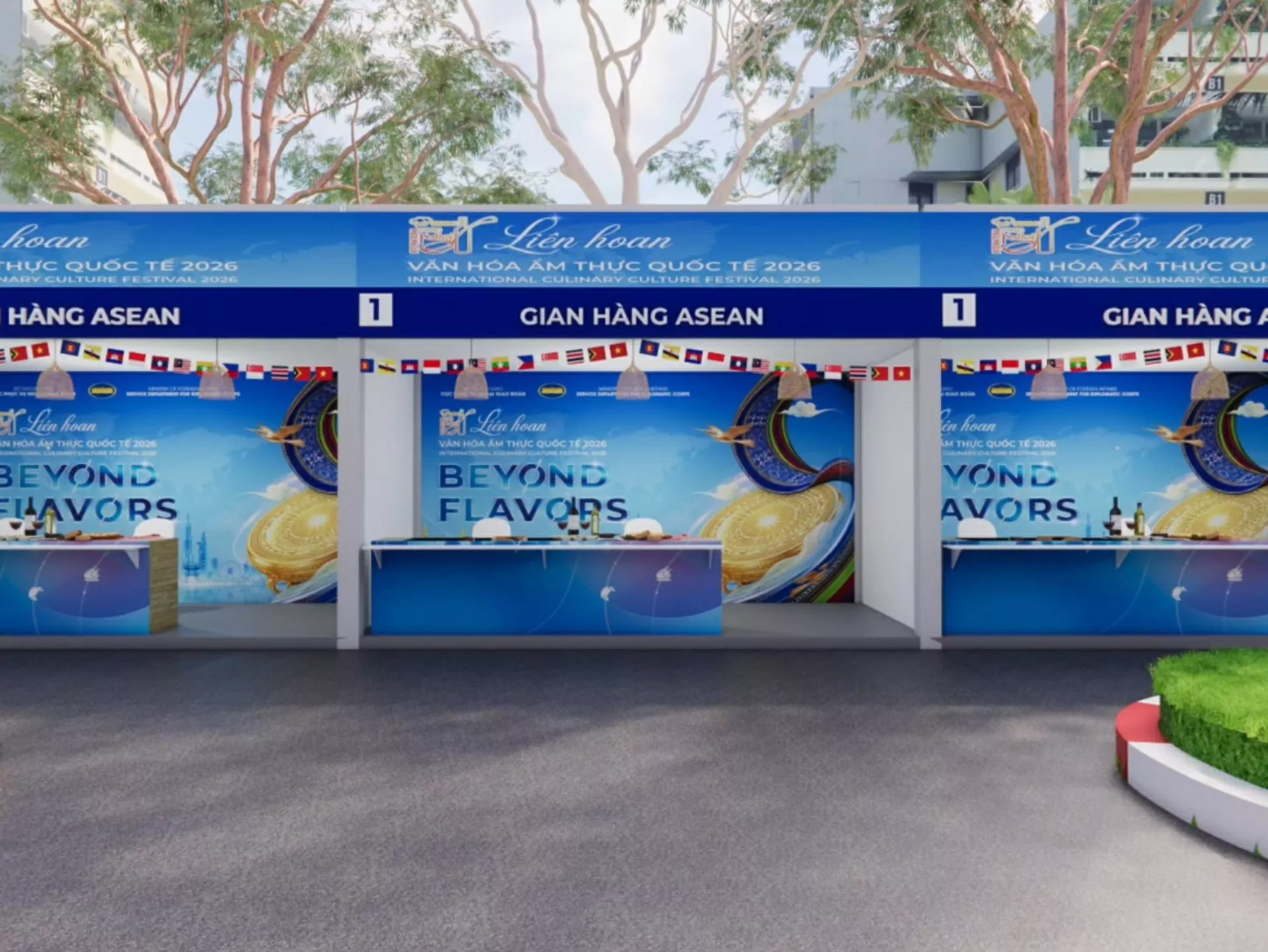 |
| An artist’s impression of the stands in the “Flavours of ASEAN” area at the International Culinary Culture Festival 2026. (Source: Organising Committee) |
One of the highlights of this year’s Festival is the “Flavours of ASEAN” space. From Laos’ perspective, how do you hope this space will help celebrate cultural diversity while highlighting the shared values and spirit of solidarity within the ASEAN Community?
I highly appreciate the initiative to organise the International Culinary Culture Festival. It provides a meaningful opportunity for countries to showcase their rich traditions and distinctive identities while promoting exchanges, integration and mutual understanding both within the region and around the world.
ASEAN is a community rich in linguistic, religious, customary and cultural diversity. Although each country has its own distinctive characteristics, we share common values of community spirit, hospitality, mutual respect and solidarity.
Through the “Flavours of ASEAN” space, visitors can discover the richness of Southeast Asia’s culinary traditions and gain a greater appreciation of diversity as one of the sources of strength of the ASEAN Community.
For its part, Laos has always attached great importance to strengthening solidarity and cooperation with fellow ASEAN Member States, with cultural and people-to-people exchanges playing a particularly important role.
I hope this space will become a meeting place for different cultures, where distinctive identities are respected and shared values are celebrated, contributing to the development of a cohesive, inclusive, resilient and people-centred ASEAN Community.
On this occasion, I wish the International Culinary Culture Festival 2026 every success and hope it will become a meaningful cultural gathering that fosters friendship, mutual understanding and cooperation among nations.
I would also like to invite the Vietnamese people and international friends to visit the Lao Embassy’s stand to experience, discover and savour the distinctive flavours of the Land of a Million Elephants.
Thank you very much, Ambassador!