




Leaders of Cambodia, Laos, Myanmar and Vietnam adopt Joint Statement of the 12th CLMV Summit in Hanoi
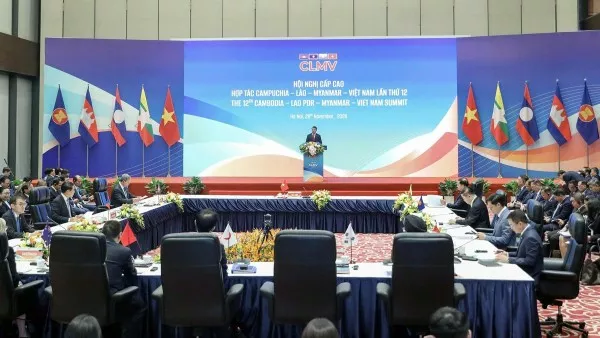
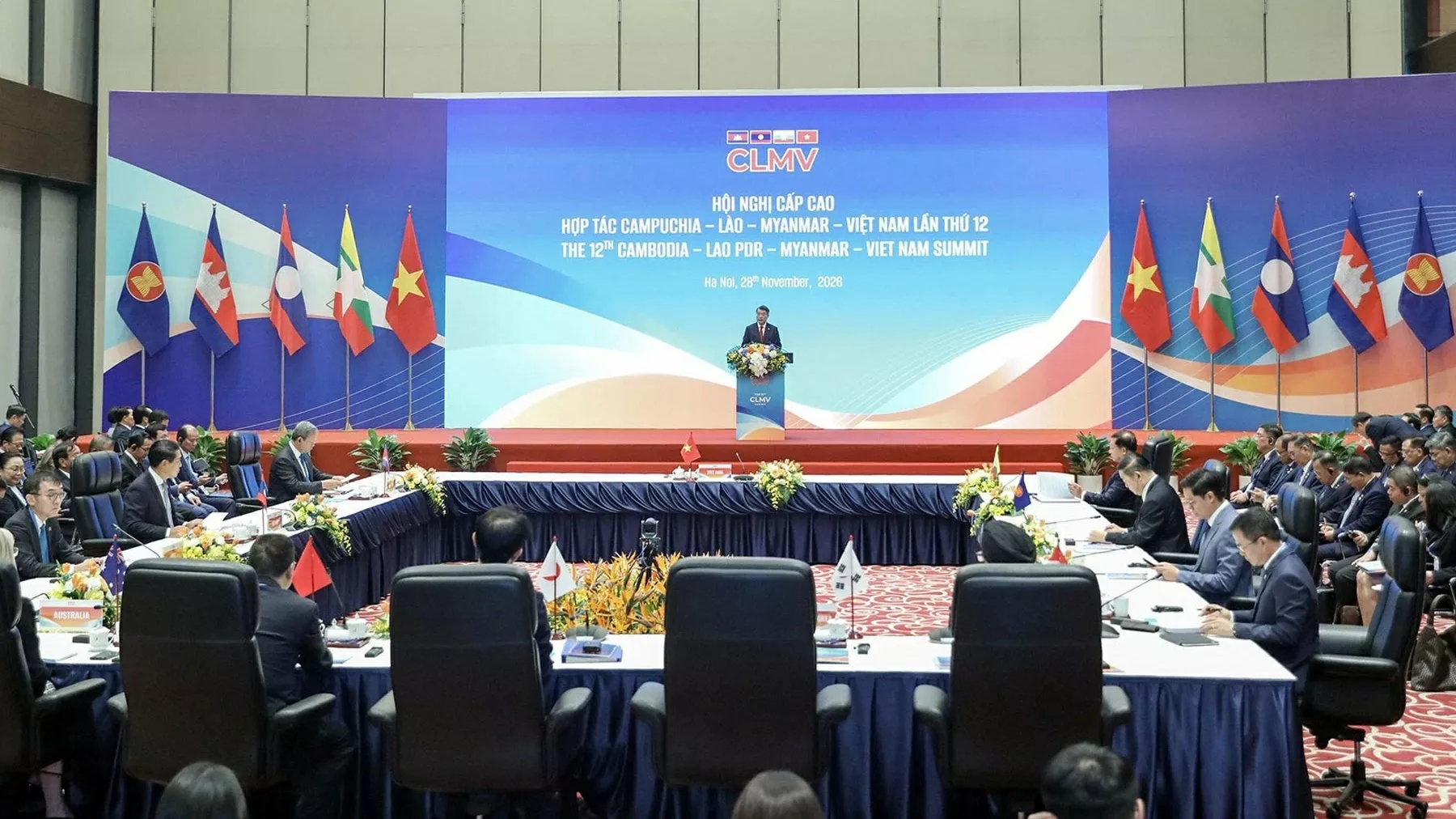
WVR/VNA - Leaders of Cambodia, Laos, Myanmar and Vietnam adopted the Joint Statement of the 12th Cambodia-Laos-Myanmar-Vietnam (CLMV) Summit at the conclusion of the summit in Hanoi on November 28, 2026.The following is the full text of the joint statement.
Latest
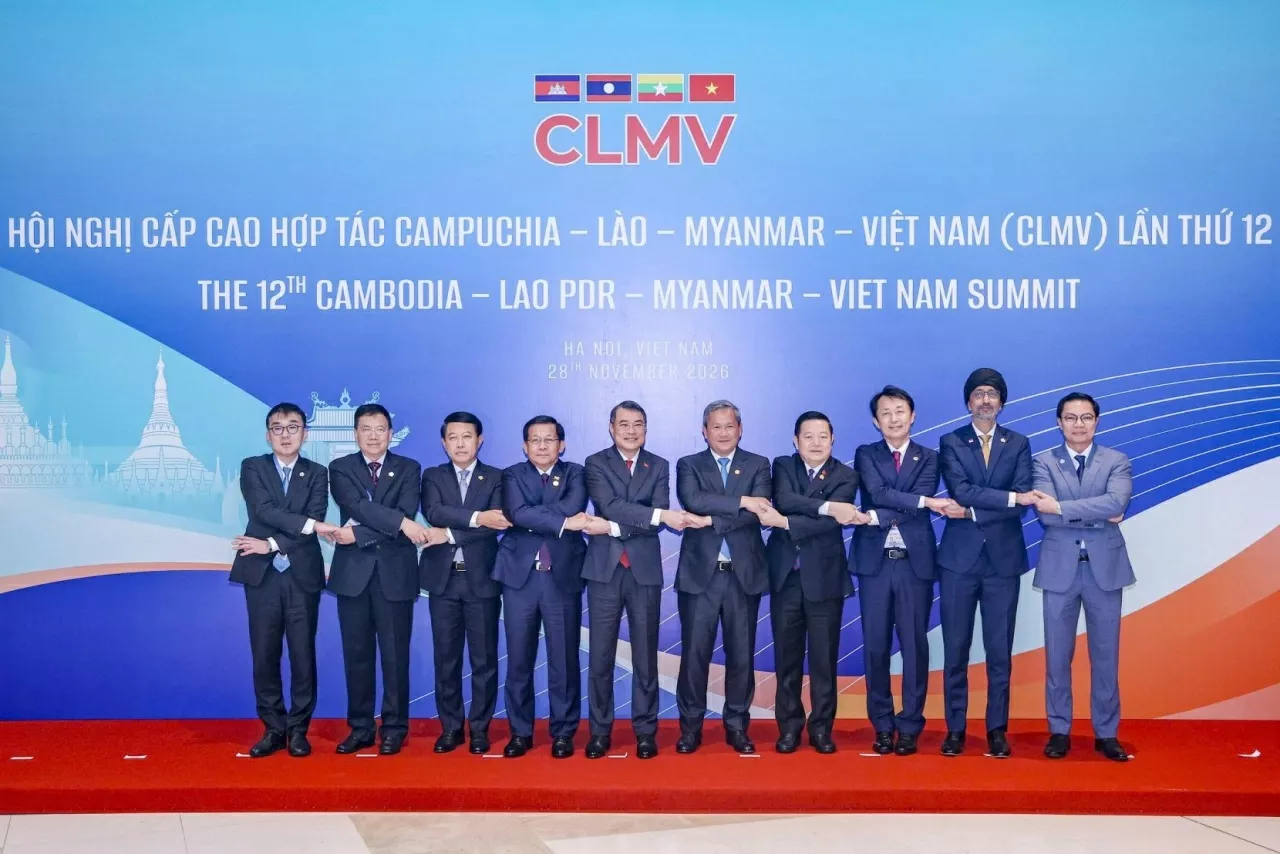 |
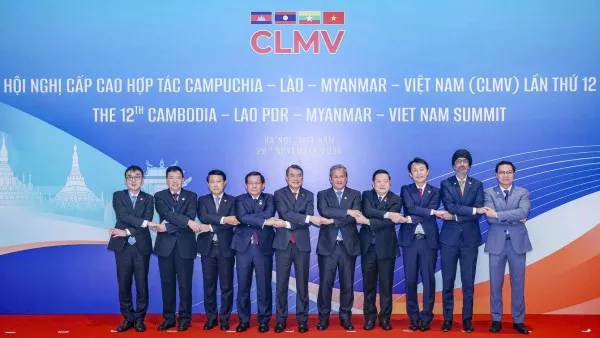
| Vietnamese Prime Minister Le Minh Hung (fifth from left), Myanmar President Min Aung Hlaing (fourth from left), Lao Prime Minister Saleumxay Kommasith (third from left), Cambodian Prime Minister Hun Manet (sixth from left), ASEAN Secretary-General Kao Kim Hourn (seventh from left) and heads of guest delegations at the 12th CLMV Summit in Hanoi on November 28, 2026 (Photo: WVR) |
JOINT STATEMENT
of the 12th Cambodia–Lao PDR–Myanmar–Vietnam Cooperation Summit
November 28, 2026, Hanoi, Vietnam
“Connecting CLMV – Harnessing Potential – Building a Prosperous Future”
1. We, the Heads of State/overnment of the Kingdom of Cambodia, the Lao People’s Democratic Republic (Lao PDR), the Republic of the Union of Myanmar and the Socialist Republic of Vietnam (hereinafter referred to as CLMV), gathered for the Twelfth CLMV Cooperation Summit on November 28, 2026 in Hanoi, Vietnam. The Secretary-General of ASEAN, and representatives of the Commonwealth of Australia, the People’s Republic of China, the Republic of Korea, Japan and the Republic of Singapore; international organisations and businesses were invited to attend the Summit.
2. We reaffirmed our unwavering commitment to the principles of CLMV cooperation, embracing traditional friendship, good neighbourliness, mutual benefit, mutual respect and mutual support among the CLMV countries, and non‑interference in one another’s internal affairs.
3. We underscored CLMV’s mission of fostering policy coordination and joint action among the four countries to ensure enduring peace, stability, and prosperity in the region, through the promotion of resilience and inclusive and sustainable development and the advancement of the welfare and quality of life of the peoples in the CLMV countries.
4. We reaffirmed our determination to realise the vision set out in the Framework for CLMV Development, aimed at transforming CLMV countries into a sustainable upper-middle-income countries by 2030 and positioning the sub-region as integrated production and investment hub, with stronger participation in regional and global value chains, and progressively developing into an Advanced Global Business Hub.
5. We noted with satisfaction that CLMV cooperation has contributed to development of comprehensive and long-lasting cooperation among our four countries as well as the ASEAN Community building process through strengthening the regional integration as well as connectivity among the CLMV countries and narrowing the development gap within ASEAN. We are committed aligning CLMV cooperation with the ASEAN Community Vision 2045 and its accompanying Strategic Plans, as adopted under the Kuala Lumpur Declaration on ASEAN 2045: Our Shared Future on 26 May 2025, the ASEAN Connectivity Strategic Plan, and the Initiative for ASEAN Integration (IAI) Work Plan V (2026 – 2030).
6. We reviewed with satisfaction the progress achieved in implementing the outcomes of the Eleventh CLMV Summit held on November 7, 2024 in Kunming, Yunnan Province, China, the Framework for CLMV Development, the Implementation Plan of the Framework, and the CLMV Action Plan (2025 – 2026). We applauded the progress made in a wide range of cooperation areas:
(i) We commended the progress of the upgrading of national road sections connecting to the ASEAN Highway Network and the Asian Highway Network, the modernization of a number of border-crossing pairs, and the advancement of preparations for the Vientiane – Vung Ang Railway, the Vientiane – Hanoi Expressway, as well as Vietnam – Laos shared warehouse and oil pipeline. We also noted the steady expansion of cross-border power trade among the CLMV countries, notably between the Lao PDR and Vietnam, between the Lao PDR and Cambodia, and between Cambodia and Vietnam.
(ii) We noted the progress in simplifying and harmonising customs and border procedures, in the pilot application of modern border-management models at selected border checkpoint pairs. We noted with satisfaction the continued growth in trade and investment flows among the CLMV countries and recognie the importance of further strengthening intra CLMV trade and investment flows. We also commended the outcomes of the Seventeenth CLMV Economic Ministers’ Meeting was held on November 7, 2025 in Yangon, Myanmar, as well as the work of the CLMV Senior Economic Officials’ Meeting (SEOM) in coordinating and monitoring the implementation of the CLMV Action Plan.
(iii) We welcomed the outcomes of the Seventh CLMV Tourism Ministers’ Meeting held in Myanmar in November 2024, in which we commended the implementation of the Action Programme on CLMV Tourism Cooperation 2023 – 2025 and of its successor Action Programme, and appreciated the continued joint participation in international travel fairs, and cooperation in tourism product development, digital marketing and public-private partnership. We welcomed the outcomes of the eight CLMV Tourism Ministers’ Meeting held in Ho Chi Minh City, Vietnam on August 27, 2026, commended the implementation of the Action Programme on CLMV Tourism Cooperation 2025-2026 and adopted the Joint Action Plan on CLMV Tourism Cooperation 2026-2028, and agreed to continue facilitating of travel and connectivity; strengthening joint tourism promotion under the theme “Four Countries-One Destination” building a shared brand image on advance digital transformation; enhancing capacity building for tourism; engaging of the private sector and local communities, including the promotion of cultural and heritage values; and enhancing cooperation with international organisations.
(iv) We welcomed the work undertaken to develop an integrated CLMV Human Resources Development Strategy as a key enabler for realising the 2030 Vision of the Framework for CLMV Development. We deeply appreciated Vietnam’s continued scholarship programmes and training courses for students and officials of Cambodia, the Lao PDR and Myanmar, and commended the expansion of cooperation among CLMV countries in technical and vocational education and training (TVET), university-business cooperation and research and development.
(v) We welcomed the progress made in agricultural cooperation among the CLMV countries and reaffirmed the importance of agriculture in ensuring food security, improving farmers’ livelihoods and promoting sustainable and inclusive development. We commended the continued cooperation in crop and livestock production, seeds and breeds, food safety, animal and plant health, and capacity building.
(vi) We welcomed the positive outcomes in bilateral energy cooperation among the CLMV countries. In 2025, Vietnam recorded a total electricity exchange of over 7 billion kWh via the power grid interconnections between Vietnam and the Lao PDR, marking a substantial increase compared to 2024. Bilateral power trade between Cambodia and Viet Nam continued stably, maintaining a capacity of approximately 250 MW via the Chau Doc-Takeo transmission line. The power grid interconnections between Vietnam and Lao PDR, as well as between Viet Nam and Cambodia, have significantly contributed to optimising the utilization of power resources, strengthening power supply security, and enhancing the reliability of the electricity supply in each respective country.
(vii) We noted the positive progress in industrial cooperation among the CLMV countries, as evidenced by the steady increase in investment flows into the processing, agro-processing, materials, and consumer goods manufacturing industries, alongside the initial formation of production clusters in the border areas of our countries.
(viii) We welcomed the progress of information and communication technology cooperation among the CLMV countries, and recognized the growing importance of digital broadcasting and emerging media technologies in strengthening connectivity and people-to-people exchanges.
7. We acknowledged that connectivity is strategic importance for CLMV countries to transform proximity into economic complementarity, expand trade and investment, integrate into global value chains, boost tourism, promote joint research and development (R&D) and achieve sustainable, inclusive, and resilient development for our peoples. We therefore agreed to designate connectivity as the central, cross-cutting priority of CLMV cooperation for 2027–2028. We tasked our Ministers and Senior Officials to incorporate the following priorities into the CLMV Action Plan (2027 – 2028) with clear deliverables, defined focal points, realistic timelines and specified sources of financing.
A. Infrastructure and logistics connectivity
8. We stressed the importance of strengthening the transportation connectivity along the East–West, North–South and Southern Economic Corridors by removing bottlenecks and mobilizing resources to accelerate highway and railway links on the Myanmar – Lao PDR – Vietnam and Myanmar – Thailand – Cambodia – Vietnam routes. We emphasised the vital role of maritime transport and port connectivity as integral components of the sub-regional transport infrastructure, complementing land-based transport corridors to facilitate seamless multimodal logistics across CLMV countries. We reaffirmed support for Lao PDR’s transformation into a land-linked country with reliable sea access through connections to the seaports of Vietnam, Cambodia, and Myanmar via realising of the Vientiane – Hanoi Expressway and Vientiane – Vung Ang Railway projects. We agreed to promote more effective implementation of existing cross-border transport agreements in the region, including GMS Cross-Border Transport Facilitation Agreement (GMS-CBTA) and the ASEAN Transport Facilitation Agreements. We tasked our civil aviation authorities to accelerate the full implementation of the CLMV Multilateral Agreement on Air Services and other bilateral and multilateral air services arrangements to further cooperation within the ASEAN framework. We agreed to jointly study the expansion of air routes connecting four countries, including the opening of new direct flights among the major cities, economic centers and tourism destinations of our countries and to encourage our airlines to develop code-sharing, interlining and combined itineraries.
9. We agreed to advance smart logistics connectivity as the foundation of seamless and resilient supply chains and we agreed to promote this by integrating digital technologies, standardised port operations, and electronic data interchange (EDI) to enhance efficiency, reduce customs bottlenecks, and secure resilient supply chains within sub-region. We tasked our Ministers responsible for logistics to design a comprehensive plan for building a sub-regional logistics ecosystem that is efficient, sustainable, and deeply interconnected – ensuring the seamless flow of goods, services, and information across borders through the integration of transport corridors, digital platforms, and energy networks.
10. We encouraged further enhancement of cross-border electricity trade and cooperation in renewable energy development, grid resilience, Battery Energy Storage Systems (BESS) and energy efficiency, thereby contributing to safeguarding energy security, promoting sustainable development, and narrowing the development gap within the region. We also encouraged the bilateral interconnection of power grids among CLMV countries as a step toward progressively establishing a Mekong sub-regional power transmission network. We agreed that this emerging network should be closely aligned with the ASEAN Power Grid and the ASEAN Plan of Action for Energy Cooperation and should contribute to increasing the share of renewable and clean energy in the regional energy mix. We also welcomed the continued support of the developed partners and international cooperation mechanisms in advancing power trade and integration across the Mekong sub-region.
B. Economic connectivity
11. We agreed to promote programmes that ensure effective and secure border management while facilitating the movement of goods across borders, including the application – adapted to national conditions and practical effectiveness – of the smart border gate model at selected CLMV border checkpoint pairs, alongside the harmonisation and simplification of customs procedures. We further committed to expanding the use of electronic customs declaration and clearance, electronic certificates of origin, and electronic sanitary and phytosanitary certification building upon and complementing existing ASEAN trade facilitation initiatives and mechanisms, including the ASEAN Single Window and other relevant regional arrangements. We encouraged the extension and synchronisation of border-crossing operating hours to advance single-stop and single-window inspection arrangements. We also agreed to continue organising trade promotion activities, business-matching events, trade fairs, CLMV business forums, and international fora on economic, trade, and investment cooperation, in order to share experiences and coordinate policies in trade, industry, and investment among the CLMV countries.
12. We agreed to boost border trade and cross-border economic zones along the East–West North–South and Southern Economic Corridors, focusing on investment in agro-processing, logistics, warehousing, trade, tourism, and digital services. We further committed to improving policies to ensure a favorable, stable, safe and transparent environment for foreign direct investment, while ensuring the security and safety of the operations, personnel, assets, and infrastructure. We also encouraged responsible investment and committed to supporting the expansion of CLMV’s enterprises in each other’s markets, including the revitalization of investment and business activities in Myanmar. We committed to fully implementing relevant ASEAN Economic Agreements to facilitate trade and to further promoting industrial cooperation towards enhancing added value chains, developing supporting industries, and integrating CLMV enterprises into regional and global supply chains. Furthermore, we encouraged technology transfer and the sharing of experience regarding industrial development policies and resolve to promote the establishment of industrial cooperation centers at border economic zones and along the economic corridors of the sub-region. We agreed to task Economic Ministers to explore the possibility of developing CLMV into a single production base, commensurate with each country’s development levels and circumstances, towards a more globally competitive and seamlessly integrated ASEAN single market and production center under the ASEAN Community Vision 2045.
13. We recognised to strengthen investment facilitation among the CLMV countries by simplifying and digitalising investment-related administrative procedures, enhancing transparency and access to up-to-date information on applicable laws, regulations, procedures and requirements, and promoting effective one-stop or single-window mechanisms and inter-agency coordination, with a view to reducing unnecessary administrative burdens, time and costs for investors, in accordance with the laws and regulations of each country.
14. We recognised the critical role of Information and Communication Technology (ICT) in driving the digital transformation of the CLMV sub-region. We committed to strengthening our digital infrastructure resilience and advancing digital literacy. We underscored the importance of expanding broadband access to ensure inclusive connectivity, harmonising digital standards to promote interoperability and efficiency of digital trade facilitation, electronic payments and other digital services, in accordance with national laws and regulations, and fostering joint readiness to address emerging cyber threats, strengthening cybersecurity cooperation to safeguard our digital ecosystems. These efforts will enhance resilience, foster innovation, and create a secure and enabling environment for the digital economy.
15. We encouraged closer cooperation among relevant authorities and public broadcasters of the CLMV countries in the areas of digital television and radio broadcasting, IP-based media delivery, artificial intelligence, emerging media technologies, emergency warning broadcasting, digital content exchange, and human resource development. We further encouraged the sharing of technical expertise, best practices, and capacity-building programmes with a view to enhancing the resilience, interoperability, and technological capabilities of the broadcasting and digital media sectors of the CLMV countries.
16. We agreed to mobilise resources from development partners to provide technical assistance to CLMV enterprises – particularly MSMEs and women- and youth-led businesses – to enhance competitiveness and deepen participation in regional and global supply chains, including through linking incubation and innovation centres and supporting-industry databases. We encouraged further exchange of knowledge, technologies and good practices in sustainable and climate-smart agriculture, including digital transformation, circular and low-emission agriculture in order to ensure food security in the CLMV sub-region. We tasked Ministers of Agriculture to study the development of CLMV agricultural supply chains focused on high value-added processed products, with cooperation in seeds and breeds, good agricultural practices, climate-smart agriculture, quality and food safety standards, traceability, quarantine, geographical indications and branding, cold-chain logistics, fertiliser factories and joint promotion in third markets, in order to raise farmers’ incomes and strengthen sub-regional resilient agricultural value chains.
C. People-to-people connectivity and environmental cooperation
17. We further agreed to enhance cooperation in responding to flood, drought, saline intrusion, riverbank and coastal erosion, air pollution and the impacts of climate change, and to promote the sharing of experience and technology application in disaster risk management and early warning. We agreed to strengthen the exchange of hydro-meteorological data and information on the development along the Mekong River under related Mekong cooperation mechanisms in coordination with the Mekong River Commission, thereby contributing to the sustainable, equitable use and management of the water resources of the Mekong River, ensuring the common interests of the sub-region and of each country.
18. We welcomed the CLMV Scholarship Programme 2.0 provided by Vietnam for Cambodia, the Lao PDR and Myanmar, which extends beyond undergraduate education to postgraduate education and vocational training and is delivered in both Vietnamese and English in educational institutions in Viet Nam, with priority given to the fields of science, technology, engineering and mathematics, digital technology, green transition, agriculture and public administration.
19. We tasked our Ministers of Tourism to jointly design a “CLMV Heritage Journey”, linking the outstanding cultural and natural heritage sites of our four countries into attractive multi-country itineraries to further strengthen the “Four Countries, One Destination” brand. This initiative could be supported by joint digital marketing, harmonised quality standards for tourism services, joint tourism package, organised roadshows and Familiarisation Trip (FAM-Trip), improved intra-regional travel facilitation, and enhanced air and land connectivity.
20. We agreed to enhance capacity-building assistance for the security and police forces of partner countries through training and education in particular the technical skills courses related to law enforcement and public order management, alongside the organisation of joint exercises on search and rescue, crime prevention, and counter-terrorism in border areas. We also further enhance cooperation in combating transnational crimes including emerging crimes, particularly online fraud/scams, high-tech crimes, cross-border illegal betting and gambling, and the exploitation of cyberspace for criminal purposes within the CLMV countries by prioritising joint capacity-building initiative, digital forensics training, and coordinated cross-border investigations among our law enforcement and cybersecurity. We further agreed to strengthen coordination in oversea nationals’ protection, evacuation and repatriation and the extradition of offenders in accordance with our respective domestic laws and international obligations.
D. Effective mobilisation of resources
21. We agreed on the need for a more transparent and effective mechanism to mobilise and facilitate access to diverse sources of financing for priority CLMV cooperation projects, including development assistance, concessional financing, blended finance, public private partnerships and private-sector investment, taking into account national and regional priorities, fiscal sustainability and applicable national laws and procedures resources for CLMV cooperation. We therefore tasked the CLMV relevant Ministers and Senior Officials to work closely with the ASEAN Secretariat to proactively mobilise resources from the Dialogue and Development Partners, international and regional financial institutions and the private sector.
22. We encouraged the ASEAN Secretariat to continue supporting the CLMV countries in the organising of regular consultations between the CLMV countries and the development partners, where appropriate, the exploration of blended finance, public-private partnership and other innovative financing modalities; and arrangements for monitoring, reporting on and evaluating of the implementation of projects, including through linkages with the IAI Work Plan V (2026 – 2030) and the ASEAN Connectivity Strategic Plan.
23. We acknowledged the vital role of the business community in realising the objectives of CLMV cooperation and reiterated our call for the greater participation of the private sector in the design, financing and implementation of CLMV projects and activities, in particular in infrastructure, logistics, digital transformation, green transition and agriculture and agro-processing.
24. We expressed our deep appreciation to ASEAN Member States and the ASEAN Secretariat, development partners, international and regional financial institutions for their valuable support to the socio-economic development of the CLMV countries, including through the implementation of the IAI Work Plans. We welcomed the adoption of the IAI Work Plan V (2026 – 2030) and called for continued and enhanced assistance for its effective implementation, together with the Framework for CLMV Development and the CLMV Action Plans. These collective efforts are essential to narrowing the development gap and advancing ASEAN Community building, and contributing to the realisation of the ASEAN Community Vision 2045.
25. We tasked our Ministers and Senior Officials to explore ways and means to strengthen the synergy between CLMV cooperation and other relevant sub-regional and regional cooperation mechanisms, including but not limited to the Ayeyawady – Chao Phraya – Mekong Economic Cooperation Strategy (ACMECS), the Mekong River Commission (MRC), the Greater Mekong Sub-region (GMS), the Mekong – Lancang Cooperation (MLC), the Mekong – Japan Cooperation (MJC), the Mekong – Republic of Korea Cooperation (MKC), and the Mekong – United States Partnership (MUSP).
26. We tasked our Ministers and Senior Officials to ensure the effective implementation of this Joint Statement, to review progress regularly and to report to the Thirteenth CLMV Summit.
27. We agreed that the Thirteenth CLMV Summit will be chaired by the Kingdom of Cambodia in 2028. The specific date and venue will be coordinated through diplomatic channels.
28. The Heads of State/Government of the Kingdom of Cambodia, the Lao People’s Democratic Republic and the Republic of the Union of Myanmar expressed their sincere appreciation to the Government and people of the Socialist Republic of Vietnam for the warm hospitality and the excellent arrangements made for the Twelfth CLMV Summit.
Adopted in Hanoi, the Socialist Republic of Vietnam, on November 28, 2026.