




Joining forces for a safer digital future for women and children
WVR - As the country prepares to host the signing ceremony and high-level conference for the United Nations Convention against Cybercrime, Vietnam promotes international cooperation and learning among countries and key stakeholders to make the online world a space of empowerment, not exploitation, for every woman and child.
Latest
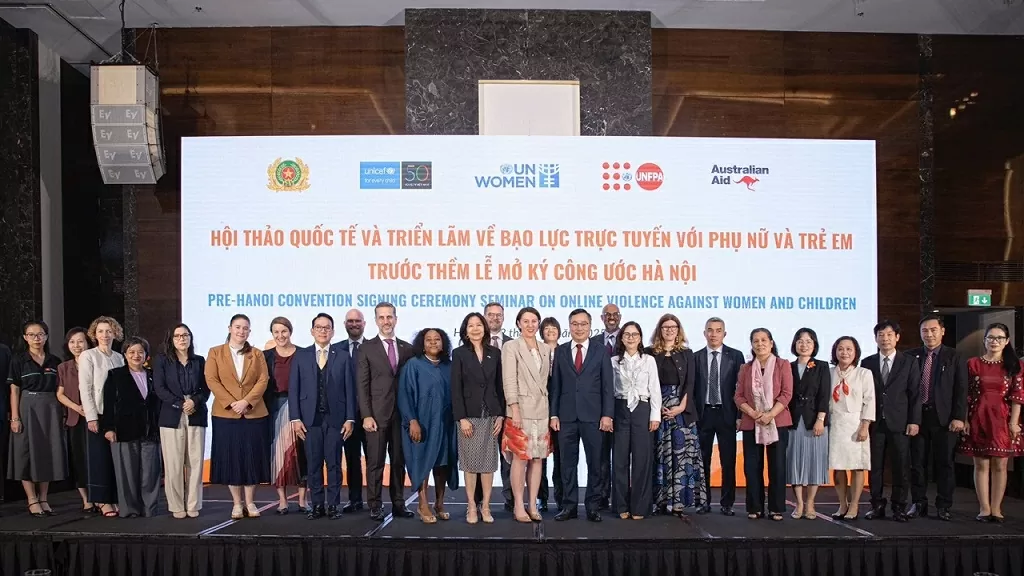 |
| Delegates at the international seminar and gallery exhibition on OCSEA and TFGBV. (Source: UNFPA) |
As Vietnam hosts the signing ceremony and high-level conference for the UN Convention against Cybercrime (also known as ‘the Hanoi Convention’), it is promoting international exchange and learning to protect women and children in the digital era -- recognizing that online child sexual exploitation and abuse (OCSEA) and technology-facilitated gender-based violence (TF-GBV) are global and deeply interconnected challenges that demand joined-up responses.
On October 22 in Hanoi, the international seminar and gallery exhibition on OCSEA and TFGBV convenes policymakers, international experts, civil society and private sector leaders to shape a shared vision for a safer digital future – in the region and in Vietnam.
In Vietnam, nearly nine in ten children aged 12–17 are engaged online, yet only a third have learned how to stay safe. Studies show that many face online harassment or exposure to sexual content, and nearly half never tell anyone - unsure of where to turn for help. While 13 percent of Vietnamese women have experienced sexual violence, there is still no national data on online abuse, leaving the full-scale unseen.
Globally, 300 million children suffer online exploitation each year, and reports of enticement and sexual extortion nearly tripled in 2024. An estimated 38 percent of women with internet access have personally experienced online violence. Across Asia and the Pacific, between 16 and 58 percent of women have experienced some form of technology facilitated abuse, underscoring the urgent need to make the digital world safer for every woman and child.
Co-hosted by the Vietnam’s Ministry of Public Security (MPS), the Australian Government’s Department of Foreign Affairs and Trade (DFAT), the United Nations Children’s Fund (UNICEF), the United Nations Entity for Gender Equality and the Empowerment of Women (UN Women), and the United Nations Population Fund ( UNFPA) under the UN Joint Programme on Ending Violence Against Women and Children (EVAWC) funded by DFAT, the event highlights both opportunities and risks of fast-growing digital economies and societies. It supports learning from good practices, facilitates dialogue and calls for collective action to ensure that technology becomes a tool for empowerment and protection - not harm.
A collaborative platform for protection and progress
Key themes range from policy implementation and reporting mechanisms to evidence based monitoring, safety-by-design, and multi-sector coordination. The event also fosters sharing lessons from other countries and explores how Vietnam can both learn from and promote regional innovation in online safety.
Participants will also examine how OCSEA and TF-GBV intersect – sharing the same digital platforms, perpetrators, and patterns of coercion, and emphasized the need for integrated, cross-sectoral responses that protect both women, minors and children.
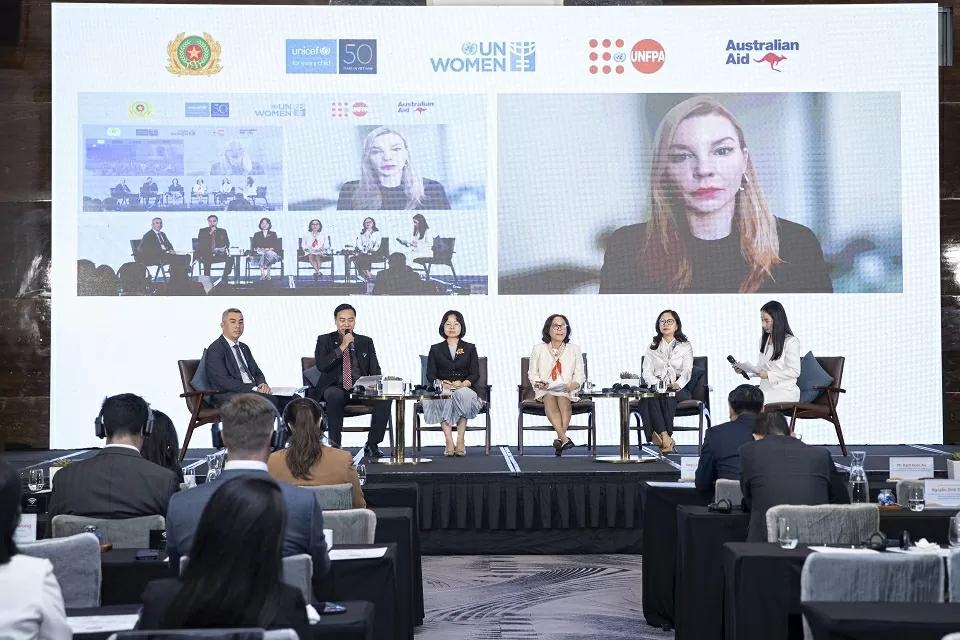 |
| Participants will also examine how OCSEA and TF-GBV intersect – sharing the same digital platforms, perpetrators, and patterns of coercion, and emphasized the need for integrated, cross-sectoral responses that protect both women, minors and children. (Source: UNFPA) |
Partnership for a safe and inclusive digital transformation
This initiative aligns with the broader Australia–Viet Nam cooperation on digital transformation that is inclusive, rights-based, and people-centered - ensuring that digital progress leaves no one behind. It builds on DFAT’s commitment to strengthen online safety and promote women’s digital inclusion across Southeast Asia.
It also highlights Vietnam’s commitment to addressing OCSEA and TFGBV together through coordinated prevention and response systems. The seminar will provide inputs for developing a national roadmap for digital protection, co-created by government, development organisations, and international partners, paving the way for Vietnam to effectively implement the Hanoi Convention once adopted.
At the event, UN Resident Coordinator to Vietnam Pauline Tamesis said: “Digital transformation opens up incredible opportunities for children, adolescent girls and boys, and women - but only when it’s safe".
For her part, Australia’s Deputy Ambassador to Vietnam Renee Deschamps: “Through this collaboration with MPS and Australia, Vietnam is taking important steps to ensure its digital future empowers and protects everyone... Australia is proud to support Viet Nam’s leadership in building safer online spaces”.
Representative of Ministry of Public Security shared: “Together, we are working to make digital transformation not only a driver of growth, but also of inclusion, trust, and safety. Ensuring a safe cyberspace is vital to Vietnam’s digital transformation. We are committed to strengthening laws, raising public awareness, and enhancing law enforcement capacity to protect all citizens, especially women and children”.