








How to help children cope with online scams and 'virtual kidnappings' schemes: Advice from educational expert
WVR - According to Dr. Vu Thu Huong, current scams and kidnapping schemes are becoming increasingly sophisticated, often using psychological manipulation to lure children away from their families and into traps without them realizing it.
Latest
 |
| How to help children cope with online scams and 'virtual kidnappings' tricks: Dr. Vu Thu Huong emphasizes that children need to be equipped with skills to respond to online scams. (Photo:Courtesy by author) |
Recently, there have been continuous cases of online scams targeting children. Although numerous warnings have been issued, online scams and virtual kidnappings persist, preying on children’s fear, lack of coping skills, inability to protect themselves, and limited understanding of the digital world.
The World & Vietnam Report spoke with Dr. Vu Thu Huong, former lecturer at the Faculty of Primary Education, Hanoi National University of Education, about equipping children early with the skills to proactively respond to scams, whether online or offline.
Scams encircling children in the digital age
Cases of children running away from home due to family conflicts or being lured through social media have become increasingly common, resulting in serious consequences. When asked about the root causes of this situation, Dr. Thu Huong stated that one of them lies in the modern lifestyle of children: while their material lives are more abundant than ever, they are often monotonous.
Most children’s routines consist only of going to school and returning home to spend hours on their phones. They do not do household chores, rarely take care of anyone, seldom interact socially, do not go to the market, and do not communicate with neighbors. As a result, their social connections are narrow and their worldview is severely limited.
They also have very little physical activity. Girls are not taught handmade crafts like sewing, embroidery or knitting. Boys are not taught to fix plumbing, electrical systems or build wooden items. Almost no children participate in community activities like summer programs as they used to.
Adults also “block” children from accessing information with the mindset that “kids don’t need to know about such things.” Children showing interest in current events often make adults uneasy. This information blockade leads children to grow indifferent to social issues and unfamiliar with real-life concepts like money laundering, drugs, stocks, and conflicts. Consequently, when approached by strangers, they are quick to believe false information and easily follow instructions.
Limited life experience due to lack of exposure to their surroundings, little labor, minimal real-life interaction, excessive screen time, and absence of community environments like clubs or youth organizations make children weaker and more prone to unrealistic thinking.
They are estranged from their families, sometimes even rebellious, yet easily trust strangers due to shallow understanding and susceptibility to psychological manipulation. Additionally, many children have virtually no knowledge of the law, making them vulnerable to manipulation at various levels when encountering scams.
Meanwhile, current kidnapping and scam tactics are increasingly sophisticated, often employing psychological tricks to make children voluntarily leave their families and naively fall into traps. This stems from a lack of awareness, coping and response skills, and also from the distance between parents and children.
Equipping children early and from afar
Given the increasing sophistication of scams—particularly on social media—children have become easy targets for exploitation. Dr. Thu Huong emphasize that the most essential skills children need to develop early on are rooted in practical life experience and a basic understanding of the law.
They note that if children are well-informed about common scam tactics and understand the legal consequences surrounding them, they will be far less likely to become victims. As the old saying goes, “Know yourself and know your enemy, and you will win every battle”.
Two key concepts children must know are: No law prohibits a child from telling their parents if they get into legal trouble; and no one in this world gives you money for free. If children know these two principles, they will understand the importance of immediately informing their parents if they feel unsafe and will be suspicious when someone suddenly “kindly” offers them money.
First, families must repeatedly remind children that they must call home no matter what happens—even if they are “arrested” by fake police officers. Parents should establish the fastest and most effective methods of communication and alerts. If possible, children should share their location before complying with any demands. They can even declare to the “fake officers” that they will do nothing until their parents are present. This approach increases their chance of escaping scams.
Second, children should understand that receiving money from strangers is never easy and always comes with strings attached. They should be suspicious if someone expresses willingness to give them money. With that suspicion, children can ask their parents or teachers about the situation and have a better chance of staying safe.
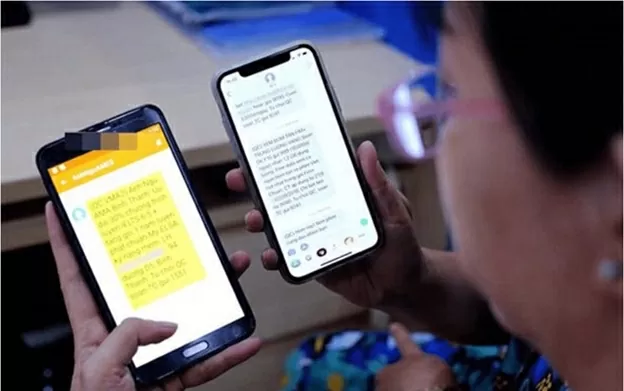 |
| How to help children cope with online scams and 'virtual kidnappings' tricks: Many online scam tactics are on the rise. (Illustrative photo: Internet) |
When asked how the education sector and schools should adapt to supplement students’ knowledge and life skills, particularly regarding safe social media use, Dr. Thu Huong stresses that this must become a priority in the current context.
With technology advancing rapidly and social media becoming indispensable, providing students with the knowledge and skills to navigate the Internet safely is essential. The education sector and schools can no longer remain on the sidelines.
First, digital skills and online safety should be introduced as a core subject or integrated into existing ones like Civic Education, Informatics, or life skills programs. Children must learn to distinguish between real and fake information, protect personal identity, recognize online scams and cyberbullying, and maintain ethical behavior in digital interactions.
Additionally, teachers need training in technology and skills to guide students on safe social media use. We cannot expect students to change if adults lack the understanding to lead them.
Digital skills education should not stop at the classroom; it must also be reinforced at home. Only then can students be comprehensively equipped to protect themselves and use technology as a helpful tool rather than a potential threat. As the digital and physical worlds coexist, the ability to navigate the online environment must become an essential life skill for the younger generation.
She believes it’s time to introduce a subject teaching prevention and response to all dangers and emergencies in life—such as fires, floods, earthquakes, scams, abuse, and kidnappings in all forms.
This subject should be designed from grade 1 to grade 12, with increasingly complex scenarios and proper assessments and exams. This way, children will gain more knowledge and better skills to respond to real-life situations.
Building Trust Between Parents and Children
Commenting on the growing issue of children being lured and enticed online, Dr. Thu Huong points out that it reflects not only gaps in education but also a lack of connection between parents and their children. She notes that many parents today have limited understanding of child psychology and lack the skills to engage effectively with their children.
Instead, parents often focus narrowly on academics, assessing their child’s worth through school performance alone and overlooking opportunities to nurture and educate at home. This imbalance—combined with academic pressure, daily stress, and at times inappropriate parenting methods—has widened the gap between parents and children, leaving space for malicious actors to exploit and manipulate young people.
In many families, parents do not trust their children, avoid communicating with them, and instead rely on friends or outsiders. This widens the distance between parent and child and makes it difficult to provide support when needed. Some also show favoritism among their children, prioritizing one over another. This creates feelings of inferiority and neglect in the others, making them easy prey for predators and scammers.
Dr. Thu Huong points out that many parents today feel confused and anxious about how to raise children in the digital age. To address this, she emphasizes the importance of building mutual trust within the family.
She suggests that parents should begin by clearly defining what children are allowed and not allowed to do, while granting them freedom within those boundaries. Trusting children, offering them age‑appropriate autonomy, listening to their opinions, and respecting their emotions are seen as crucial steps to help children feel secure and less drawn to the allure of the virtual world.
Parents should also share with children about dangers in real life and online—not by scaring them, but by teaching them calmly. When children understand the reasons behind rules, they are more likely to comply.
Crucially, parents must spend time with their children. If the child feels loved and understood at home, they will be less likely to seek validation from strangers online. Daily conversations, shared meals, family activities—all these small things build emotional security and trust.
Finally, parents themselves need to stay informed and adapt to the digital world. Only by understanding the platforms children are using can parents provide meaningful guidance and support.


