





General Secretary To Lam: National Target Programs must focus on the vulnerable with specific actions
WVR - On the morning of November 25, speaking at the discussion session of Group 1, Hanoi delegation, General Secretary To Lam emphasized the need to focus on developing key pillars such as culture, healthcare, and education. These are not only goals but should also become the driving force and breakthrough focus in the country's development.
Latest
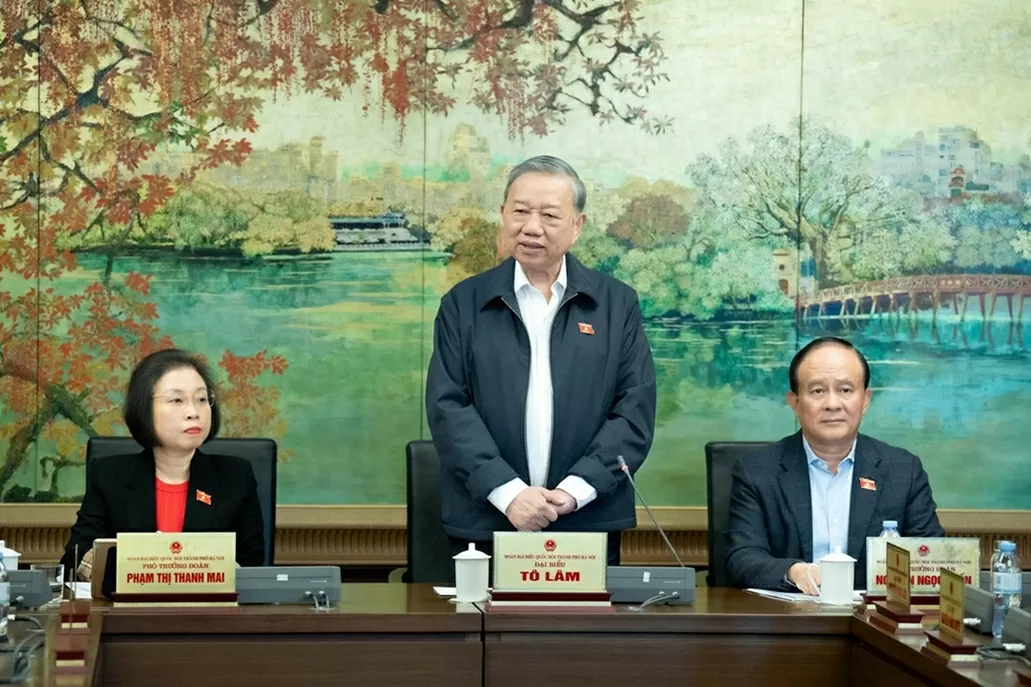 |
| General Secretary To Lam speaking at Group 1 on the morning of November 25. (Source: National Assembly) |
During the Group 1 discussion on the National Target Program for modernization and improving education and training quality from 2026 to 2035; the National Target Program on healthcare, population, and development from 2026 to 2035; and the National Target Program on new rural development, sustainable poverty reduction, and socio-economic development in ethnic minority and mountainous areas until 2035, the General Secretary made it clear that the National Target Program is not solely for the healthcare or education sectors. It requires “the whole society to join hands, breaking out of the confines of specific fields and national sectors”.
Therefore, this content needs to be discussed and considered within the scope of the term “national target”, not just within the education or healthcare sectors.
Primary healthcare for citizens is crucial
General Secretary To Lam emphasized: “In recent times, we have established many management boards, implemented numerous projects and programs that took a lot of time and resources, but the final results were not as expected. Therefore, the national target program needs a clear leading agency and defined objectives, avoiding overlap with previous programs, and ultimately ensuring that the people benefit.”
Regarding the National Target Program on healthcare, the General Secretary stressed the need to clearly define what we aim to achieve. By 2030, the healthcare sector must have specific goals for public health examinations, rather than “circling around what we are already doing”.
According to the General Secretary, in the healthcare sector, primary healthcare for citizens is very important. Additionally, attention must be paid to the preventive healthcare system, as its current underdevelopment leads to frequent outbreaks of diseases.
The General Secretary stated that the existing issues in the healthcare sector must be resolved within the next five years. For example, many infectious diseases like tuberculosis and malaria have been eradicated globally, yet we are still facing them.
If we continue to focus solely on treatment while neglecting environmental pollution, contaminated water sources, and unsanitary food, we are ignoring the root causes of diseases. Therefore, “we must address the root causes of diseases, not just focus on treatment and care in the healthcare sector”.
Based on this reality, General Secretary Tô Lâm suggested that investment in the National Target Program should be appropriately considered, not limited to just the healthcare sector, as this would lead to waste and fail to address the core issues.
If there are no English teachers, where will the children learn?
According to the General Secretary, both the National Target Programs on healthcare and education focus on specific issues.
Firstly, infrastructure, hospitals, and equipment; secondly, the qualifications of teachers and doctors – have they truly met the standards? While most teachers and doctors are highly qualified, how should we train them to meet practical demands?
Regarding the National Target Program on education, the General Secretary noted that many goals have been set, with many delegates commenting on teacher staffing and the shortage and surplus of teachers in various regions, especially in mountainous and remote areas.
The General Secretary emphasized the need for localities to proactively manage staffing and ensure sufficient schools and classes for children to attend.
Recently, the Ministry of Education and Training, in coordination with border provinces, organized groundbreaking ceremonies for inter-level boarding schools in land border communes to facilitate education for children. This ensures that children can attend school equally and have a conducive learning environment, not just the opportunity to attend school.
The General Secretary highlighted the significance and importance of building inter-level boarding schools in land border communes recently, with investments in solid school infrastructure, English classrooms, physical education facilities, swimming pools, etc., contributing to comprehensive education, physical development, and life skills training.
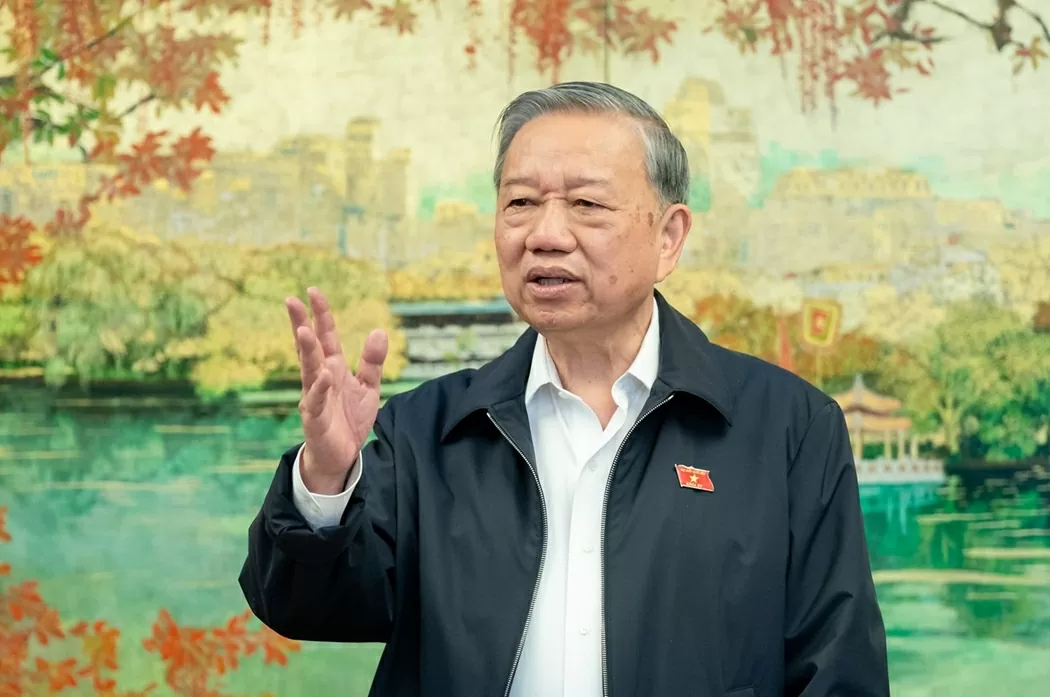 |
| According to the General Secretary, in the healthcare sector, primary healthcare for citizens is very important. (Source: People's deputy newspaper) |
In this spirit, the Ministry of Education and Training, along with related units, will continue to implement and build more schools following this model, to be completed before 2030 to meet current local needs.
The General Secretary also pointed out the current issue of English being a second language, yet the number of English teachers is still very limited. “If there are no English teachers, where will the children learn?”, the General Secretary pondered.
The General Secretary noted that in the National Target Program, we have only focused on physical infrastructure (building schools, classrooms, etc.) and have not paid enough attention to training and developing human resources in both healthcare and education. Therefore, implementing the National Target Program must be synchronized with other programs to achieve larger goals.
“We should also invest in private and non-public schools alongside public schools. Notably, many charitable organizations are currently caring for and nurturing many disabled children, supporting families in difficult circumstances.
Through the National Target Program, we must set investment requirements for the healthcare and education systems to help address future social issues.
The National Target Program must focus on the vulnerable, addressing their needs with specific actions”, the General Secretary stated.
The General Secretary also emphasized that the National Target Program on education must ensure educational and scientific standards, following a standard process from kindergarten to university and postgraduate levels. To develop the country and achieve high labor productivity, education and training are essential, ensuring that learning and human resource training achieve the highest efficiency.
For example, in specialized fields like healthcare, it takes 5 to 10 years to train a team of doctors to meet the public's medical examination and treatment needs.
“We must thoroughly discuss each specific task to implement the National Target Programs on education and healthcare. Every locality and community must contribute to the program, not just the Ministry of Education and Training or the Ministry of Health.
Additionally, there must be coordination between the two Ministries to address common issues, such as school nutrition and developing catering services for hospitals and schools”, the General Secretary emphasized.