


From legacy modernisation to 24/365 monitoring: Keeping modernised systems stable
For many enterprises, particularly in Japan, digital transformation (DX) presents a dual challenge. On one side sits the need to modernise ageing core systems that were never designed for today's cloud, data, and AI workloads. On the other hand is the requirement to keep those systems, old and new alike, running without interruption. Increasingly, the two are being treated not as separate projects but as two halves of a single, continuous effort.
Latest
The weight of legacy systems
Many Japanese organisations continue to rely on enterprise systems built decades ago. These platforms are often stable and deeply embedded in daily operations, but they can lack the flexibility required for evolving digital business. Modernising them is rarely straightforward.
The core difficulty is architectural. Legacy environments are typically tightly integrated, with applications, databases, and internal services closely interdependent. Migrating or updating a single component without disrupting the wider system requires detailed assessment and careful planning. Enterprises generally choose among several approaches: rehosting (lift-and-shift), refactoring for cloud compatibility, or rebuilding on modern architectures, with the right path depending on system complexity, risk tolerance, and long-term objectives.
 |
A further constraint is talent. Modernisation demands skills in cloud architecture, data migration, automation, and security, and limited in-house experience can affect both timelines and execution. Business continuity adds another layer: in sectors such as manufacturing, logistics, and finance, core systems often cannot be taken offline, which is why many organisations adopt phased, incremental modernisation rather than large-scale replacement.
Why modernisation alone is not enough
Replacing or refactoring legacy systems improves flexibility, but it also raises the stakes for reliability. A modernised environment typically combines legacy components, cloud platforms, and new integrations, resulting in a more capable system but also a more complex one with more potential points of failure.
This is where many transformation efforts fall short. Enterprises invest heavily in modernisation, then discover that operational stability requires just as much attention as the migration itself. System downtime carries real consequences: in finance, e-commerce, and manufacturing, even brief disruptions can affect transactions, delay processes, and damage user experience. Industry estimates place the cost of downtime at significant levels for large organisations, along with indirect effects such as lost productivity, reputational impact, and recovery effort.
The role of continuous monitoring
As IT environments grow more complex, continuous system monitoring has become an increasingly important component of operations. The logic is straightforward: the earlier an issue is detected, the smaller its impact.
Modern monitoring goes beyond simply checking whether a system is online. Core practices include real-time performance tracking, automated alerts when irregular activity is detected, predictive analysis to anticipate problems before they escalate, and structured incident-response processes. Together, these functions support system reliability and help technical teams respond before a minor anomaly becomes a major outage.
For enterprises running hybrid environments, legacy systems alongside modern cloud platforms, this kind of around-the-clock oversight is becoming standard rather than optional. As Japanese enterprises deepen their reliance on digital systems, demand for stable, well-managed infrastructure continues to rise. IDC projects Japan's spending on digital transformation will exceed $73 billion by 2027.
Modernisation and monitoring as one continuum
The most effective approach treats modernisation and operational reliability as a single lifecycle rather than sequential phases. A modernisation project typically begins with an assessment of the existing environment, architecture, application dependencies, data structures, and security requirements, followed by a staged roadmap. Applications are migrated incrementally while maintaining availability, allowing teams to evaluate performance and resolve integration issues as they arise.
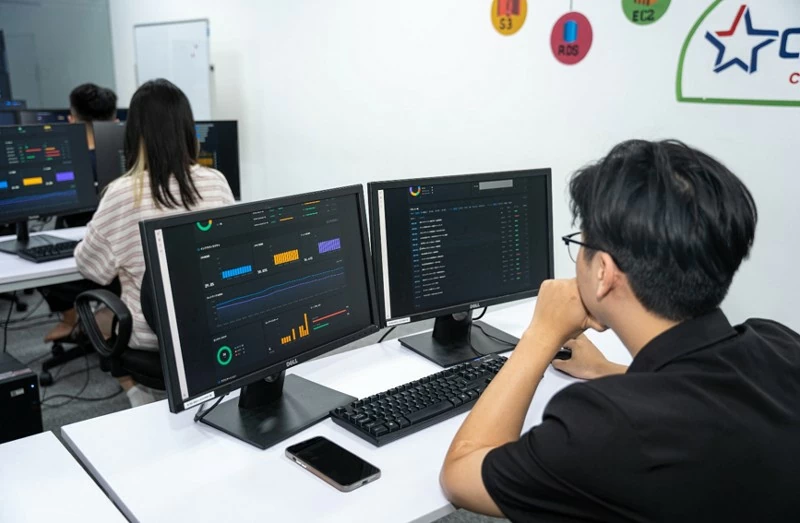 |
Crucially, the work does not end at deployment. Optimisation becomes ongoing: improving resource utilisation, strengthening automation, and enhancing scalability. Continuous 24/365 monitoring is what sustains that newly modernised environment over time, closing the loop between transformation and day-to-day stability.
A combined capability
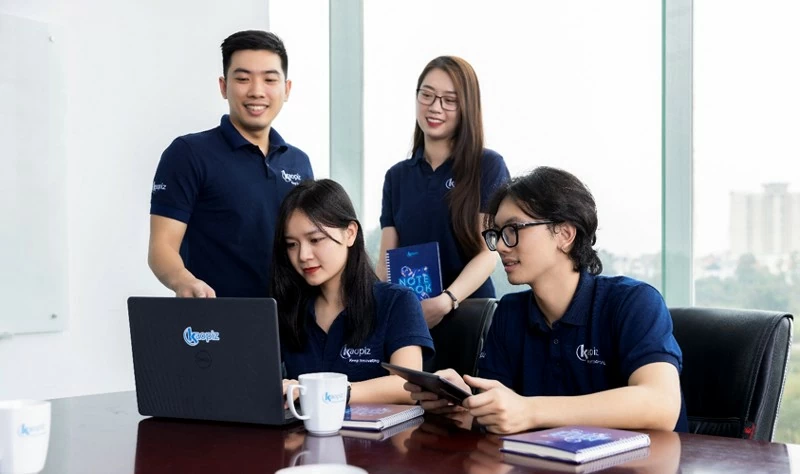
Kaopiz, a Vietnam-based IT service provider working extensively with Japanese clients, structures its services around this continuum. The company supports enterprises in modernising legacy environments, refactoring outdated components, improving interoperability, and migrating to cloud-based architectures as an AWS Advanced Consulting Partner, while also providing 24/365 infrastructure monitoring and system maintenance built around performance tracking, automated alerts, and structured incident response.
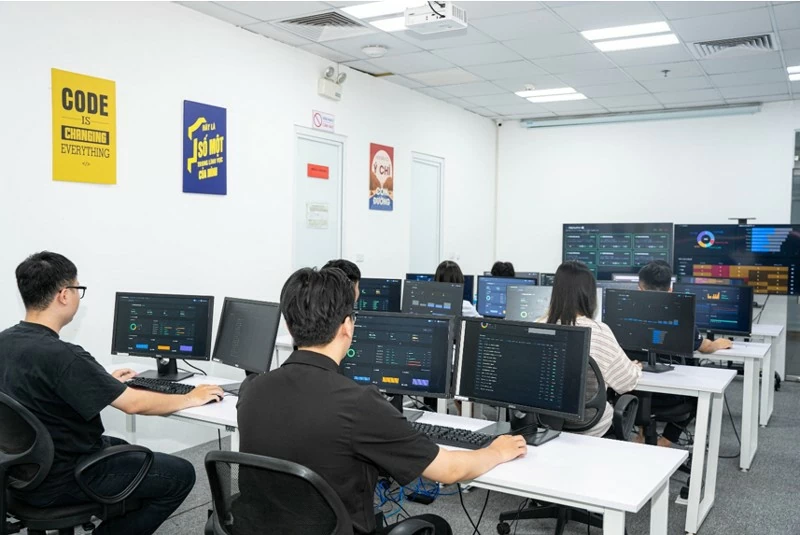 |
By combining cloud and software engineering with continuous operational oversight, the model aims to help organisations modernise without sacrificing stability. With more than 700 engineers across Vietnam, Japan, and Singapore and over 1,000 delivered projects, Kaopiz operates under internationally accredited frameworks, including ISO 9001 and ISO 27001, that underpin secure, consistent delivery.
Recognition for an integrated approach
This emphasis on practical, end-to-end value has drawn external recognition. Kaopiz recently won both the Gold Winner and Best of Category at the Globee® Awards for Technology 2026 in the "Company of the Year - IT Services" category, an international program that evaluates entrants on innovation, industry impact, and demonstrated real-world value. The company reported 50% revenue growth in 2025 and is expanding into English-speaking markets under a "Go Global" strategy targeting 50% average annual growth through 2030.
For enterprises navigating DX, the lesson is increasingly clear: modernising legacy systems and keeping them reliably running with 24/365 monitoring are not separate goals but two sides of the same long-term commitment.
| Email: [email protected] Japan Office: 3F, 3-8-8 Minami Ikebukuro, Toshima-ku, Tokyo. Tel: 03-5809-2633 Singapore Office: 1 Raffles Place #19-61, One Raffles Place Tower 2, Singapore 048616 Vietnam Office - Hanoi: 1-2-4-5F, CT1-C14 Bac Ha Building, To Huu Street, Dai Mo Ward, Hanoi. Tel: 024-6652-2105 Vietnam Office - Da Nang: 12F, SHB Da Nang Building, 06 Nguyen Van Linh Street, Hai Chau Ward, Da Nang. Tel: 024-6652-2105 |

| Lecturer Do Thi Kim Quyen: Keeping the culinary passion alive through dedication and perseverance From the stressful internship days in a 5-star restaurant kitchen to many years of teaching culinary arts, lecturer Do Thi Kim Quyen has chosen a ... |
| EVN ensures safe, stable power supply in the first half of the year and proactively plans ahead WVR - In the first half of 2026, Vietnam Electricity (EVN) and its units have strived to ensure a safe and stable electricity supply to ... |