






Denmark supports Vietnam in completing the Green Jobs Statistical Indicators
WVR - Vietnam has researched and developed a set of Green Jobs Statistical Indicators, marking a significant step forward. This serves as a foundation for its official issuance, aiming to strengthen the statistical system, support green growth, and sustainable development.
Latest
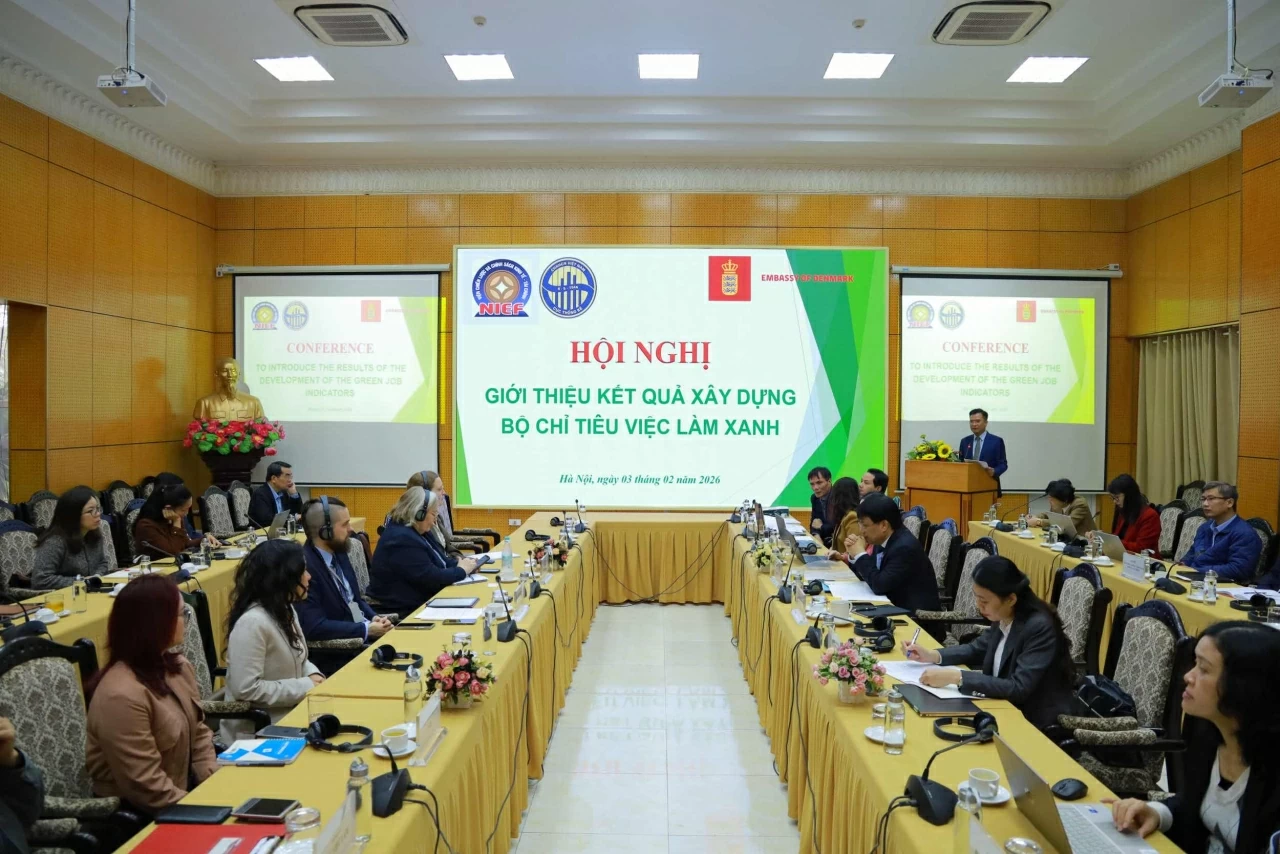 |
| Workshop "Introduction of the Green Jobs Indicators Development Results". (Source: Embassy of Denmark in Vietnam) |
For the public and livelihoods, high-quality statistics on green jobs make the green transition more tangible and equitable.
With data on new jobs, required skills, and those potentially affected by economic changes, policymakers can develop appropriate training programs. This supports workers in overcoming structural changes, ensuring the transition to a greener economy provides fair and adequate job opportunities for everyone.
Globally, only a few countries have developed green job indicators tailored to national characteristics and integrated them into the official statistical system.
By researching to issue this set of indicators, Vietnam has become one of the pioneering countries in researching and proposing a systematic, evidence-based approach to reflect the impact of the green transition on employment, skills, and livelihoods in the economy.
This set of indicators is led by the National Institute for Economic and Financial Policy (NIEF) in close collaboration with the General Statistics Office (GSO), with financial support from the Danish government.
The research results were officially announced at the scientific workshop "Introduction of the Green Jobs Indicators Development Results" recently held in Hanoi.
Data serving the green transition
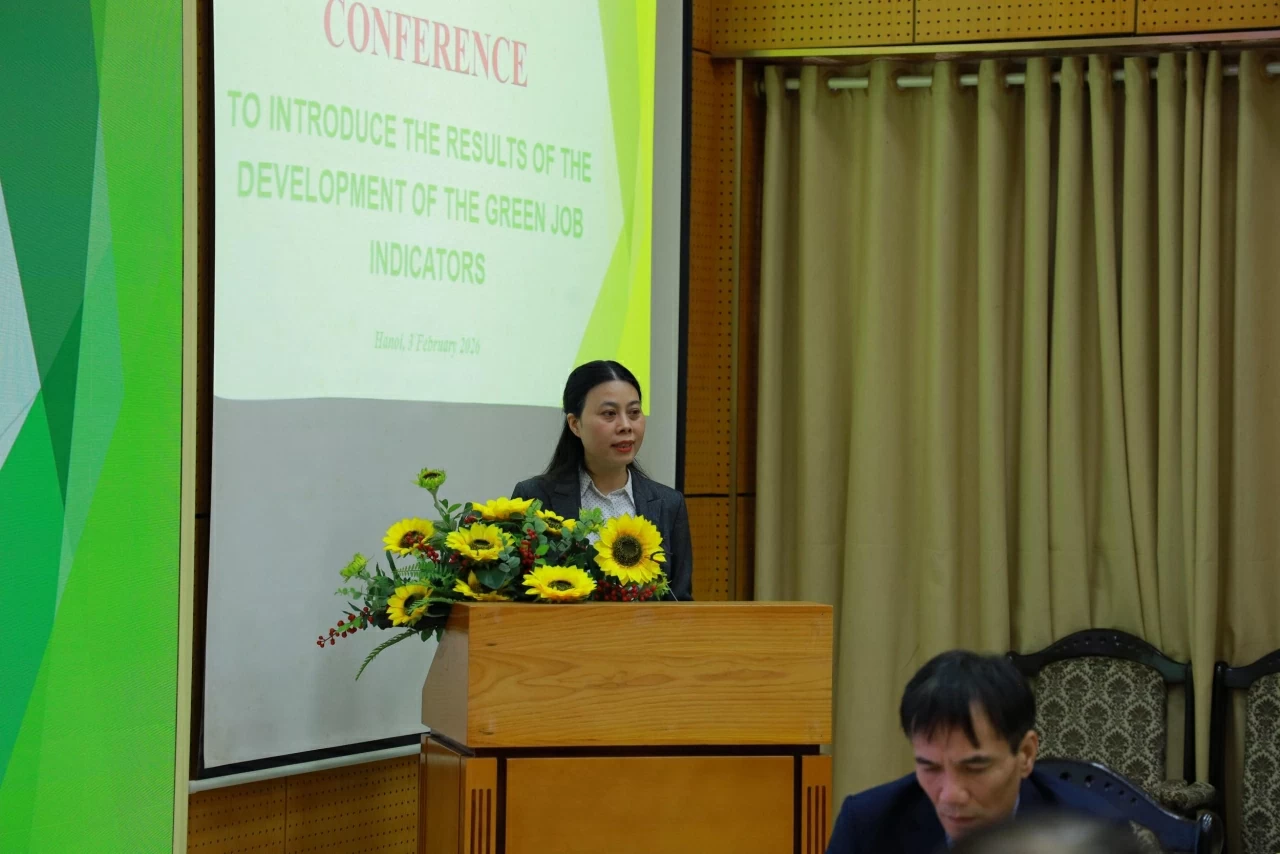 |
| Ms. Do Thi Ngoc, Deputy Director of the General Statistics Office, speaking at the workshop. (Source: Embassy of Denmark in Vietnam) |
Speaking at the workshop, Ms. Do Thi Ngoc, Deputy Director of the General Statistics Office, emphasized the central role of statistics in supporting policy decisions: “In the context of Vietnam accelerating the implementation of the National Strategy on Green Growth, transitioning the growth model towards sustainability, and fulfilling international commitments on climate change, the requirement for statistics is to provide timely, comprehensive, and reliable information and data to support policy formulation, monitoring, and evaluation.”
From Denmark's perspective, Mr. Jesper Blaabjerg Holm, Counselor at the Danish Embassy in Vietnam, also affirmed the importance of a good and reliable national data system for realizing Vietnam's green growth ambitions.
“Vietnam has made strong commitments to green growth and achieving net-zero emissions by 2050. These are ambitious and legitimate goals. However, ambition alone is not enough. We need data: reliable, timely, and integrated to connect the environmental, economic, energy, and labor market sectors,” he stated.
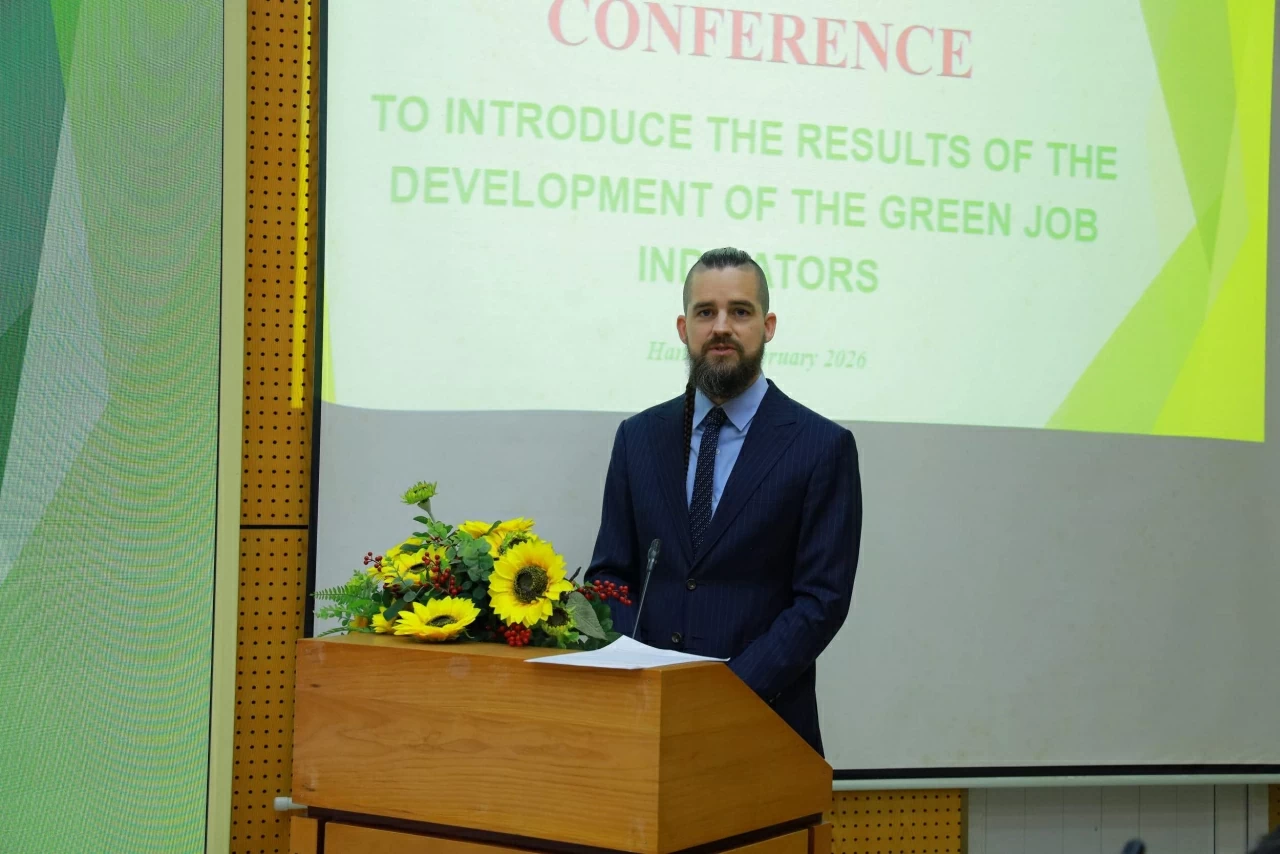 |
| Counselor at the Danish Embassy in Vietnam Jesper Blaabjerg Holm affirms the importance of a good and reliable national data system for realizing Vietnam's green growth ambitions. (Source: Embassy of Denmark in Vietnam) |
Implementing green jobs measurement
The development of Green Jobs Indicators reflects Vietnam's efforts to translate global concepts into practical tools suitable for national conditions.
The National Institute for Economic and Financial Policy has closely collaborated with the General Statistics Office to implement the project, ensuring alignment with international statistical standards.
Mr. Nguyen Nhu Quynh, Director of the National Institute for Economic and Financial Policy, believes that if implemented, the Green Jobs Statistical Indicators will provide a solid foundation for analyzing labor market changes related to the green transition.
“These are crucial elements for authorities to consider and apply in the process of developing, monitoring, and evaluating policies on labor, employment, and green growth in the future,” he expressed.
Alongside developing the conceptual framework, the two agencies have piloted the Indicators through a trial survey.
The results show that the Indicators have a robust methodology, reflect the reality of Vietnam's economy, and can be integrated into the national statistical system after further refinement.
Pilot survey results in Quang Ninh and Phu Tho also indicate that green jobs are expanding beyond traditional "green" sectors, showcasing the extensive transformation of the labor market during the green transition.
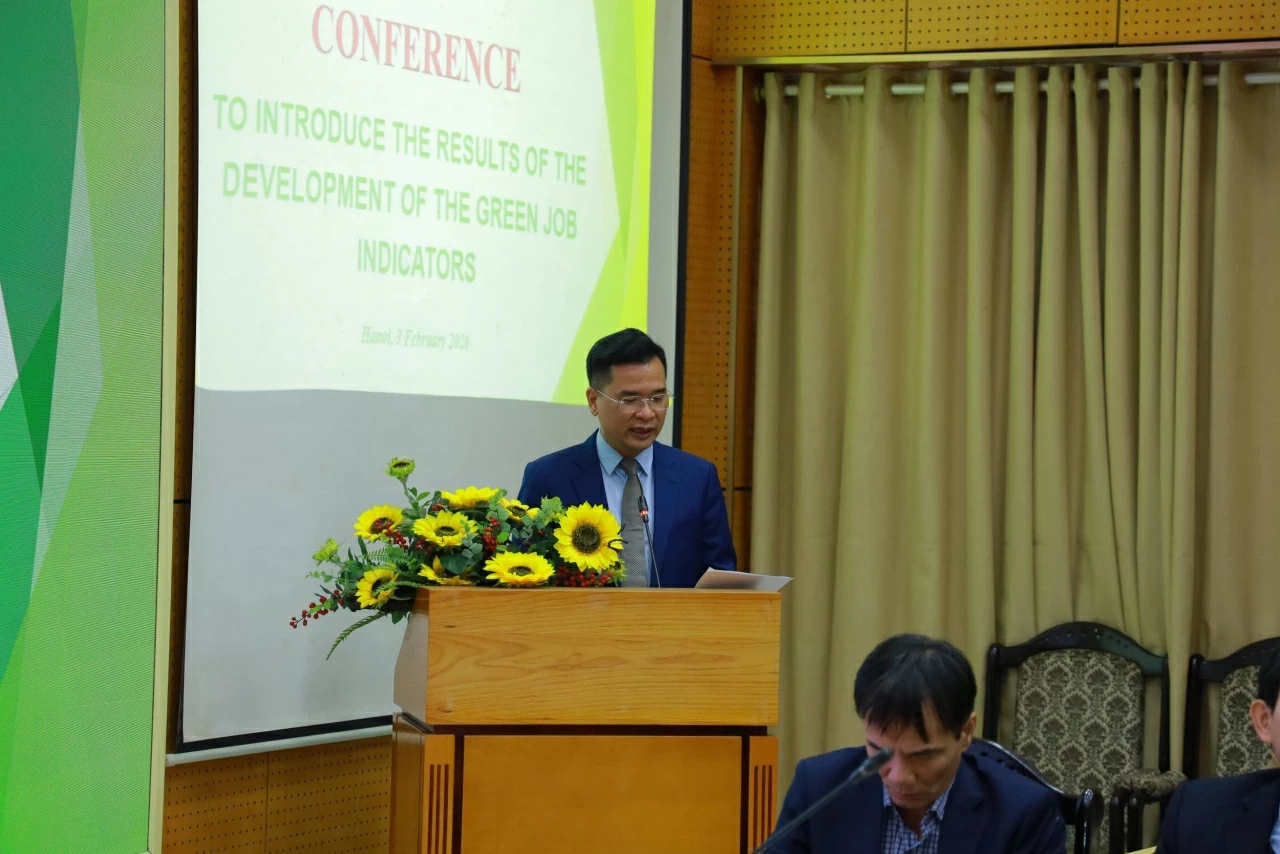 |
| Mr. Nguyen Nhu Quynh, Director of the National Institute for Economic and Financial Policy, speaking at the workshop. (Source: Embassy of Denmark in Vietnam) |
From development to institutionalization
Ms. Do Thi Ngoc, Deputy Director of the General Statistics Office, is confident that the Green Jobs Statistical Indicators can be implemented in the national statistical system after further refinement, providing crucial information for researching, developing, and adjusting policies on labor, employment, and human resource development linked to green growth and sustainable development.
However, she also noted that continued efforts are needed to move from the pilot survey phase to institutionalization, as measuring green jobs is a complex and ever-changing field, requiring methodological improvements, enhanced data sharing, and sustained coordination among agencies.
The project to develop the Green Jobs Statistical Indicators is part of the cooperation between Vietnam and Denmark to enhance statistics and green data.
This program includes the Sector Strategic Cooperation (SSC) on statistics between the General Statistics Office of Vietnam and Statistics Denmark, aimed at supporting digital transformation, business statistics, communication, and green statistics.
Denmark also supports identifying and addressing critical green data gaps related to Vietnam's development priorities.
“These efforts reflect Denmark's view that data is a strategic asset for governments, serving green policy formulation and maintaining public trust,” Mr. Jesper Blaabjerg Holm emphasized.
| Since establishing diplomatic relations in 1971, Vietnam and Denmark have maintained a strong and close cooperative relationship. On November 1, 2023, the Prime Ministers of both countries jointly declared the establishment of the Green Strategic Partnership (GSP) between Vietnam and Denmark. The signing of the GSP marks a significant milestone in the relationship between the two countries, establishing a solid framework to support Vietnam in developing a low-carbon economy, adapting to climate change, and promoting a circular economy. The GSP strengthens existing cooperation in climate, environment and energy, food and agriculture, trade, health, statistics, and other initiatives of mutual interest. The Sector Strategic Cooperation (SSC) project on statistics for the 2025-2027 period continues the initial cooperative efforts between Statistics Denmark, the General Statistics Office of Vietnam, and the Danish Embassy in Vietnam during the 2024-2026 period. The project focuses on improving communication and dissemination of statistical information, using administrative data in business, trade, and service statistics, enhancing IT systems for the statistics sector, and developing economic-environmental accounts. |