







Bat Trang - The soul of Vietnamese Pottery in the integration stream
In Bát Tràng, an over 700-year-old pottery village by the Red River, artisans tirelessly create products infused with a “new breath”. Through technical innovation and pottery-making experiences for tourists, Vietnamese ceramics here have touched the hearts of international friends, becoming a bridge between national tradition and world culture.
Latest
If pottery is the soul of the Vietnamese land, Bat Trang is where this flame is preserved and passed down through generations. From traditional products like jars, vases, and pots, locals continuously innovate to meet the modern market. Mrs. Nguyen Thi Lam, born and raised in Bát Tràng, exemplifies the village's remarkable transformation. Mrs. Lam shared: “The village has developed many new glazes such as blue glaze, crystalline glaze, and fire-changing glaze, making each product unique and rich in aesthetic value.”
Beyond product innovation, Bat Trang residents have developed a rich cultural heritage, making the area a destination that attracts international tourists. Mrs. Lam enthusiastically stated: “Foreign tourists love trying pottery making and painting to take their creations home, feeling the love for the craft and the hospitality of the locals.” For Mrs. Lam, these innovations reflect the persistent aspiration of Bat Trang people to preserve and promote the traditional essence.
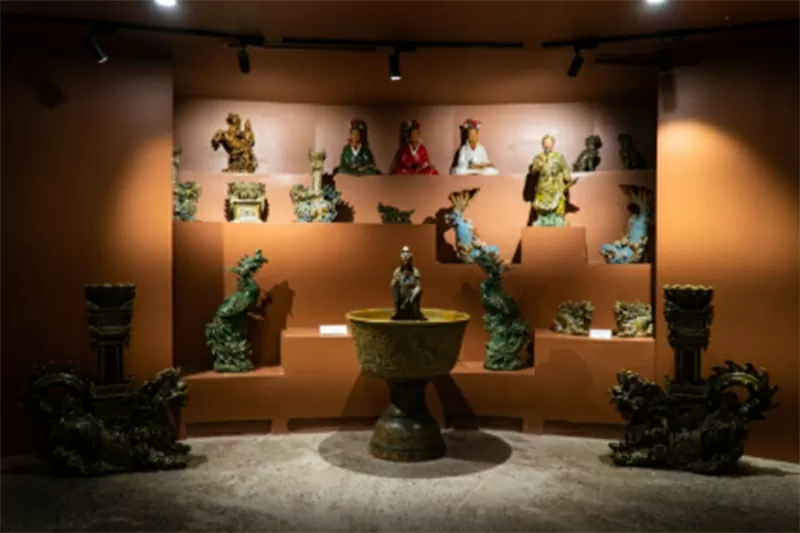 |
| A pottery collection is displayed at the Bat Trang Pottery Museum. |
For many international tourists, Bat Trang is not only a cultural tourism destination but also a place that sparks creative inspiration. A couple from Brazil shared that they learned about Bat Trang through relatives living in Hanoi and were immediately captivated by the unique features of this craft village: “My sister living in Hanoi suggested us to visit Bat Trang. Since I used to make pottery in Brazil, I was eager to see the pottery museum firsthand.” When asked about the differences between Bat Trang and Brazilian pottery, they noted that Bat Trang's charm lies in its cultural depth and high aesthetics: “Pottery here has a longer tradition, more details, and is used for decoration; whereas in Brazil, pottery is mainly used as a tool.”
 |
| The Brazilian couple shares their feelings. |
Among those tirelessly preserving the village's essence, the reporters had the opportunity to speak with artisan Cao Duy Phuong, one of the young artisans representing the new generation. Starting as a pottery trader, he was gradually drawn to the spiritual values that each product embodies. Consequently, Mr. Phuong decided to embark on the path of ceramic production, personally engaging in the process of “shaping clay” – a journey requiring relentless exploration and passion to create products with sustainable value.
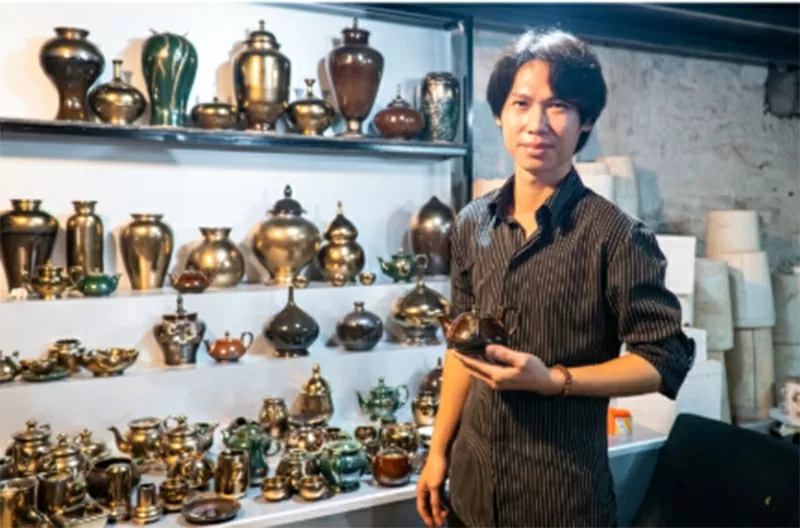 |
| Artisan Cao Duy Phuong with a new pottery collection. |
In international integration, potters like him are always aware that innovation is essential for a traditional craft amidst the whirlwind of integration. Cao Duy Phuong believes that each artisan should learn from around the world, conduct research, and apply their personal artistic creativity to produce new glazes along with unique, intricate patterns. To bring Bat Trang pottery to the world, each artisan needs to be “dedicated to the craft, persistent, and passionate to develop deeply.”
In the broader picture of the global pottery craft, Bat Trang is not only a symbol of Vietnam but also a representative of Eastern cultural identity. While Arita pottery (Japan) is renowned for its sophistication or Jingdezhen (China) is called the “capital of porcelain”, Bat Trang conquers the world with a blend of traditional values and contemporary vitality. The special feature of Bát Tràng pottery lies in its rustic Vietnamese “soul”, yet rich in cultural depth, which helps the craft village stand alongside its international friends.
It is evident that Bat Trang has traversed over seven centuries of historical ups and downs, yet today it continues to shine brightly in the flow of international integration. More than just a craft village, Bát Tràng is a “cultural ambassador” contributing to spreading the image of a creative and open Vietnam, embodying the love for labour and the aspiration for integration of Vietnamese people in the new era. There, people not only recount the journey of pottery but also speak of the journey of the Vietnamese cultural essence that has reached across five continents.
| Since humans learned to mould clay and kindle fire, pottery has become the breath of wet rice civilisation. Through the Ly, Tran, and Le dynasties, pottery not only served daily life but also embodied folk aesthetics. Despite ups and downs, the flame in the pottery kiln still burns quietly, a source of creative inspiration, a resilient vitality of traditional culture amidst the rhythm of integration. |