


ASEAN-EU Foreign Ministers' meeting: A testament to the vitality and enduring value of regional and multilateral cooperation
WVR - On the occasion of Politburo Member and Minister of Foreign Affairs Le Hoai Trung attending the 25th ASEAN-EU Foreign Ministers' Meeting (April 27-28) in Brunei, Ambassador Ton Thi Ngoc Huong, Head of the Vietnamese Delegation to ASEAN, shared with The World and Vietnam Report the key focuses of the conference and Vietnam's contributions to promoting ASEAN-EU cooperation.
Latest
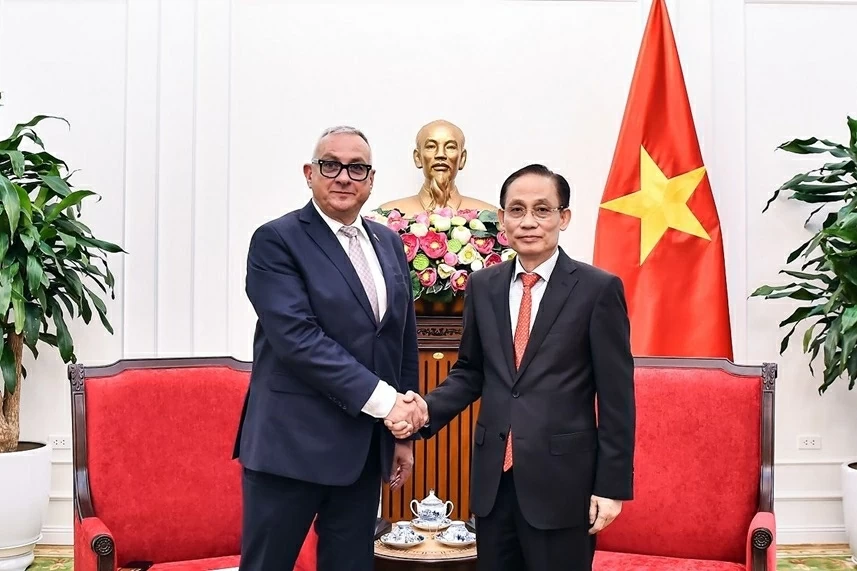 |
| Minister of Foreign Affairs Le Hoai Trung held talks with EU Commissioner for International Partnerships Jozef Síkela during his visit to Vietnam on March 24. (Photo: Bao Chi) |
Ambassador, could you share the significance and key highlights of the 25th ASEAN-EU Foreign Ministers' Meeting?
The ASEAN-EU Foreign Ministers' Meeting is held biennially, with the participation of Foreign Ministers from ASEAN and EU member countries. The 25th meeting takes place as both sides are approaching the milestone of 50 years of partnership (1977-2027) amidst significant challenges due to geopolitical and geoeconomic shifts, conflicts, and instability globally and regionally. As exemplary regional organizations in Southeast Asia and Europe, ASEAN and the EU are under pressure to maintain effective multilateral cooperation and strengthen multilateral institutions.
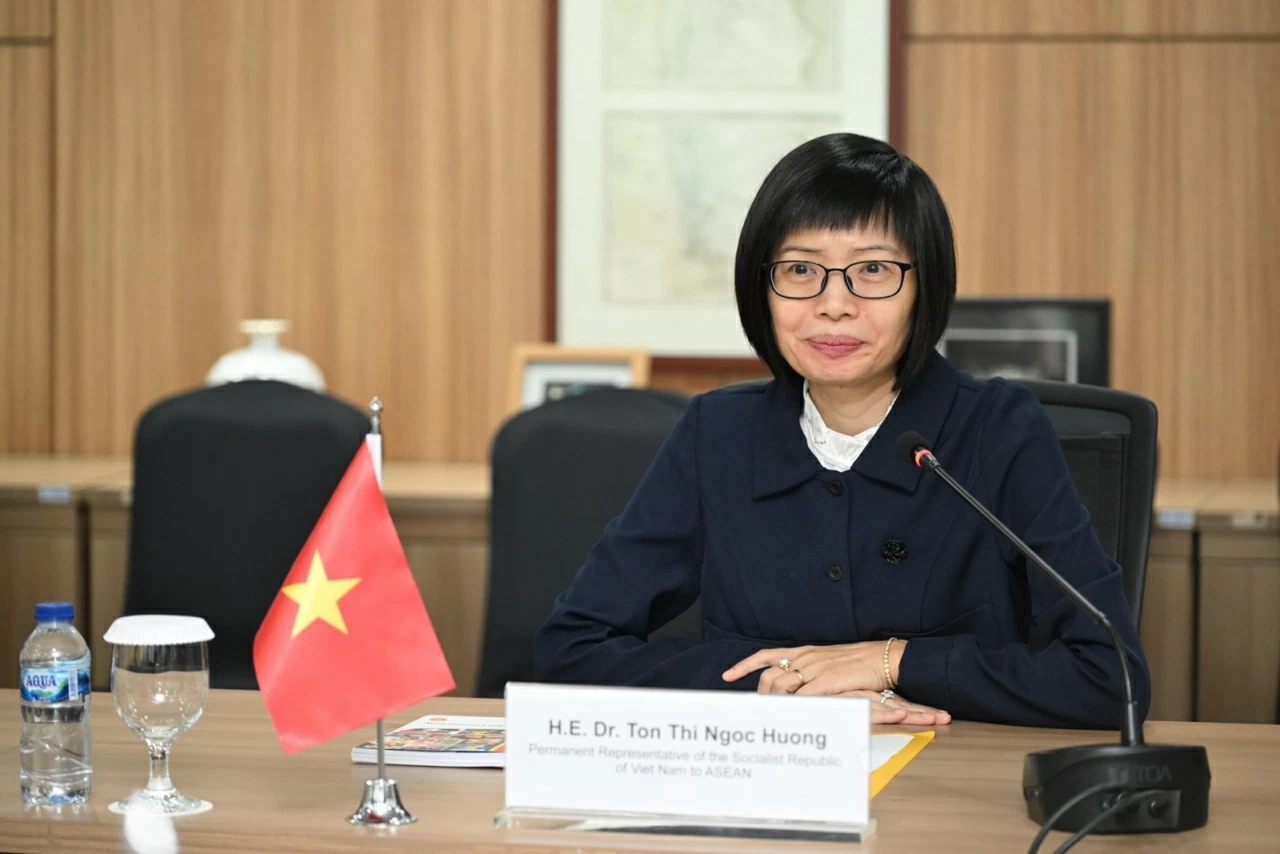 |
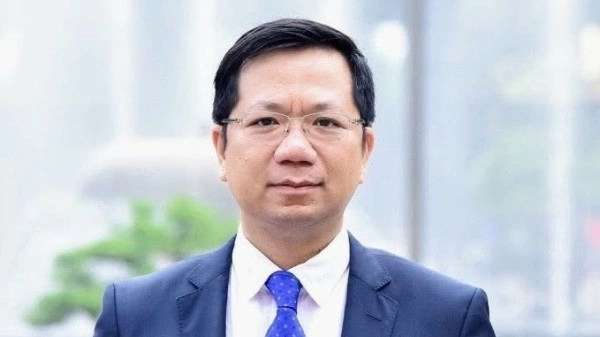
| Ambassador Ton Thi Ngoc Huong, Head of the Vietnamese Delegation to ASEAN. (Source: Vietnamese Delegation to ASEAN) |
The Foreign Ministers from ASEAN and the EU attend the 25th Meeting with high expectations: to substantially enhance cooperation between the two regions, considered key growth poles of the world, to coordinate responses to challenges affecting global and regional security and development, and to contribute to efforts to maintain peace, security, and stability globally, demonstrating the vitality and enduring value of regional and multilateral cooperation.
Ahead of the 50-year partnership anniversary, the meeting is an opportunity for both sides to discuss long-term strategic directions, adjust expectations, and create new momentum for the next phase of cooperation. The meeting will focus on a comprehensive review of past cooperation, including the implementation of the 2023–2027 Action Plan (approximately 61% completed). From there, both sides will discuss and identify future priorities, continuing to deepen cooperation in traditional fields such as economic-trade, development cooperation, sustainable development, and connectivity, while expanding cooperation into emerging areas of mutual interest like digital transformation, digital economy, green growth, new technologies, including artificial intelligence (AI) and AI governance.
As per tradition, the meeting is also an opportunity for ASEAN and the EU to have frank exchanges on international and regional issues of mutual concern, thereby enhancing understanding and strengthening strategic trust, leading to more effective cooperation in ensuring peace, security, stability, cooperation, and development in each region and globally.
Within the framework of the meeting, what contributions and initiatives will Vietnam make to promote the ASEAN-EU Strategic Partnership and contribute to realizing ASEAN's long-term visions, including the ASEAN Vision 2045?
Vietnam makes positive and substantive contributions to promoting the ASEAN-EU Strategic Partnership. Currently, Vietnam is the EU's largest trading partner in ASEAN, and the two sides recently upgraded their relationship to a Comprehensive Strategic Partnership in early 2026. This strong bilateral relationship foundation helps Vietnam play a crucial bridging role in promoting cooperation between ASEAN and the EU.
As the coordinator of ASEAN-EU economic relations, Vietnam has proactively promoted many practical cooperation initiatives. Notably, Vietnam co-chaired the development of the ASEAN-EU Digital Trade Principles to address challenges in digital trade, promote the transition to paperless trade, recognize electronic signatures, protect personal data, and maintain a moratorium on electronic transactions. Vietnam also actively coordinates the implementation of the ASEAN-EU Trade Support Package (SCOPE Trade), supporting the implementation of ASEAN-EU Action Plan priorities, particularly in areas such as trade facilitation, standards harmonization, digital transformation, green trade, and enhancing private sector participation.
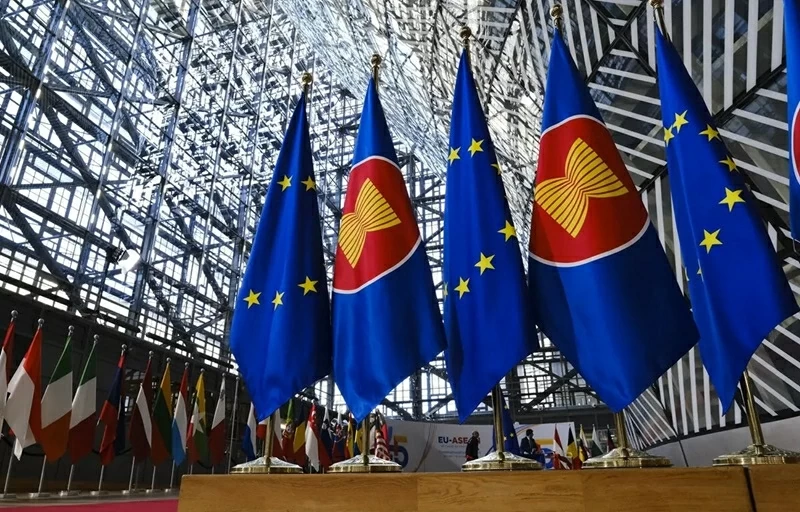 |
| ASEAN-EU cooperation over nearly 50 years can be considered one of the most successful and sustainable inter-regional cooperation models globally. (Photo: asean.org) |
As one of the few ASEAN member countries to have completed a bilateral Free Trade Agreement with the EU (EVFTA), Vietnam consistently supports efforts to promote trade and investment liberalization between the two regions. Through its good relations with EU member countries, Vietnam actively contributes to enhancing political trust, understanding, and seeking substantive cooperation opportunities between the two sides, while also helping to harmonize diverse perspectives on differing issues.
Ambassador, how do you evaluate the highlights of ASEAN-EU cooperation over nearly 50 years, and what specific benefits have these collaborations brought to member countries, including Vietnam? What significance does the cooperation model between these two regional organizations have in promoting multilateralism and global cooperation mechanisms?
ASEAN-EU cooperation over nearly 50 years can be considered one of the most successful and sustainable inter-regional cooperation models globally. In the context of the EU promoting strategic autonomy, diversifying partnerships, and expanding its presence in the Indo-Pacific region, relations with ASEAN are increasingly valued, as evidenced by numerous initiatives such as the Global Gateway Strategy, the Enhancing Security Cooperation in and with Asia (ESIWA) project, and the CRIMARIO initiative on maritime security of critical sea lanes.
Economically, the EU remains one of ASEAN's most important trade and investment partners. In 2024, bilateral trade reached over 320 billion USD, and FDI from the EU into ASEAN reached nearly 20 billion USD, making the EU ASEAN's third-largest trade partner and third-largest source of FDI. This reflects the deep and stable economic ties between the two regions and European businesses' confidence in ASEAN's potential.
The principles and values shared by ASEAN and the EU over nearly five decades, such as upholding international law, supporting an international system based on international law, multilateral cooperation, free trade, and open supply chains, have been expanded across many fields through large-scale regional initiatives. Notably, the Sustainable Connectivity Package (SCOPE) under the Global Gateway Strategy focuses on promoting high-quality infrastructure, trade, green and digital transformation.
To date, the EU has mobilized over 4.2 billion Euros for projects in ASEAN and is on track to achieve the 10 billion Euro target by 2027. Additionally, E-READI, a dialogue and cooperation framework worth over 20 million Euros, is actively implemented to promote policy dialogue, share experiences, and build capacity in areas ranging from environment, energy, and economy to regional governance. Many other practical cooperation activities are also being actively implemented in fields such as education, health, gender equality, green cities, circular economy, and biodiversity conservation.
ASEAN-EU cooperation brings tangible benefits to ASEAN member countries, including Vietnam. Technical support programs, experience transfer, and capacity building help ASEAN countries better adapt to Europe's high standards, promote green transformation, digital transformation, sustainable energy development, stabilize supply chains, and expand trade and investment. Vietnam also gains specific benefits from raising production standards, increasing process transparency, and meeting EU market regulations, boosting exports, attracting investment, and supporting deeper integration into global value chains.
The success of ASEAN-EU relations is a prime example of the effectiveness of inter-regional cooperation and multilateralism. The sustainable cooperation model, based on dialogue, shared values, and mutual respect between the two organizations, sends a strong message to the international community: in a fragmented world, multilateralism remains the choice for nations seeking cooperation and dialogue, offering an effective path towards maintaining peace, security, stability, and sustainable development.
Thank you very much, Ambassador!