





VNU-HCM sets sights on Asia top 100 with research and education reforms
The Vietnam National University, Ho Chi Minh City (VNU-HCM) aims to enter the top 100 higher education institutions in Asia by 2030.
Latest
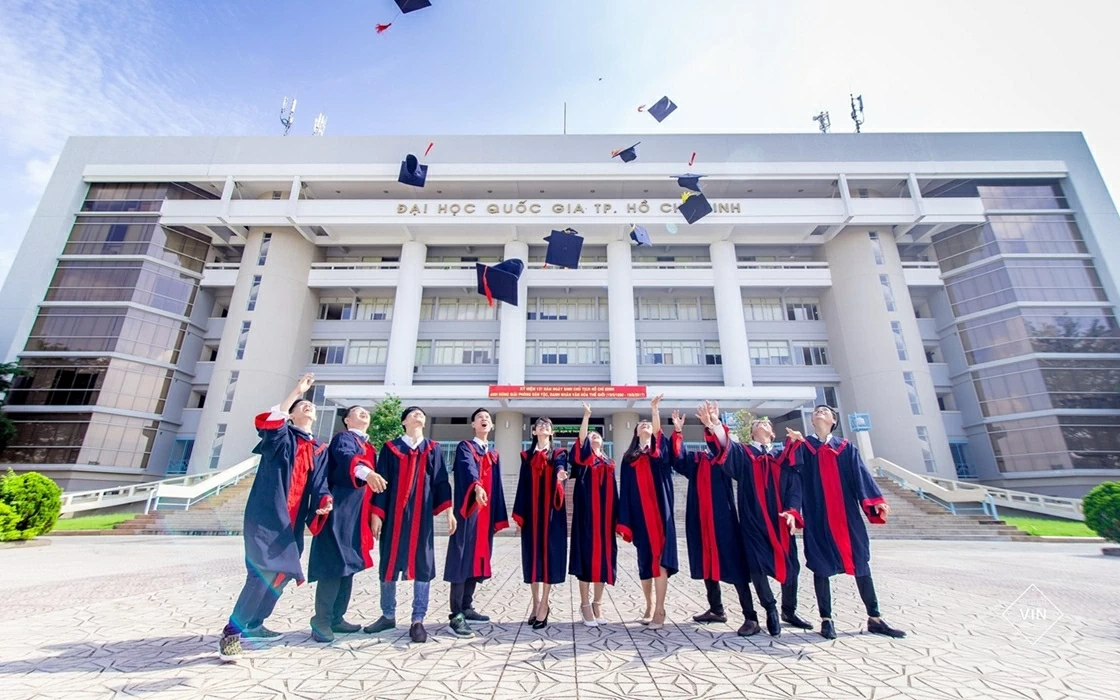 |
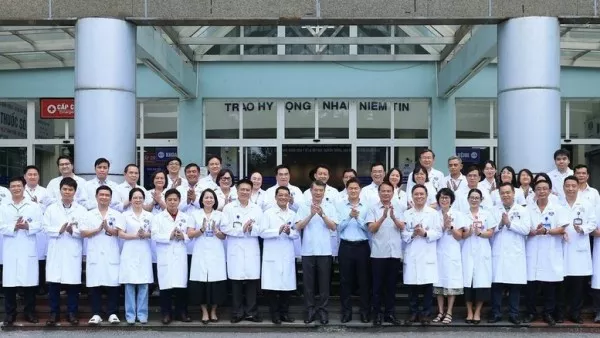
| VNU-HCM sets sights on Asia top 100 with research and education reforms. (Photo: VGP) |
The goal was unveiled at its 2025 annual conference on December 26.
At the event, the university announced adjustments to several targets in its development strategy for the 2026–2030 period with an ambition to make breakthroughs in both academic training and scientific research.
Prof. Dr Nguyen Thi Thanh Mai, President of the VNU-HCM, said the university will strengthen its cooperation with businesses and state agencies, expand international partnerships, and advance education reform as part of its bid to reach the Asian Top-100 ranking.
The promotion of “trilateral” cooperation among the university, businesses, and state agencies is intended to translate research outputs into real-world applications while mobilising support resources more effectively. Priority will be given to developing basic sciences linked with strategic technologies, thereby training elite human resources and creating impactful scientific and technological products.
The VNU-HCM will also continue to deepen international integration by expanding collaboration with leading global universities, research institutes and corporations, attracting foreign experts, and providing opportunities for lecturers and students to learn and work in advanced academic environments. It will play the core role in organising the city's annual science and technology forums and workshops with a high degree of internationalisation. The goal is to connect global knowledge, technology, businesses, and investors, thus gradually shaping an international innovation environment.
For the 2026–2030 period, the VNU-HCM aims to recruit an additional 1,500 PhD-qualified lecturers and experts, with half of all PhD-holders attaining the rank of professor or associate professor. System-wide, it plans to publish 41,200 papers indexed in Scopus, secure 100 international patents, establish eight basic science laboratories incorporating strategic technologies, and complete and effectively run an innovation centre.
In training, it targets English-medium instruction for 60% of STEM programmes and an on-time graduation rate of 70%. It also plans to build one to two international-standard hospitals to support teaching, research, and medical services.
By the end of 2024, the VNU-HCM employed 3,677 lecturers, including 1,323 PhD holders, 41 professors, and 349 associate professors. Talent-attraction schemes have also drawn 71 leading scientists and 58 visiting professors from prestigious foreign universities.
In 2025, the university continued to lead the nation in international scientific publications, with 3,288 papers — up 120 from 2024 — and 11 patents. It also signed 1,237 contracts on science – technology services with revenue totalling 269.67 billion VND (10.2 million USD).
However, it acknowledged that the share of research outputs with commercial potential remains modest, with technology-transfer revenue yet to match the capacity of businesses and the city.
The VNU-HCM also plans to accelerate education reform and digital transformation, developing a smart learning environment that fosters creativity and lifelong learning. Experiential, research-based, and industry-linked learning models will be expanded, while student assessment will increasingly move from standardised testing to multi-dimensional evaluation based on learning outcomes, innovation, and professional experience.
More than 30 years after its establishment, the VNU-HCM remains Vietnam’s largest higher-education system and continues to strengthen its standing in international university rankings. It is currently placed 801–850 globally in QS World 2026 and 175th in Asia in QS Asia 2026, while also leading the nation in Scopus-indexed publications and internationally accredited programmes.

| Hanoi introduces four heritage tourism routes with advanced digital platform WVR - On December 3, four heritage exploration routes in the capital were launched, utilising digital maps, QR codes, and the H-Heritage platform, introducing a ... |

| Promoting digital transformation while protecting human rights, ensuring digital security, and sustainable development of the nation WVR - Opening remarks by Associate Professor Dr. Tuong Duy Kien, Director of the Institute of Human Rights, Ho Chi Minh National Academy of Politics ... |
| Hanoi honors culinary heritage, inspiring creativity from traditional values WVR - On the afternoon of December 16, the Hanoi Department of Culture and Sports held a press conference to announce the Hanoi Culinary Culture ... |

| Exhibition “The ARt of WATER”: When water puppetry heritage is told through digital technology WVR - On December 13, in Hanoi, a group of students from the Academy of Journalism and Communication, in collaboration with the Hanoi Creative Coordination ... |
| The digital exhibition space 'Radiant Hanoi - Light and Heritage' The digital exhibition space "Radiant Hanoi - Light and Heritage" officially opened to the public this evening, December 26, at 93 Dinh Tien Hoang, Hanoi. ... |
(Source: VNA)