





Vietnam’s three decades in ASEAN - A testament to unity and shared progress
WVR - On the occasion of the 58th anniversary of ASEAN’s founding (August 8, 1967 – August 8, 2025) and the 30th anniversary of Vietnam’s accession to ASEAN (July 28, 1995 – July 28, 2025), Malaysian Prime Minister Anwar Ibrahim contributed an exclusive article to The World & Viet Nam Report, sharing his perspective on Vietnam’s efforts within ASEAN over the past three decades.
Latest
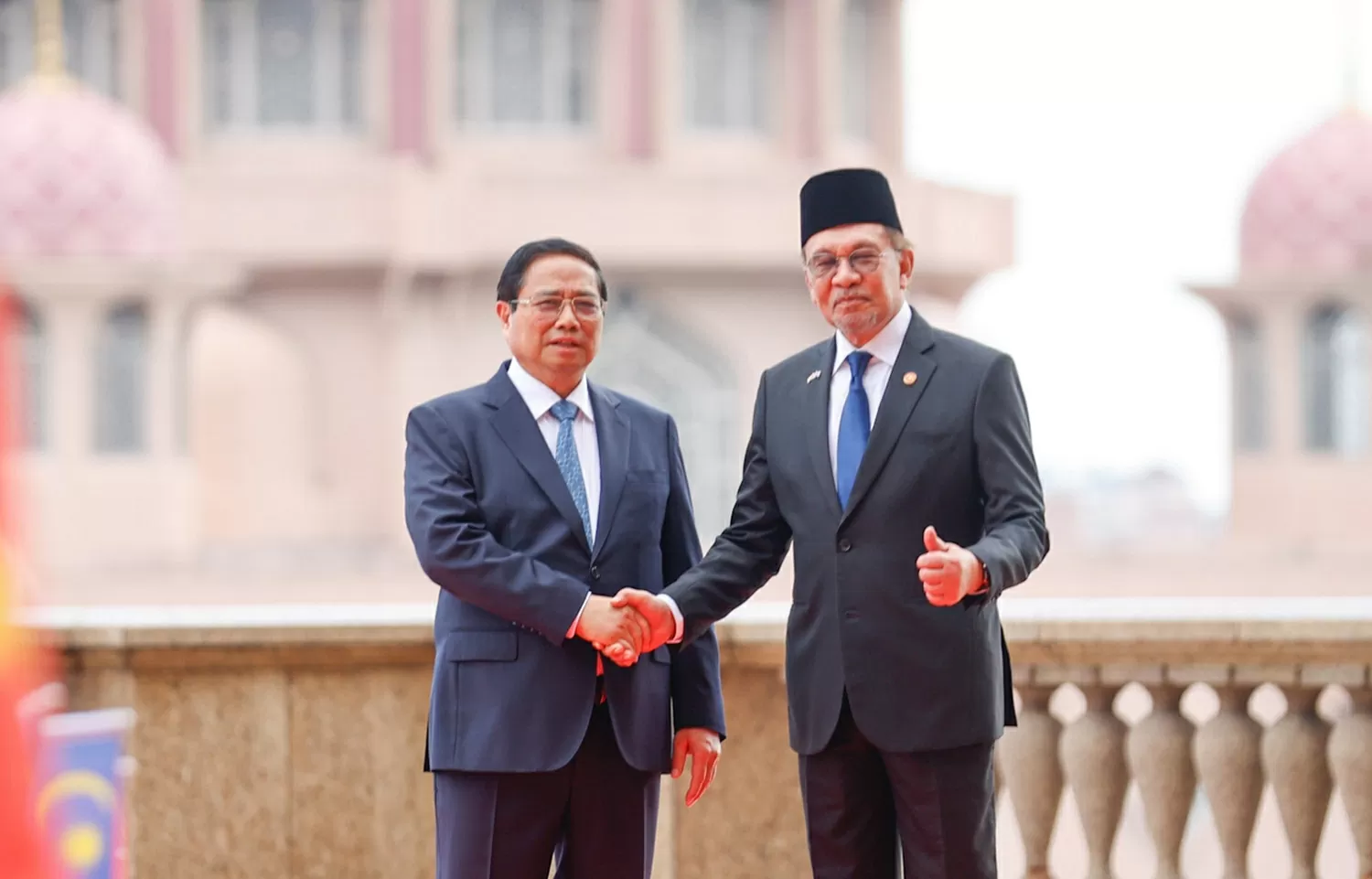 |
| Prime Minister Pham Minh Chinh and Malaysian Prime Minister Anwar Ibrahim prior to their talks on May 25, during Prime Minister Chinh’s official visit to Malaysia to attend the 46th ASEAN Summit and related summits. (Photo: Nhat Bac) |
This year marks a significant milestone: the 30th anniversary of Vietnam’s accession to ASEAN, alongside the 58th anniversary of ASEAN’s founding. It is a timely occasion to reflect on our shared journey as a regional community, and to chart the path forward amid evolving challenges and opportunities.
The global landscape stands at a geopolitical inflection point. A decade of disruptions, from economic shocks to intensifying strategic rivalries, has exposed the fragility of the international order and the limitations of the institutions designed to uphold it. These fractures, whether rooted in ideology, history, or security competition, are reverberating across our region, threatening peace, prosperity, and the well- being of our people.
In this era of uncertainty, ASEAN must remain a beacon of stability and hope. We must continue building a sustainable, harmonious, and economically vibrant region that exemplifies strength through unity in diversity. ASEAN centrality, often cited as our greatest asset, is not an entitlement; it is a responsibility that must be continuously earned through cohesion, mutual trust, and a shared sense of purpose. Our continued relevance hinges on our ability to act collectively, transcend differences, and uphold the common vision that binds us.
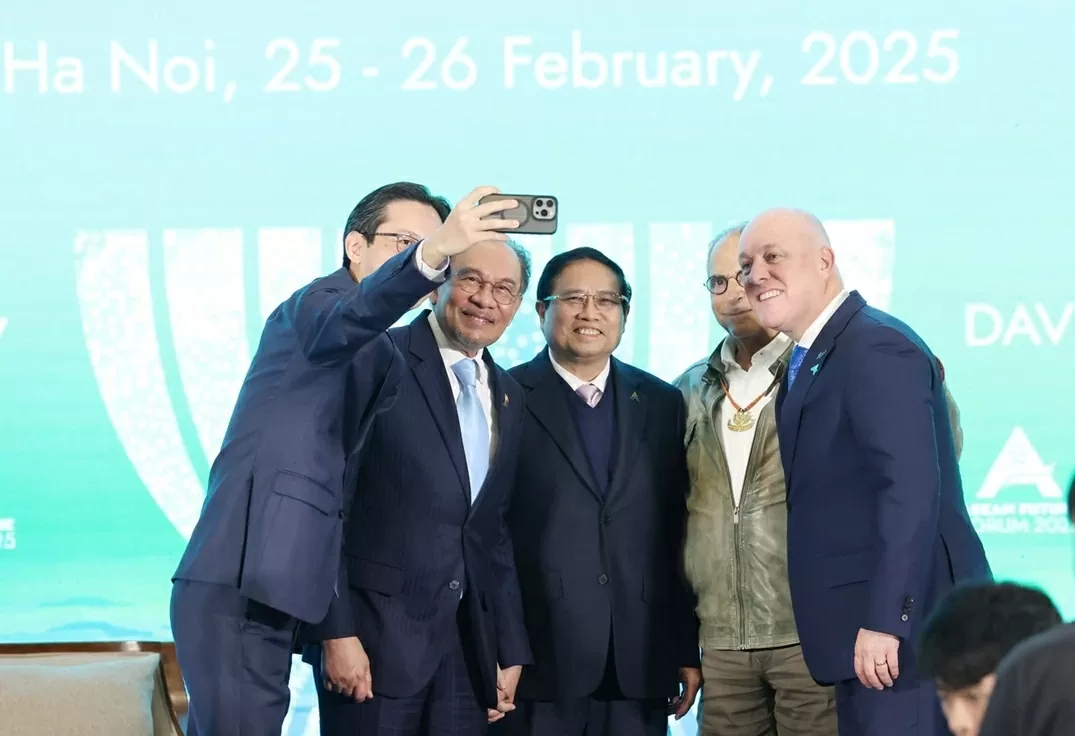 |
| Prime Minister Pham Minh Chinh, Malaysian Prime Minister Anwar Ibrahim, Timor-Leste President José Ramos-Horta, New Zealand Prime Minister Christopher Luxon and Deputy Minister of Foreign Affairs Do Hung Viet took a selfie at the High-level Dialogue Session of the ASEAN Future Forum in February 2025. (Photo: Hoang Hai) |
As ASEAN Chair this year, Malaysia is deeply conscious of both the responsibility and the promise that this role entails. A key milestone of our Chairmanship has been the adoption of the Kuala Lumpur Declaration on ASEAN 2045: Our Shared Future. This declaration outlines our collective aspirations for an ASEAN Community that is more united, innovative, and resilient, anchored in sustainable development, inclusivity, and the rule of law.
Malaysia’s Chairmanship has placed strong emphasis on deepening economic integration and advancing priority areas such as digital transformation, green growth, and people-centred development. These focus areas reflect our conviction that ASEAN’s economic success must be not only dynamic, but also equitable and sustainable. The developmental disparities across our region remain stark: in some cases, the GDP per capita of one member state exceeds that of another by more than thirtyfold. This is a structural challenge that we must address together.
Malaysia’s approach to regional prosperity centres on both raising the floor and elevating the ceiling of economic development. We must strengthen supply chain resilience to withstand external shocks and adapt to global shifts. As developed markets increasingly demand high environmental standards in trade and investment flows, ASEAN must enhance its ability to measure, report, and verify the environmental impact of products crossing our borders. Guided by the MADANI framework, Malaysia stands ready to lead on green infrastructure, regenerative agriculture, and renewable energy investments that will underpin a more sustainable future for all.
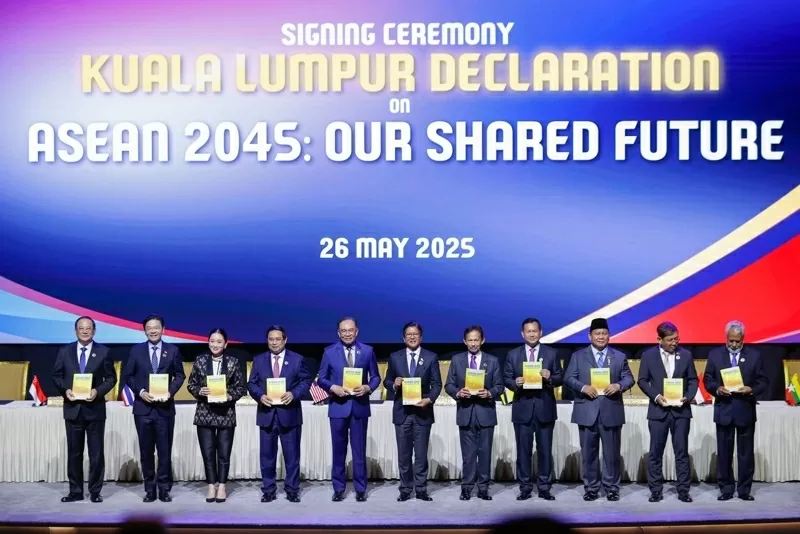 |
| Prime Minister Pham Minh Chinh, Malaysian Prime Minister Anwar Ibrahim and other leaders signed the “ASEAN 2045: Our Shared Future” Declaration. (Source: VGP) |
In this effort, the active participation and support of all member states, especially longstanding partners like Vietnam, are indispensable. As Malaysia charts a path forward under the Kuala Lumpur Declaration, it is worth reflecting on the remarkable journey that Vietnam itself has undertaken as an ASEAN member over the past three decades.
Since joining ASEAN in 1995, Vietnam has become an indispensable pillar of our shared enterprise. It has consistently demonstrated a steadfast commitment to ASEAN’s collective purpose and values, playing a vital role in strengthening unity and solidarity, especially during periods of uncertainty and global change. Whether responding to the Asian Financial Crisis, managing public health emergencies, or navigating a complex geopolitical landscape, Vietnam has championed the principles of consensus and collective resilience as the bedrock of our regional success.
Vietnam’s dedication to upholding ASEAN centrality has been evident through its active participation and thoughtful leadership. Its Chairmanships in 2010 and again in 2020, at the height of the COVID-19 pandemic, reflected capable, forward-looking stewardship. Under Vietnam’s leadership, ASEAN remained cohesive, engaged constructively with major external partners, and upheld the inclusive, outward-looking approach that has come to define our regional identity.
Vietnam has also played a key role in strengthening ASEAN’s global credibility and relevance. From promoting the Treaty of Amity and Cooperation to driving economic integration through landmark initiatives such as the Regional Comprehensive Economic Partnership (RCEP), Vietnam has helped position ASEAN as a force for peace, stability, and shared prosperity. These efforts reflect a deep and consistent commitment to a rules-based regional order grounded in mutual respect, dialogue, and cooperation.
Looking ahead, I am confident that ASEAN stands on the cusp of renewal and transformation, underpinned by a vision of shared progress, prosperity, and justice. We are no longer bystanders in global affairs, but a dynamic and influential force capable of driving positive change. Indeed, as Prime Minister Chính has observed, ASEAN is a region of “incredible vitality,” and I fully share that conviction.
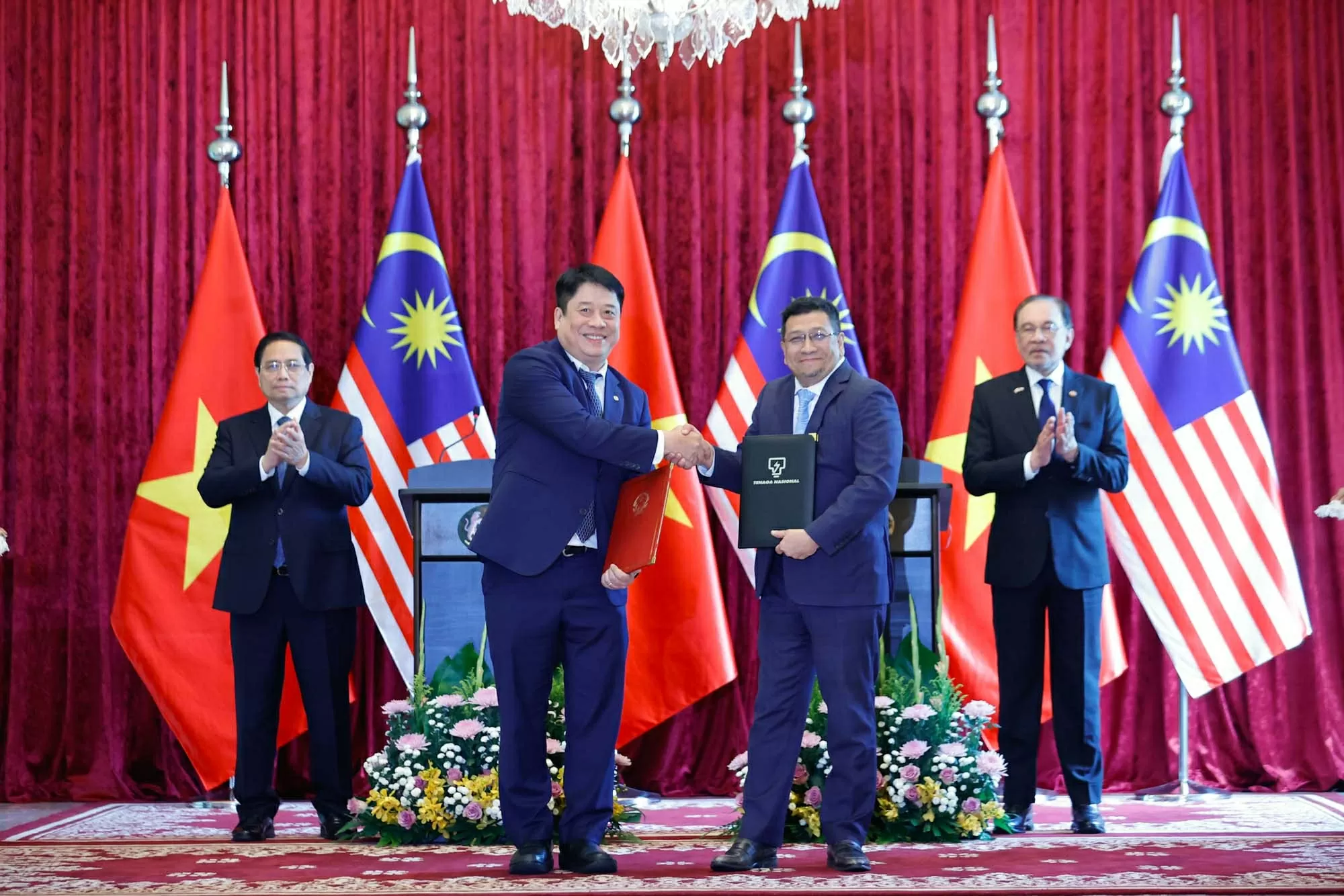 |
| Prime Minister Pham Minh Chinh and Malaysian Prime Minister Anwar Ibrahim witnessed the signing of a Memorandum of Understanding between Vietnam Electricity (EVN) and Tenaga Nasional Berhad (TNB) on May 25, during Prime Minister Chinh’s official visit to Malaysia to attend the 46th ASEAN Summit and related summits. (Source: VGP) |
Realising this vitality will require ASEAN to deliver more tangible outcomes that strengthen regional resilience and sustainability. Specifically, as we navigate the complexities of the global energy transition, ASEAN must act decisively to accelerate regional cooperation in sustainable energy development. The ASEAN Power Grid stands as a flagship initiative with the potential to deliver tangible benefits to our people, through greater energy security, reduced emissions, and economic integration. Advancing cross- border energy connectivity, sharing technical expertise, and scaling renewable energy investments are key steps towards a more resilient and sustainable future.
Beyond energy, ASEAN must continue to collaborate in priority areas such as digital innovation, food security, and climate resilience. Building on our shared aspirations, member states can pilot solutions and pool resources in ways that generate collective impact. By strengthening institutional cooperation, bridging development gaps, and upholding a rules-based order, we reaffirm ASEAN’s centrality and credibility as a community that delivers for all.
As we commemorate these anniversaries, we are reminded of how far ASEAN has come as a project of peace, shared prosperity, and solidarity. Vietnam’s journey over the past thirty years is a testament to what is possible when nations come together with vision, trust, and commitment. I look forward with confidence to the next chapter of our collective endeavour, in which Malaysia and Vietnam will continue to stand side by side in the service of our region and our peoples.