





Vietnam realizes development aspirations in the digital era with people at the centre
WVR - During his lifetime, President Ho Chi Minh affirmed: “If the country is independent but the people do not enjoy happiness and freedom, then independence has no meaning.” Therefore, throughout the development journey, human rights in Vietnam are not just slogans but vibrant realities in every policy and societal advancement. Now, in an era of rapid technological development, human rights need to be prioritized more than ever.
Latest
Digital transformation is reshaping every aspect of social life, from how people learn, work, and communicate to how they enjoy their fundamental rights.
In the digital space, human rights are not only expanded with many opportunities but also face unprecedented challenges regarding privacy, equality, and information security.
Amidst this significant shift, the challenge of ensuring and promoting human rights in the digital era has become a focal point of interest for Vietnam and the world.
A global revolution
Never before in human history has technology had such a profound impact on personal and social life as it does today.
From a small smartphone in the palm of one's hand, people can access knowledge, connect with the world, exchange views, and express their voices in the digital space.
Fundamental rights such as access to information, freedom of expression, the right to education, and participation in social life are being expanded more than ever thanks to the development of the internet and digital platforms.
In remote areas where educational infrastructure is limited, a computer with internet access can open up a borderless world for students there.
Moreover, thanks to the strong spread of digital platforms, many people with disabilities or limited mobility have more opportunities to work, learn, and contribute to society.
E-commerce platforms, online work, and online learning also help bridge geographical gaps, allowing millions to access opportunities that were previously almost out of reach.
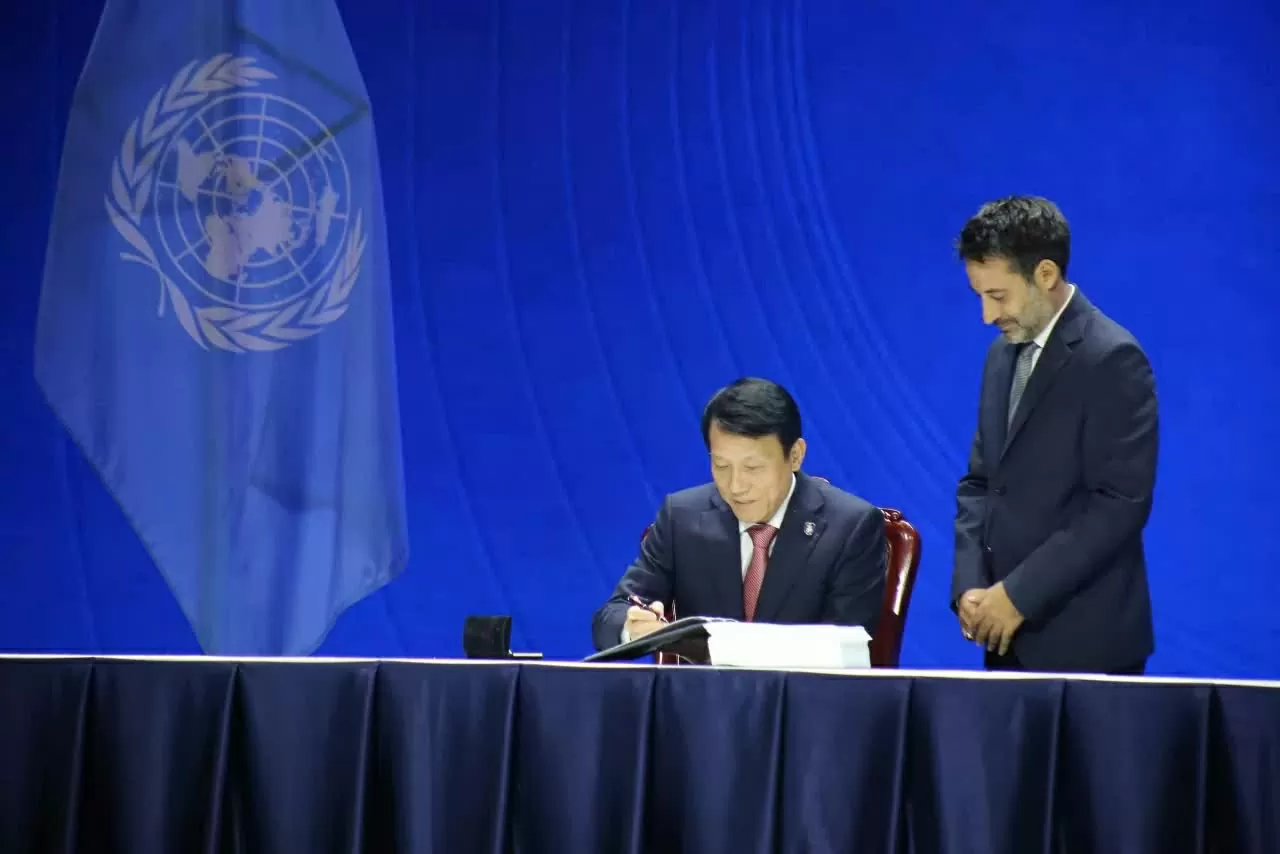 |
| General Luong Tam Quang, Member of the Politburo, Minister of Public Security, signs the United Nations Convention against Cybercrime (Hanoi Convention). (Photo: Thanh Long) |
At the signing ceremony of the United Nations Convention on Cybercrime (Hanoi Convention), Minister of Justice Nguyen Hai Ninh affirmed that we are living in the era of the Fourth Industrial Revolution, shaped by breakthrough technologies such as artificial intelligence (AI), big data, blockchain, and the Internet of Things (IoT).
In this context, data becomes a strategic resource, bringing immense economic and social value, opening a new era of development where every individual can connect, learn, and create without borders.
However, alongside technological achievements is the rapid increase of cybercrime on a global scale, with increasingly complex methods, leading to clear downsides: the risk of privacy invasion and the rise of digital inequality.
| More from WVR |
 Vietnam launches a new project to strengthen capacity for preventing and responding to domestic violence in the digital age Vietnam launches a new project to strengthen capacity for preventing and responding to domestic violence in the digital age |
When all online activities leave "data traces," from shopping habits and search behaviors to social relationships, individuals become more "exposed" than ever in the digital space.
If not properly protected, personal data can become a commodity, a tool for advertising, behavior manipulation, and even fraud, extortion, and violation of dignity and honor.
These threats not only cause economic damage but also directly threaten national security, human rights, and civil rights.
On the other hand, in the rapid wave of digital technology development, the gap between those with access to technology and those without is creating a new form of inequality.
This situation raises concerns about some being left behind, not only economically but also in terms of access to information, education, healthcare, employment, and social voice; effectively excluding them from many critical development processes of the era.
Therefore, in the digital era, ensuring human rights has become a challenge involving policy, infrastructure, education, and social awareness, not only in Vietnam but globally.
People - The centre of digital transformation
Ultimately, no matter how advanced, technology cannot replace human awareness and values. Vietnam consistently holds the view that the core value of digital transformation and technology must be built on the foundation of ensuring human rights and civil rights in the digital environment.
Re-elected to the United Nations Human Rights Council for the 2026-2028 term this October, one of Vietnam's eight priority areas is human rights in the context of digital transformation. This priority reflects Vietnam's strong commitment to ensuring human rights in the digital era.
Additionally, Vietnam hosting the signing ceremony of the Hanoi Convention on October 25-26 further demonstrates proactive, positive, and comprehensive international integration, marking a concrete step in implementing the Politburo's Resolution No. 59-NQ/TW on international integration in the new situation.
From a responsible partner, Vietnam is clearly demonstrating a "new mindset" - becoming a nation making substantial contributions to shaping international institutions and standards, including in human rights, non-traditional security, and global justice.
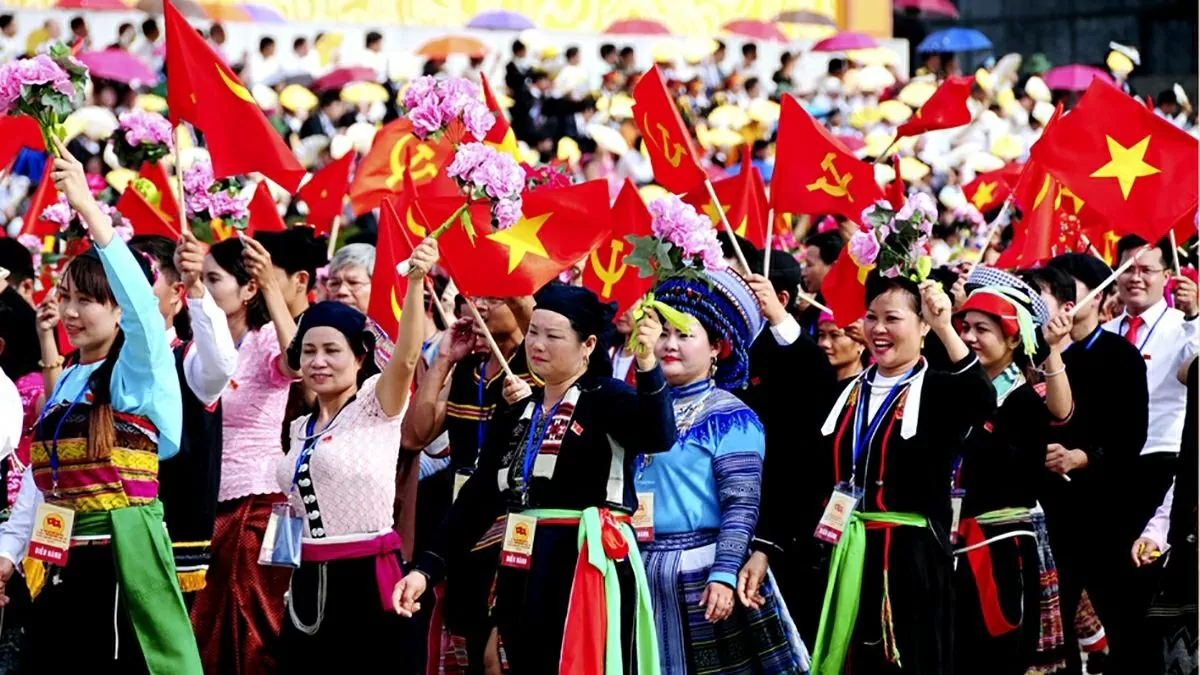 |
| Vietnam believes that the core value of digital transformation and technology must be built on the foundation of ensuring human rights and civil rights in the digital environment. (Source: Nhan Dan Newspaper) |
However, beyond international forums or lengthy commitments, the everyday life of citizens is where human rights are most clearly manifested.
Thus, ensuring human rights in the digital era is not only about technical infrastructure or legal frameworks but must begin with education, especially education on human rights and digital citizenship.
Human rights need to be "transformed" from concepts into vibrant experiences in every digital skills lesson for students, in every campaign to raise awareness about online safety, or in every policy aimed at bridging the digital divide between urban and rural areas.
A generation that knows how to use technology responsibly, understands their rights and obligations in the digital space, respects differences, and protects their own and others' privacy, is the most sustainable "shield" for a humane digital society.
When each individual understands that behind the screen is a real person, with dignity, emotions, and the right to be respected, technology truly becomes a tool serving humanity, not the other way around.
In summary, the digital revolution will continue at an even faster, deeper, and broader pace. But if there is one constant, it is the value of humanity - the center of all progress.
When technology is guided by ethics, when data is protected by law and self-awareness, and when younger generations are equipped with both knowledge and responsibility, digital transformation will not just be a technical revolution but a significant step forward in ensuring human rights for all.

| Vietnam approves 2026–2030 IPv6-only roadmap to accelerate digital infrastructure upgrades WVR - The Ministry of Science and Technology has issued a decision approving a programme to promote and implement IPv6-only transition in Vietnam for the ... |
| Vietnam's re-election to the UNHRC affirms the country's growing international role, position, and prestige: Deputy FM On October 14 (New York time), at the United Nations Headquarters, the UN General Assembly elected members of the UN Human Rights Council (UNHRC) for ... |

| Vietnam’s voluntary pledges as a member of the Human Rights Council for the 2026-2028 term WVR - As a member of the United Nations Human Rights Council for the term 2023-2025, Vietnam has 12 voluntary pledges in many areas and ... |

| Vietnam brings an important perspective to UN Human Rights Council: UNDP Resident Representative WVR - According to UNDP Resident Representative in Vietnam Ramla Khalidi, as a developing and emerging economy, Vietnam brings an important perspective to United Nations ... |
| Re-election to the UN Human Rights Council: Greater credibility, responsibility and expectations for Vietnam WVR - Ambassador Dr. Le Thi Tuyet Mai - Member of the Executive Committee of the Vietnam Society of International Law; former Permanent Representative of ... |


