




Vietnam leverages FTAs to diversify markets amid US tariff concerns
WVR - As the United States accounts for 30% of Vietnam’s total export turnover, the recent announcement of a reciprocal tariff of up to 46% by President Donald Trump is expected to significantly affect several key industries.
Latest
Vietnamese businesses, however, are turning to the 17 free trade agreements (FTAs) Vietnam has signed or is negotiating to diversify export markets and mitigate the impact.
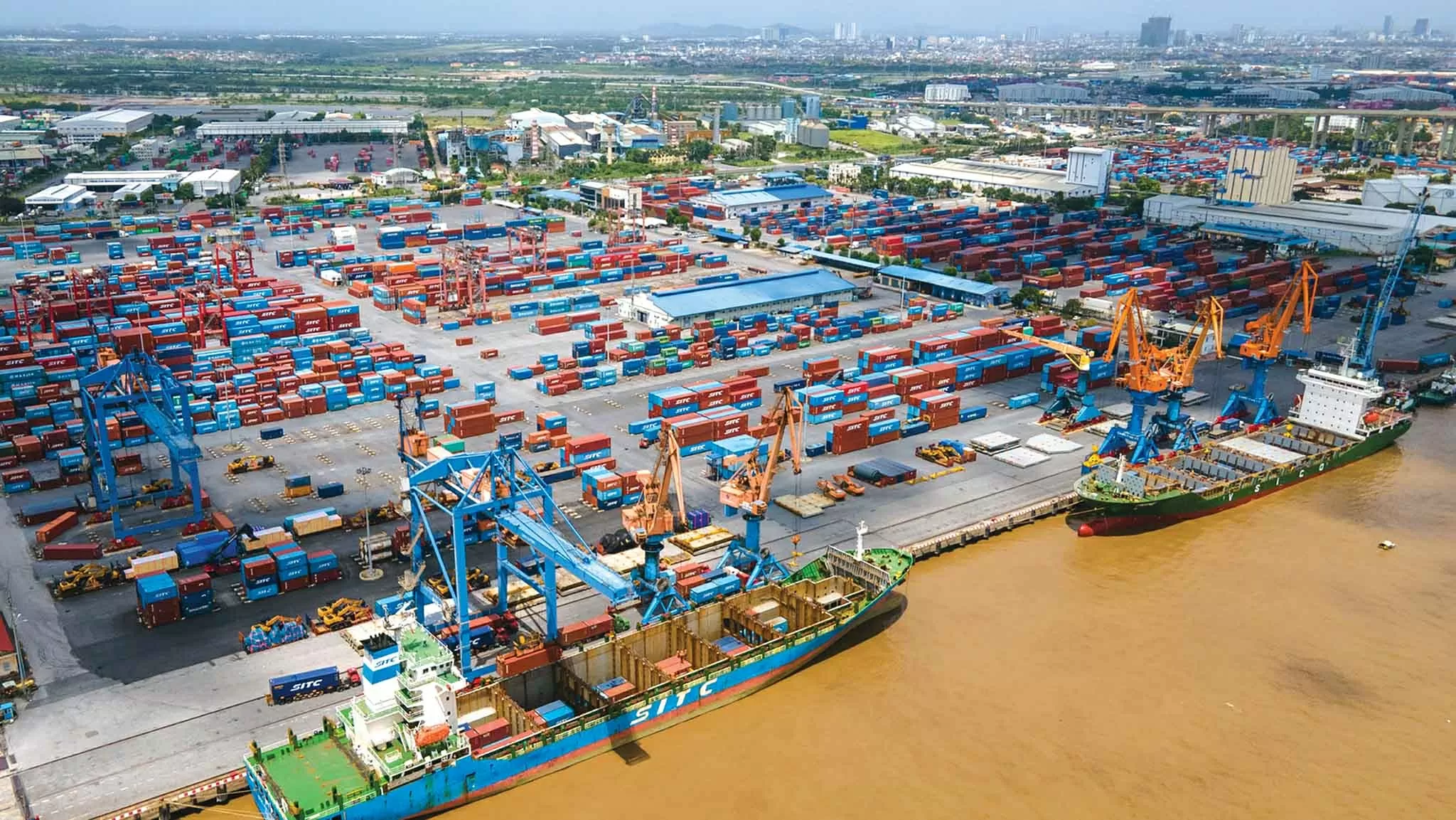 |
| Vietnam’s export turnover in the first quarter of 2025 was estimated to reach 102.8 billion USD, 10.6% higher than that of the same period last year. (Photo: Hoang Anh) |
The US currently absorbs 40% of Vietnam’s footwear exports, worth over 10 billion USD annually. A steep tariff could stall shipments. Phan Thi Thanh Xuan, Vice Chairwoman and General Secretary of the Vietnam Leather, Footwear and Handbags Association (LEFASO), noted that higher tariffs would increase costs, pushing businesses to improve production efficiency and optimize input management.
“Enterprises hope the government and relevant ministries will provide support, particularly through streamlined administrative, tax, and customs procedures, to reduce costs and enhance production capacity,” Xuan said.
Mr. Le Tien Truong, Chairman of the Vietnam National Garment and Textile Group (Vinatex), acknowledged the new tariff is high but noted it is still lower than that imposed on Chinese textiles and comparable to other competitors. In response, businesses are advised to remain calm and implement sustainable strategies such as enhancing operational efficiency, improving productivity, and negotiating with partners to share difficulties.
He added that the US policy remains open to negotiation, and called on the Vietnamese government to engage in talks with Washington. The Chairman also recommended increasing the use of US-origin cotton to meet rules of origin and improve trade balance.
Push for market diversification
Amid global uncertainties, Vietnam is pushing for broader export diversification. In 2025, the Ministry of Industry and Trade (MoIT) targets 12% export growth, or roughly 450 billion USD. March 2025 alone saw exports rise to 38.5 billion USD, the highest monthly figure so far this year and a 14.5% increase year-on-year. In Q1, export turnover reached 102.8 billion USD, up 10.6% from the same period in 2024.
Mr. Ta Hoang Linh, Director General of the MoIT’s Department of Foreign Market Development, said ministries and sectors would work closely with Vietnamese and foreign-invested enterprises to realize this goal. Vietnam is actively seeking new trade opportunities in the Middle East, Latin America, Central Asia, and other emerging markets.
The ministry also aims to promote trade activities, improve logistics infrastructure to cut transport costs, and expand its global trade office network to better support export businesses.
Mr. Le Hoang Tai, Deputy Director General of the MoIT’s Trade Promotion Agency, stressed the importance of identifying new and niche markets to reduce dependence on a few major partners and ensure sustainable export growth.
Business response and domestic market focus
Ms. Nguyen Thi Phuong Thao, CEO of May 10 Corporation, shared that her company had proactively diversified both export markets and raw material sources ahead of the US tariff hike. The firm has cut costs across operations and invested in technology to boost productivity and maintain competitive pricing.
She added that May 10 is also strengthening its domestic market presence and closely monitoring policy changes in both Vietnam and the US to adjust its production and business strategies accordingly.
Meanwhile, Mr. Pham Dinh Ngai, CEO of Tra Vinh Farm LLC, noted that while exports remain a major revenue stream, the domestic market offers growing potential. “With improving internal capabilities, Vietnamese companies will continue to expand both export and domestic activities,” he said.