


USCIRF's assessment of Vietnam's religious freedom: Biased and one-sided
WVR - With a biased and skewed perspective, the United States Commission on International Religious Freedom (USCIRF) frequently publishes reports on the state of religious freedom in Vietnam with numerous negative assessments.
Latest
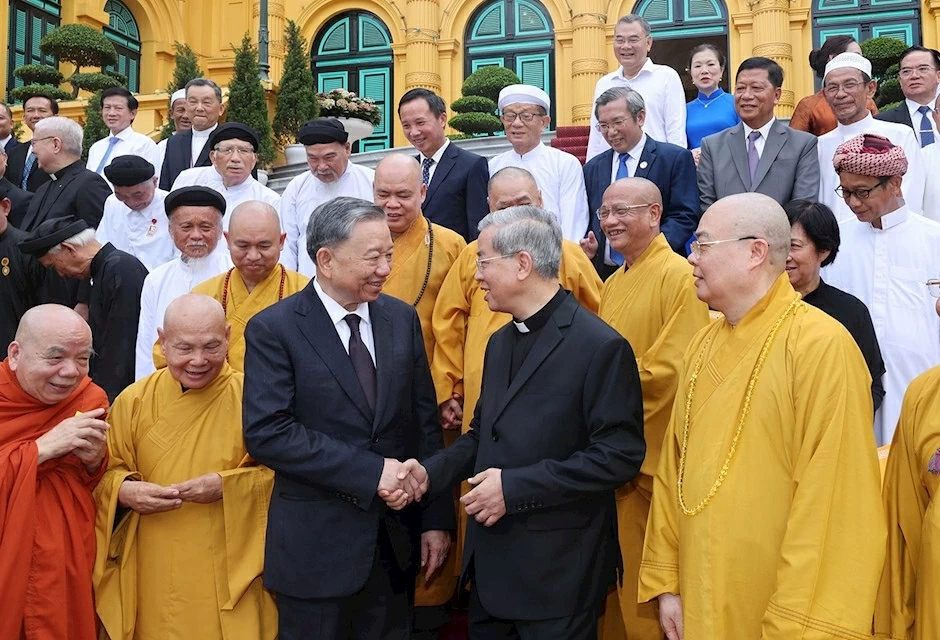 |
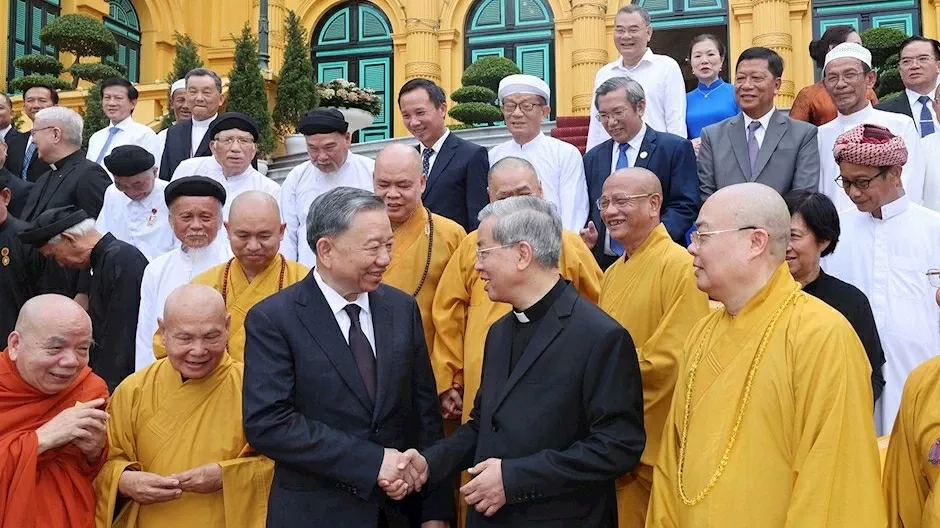
| In June 2024, President To Lam had a cordial meeting with a delegation of religious leaders to commend, honor, and encourage them to uphold the tradition of patriotic service and national unity. (Photo: VNA) |
Recently, the March 4 report by USCIRF continued to provide an unobjective and inaccurate assessment of the situation of religious freedom in Vietnam, as well as deny Vietnam's efforts over the past decades.
Unfounded allegations
USCIRF is an independent, bipartisan advisory body established by the U.S. Congress in 1998 with the function of "monitoring" violations of religious freedom in certain countries.
This body makes policy recommendations to the U.S. President, the U.S. Secretary of State, and the U.S. Congress regarding countries deemed to violate religious freedom; it also proposes lists of "Countries of Particular Concern" (CPC), "Special Watch List" (SWL), and "Entities of Particular Concern" (EPC) for the U.S. Department of State to consider in foreign policy formulation and implementation.
| More from WVR |
 Vietnam respects and ensures human rights, including freedom of religion or belief: Spokesperson Vietnam respects and ensures human rights, including freedom of religion or belief: Spokesperson |
The annual religious freedom report by USCIRF is developed under the 1998 IRFA Act of the U.S. Congress to promote "American values" of global religious freedom.
However, USCIRF's reports are often criticized for being politically motivated, primarily targeting non-U.S. ally countries and heavily relying on unverified sources from organizations and individuals with hostile views against local governments.
The reports also tend to selectively highlight violations in countries that do not align with U.S. views, while rarely addressing similar issues in allied nations.
In the March 4 report by USCIRF, the section on Vietnam spans about five pages with a structure similar to previous years' reports, yet it increases the level of criticism towards Vietnam.
In summary, the report claims that the state of religious freedom in Vietnam in 2025 "remains concerning". The Vietnamese government's implementation of the 2018 Law on Belief and Religion, along with certain provisions of the Penal Code, has restricted religious freedom.
The report accuses Vietnam of several main issues such as: Applying Articles 116, 117, and 331 of the Penal Code to handle Protestant followers in Gia Lai and Dak Lak; pressuring independent religious groups in the Central Highlands and H'Mong ethnic areas, increasing surveillance of religious followers, "forcing" them to abandon their faith to join state-recognized religious organizations; intensifying actions against new religious organizations and cults; harassing Buddhists not affiliated with the state-recognized Vietnam Buddhist Sangha; publicly criticizing Thich Minh Tue and his followers; preventing monks and nuns of the Thien am ben bo vu tru group...
The report cites conclusions from the United Nations Human Rights Committee's observations at the ICCPR implementation review session, expressing "concern" about Vietnam's "restriction" of religious freedom and belief; suggesting that Vietnam "acknowledges" inconsistencies in applying and enforcing laws regulating religious activities; the Vietnamese government denies allegations of security forces using force against individuals and leaders of ethnic minority groups...
Accordingly, this year's report recommends the U.S. Department of State include 18 countries in the CPC list[1] (including Vietnam), 11 countries in the SWL list, and 07 organizations in the EPC list[2].
It is evident that these assessments have been creating misunderstandings about the policies and practices ensuring religious freedom in Vietnam.
Many statements in these reports are based on biased, unverified information or rely on sources from organizations and individuals opposing the Vietnamese government. This leads to an incomplete and unobjective reflection of the religious life in Vietnam.
Ensuring religious freedom in Vietnam: Consistency in policy and practice
According to the Government Committee for Religious Affairs, about 27-28 million Vietnamese are adherents of recognized religions, accounting for approximately 27% of the population. However, due to cultural characteristics, many Vietnamese practice beliefs even if they do not follow a religion.
In reality, 90-95% of Vietnamese have a spiritual life. This is a relatively large number, reflecting the people's spiritual needs and the Vietnamese government's facilitation of religious and belief activities.
The consistent view of the Party and State of Vietnam is that religion is a spiritual need of a segment of the population and will exist long-term in society. Therefore, the State respects and ensures the right to freedom of belief and religion, while encouraging religions to participate in positive social activities such as charity, education, healthcare, and social protection.
One of the important principles in Vietnam's religious policy is ensuring equality among religions. Sixteen religions and 43 religious organizations are recognized and registered to operate, all respected and treated equally before the law. This contributes to creating a favorable environment for harmonious religious development and strengthening unity among religious communities.
Vietnam's religious policy also emphasizes the role of religious organizations in building national solidarity. Religions are encouraged to participate in patriotic emulation movements, community development activities, and environmental protection.
In practice, many religious organizations have actively contributed to charitable activities, helping the poor, caring for the elderly and disadvantaged children, contributing to building a compassionate and sustainable society.
The right to freedom of belief and religion is enshrined in the 2013 Constitution, the highest legal document in Vietnam's legal system. Article 24 of the Constitution states: Everyone has the right to freedom of belief and religion, to follow or not follow any religion. All religions are equal before the law, and the State respects and protects citizens' right to freedom of belief and religion.
At the same time, the Constitution emphasizes that no one is allowed to infringe on others' freedom of belief and religion and not to exploit religion to violate the law. This provision clearly reflects the Vietnamese State's viewpoint: ensuring the people's religious freedom while maintaining social order and safety.
The Law on Belief and Religion - an important legal document - fully and in detail regulates the right to freedom of belief and religion as well as the activities of religious organizations in Vietnam.
The law clearly defines the rights of individuals and organizations in practicing religion and the State's responsibility in ensuring this right. People have the right to express their religious beliefs, participate in religious ceremonies, study religious teachings, and practice their beliefs. Citizens can follow or not follow any religion and are not discriminated against for religious reasons.
Additionally, religious organizations are guaranteed many important rights such as organizing religious rituals, training clergy, publishing religious texts, building places of worship, and participating in charitable and social activities according to the law.
According to regulations, religious groups can register for collective religious activities, then register for religious activities, and eventually be recognized by the State as legal religious organizations, ensuring that religious activities are organized transparently, stably, and in accordance with the law, with a clear legal basis for long-term operation.
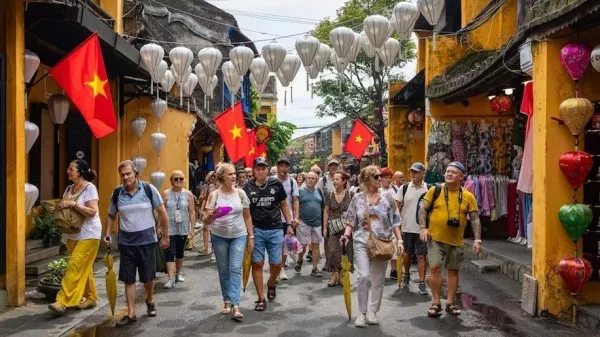
Any foreigner visiting Vietnam can witness the rich and diverse religious life of the people. Vietnam currently has 16 religions with 43 religious organizations recognized and registered by the State, along with over 26.5 million followers, accounting for about 27% of the national population.
The country has over 54,000 clergy, more than 135,000 religious workers; nearly 30,000 places of worship for various religions, tens of thousands of folk belief establishments such as communal houses, temples, shrines, and pagodas[3]. Additionally, Vietnam has over 50,000 traditional belief establishments and about 8,000 religious and belief festivals held annually nationwide...[4]
Vietnam's policies and laws on freedom of belief and religion reflect a combination of ensuring human rights and managing society by law.
The State respects the people's right to religious freedom while facilitating religious activities within the legal framework and contributing positively to society. This not only helps ensure human rights but also promotes the country's stability, unity, and development.
Recognized religious organizations in Vietnam currently operate stably, with a rich religious life and many religious activities occurring normally across the country, integrating into the nation's flow and aspirations for a prosperous, civilized country in the new era.
Ensuring and promoting religious freedom always goes hand in hand with strictly handling acts that exploit religion to divide the nation, disrupt social order, infringe on national security, or violate the law. These contents are legally stipulated to prevent acts that exploit religion for personal purposes or negatively impact society. Setting these limits is necessary to ensure harmony between religious freedom and the common interests of the community.
Vietnam always welcomes constructive and goodwill contributions from countries, organizations, and individuals through open dialogue.
However, it is necessary to evaluate objectively, respect the truth, and accurately reflect reality. Vietnam does not accept biased, distorted, or even fabricated information to undermine its image and reputation. Only by doing so can differences be narrowed, aiming towards the common goal of ensuring and promoting human rights, including the right to freedom of belief and religion.
| USCIRF's sources mainly come from exiled reactionary organizations (such as exiled FULRO groups, "Boat People SOS - BPSOS", "Montagnards Stand for Justice - MSFJ") and domestic extremists with distorted, fabricated information, which is then legitimized as "evidence" in the report. The report does not reflect the broad, comprehensive picture of religious life in Vietnam. |
- Including 18 countries, of which 17 countries remain on the proposed list in 2025, including: Myanmar, China, Cuba, Eritrea, Iran, Nicaragua, DPR of Korea, Pakistan, Russia, Saudi Arabia, Tajikistan, Turkmenistan Afghanistan, India, Nigeria, Vietnam; and add Libya to this year's list.
- Including 7 organizations, of which 06 remain: Al-Shabaab, Boko Haram, Islamic State Sahel Province (IS Sahel), Islamic State in West Africa (ISWAP), Jamaat Nasr al-Islam wal Muslimin (JNIM), the Houthis; remove Hay'at Tahrir, al-Sham (HTS) and put Sudan's Rapid Support Forces on the list
- Ensuring freedom of belief and religion in Vietnam - Nhandan Newspaper, Thursday, November 9, 2023
- Religious studies training in Vietnam: Achievements and problems posed - University of Social Sciences and Humanities
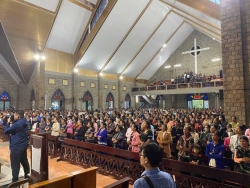
| Religious and spiritual life in Lam Dong: Connection, harmony and development WVR - Lam Dong – a highland province rich in cultural identity – is home to a convergence of diverse communities, each with their own ... |
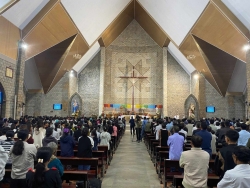
| Field visit witnesses freedom of religion and belief in the Central Highlands WVR - Ensuring the right to freedom of religion and belief is one of the key goals that Vietnam has been actively pursuing, yielding many ... |
| Vietnam always values peace, freedom, dignity, and human rights: Ambassador WVR - On September 15, the Permanent Mission of Vietnam to the United Nations, the World Trade Organization (WTO), and other international organizations in Geneva, ... |
| HCMA President, Russian Academy Rector discuss cooperation on Vietnam’s personnel competency assessment WVR/VNA - Rector of the Russian Presidential Academy of National Economy and Public Administration (RANEPA) Alexey Komissarov has affirmed readiness to transfer technology and help ... |
| Protecting national and religious identity: International standards and implementation experiences WVR - Viewing national and religious identity as a soft power resource of the nation, the protection of the right to preserve national and religious ... |