






Standing Committee of the National Assembly gives opinions on the draft revised Food Safety Law
WVR - The 6th session of the Standing Committee of the National Assembly provided opinions on the draft revised Law on Food Safety, aiming to address issues encountered during the implementation of the 2010 Law.
Latest
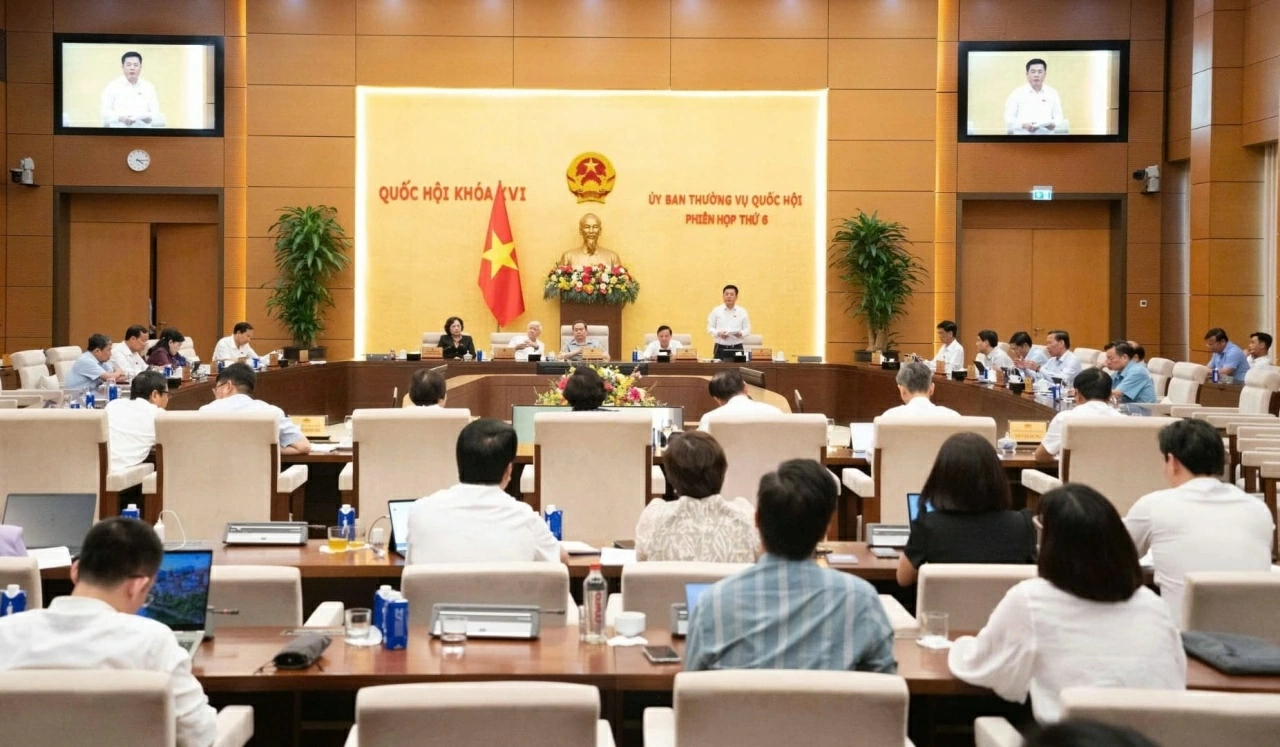 |
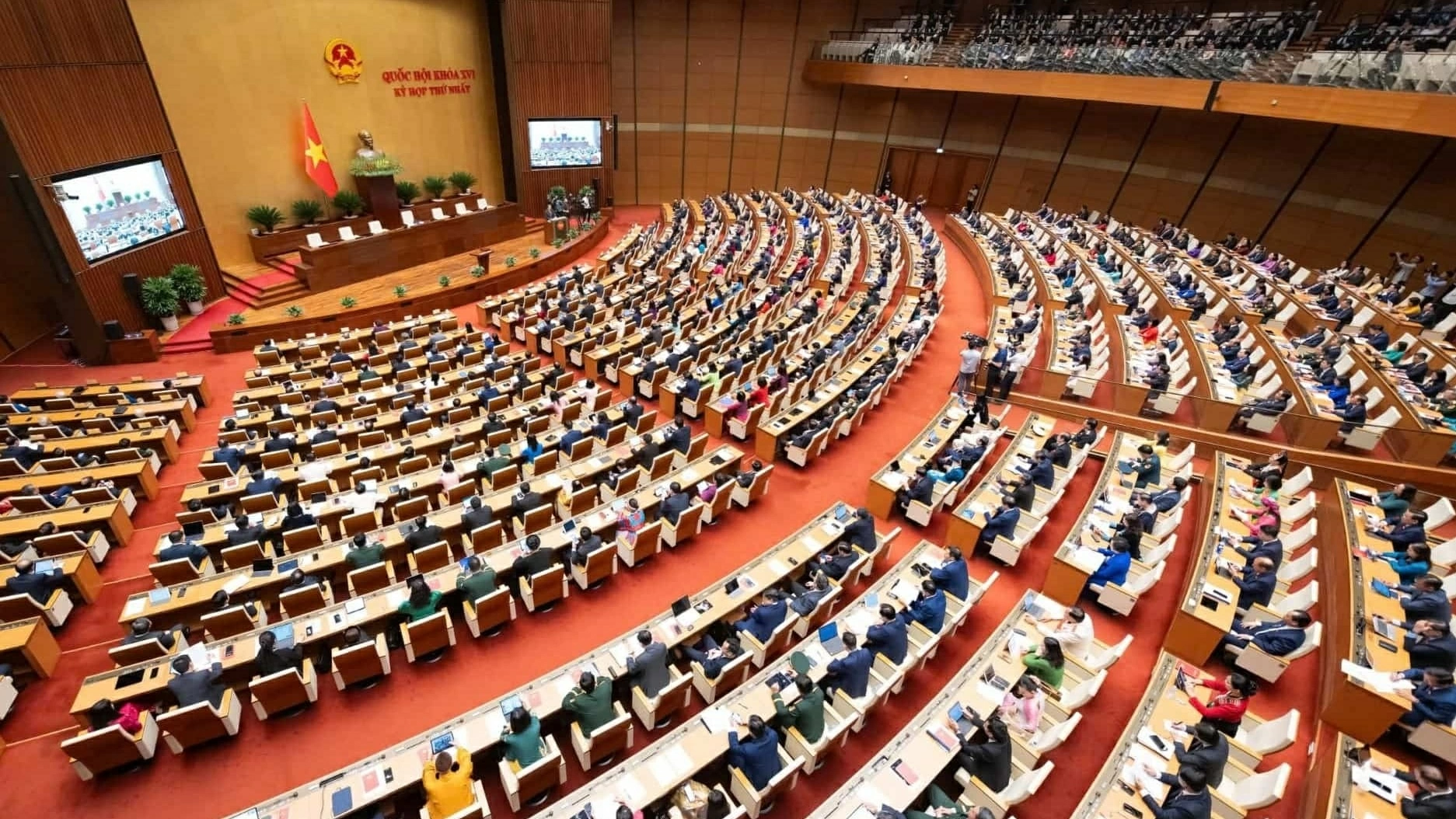
| Overview of the 6th session, where the Standing Committee of the National Assembly gave opinions on the draft revised Law on Food Safety . (Source: National Assembly) |
On the afternoon of September 24, continuing the program of the 6th session, the Standing Committee of the National Assembly, at the National Assembly House, under the chairmanship of National Assembly President Tran Thanh Man and the direction of Vice President Nguyen Hong Dien, provided opinions on the draft revised Food Safety Law.
Timely Resolution on difficulties and obstacles
Presenting the Government's proposal on the draft revised Law on Food Safety, Deputy Minister of Health Do Xuan Tuyen stated that the development of the draft Law aims to promptly resolve difficulties and obstacles arising during the implementation of the 2010 Food Safety Law.
The draft Law provides general regulations on food safety; rights and obligations of food business establishments; conditions for food; conditions for food business establishments; measures for food safety management; food testing activities, assessments for state management of food safety; information systems on food safety; traceability of food safety; information, communication on food safety, advertising, food labeling; state management of food safety.
The draft Law consists of 76 articles, 9 chapters, supplementing several issues such as: Principles for applying the Law in cases where the Food Safety Law and other laws have legal conflicts; Certain prohibited acts to align with current legal documents and practices; Obligations of businesses when conducting e-commerce and additional conditions to ensure food safety for online food delivery establishments; Obligations of organizations and individuals providing collective meals not for business purposes...
Regarding decentralization and delegation, the draft Law has specified principles for decentralization and delegation with a unified focal point, stipulating that the Government uniformly manages state affairs on food safety; the central state management agency on food safety is responsible to the Government for implementing state management of food safety. Delegation to the People's Committees (PC) at all levels to perform state management within localities and assign the Government to detail specific responsibilities of each level.
Decentralization of the receipt of publication dossiers and issuance of certificates of eligibility for food safety: the Government is assigned to regulate the authority to issue, extend, revoke the product publication and certificates of establishments eligible for food safety in the direction of maximizing decentralization to specialized agencies under the provincial People's Committees.
On behalf of the Verification Agency, Chairman of the Committee on Science, Technology, and Environment Nguyen Thanh Hai emphasized that the Standing Committee finds that the draft Law basically adheres to and institutionalizes the Party's guidelines and policies in the current period. However, it is suggested to continue researching and reviewing the provisions in the draft Law to ensure compatibility, updating, and internalizing related contents of international commitments and treaties that Vietnam participates in or is a member of.
Regarding the feasibility of the draft Law, the Standing Committee on Science, Technology, and Environment has many concerns about the feasibility of the draft Law, which depends on five conditions that are still not clearly ensured, including: Over-reliance on detailed regulatory documents (37/76 articles assigned to the Government for regulation); Inadequate capacity of the post-inspection testing system; Insufficient investment funds for digital database infrastructure; Underevaluated resources for management and enforcement at the local level; The effective date needs to be long enough for businesses to prepare.
Regarding specific contents, the verification report mentions several contents that the drafting agency is requested to research and clarify, such as: Rights and obligations of organizations and individuals producing and trading food (from Article 7 to Article 12); Conditions ensuring safety for food fortified with micronutrients (Article 16); Post-inspection and sanctions for violations (Article 58 and Article 59); Information data systems and digital transformation (from Article 63 to Article 68)...
Revising the Law on Food Safety: Clarifying the “One-Stop” Management Model needed
Discussing at the session, delegates generally agreed on the necessity of amending the law after more than 15 years of implementation, focusing on in-depth analysis of the “one-stop” state management model, the regulation of “fake food,” and the feasibility of applying it in practice.
Commenting on the regulation of State management responsibility in Article 73, Vice President of the National Assembly Nguyen Khac Dinh stated that the draft Law's provision that the Ministry of Health is primarily responsible is in the right direction, but the legislative technique needs to standardize the terminology. The Deputy Chairman of the National Assembly suggested amending it to: “The Ministry of Health is the focal agency assisting the Government in uniformly implementing state management of food safety” instead of stating: “The Ministry of Health is responsible to the Government...”.
Sharing the same view, Chairman of the Committee on Legal and Judicial Affairs Phan Chi Hieu also assessed that establishing a one-stop model is a very new and progressive step. However, the current draft still does not clearly delineate between the advisory agency assisting the Government in unified management and the specialized ministries.
“The regulation that ministries perform specialized management tasks according to the management scope is still quite vague. It is necessary to clearly define which agency is the lead, which agency coordinates, and how the participation mechanism works to ensure the centralized management model operates effectively in practice,” emphasised Chairman of the Committee on Legal and Judicial Affairs Phan Chi Hieu.
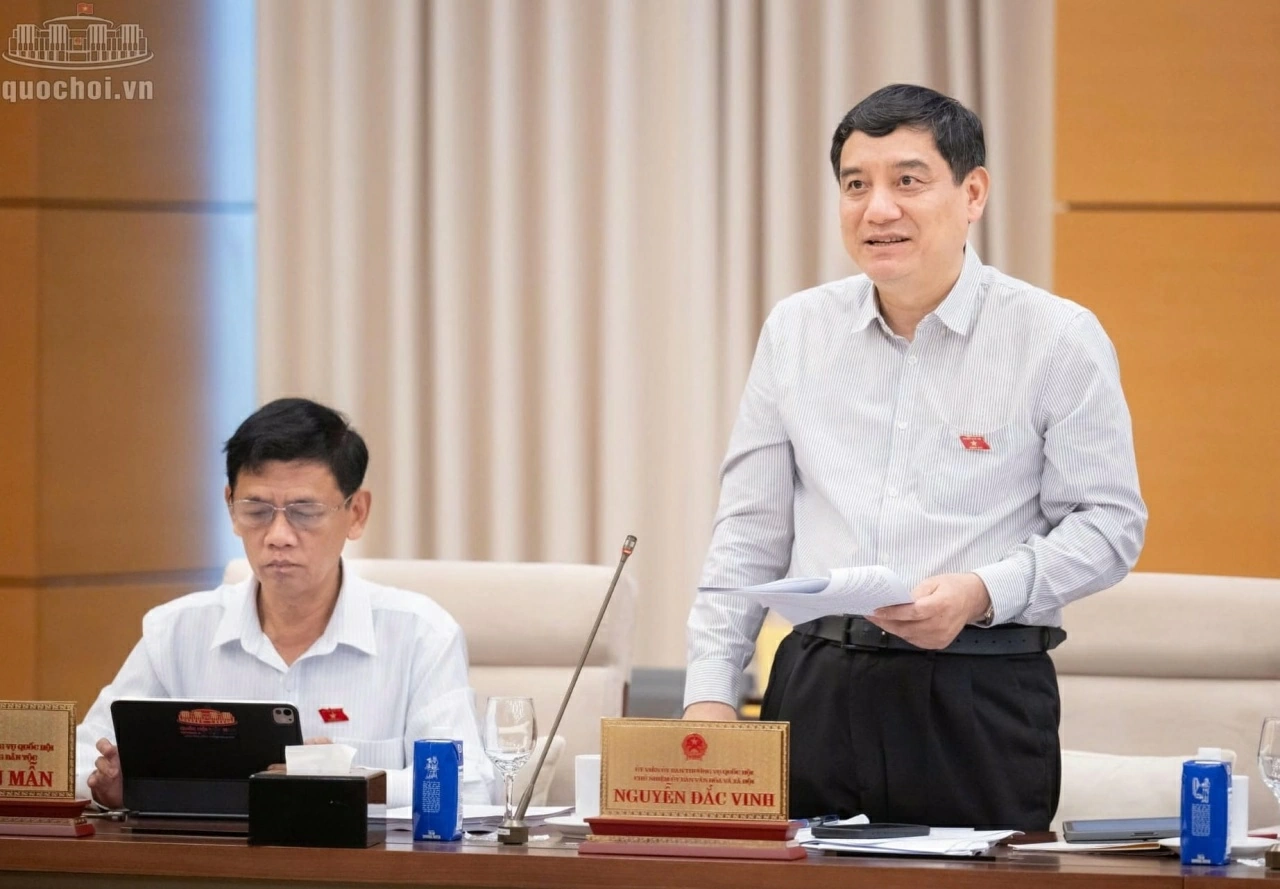 |
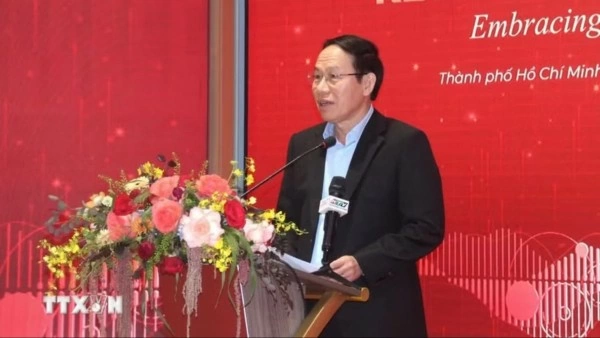
| Chairman of the Committee on Culture and Society Nguyen Dac Vinh makes a proposal. (Source: National Assembly) |
Defining “Fake Food”: Inheriting quantitative Standards to delineate criminal handling boundaries
Addressing the regulation on “fake food,” Chairman of the Committee on Culture and Society Nguyen Dac Vinh suggested carefully considering whether to include this concept in the “Terminology Explanation” clause or to regulate it as a separate clause, as fake food directly relates to the basis for handling violations. Since fake food is specific but also a type of counterfeit goods regulated in the Law on Product and Goods Quality, policy design must ensure consistency. At the same time, detailed regulations on quantitative methods and evaluation criteria are needed to serve as a legal basis for handling violations.
Analyzing this content further, Vice President of the National Assembly Nguyen Khac Dinh also suggested thoroughly reviewing the concept of fake food, ensuring it inherits the Law on Product and Goods Quality and Government Decree No. 98/2020/ND-CP.
The Vice President of tational Assembly noted that, according to current regulations in Decree 98/2020/ND-CP, products with quality indicators or technical characteristics reaching only 70% or less compared to the minimum level as prescribed or registered are identified as counterfeit goods. The draft Law's omission of the 70% quantitative criterion may lead to confusion when delineating the boundary between “fake food” (criminal handling) and “substandard food” (administrative handling).
Risk management, clear responsibility focal point
Speaking at the session, National Assembly President Tran Thanh Man emphasised that the biggest bottleneck currently is that the existing law and the draft revised Law still do not clarify the state management mechanism or the boundary of responsibility between ministries, between the central and local levels. According to the Politburo's directive, the reorganization of the state management apparatus on food safety should be unified with only one focal point responsible from the central to local levels, which is the Ministry of Health. “The revised Law must clearly state: the lead agency, the coordinating agency, which agency decides, and when an incident occurs, which agency must take full responsibility,” emphasised the National Assembly President.
The National Assembly President affirmed that the transition from pre-inspection to risk-based management must be the “backbone” of the revised Law, regulating the transition from mechanical “pre-inspection” to risk analysis and substantial “post-inspection.” Along with that, clear criteria for risk classification must be stipulated (e.g., high-risk groups like infant formula, functional foods require strict control; low-risk groups like packaged agricultural products transition to post-inspection). Absolutely do not use management as an excuse to restore the “ask-give” mechanism, but also do not lower safety standards in the name of procedural reform.
Besides, management must focus on controlling from the source; post-inspection must be substantial and tightly controlled; substantial post-inspection means directly going to the establishments, sampling in the market, checking compliance history, and tracing origins.
Regarding data, National Assembly President Tran Thanh Man stated that another important transition is moving from manual inspection to data management and chain-based tracing. The draft Law's provision for a separate chapter on data is in the right direction, but it must operate on the principle of “One declaration, multiple uses.” Information already in the data system should not require citizens or businesses to provide again, while ensuring the protection of business secrets and product formulas.
The National Assembly President emphasised that the revised Food Safety Law, when enacted, must answer three essential questions: Is the food reaching the people safe?; Do well-compliant businesses have fewer procedures?; When an incident occurs, can the origin be traced, responsibility determined, and handled quickly enough?
“Food safety cannot be ensured by creating more licenses, but by clearer safety standards, better data, stronger post-inspection, and inescapable responsibility,” affirmed National Assembly President Tran Thanh Man.
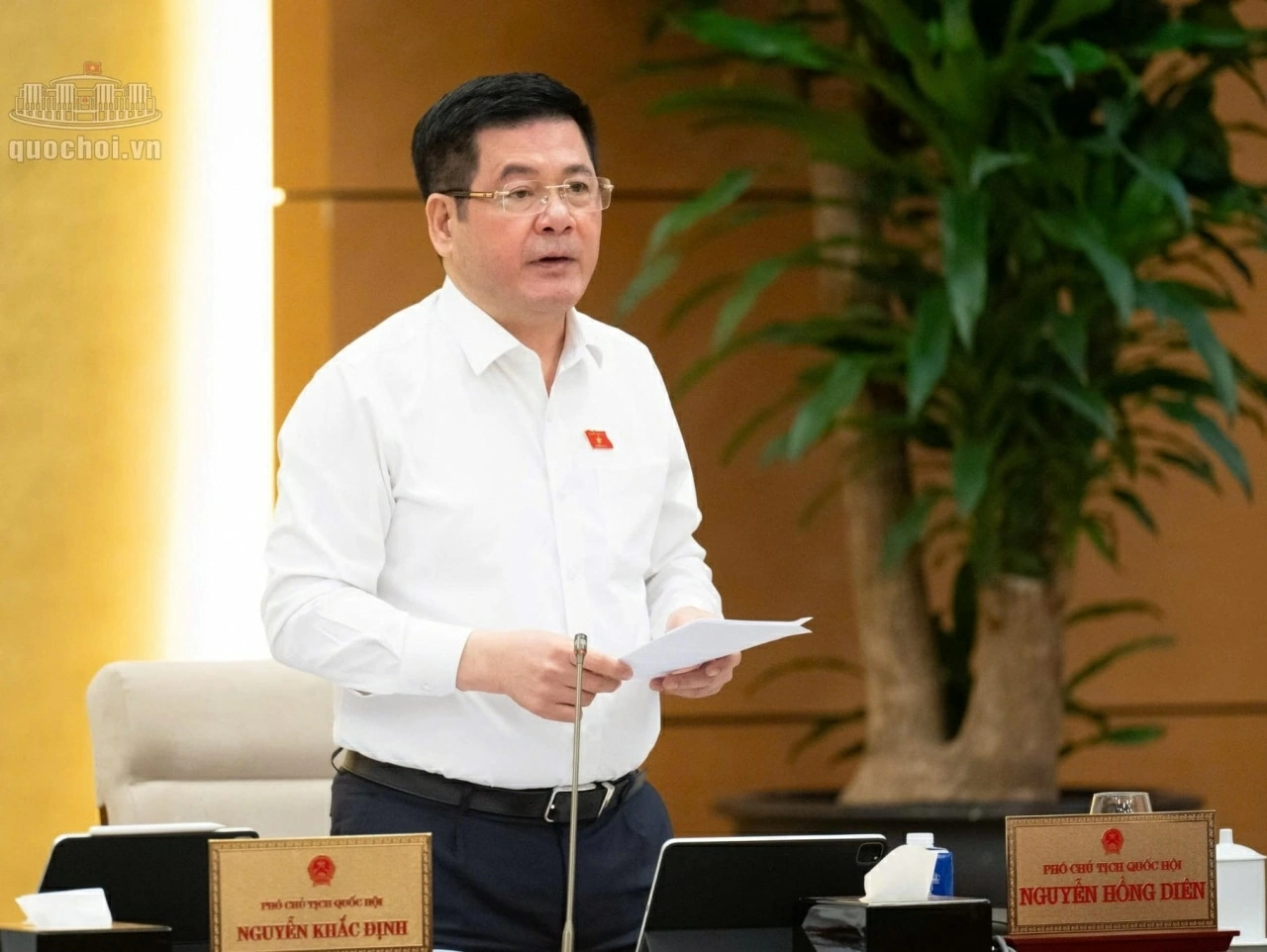 |
| Vice President of the National Assembly Nguyen Hong Dien delivers the session's conclusion. (Source: National Assembly) |
In concluding the session, Vice President of the National Assembly Nguyen Hong Dien stated that the Standing Committee of the National Assembly agrees on the necessity of a comprehensive revision of the 2010 Food Safety Law.
The Standing Committee of the National Assembly suggests that the development of the draft Law must deeply grasp and fully institutionalize Directive 17 of the Secretariat on reorganizing the state management apparatus on food safety towards a unified “one-stop responsibility” from the central to local levels. This model needs to be clearly stipulated in the Law to definitively resolve the situation of dispersion, overlap, vacancy, or shifting of responsibility between ministries and sectors.
At the same time, legislative work must institutionalize the Politburo's directives on thorough digital transformation, administrative procedure reduction, elimination of inappropriate licenses, and a strong shift from pre-inspection to data-based post-inspection.
Regarding the reduction of administrative procedures and business conditions, the Standing Committee of the National Assembly believes that a thorough review of regulations is needed to reduce compliance costs for businesses, especially the mandatory regulation of adding micronutrients to food.
For products that have been granted a registration certificate, adjustments are only required to be re-registered when there are core changes in nature, safety, or utility; minor technical adjustments will be self-updated by businesses on the digital data system without waiting for approval from the authorities.
Additionally, it is necessary to clearly stipulate the validity period of the Product Registration Certificate, the Certificate of Establishment Eligibility for Food Safety; and clarify management responsibilities for online food delivery services, street food, and e-commerce platforms, social networks.
Regarding post-inspection and digital transformation, the draft Law needs to complete regulations on digital transformation, moving towards building a single national food safety data portal, ensuring seamless connectivity with the National Population Database. Innovation in post-inspection is identified as a key stage. Post-inspection activities must go into the essence and have real value, focusing on actual inspection at production facilities and sampling for market testing instead of just post-inspection on procedural records.
The Standing Committee of the National Assembly notes that the feasibility of the draft Law needs to be thoroughly evaluated; transitional provisions must be fully reviewed, determining appropriate timing and implementation roadmap to avoid legal gaps or disruptions to business operations.
Regarding the timeline for submission to the National Assembly, the Standing Committee of the National Assembly agrees to submit it for the National Assembly's consideration and initial opinion at the 2nd session (October 2026) and for approval at the 3rd session (May 2027).