



Quang Ninh: A 40-year journey of renewal, paving the way to becoming a centrally-governed city
WVR - After 40 years of implementing the Party's renewal policies (Doi Moi), from a locality with numerous challenges, limited transportation infrastructure, restricted resources, and an economy heavily reliant on resource extraction, Quang Ninh has gradually transformed into one of the dynamic growth poles of the North.
Latest
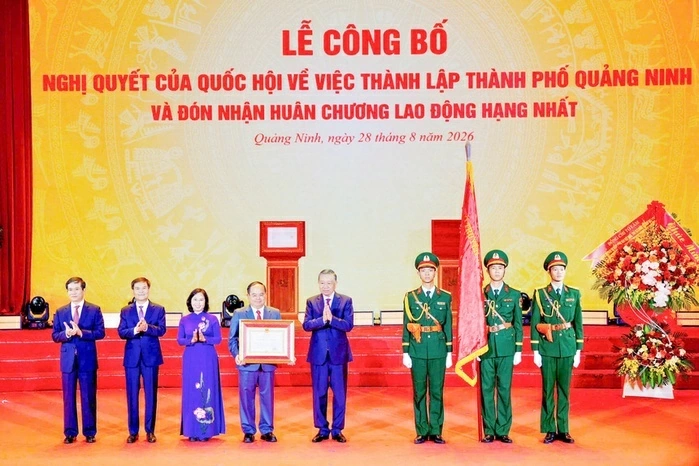 |
| The General Secretary and President present the National Assembly's Resolution on the establishment of Quang Ninh centrally -governed City to the city's leaders. (Source: Organizing Committee) |
August 24, 2026, marks a new milestone when, at the First Extraordinary Session, the 16th National Assembly passed the Resolution to establish Quang Ninh City as a centrally governed city, effective from September 1, 2026. From a locality once likened to a “transportation island,” Quang Ninh steps into a new development space with greater stature and higher demands.
| At the ceremony announcing the National Assembly's Resolution on the establishment of Quang Ninh City and receiving the First-Class Labour Medal on the morning of August 28, General Secretary and President To Lam emphasised that Quang Ninh becoming a city is a significant milestone in its journey of formation, construction, and development. From today, Quang Ninh bears a new urban name, a new stature, and a greater responsibility to the people and the nation. |
From a “transportation Island” to a growth pole
In the early years of the Renewal, Quang Ninh faced numerous obstacles. The terrain was divided by mountains, rivers, and seas; transportation infrastructure was limited; industrial production mainly relied on coal mining; and investment resources were heavily dependent on the state budget.
In this context, the challenge was not only to resolve immediate bottlenecks but also to find a new development direction for the entire economy.
Through many terms, the Party Committee, administration, and people of Quang Ninh have gradually renewed their thinking, boldly experimenting with new models, mobilizing social resources, and better exploiting the unique advantages of the locality.
One of the pivotal decisions was to shift the growth model from “brown” to “green,” gradually reducing dependence on finite resources while expanding development space based on services, tourism, processing and manufacturing industries, and the marine economy.
Changes in development thinking have gradually been reflected in economic indicators. By 2025, Quang Ninh's GRDP reached approximately 368,445 billion VND; per capita GRDP reached 10,402 USD. The GRDP growth rate in 2025 reached 11.89%, among the highest in the country; total state budget revenue reached 85,050 billion VND, the highest ever.
Looking at the historical timeline, the degree of change is even more evident. The economy's scale in 2025 was about 7 times that of 2010, 71.6 times that of 2000, and 135.7 times that of 1995.
Behind these numbers is a process of economic restructuring, changing management methods, and gradually forming a more diverse and dynamic economy.
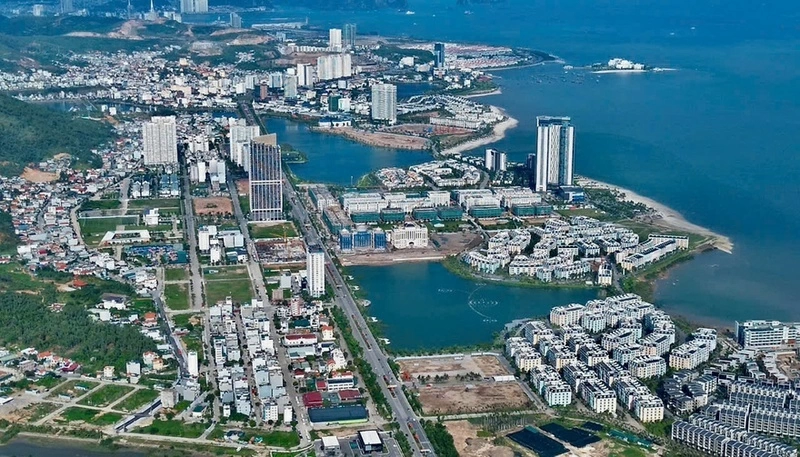 |
| By 2025, Quang Ninh's GRDP reached approximately 368,445 billion VND. (Photo: Thanh Tung) |
When infrastructure becomes a “lever” for development
If shifting the growth model is a strategic choice, then infrastructure is identified by Quang Ninh as one of the prerequisites to realize that choice.
Since 2011, the province has accelerated the transition from “brown” to “green” development, taking green growth and sustainable development as a consistent orientation. Along with that, Quang Ninh has gradually formed a development mindset based on the three pillars of “Nature - People - Culture,” linking economic development with resource conservation, heritage preservation, and improving quality of life.
One of the toughest challenges is finding resources to invest in infrastructure systems under limited budget conditions.
Former Secretary of the Quang Ninh Provincial Party Committee Nguyen Duy Hung stressed that an important local experience is to promote internal resources, not rely on central funds, and proactively invest in strategic transportation routes based on mechanisms and policies permitted by the central government.
Quang Ninh is also one of the localities that boldly exploits resources from the private sector through the public-private partnership (PPP) model, with the mindset of “public investment leading private investment.”
According to the Quang Ninh Department of Finance, from 2014 to now, the total investment capital for PPP projects in the area has reached approximately 46,297 billion VND, with 29 projects across 5 fields. Of this, the state's capital participation is about 5,163 billion VND, equivalent to 11%, mainly for land clearance.
In the transportation sector alone, there are 7 projects with a total capital of about 43,099 billion VND, accounting for 93% of total PPP capital.
Director of the Quang Ninh Department of Finance Pham Hong Bien stated that nearly 90% of resources for PPP projects are mobilized from the private sector. On average, one public budget dollar can attract about 8-9 non-budget dollars.
This approach has fundamentally changed the infrastructure landscape of Quang Ninh.
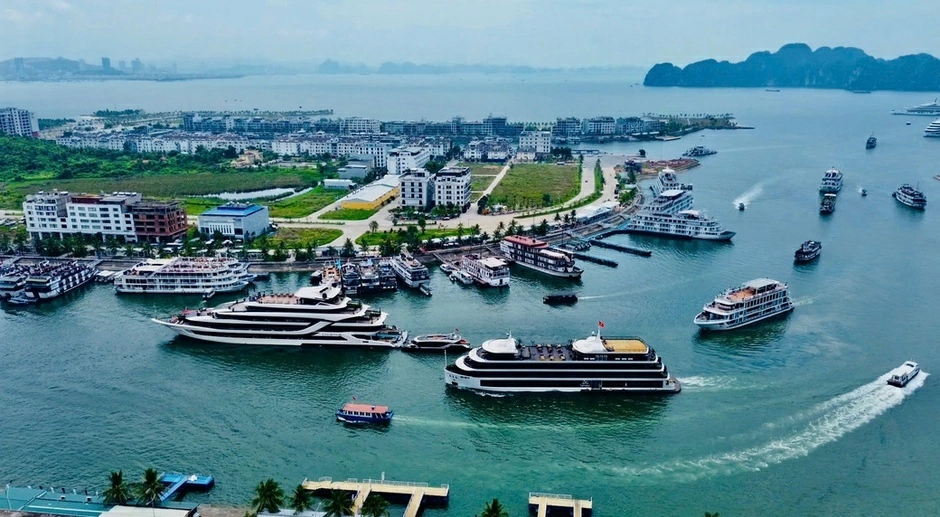 |
| Transportation infrastructure investment not only shortens geographical distances but also changes how Quang Ninh connects with major economic centers. (Photo: Thanh Tung) |
From a locality that once faced many connectivity challenges, Quang Ninh now boasts a relatively synchronized multimodal transportation network, notably the provincial expressway from Hai Phong - Ha Long - Van Don to Mong Cai, nearly 200 km long.
Van Don International Airport - Vietnam's first private airport - opens an air gateway to the Northeast region. Meanwhile, Ha Long International Passenger Port creates additional capacity for Quang Ninh to develop cruise tourism, targeting high-spending international visitors.
Transportation infrastructure investment not only shortens geographical distances but also changes how Quang Ninh connects with major economic centers. From its “island” status, the locality increasingly integrates with the Hanoi - Hai Phong - Quang Ninh development triangle and the Northern Coastal Economic Corridor.
A multi-driven economy
Along with infrastructure, a significant change in Quang Ninh lies in the process of economic restructuring.
While coal previously played a particularly important role, in recent years, processing and manufacturing industries, services, and tourism have increasingly become new growth drivers.
In industrial zones such as Song Khoai, Dong Mai, and Bac Tien Phong, the presence of international companies and corporations in electronics, high-tech industries, and renewable energy equipment is contributing to a new industrial landscape in Quang Ninh.
The participation of major companies like Jinko Solar and Foxconn also demonstrates the increasing attractiveness of the local investment environment, while creating conditions for Quang Ninh to participate more deeply in the global production and supply chain.
Alongside this, tourism continues to be identified as a spearhead economic sector. The advantages of Ha Long Bay, Bai Tu Long, the island system, and cultural-historical values provide Quang Ninh with a foundation to develop high-quality tourism, diversify products, and expand the international market.
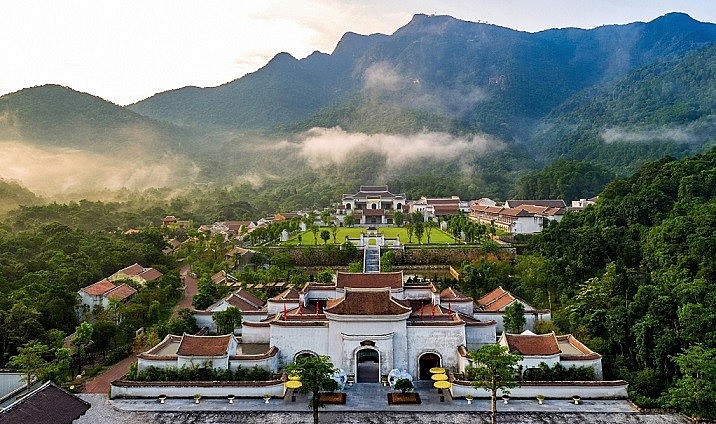 |
| A corner of the Yen Tu scenic complex. (Source: Bao Quan Ninh) |
This orientation aligns with the new requirements set at the 16th Quang Ninh Provincial Party Congress, term 2025-2030. Former Politburo Member Nguyen Xuan Thang emphasized the need to continue renewing thinking, establishing a new growth model, in which science - technology, innovation, digital transformation, and green transformation become important drivers.
In addition to developing modern processing and manufacturing industries, renewable energy, marine economy, and ecological agriculture, Quang Ninh is oriented to become an international tourism center, while developing heritage economy and cultural industries.
Renewal for the people to benefit
A noteworthy aspect of Quang Ninh's development journey is that renewal is not only reflected in growth rates or investment scale but also in how the locality approaches governance and serves the people and businesses.
Quang Ninh has been among the leading provinces in the country for many years in indicators related to competitiveness, administrative reform, citizen satisfaction, and governance effectiveness.
Along with administrative procedure reform, the province focuses on building a transparent and favorable business investment environment, creating conditions for businesses to participate more deeply in the development process.
In mountainous, border, and island areas, socio-economic development support policies are implemented to gradually narrow regional disparities.
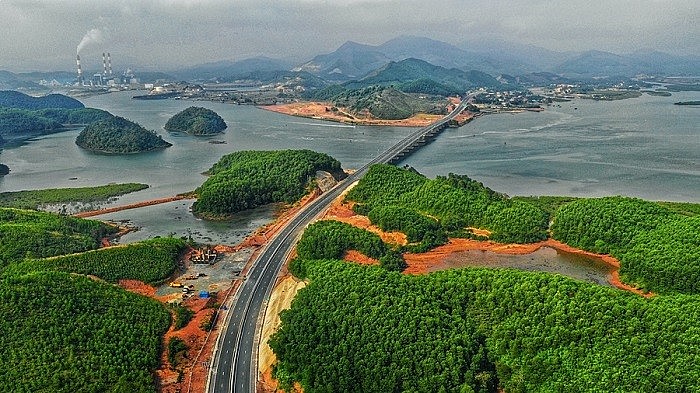 |
| The expressway to Van Don Quang Ninh. (Source: VOV) |
Resolution 06-NQ/TU on sustainable socio-economic development for ethnic minority, mountainous, border, and island areas is one of the policies Quang Ninh implements in this direction. In areas such as Binh Lieu, Ba Che, or special zones like Co To and Van Don, the electricity, roads, schools, and healthcare systems continue to be invested in, contributing to improving living conditions and increasing people's income.
Thus, after 40 years of renewal, Quang Ninh's transformation is not only seen in expressways, industrial zones, or major projects but also in the changes in the lives and development opportunities of people in various regions of the province.
A new development door
The achievements accumulated over 40 years of renewal have laid the foundation for Quang Ninh to enter a new development phase.
On August 24, 2026, the 16th National Assembly passed the Resolution to establish Quang Ninh City as a centrally governed city, effective from September 1, 2026. This is not only a change in administrative organization but also opens up the requirement to restructure development space, enhance governance capacity, and create new growth drivers.
Secretary of the Quang Ninh Provincial Party Committee Quan Minh Cuong emphasised that with advantages in geographical location, seaports, import-export economy, minerals, tourism, along with accumulated socio-economic foundations, the establishment of Quang Ninh City is significant in creating new development space and momentum.
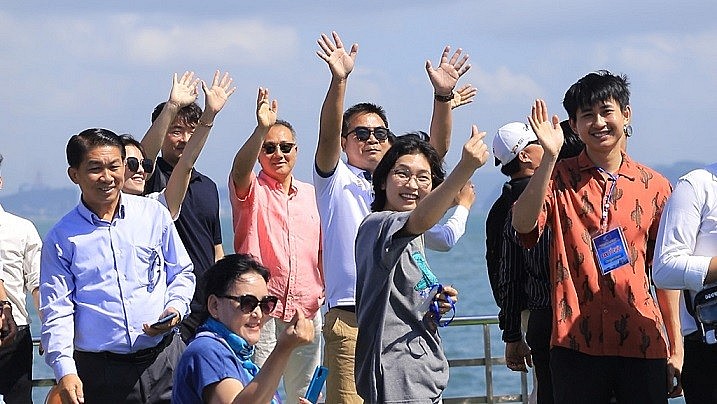 |
| After 40 years of renewal, Quang Ninh's transformation is evident in the lives and development opportunities of people in various regions of the province. (Photo: Hung Anh) |
Quang Ninh stands before the opportunity to better exploit the advantages of a centrally governed city while addressing larger challenges in planning, infrastructure, urban management, human resource quality, green transformation, and sustainable development.
The 40-year renewal journey has provided Quang Ninh with an important foundation: the ability to confront bottlenecks, the courage to change approaches, and the ability to turn limited resources into development drivers.
From a locality once heavily reliant on resource extraction and facing numerous connectivity challenges, Quang Ninh today has formed a multi-driven economy, modern infrastructure, and an open development space.
On September 1, 2026, when the Resolution on the establishment of Quang Ninh City as a centrally governed city officially takes effect, the renewal journey does not close but enters a new chapter. Quang Ninh has more grounds to aim for a modern, green, smart, and distinctive urban area, becoming an increasingly important growth pole for the entire country.