


Prof. Dr. Pham Manh Hung: 'Vietnam’s interventional cardiology is reaching global standards'
Prof. Dr Pham Manh Hung (*) is a leading figure who has made outstanding contributions to Vietnam’s cardiology sector through scientific research, academic publications, specialised books, medical training, and his relentless efforts to place Vietnamese cardiology on the global medical map.
Latest
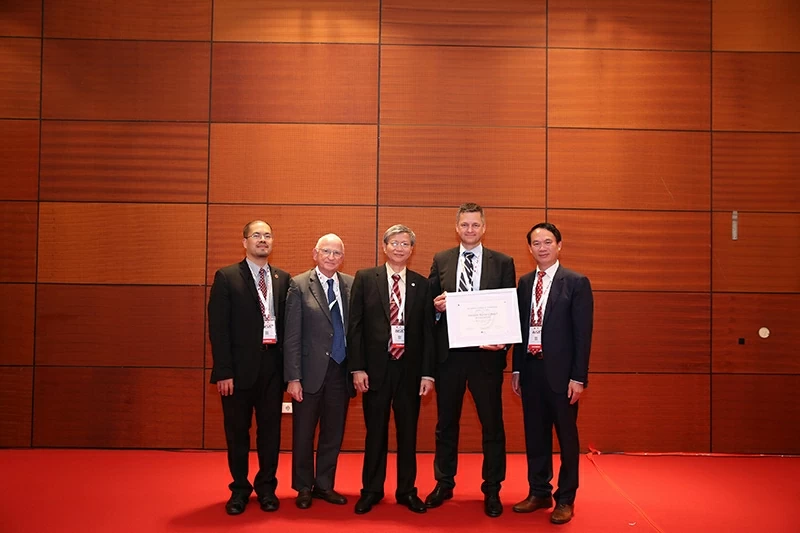 |
| Chair of the scientific workshop session within the framework of the European Conference on Interventional Cardiology (EuroPCR 2024). |
On the occasion of the 35th anniversary of Vietnam–EU diplomatic relations, The World and Vietnam Report is pleased to introduce to readers the professional reflections of a professor who has devoted his life to this field.
Professor, you are not only a leading expert in interventional cardiology, but also have more than 30 years of teaching experience at the Department of Cardiology, Hanoi Medical University. Could you share your views on the responsibilities of those who are both teachers and physicians?
I was born into a family with a strong medical tradition. According to the Hippocratic Oath, physicians not only diagnose and treat patients but also bear the responsibility of passing on knowledge to future generations. Beyond teaching theory, clinical thinking, and updating modern knowledge and techniques, medical students need dedicated and highly qualified mentors who guide them directly through patient examination, diagnosis, and treatment. Only in this way can we train doctors with strong professional competence and solid medical ethics for our national healthcare system.
I feel truly happy to see many generations of my students now becoming excellent doctors, even in remote and disadvantaged areas, where they are able to successfully perform complex cardiac interventions and save lives under challenging conditions. For a physician and teacher like me, that is an invaluable reward.
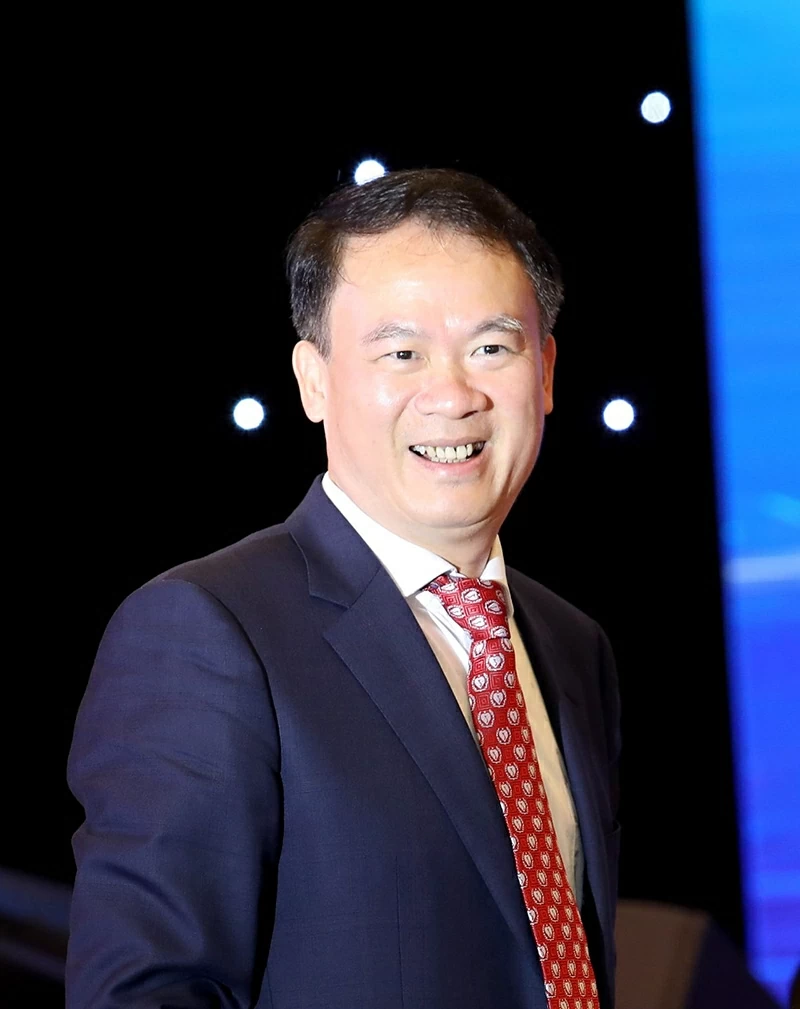 |
| Prof. Dr. Pham Manh Hung. |
Over the past decades, you and your colleagues have worked tirelessly to place Vietnam on the global cardiology map. Could you highlight some of Vietnam’s most notable achievements in general cardiology and interventional cardiology in particular?
The physicians and lecturers at the Department of Cardiology, Hanoi Medical University, have consistently been at the forefront of applying advanced techniques in cardiovascular treatment, keeping pace with regional standards and moving closer to the world’s most advanced medical systems, especially in the field of interventional cardiology.
In Vietnam, we have successfully applied many advanced procedures, including transcatheter aortic valve replacement, mitral valve repair and replacement, and left atrial appendage closure, all performed via catheter-based approaches. As a result, many elderly patients or those who previously had cardiac surgery no longer require open-heart surgery. With only local anaesthesia through femoral access, patients can walk again after just a few hours, with significantly reduced complications.
Many other advanced techniques have also been developed rapidly, enabling patients to receive effective treatment domestically without the need to go abroad at great expense, thereby contributing significantly to cardiovascular healthcare for the Vietnamese people.
Beyond technology transfer, we have also achieved remarkable innovations and strengths that allow us to share and train doctors from other countries in congenital heart interventions, valvular interventions, and stent graft implantation. As a result, many cardiac centres from the region and around the world have come to Vietnam to learn from our experience. I am very proud that Vietnam’s interventional cardiology has now reached the level of leading countries in Southeast Asia and Asia, and is steadily expanding its global presence.
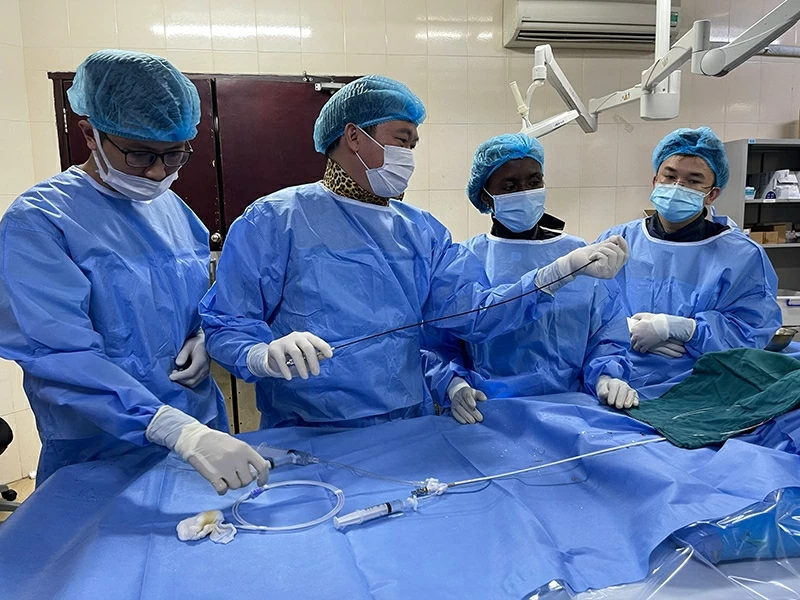 |
| Guiding international trainees on interventional cardiology techniques within the framework of cooperation with the Republic of France. |
You are the author and editor of many scientific works, articles, and books highly regarded by international experts. Which achievement gives you the greatest sense of fulfilment?
I have participated in or served as editor-in-chief of 19 textbooks and specialised medical books, including three published in the United States. I have also published over 300 scientific papers in reputable domestic and international journals, and I have received numerous scientific awards. In addition, I have led and participated in numerous international, national, and ministerial-level research projects, including Inoue balloon mitral valvuloplasty for mitral stenosis—especially in pregnant women; percutaneous coronary interventions; stem cell therapy; and interventions for congenital heart diseases. These studies have been widely applied in clinical practice with high efficiency.
For me, the greatest achievement is contributing to the sharing and dissemination of professional expertise in interventional cardiology to colleagues and students in Vietnam and around the world.
You frequently deliver scientific presentations at major international conferences in Europe and globally. Can you serve as a bridge to strengthen international research cooperation for Vietnamese doctors?
We maintain close cooperation and strong professional ties with the European Society of Cardiology (ESC) and European interventional cardiology organisations such as EuroPCR. Every year, they invite us to participate in scientific research activities, training programs, conferences, workshops, and bilateral cooperation initiatives.
The EU region is highly advanced in interventional cardiology. I always feel the openness and strong willingness of European colleagues to support Vietnamese medicine. In my capacity, I am always ready to serve as a bridge, bringing the latest advances in interventional cardiology from Europe and around the world to Vietnam, thereby contributing to the continued development of this field.
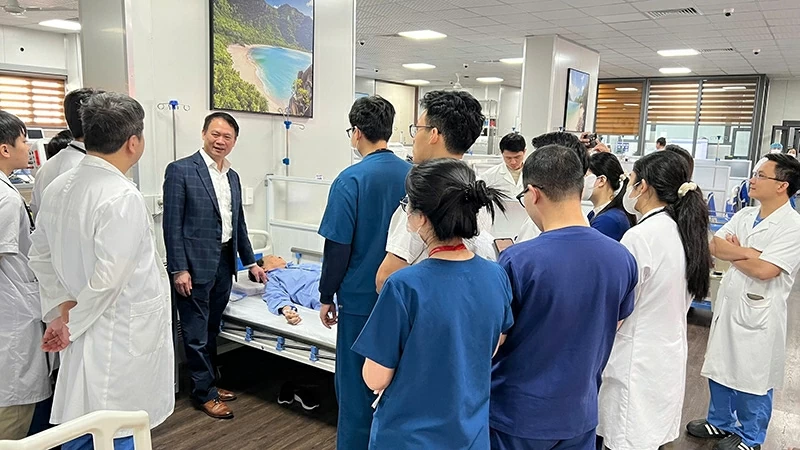 |
| A clinical lecture at the patient's bedside. |
What is your most memorable experience with domestic and international colleagues during professional cooperation?
There are many memorable experiences, but the person who left the deepest impression on me is Prof. Thach Nguyen. He was not only an exceptionally talented scientist but also a person who made tremendous contributions to Vietnamese medicine. To me, he was both a respected teacher and a cherished colleague.
He not only imparted knowledge and techniques but also inspired professional dedication, constantly seeking ways to support Vietnam and connect us with leading professors from the United States, Europe, and around the world. In particular, he personally came to Vietnam to provide hands-on training, helping educate many generations of interventional cardiologists. Without Prof. Thach Nguyen, Vietnam’s interventional cardiology would not have advanced as rapidly as it has today. From the bottom of my heart, I express my deepest gratitude to him.
(*) Prof. Pham Manh Hung is Head of the Department of Cardiology at Hanoi Medical University; President of the Vietnam Society of Interventional Cardiology; Vice President of the Vietnam Heart Association; President of the Southeast Asian Federation of Cardiology; and former Director of the Vietnam National Heart Institute – Bach Mai Hospital.
| RELATED NEWS | |
 | Vietnam set to become premier destination for global tech talent and innovation: PM |
| Vietnam reviews 5 years of implementing the global compact for safe, orderly and regular migration |