




Vietnam–Chile relations: A 55-year journey bridging distance and laying the foundation for the future
WVR - Marking the 55th anniversary of diplomatic relations between Vietnam and Chile, Vietnamese Ambassador to Chile Nguyen Viet Cuong expressed his delight at the positive developments in bilateral ties and shared his reflections with Chilean readers. The World and Vietnam Report is honoured to introduce his article.
Latest
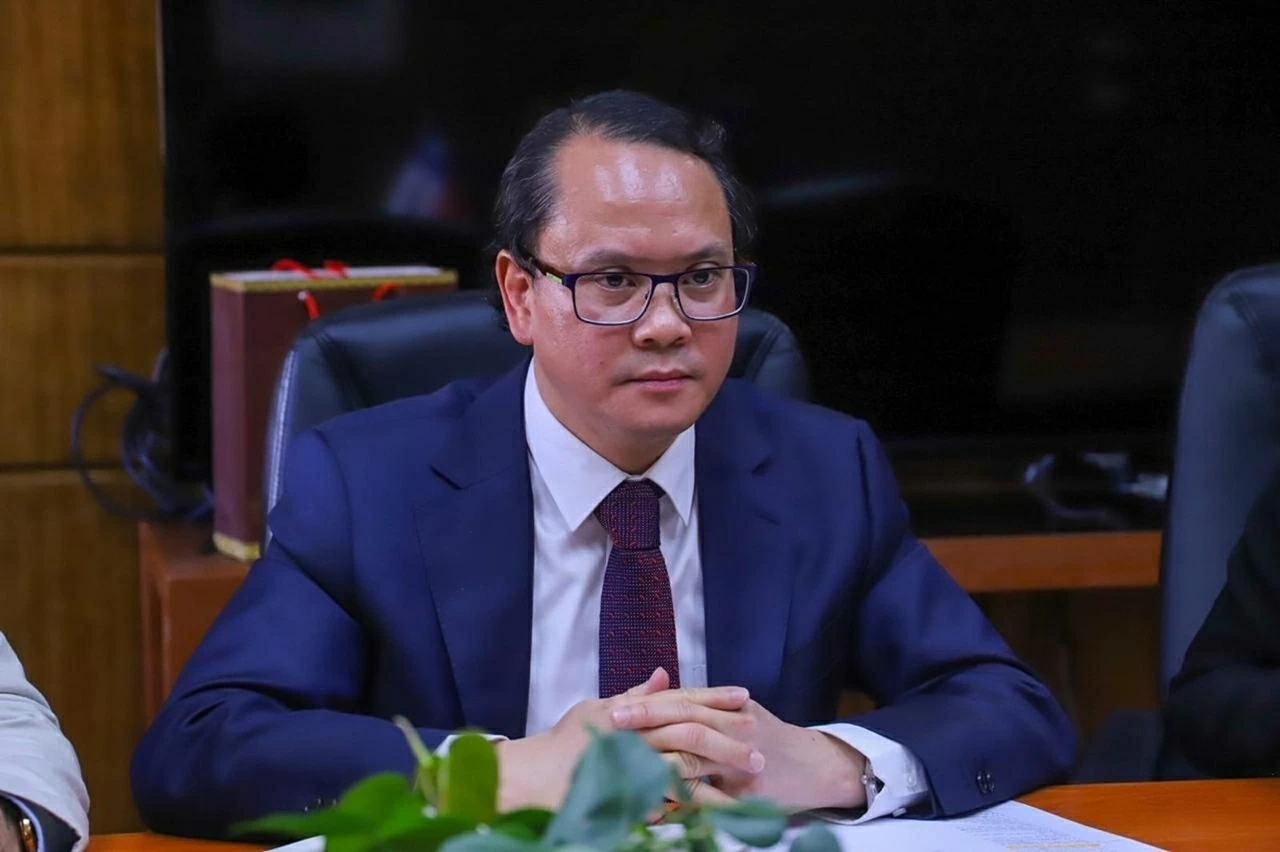 |
| Vietnamese Ambassador to Chile Nguyen Viet Cuong. (Source: Resumen) |
This year marks the 55th anniversary of diplomatic relations between Vietnam and Chile. As Vietnam’s Ambassador to Chile, I am delighted to witness the positive development of bilateral relations over the years. On this significant occasion, I would like to share with Chilean readers my impressions, observations, and reflections from my time living and working in your country.
On March 25, 1971, Chile became one of the first South American countries to establish diplomatic relations with Vietnam. Soon, the two nations will celebrate 55 years of diplomatic ties.
A 55-year journey bridging distances and the test of time
Earlier this year, I visited Aysén, the gateway to Patagonia in southern Chile. Standing amidst the majestic nature of one of South America's most remote regions, I pondered the distance between two of the world's farthest points: Vietnam and Chile, nearly 19,000 km apart. Yet, 55 years ago, our two nations chose to join hands.
Fifty-five years is a long enough period to test any relationship. Over more than half a century, both Vietnam and Chile have navigated their own historical turns: Vietnam transitioned from war to peace, from a closed economy to a deeply integrated nation with the world. Chile, on its part, has become one of Latin America's most open economies.
Despite numerous upheavals, the relationship between our two countries has been preserved and nurtured by successive generations of leaders. Today, both Vietnam and Chile have chosen the path of integration. Vietnam, with 17 free trade agreements covering over 60 economies, and Chile, with more than 30 agreements covering 64 economies, are among the countries with the world's broadest trade networks. In other words, we choose to open rather than close. We have many institutional, cultural, and linguistic differences, but we share a common aspiration for development and a similar approach to achieving our goals.
In 2007, the two countries established a Comprehensive Partnership framework. To me, this cooperation framework holds significant meaning, not just as a diplomatic agreement. In a world where alliances can shift and supply chains can break overnight, the most valuable asset is relationships that have stood the test of time.
With over 100 million people, a total trade turnover exceeding 930 billion USD, located at the heart of Southeast Asia with over 3,200 km of coastline along crucial international maritime routes, Vietnam currently maintains Comprehensive Strategic Partnerships with 15 countries and organizations, including all five permanent members of the United Nations Security Council, thanks to its consistent foreign policy: Independence, self-reliance, cooperation with all countries, but no military alliances with anyone. With Chile, Vietnam has 55 years of trust, despite numerous upheavals in both countries. We have established a Comprehensive Partnership and are committed to promote our relationship based on this framework.
Cooperation for development and leveraging complementary strengths
During my tenure in Chile, I have traveled extensively—from Valdivia, with its internationally recognised wetlands, to Antofagasta, where the Atacama Desert is being harnessed for clean energy, and most recently to Aysén in Patagonia, where fjords sustain one of the world’s largest salmon industries.
Chile not only boasts majestic natural landscapes but also abundant resources. It is the world’s largest copper producer, accounting for roughly a quarter to nearly a third of global output, and a leading producer and exporter of lithium—two key minerals for the global energy transition. As a founding member of the Pacific Alliance, Chile serves as a natural bridge between Latin America and the Asia-Pacific region.
Chile is leading the region in renewable energy development, with a significant increase in electricity from renewable sources in recent years and the implementation of a green hydrogen strategy with ambitions to become a leading exporter.
Vietnam is also committed to achieving net-zero emissions by 2050. Standing before the vast solar panel fields in the Atacama Desert—where solar radiation is among the highest in the world—I cannot help but think of the similar potential in Vietnam. This is an area where our two countries can fully collaborate.
Vietnam and Chile have signed a bilateral Free Trade Agreement—the first FTA between Vietnam and a Latin American country—and are both members of the Comprehensive and Progressive Agreement for Trans-Pacific Partnership (CPTPP).
Bilateral trade turnover has reached nearly 1.8 billion USD, a significant increase compared to the period before the FTA took effect. Chile is currently Vietnam's fourth-largest trading partner in Latin America, while Vietnam is Chile's leading trading partner in ASEAN.
The potential is vast, as the two economies are highly complementary: Vietnam is a global hub for electronics and technology manufacturing but needs strategic raw materials like copper and lithium that Chile possesses; conversely, Chile's high-quality minerals, agricultural products, and seafood require the large markets that Vietnam and ASEAN can offer. The question now is not "whether to cooperate" but "how to turn these advantages into tangible benefits for the people of both countries".
The answer lies in the political will of the leaders of both countries, who have persistently nurtured trust over the years, bringing the two sides of the Pacific Ocean closer together. In November 2024, Vietnamese President Luong Cuong paid an official visit to Chile—the first Head-of-State visit in 15 years—affirming the determination to elevate bilateral relations to a new level.
The answer also lies in the aspirations of Chilean entrepreneurs wanting to bring wine, cherries, and salmon to Asian consumers, including Southeast Asia, and Vietnamese entrepreneurs seeking opportunities in a continent full of potential to explore; where scientists pursue clean energy and sustainable agriculture; and where young people are eager to learn a new language to understand a culture on the other side of the globe.
Continuing the story of cooperation for peace, cooperation, and development
The 19,000 km distance is a barrier. However, as I stand in Patagonia and think of Vietnam, I realize that geographical distance is ultimately just a number. What truly matters is the human will to overcome it.
Over the years, despite numerous upheavals and different political tendencies, the relationship between Vietnam and Chile has always been preserved and nurtured by successive generations of leaders, fostering political trust and creating a solid foundation for promoting cooperation in various fields.
Looking back on the 55-year journey, the people of Vietnam and Chile have shown that both nations have aspirations and desires to promote cooperation and strengthen friendship for the benefit of their peoples, as well as for peace, cooperation, and development. The uniqueness of the relationship lies in the way the two countries respect each other and turn differences into complementary strengths.
Chile, with the expansive spirit of the Andes and a vision toward the ocean, has found in Vietnam—a nation shaped by the resilient vitality of a wet-rice civilization and a strong will to rise—a kindred partner in spirit. The deep-rooted affinity between the peoples of the two countries lies in a shared belief in the right of nations to self-determination, in a more equitable world order, and in development centered on people.
In the multilateral arena, Vietnam and Chile are responsible partners in addressing the challenges of our time. At major forums such as the United Nations and the Asia-Pacific Economic Cooperation (APEC), the two countries consistently maintain a steadfast stance: upholding the rule of law and strongly supporting the United Nations Charter in the peaceful resolution of disputes.
This partnership further extends into key areas of the 21st century: from jointly promoting a sustainable blue economy and ensuring maritime and aviation security and safety to keep trade flows smooth, to advancing substantive cooperation to combat climate change and addressing non-traditional security challenges.
The two nations share a common voice at Climate Change Conferences (COP), turning individual efforts into collective strength in the pursuit of protecting our planet.
Notably, the two countries’ consensus in signing the United Nations Convention against Cybercrime and their cooperation in ensuring cyber-security reflect a shared vision: building a peaceful and prosperous world that ensures safety for people in the digital age.
I am confident that, with the efforts of both sides and the achievements of 55 years of diplomatic relations, the next chapters of Vietnam–Chile cooperation will continue to bring tangible benefits to the peoples of both countries, contributing to peace, cooperation, and development in the region and the world.