




National Assembly holds a meeting on personnel matters
Today, November 10, the National Assembly holds a meeting on personnel matters and other topics concerning population and disease prevention.
Latest
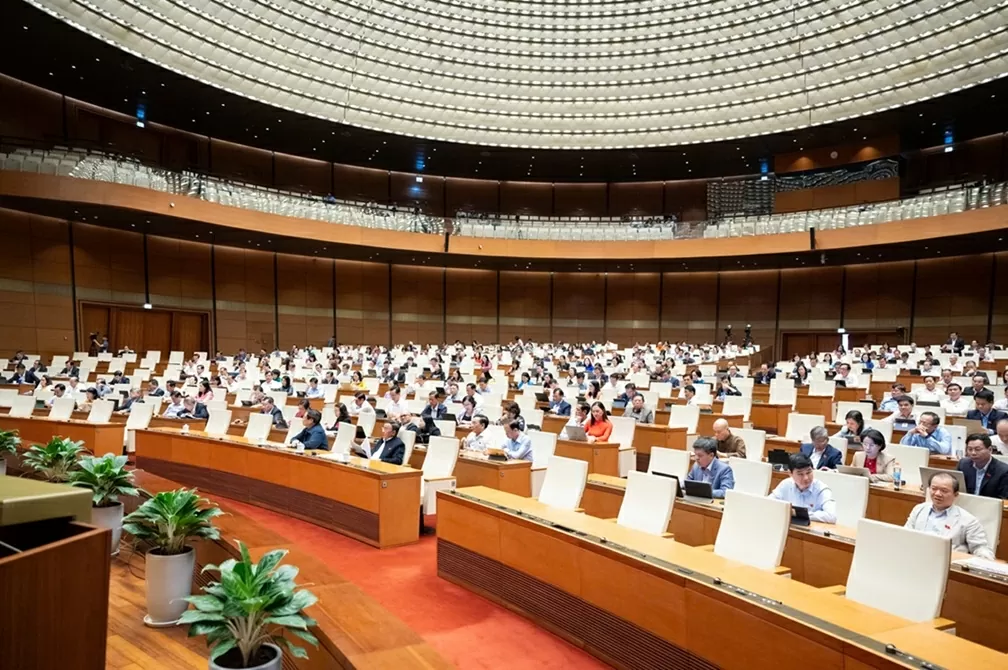 |
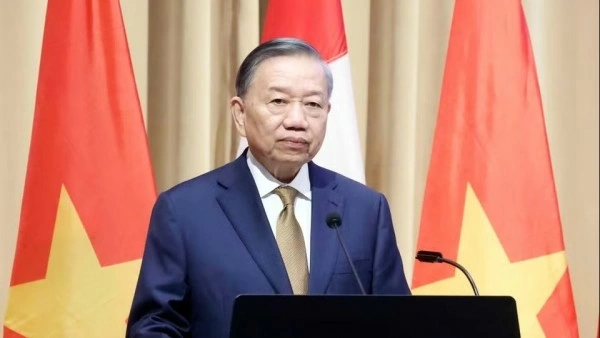
| National Assembly holds a private meeting on personnel matters. (Source: National Assembly) |
The National Assembly holds a private meeting on personnel matters. The National Assembly also discusses topics on Population Law Project; Disease Prevention Law Project. Subsequently, the Minister of Health provides explanations and clarifications on several issues raised by the National Assembly delegates.
* Previously, on the morning of November 8, the National Assembly's Committee on Culture and Society held its 4th plenary session to review a number of important matters.
One of the topics that received significant feedback from the delegates attending the session was the draft Resolution of the National Assembly on several special, breakthrough mechanisms and policies for the development of education and training.
Presenting a summary report on the Resolution, Deputy Minister of Education and Training Pham Ngoc Thuong stated that several special, breakthrough mechanisms and policies for the development of education and training are outlined in the draft Resolution under specific policies.
The policy for developing educational programs aims to issue a unified national textbook set from the 2026–2027 academic year, moving towards free education by 2030; exempting tuition fees for national defense – security subjects; allowing educational institutions to collaborate with businesses, co-invest, and share benefits, as well as receive and transfer internationally accredited foreign programs.
The policy for digital transformation and the development of science and technology in education focuses on investing in digital infrastructure, a national database, establishing innovation centers, allowing businesses to contribute intellectual property as capital and receive a 50% tax reduction for 10 years, followed by a 5% tax rate. The draft also proposes a mechanism for outcome-based budgeting to increase efficiency in budget use.
The policy for expanding autonomy and international cooperation allows educational institutions to organize international conferences and seminars without permission; exempts income tax for the first 12 months, reduces it by 50% for the next 29 months for foreign experts; and permits the establishment of public university branches of Vietnam abroad.
The policy for expanding access to preferential credit sources enables learners to cover educational and living expenses, while implementing a national key program for doctoral training linked to advanced science and technology tasks.
The investment incentive policy allows the Provincial People's Council and People's Committee to decide on projects and use educational land through simplified procedures, ensuring a minimum budget allocation of 20% for education, with at least 50% invested in difficult areas, along with tax deductions for educational sponsorships.
On behalf of the reviewing agency, Deputy Chairman of the National Assembly's Committee on Culture and Society Dinh Cong Sy stated that the reviewing agency agrees with the policy but suggests a thorough assessment of financial, human resources, and implementation mechanisms to ensure feasibility and avoid resource dispersion.
Commenting on the Draft Resolution, Vice Chairwoman of the National Assembly's Ethnic Council Tran Thi Hoa Ry praised the close coordination between the drafting and reviewing agencies.
However, the delegate noted that some issues remain unclear, especially those related to ethnic minorities in connection with the Politburo's Resolution 71.
According to the delegate, the Government is preparing to merge three national target programs: Poverty Reduction, New Rural Development, and Development of Ethnic Minority Regions, in which cultural, educational, and health fields are assigned to the responsible ministries. Therefore, this Resolution needs to clearly outline the coordination mechanism and implementation responsibilities of the ministries to avoid overlaps in execution.