



From WTO to a New Era: Ho Chi Minh City charts its course for International Integration
WVR - On June 30, at the Department of Foreign Affairs of Ho Chi Minh City, the scientific seminar "International Integration of Ho Chi Minh City: Some Theoretical and Practical Issues" was held to discuss and clarify the theoretical and practical foundations, and propose policy implications to enhance the effectiveness of international integration for the City in particular, and Vietnamese localities in general, in the new phase.
Latest
The seminar is part of the task of researching the ministerial-level scientific project "International Integration of Ho Chi Minh City: Some Theoretical and Practical Issues" led by the Department of Foreign Affairs of Ho Chi Minh City.
Attending the seminar were Ambassador Dang Dinh Quy, former Deputy Minister of Foreign Affairs; Pham Chanh Truc, former Deputy Head of the Party Central Committee's Economic Commission, former Standing Deputy Secretary of the Ho Chi Minh City Party Committee; Dr. Nguyen Thanh Phong, Chairman of the Scientific Council of the Institute of Socio-Economic Research, Saigon University, former Chairman of the Ho Chi Minh City People's Committee; Tran Xuan Thuy, Deputy Director of the Department of Foreign Affairs of Ho Chi Minh City; along with representatives from various departments, research institutes, and universities in the City.
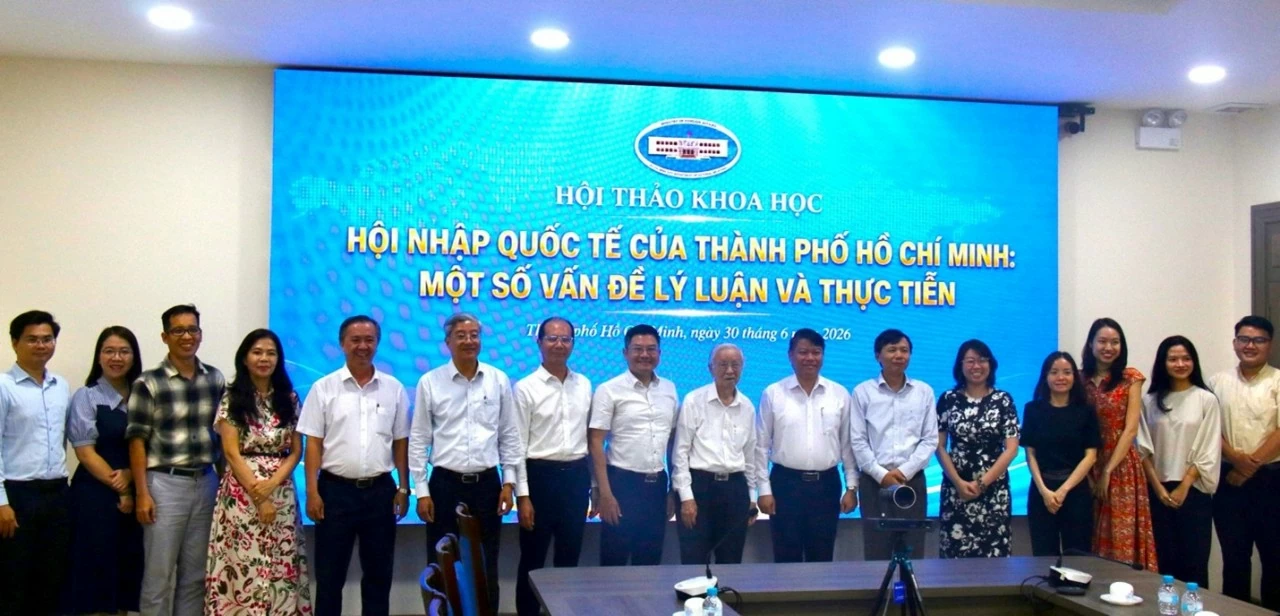 |
| The delegates attending the seminar and members of the Project. |
In his opening remarks at the seminar, Deputy Director of the Department of Foreign Affairs of Ho Chi Minh City Tran Xuan Thuy, Project Leader, emphasized that international integration is a strategic orientation throughout by the Party and the State, from Resolution 22-NQ/TW dated April 10, 2013, on international integration to Resolution 59-NQ/TW dated January 24, 2025, on international integration in the new situation, with an important shift from the mindset of "participation, expansion, commitment implementation" to "proactive creation, taking integration as a strategic driving force" for national development.
For Ho Chi Minh City, enhancing the effectiveness of international integration has become even more important following the Politburo's issuance of Resolution No. 09-NQ/TW on May 19 on building and developing the city in the new era.
The resolution identifies that the City must pioneer in opening the way for development models, institutions, and governance methods, in which foreign affairs and international integration are among the important tasks and solutions. Accordingly, the current issue is to clarify how international integration at the local level, especially in a special urban area like Ho Chi Minh City, should be understood correctly and sufficiently.
This is not only about implementing national foreign policy at the local level but also about the process in which local administrations, businesses, and citizens participate and self-adjust to adapt to international standards, commitments, and requirements.
In response to this requirement, the project, "International Integration of Ho Chi Minh City: Some Theoretical and Practical Issues," seeks to clarify the concept and content of international integration at the local level, analyze Ho Chi Minh City's integration process since Vietnam joined the WTO in 2007, and develop a set of criteria for evaluating the level and effectiveness of local international integration to support policymaking in the coming period.
At the seminar, delegates focused on discussing three main content groups: Theoretical foundations and concepts of local international integration; international experiences and reference lessons for Ho Chi Minh City; the practical implementation of international integration of the City through various phases, from after Vietnam joined the World Trade Organization (WTO) in 2007, to the issuance of Resolution 22-NQ/TW dated April 10, 2013, on international integration, and now Resolution 59-NQ/TW dated January 24, 2025, on international integration in the new situation.
The presentations at the seminar focused on analyzing the content and scope of local international integration, international experiences, and the practical integration of Ho Chi Minh City. Ambassador Dang Dinh Quy clarified the difference between "foreign affairs" and "international integration", pointing out specific tasks that local governments need to perform, while emphasizing that localities are not only places for implementation but also for policy critique, helping the Central Government in law-making.
Dr. Dao Minh Hong shared integration experiences of Shanghai, Rotterdam, and Mumbai – non-capital cities with many similarities to Ho Chi Minh City, suggesting reference lessons.
Dr. Nguyen Thanh Phong discussed the practical implementation of Resolution 22-NQ/TW, affirming the City's pioneering role in expanding international cooperation through various development phases.
Comrade Pham Binh An analyzed the City's integration process through three phases since 2007, while proposing new directions such as strengthening strategic autonomy, resolving infrastructure bottlenecks, and investing in high-quality human resources.
Mr. Nguyen Huu Nam, Deputy Director of VCCI Southern Region, emphasized the significant role of the business community, especially small and medium enterprises, in the integration process, and suggested more support in terms of information, capacity, and resources.
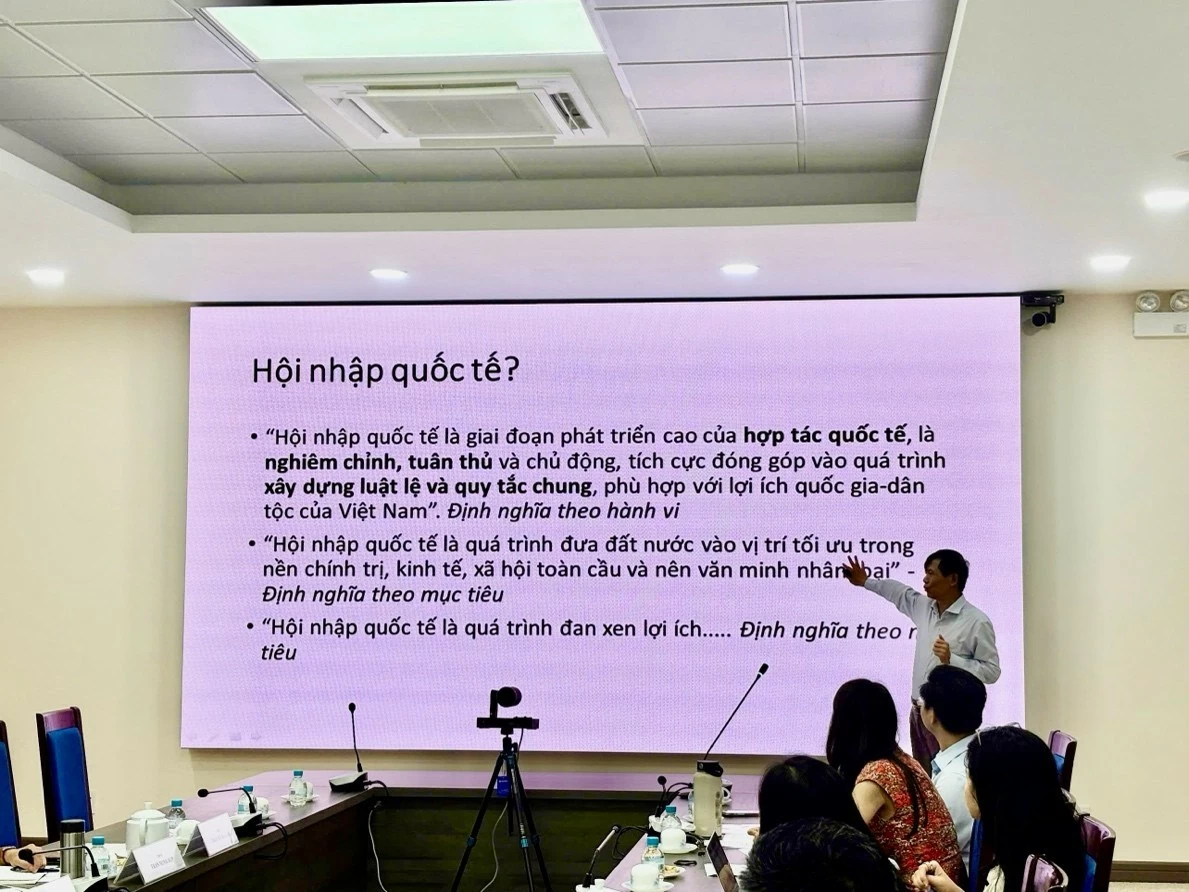 |
| Comrade Dang Dinh Quy presenting at the seminar. |
The discussion focused on two major topics: Understanding local international integration, with many opinions emphasizing that this is a multi-subject, multi-field process, not just the foreign affairs activities of the government, and the role and contribution of Ho Chi Minh City in Vietnam's international integration process, along with current bottlenecks in connecting global resources, enhancing competitiveness, and supporting businesses to participate more deeply in the international market.
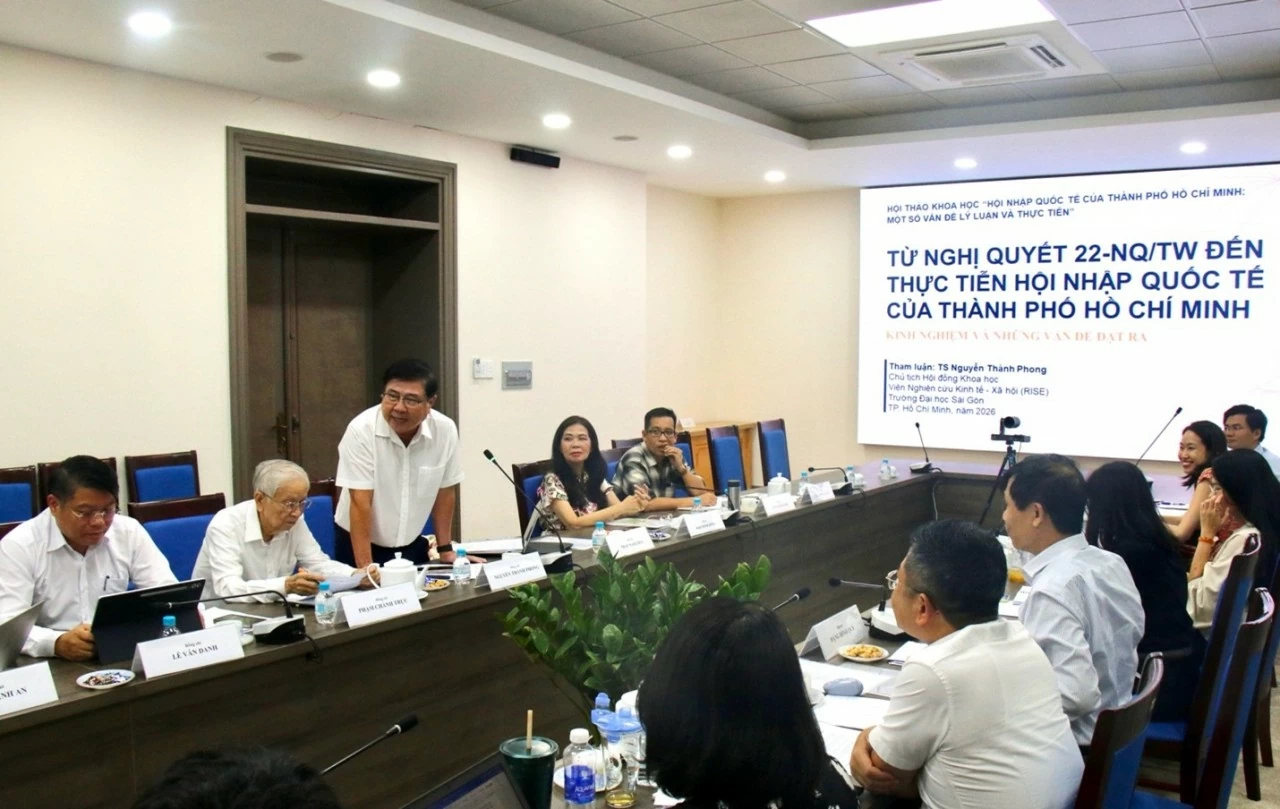 |
| Comrade Nguyen Thanh Phong presenting at the seminar. |
The opinions at the seminar unanimously agreed that in the context of digital transformation, digital economy, geopolitical competition, and the requirement for sustainable development, Ho Chi Minh City needs to continue to promote its leading role in the country's international integration.
This requires the City not only to expand foreign relations but also to improve governance quality, build an internationally oriented business environment, develop high-quality human resources, promote innovation, and support businesses in meeting global standards.
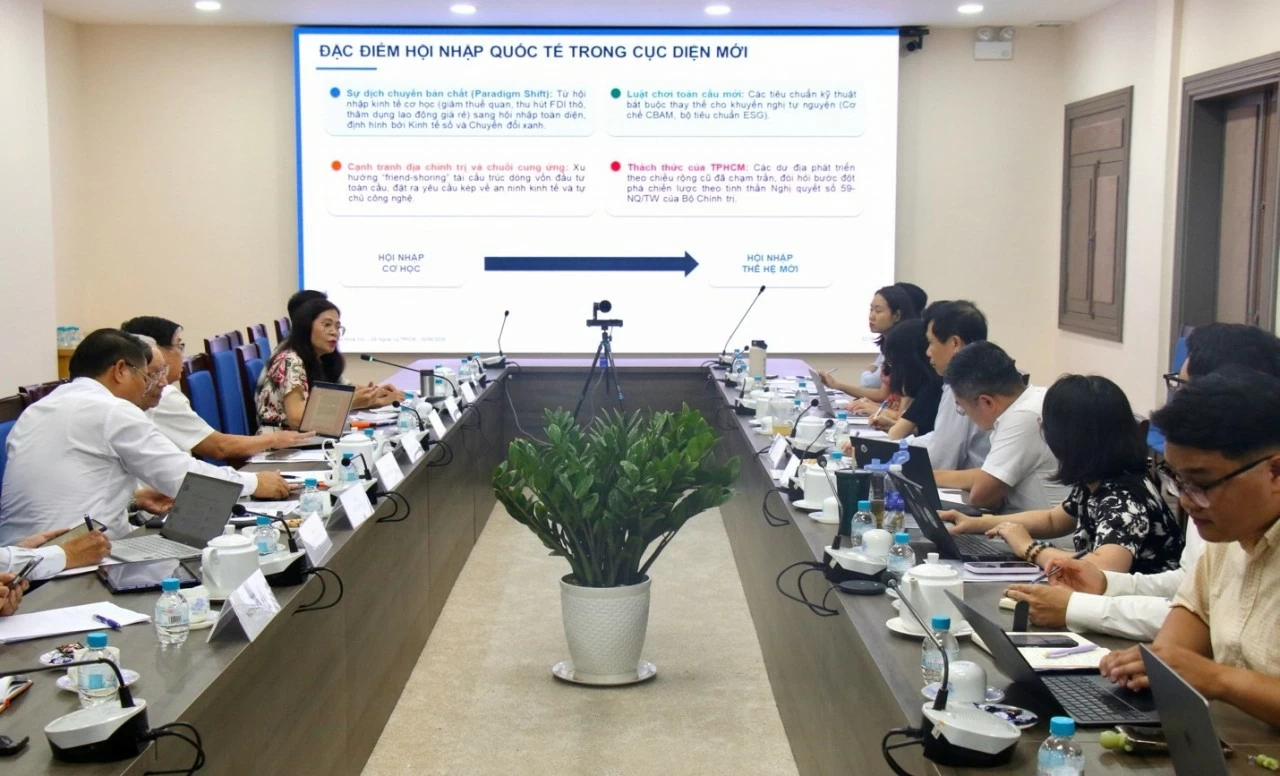 |
| The delegates attending the seminar exchange with the Project members. (Photo: Organizing Board) |
Concluding the seminar, comrade Tran Xuan Thuy, Project Leader, thanked the delegates for their participation and contributions. He affirmed that the heartfelt, profound, and practical exchanges at the seminar will be an important foundation for the research team to absorb, complete the theoretical basis, verify practices, and propose practical policy implications, aiming to build a set of criteria to evaluate the level and effectiveness of the City's international integration, thereby affirming the role and making international integration a growth method for Ho Chi Minh City in the new development phase.