



Hung Yen - Bringing advantages and resources together for greater growth
With its strategic location at the heart of the Red River Delta, a solid economic foundation, and targeted investment attraction policies, Hung Yen is well-positioned to break through and aim to become a modern industrial hub, a civilized urban area, and a key maritime economic center in the North.
Latest
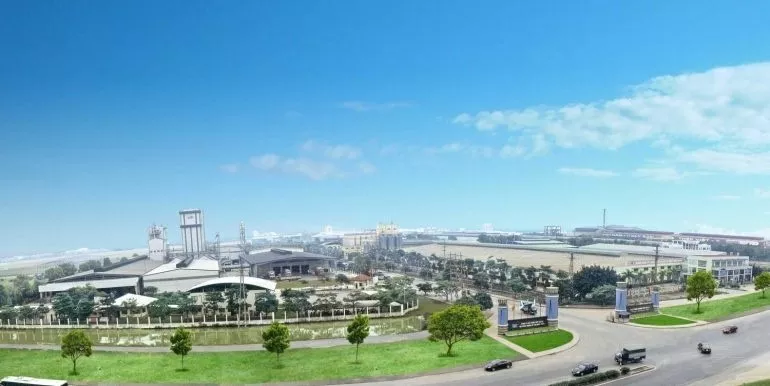 |
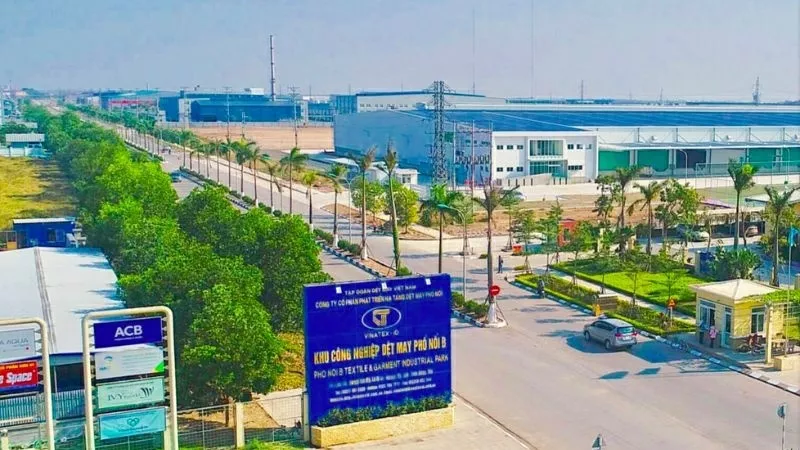
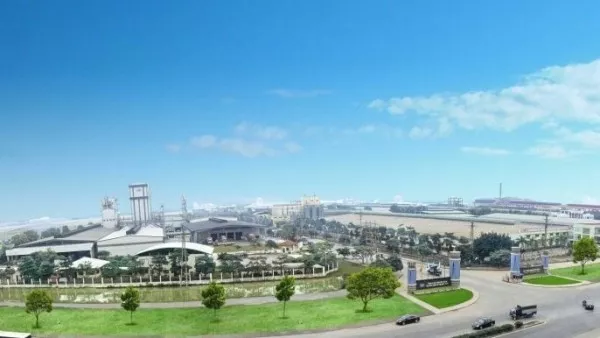
| Pho Noi A Industrial Park, Hung Yen. (Source: Dan tri) |
Inter-regional connectivity advantages
After consolidation, Hung Yen spans approximately 2,638 km² of natural area, about 487 km² of maritime space, and 104 commune-level administrative units. This new scale facilitates the province's reorganization of its economic space, connecting industrial, urban, and service centers, as well as coastal areas, thereby creating more diverse growth drivers.
Located adjacent to Hanoi, Bac Ninh, Hai Phong, and Ninh Binh, Hung Yen holds an advantage in connecting with major economic centers in the North. Notably, the new development space expands connectivity among the northern industrial area, the central region, and the eastern coastal area, facilitating the circulation of goods, supply chain development, and logistics services.
According to the adjusted Hung Yen Provincial Plan for the 2021-2030 period, with a vision to 2050, approved by Resolution No. 832/NQ-HDND on February 25, 2026, the province's development space is oriented towards multi-center linkage and is associated with economic corridors and strategic traffic axes.
The goal is to effectively exploit the advantages of each area, enhance intra-provincial and inter-regional connectivity, and harmoniously develop industry, urban areas, services, and the maritime economy. This is a crucial foundation for Hung Yen to expand its economic scale, enhance competitiveness, and participate more deeply in the production and trade network of the Red River Delta. Economic growth lays the groundwork for new advances.
The economic results achieved in 2026 demonstrate Hung Yen's remarkable momentum post-consolidation.
According to the provincial statistics agency, the GRDP for the first nine months of 2026 is estimated to increase by 11.22% compared with the same period last year, ranking 7th among 34 provinces and cities nationwide and 5th in the Red River Delta. Notably, the industrial and construction sector grew by 14.84%, contributing 8.02 percentage points to overall growth; the service sector grew by 9.14%, contributing 2.37 percentage points; and the agriculture, forestry, and fisheries sector grew by 2.47%. The GRDP scale at current prices is estimated to reach 258,909 billion VND.
The economic structure continues to shift towards industrialization, with industry and construction accounting for 55.58%. Indicators of production, trade, and investment also reflect the increasing attractiveness of the business environment. In nine months, the province attracted about 68,000 billion VND and 1.9 billion USD in registered investment; 4,008 new enterprises were established, with total registered capital of 44,212 billion VND.
Export turnover increased by 16.69%, and total retail sales of goods and services revenue rose by 17.5%. These figures indicate that Hung Yen's growth momentum is expanding across various fields, with industry continuing to play a leading role. This also forms the basis for the province to aim to maintain an average GRDP growth rate of 10-11% per year during the 2026-2030 period, striving to exceed 11% per year.
According to the adjusted Provincial Plan, by 2030, Hung Yen's GRDP scale is expected to reach about 686,000 billion VND, with per capita GRDP exceeding 209 million VND. Total social investment capital for the 2026-2030 period is projected at approximately 1.1 million billion VND.
To achieve this goal, the province is determined to continue improving the investment environment, effectively mobilizing social resources, developing infrastructure, and enhancing the quality of growth.
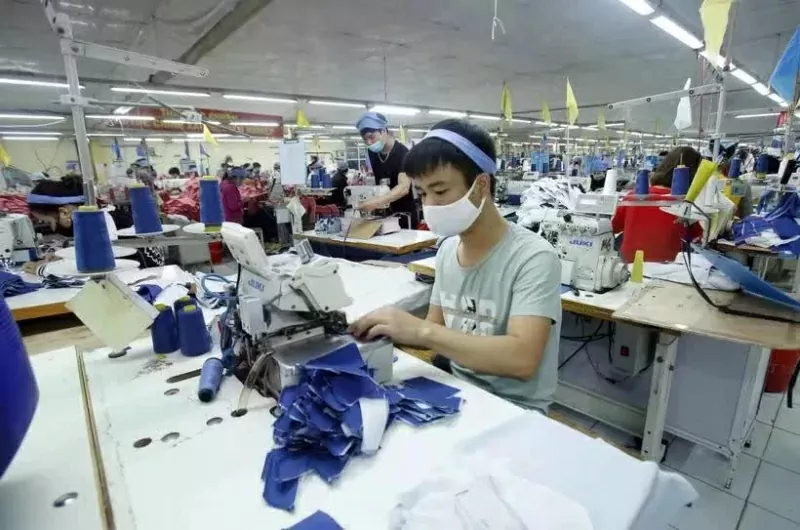 |
| Garment production at Tien Hung Garment JSC in Hung Yen province. (Photo: VNA) |
Expanding industrial space, forming new growth poles
Industry is one of the key pillars in Hung Yen's development strategy. Post-consolidation, the province has the conditions to connect existing industrial parks with areas having potential for new industrial development, forming a larger production and supply network.
In the North, industrial parks such as Thang Long II, Pho Noi A, Yen My, Yen My II, and Pho Noi Textile remain notable investment destinations. Meanwhile, the southern area and the Thai Binh Economic Zone offer potential for developing industries, logistics services, energy, and the maritime economy.
According to the review and update plan of the Provincial Plan presented at the meeting on September 17, 2026, Hung Yen plans to develop 66 industrial parks with a total area of approximately 23,068.5 hectares and 125 industrial clusters with a total area of 7,920.12 hectares. This planning option has been updated and reviewed to reflect the scale of industrial space the province aims for in the next phase. In addition to long-term planning, the province is focusing on accelerating the implementation of infrastructure projects in industrial parks and clusters.
According to Plan No. 220/KH-UBND dated June 9, 2026, the province aims to build technical infrastructure on over 1,000 hectares of industrial parks and over 500 hectares of industrial clusters in 2026; the total investment capital for implementing infrastructure projects in industrial parks and clusters is expected to exceed 20,000 billion VND. Land clearance is also identified as a key task.
The province aims to clear land on over 1,400 hectares of industrial parks and over 1,000 hectares of industrial clusters in 2026, while accelerating the resolution of difficulties and obstacles to ensure projects are implemented soon. Hung Yen's industrial development orientation does not stop at expanding the area; it also focuses on improving the quality of investment attraction. High-tech fields, electronics, semiconductors, electronic components, machinery and equipment manufacturing, biotechnology, and supporting industries are prioritized.
The province also aims to develop high-value-added industries, strengthen links between FDI enterprises and domestic enterprises, and gradually participate more deeply in the global value chain.
Developing modern urban areas, aiming for centrally governed city status
Alongside industry, urban development is one of the key drivers of Hung Yen's economic expansion and improved quality of life for its residents.
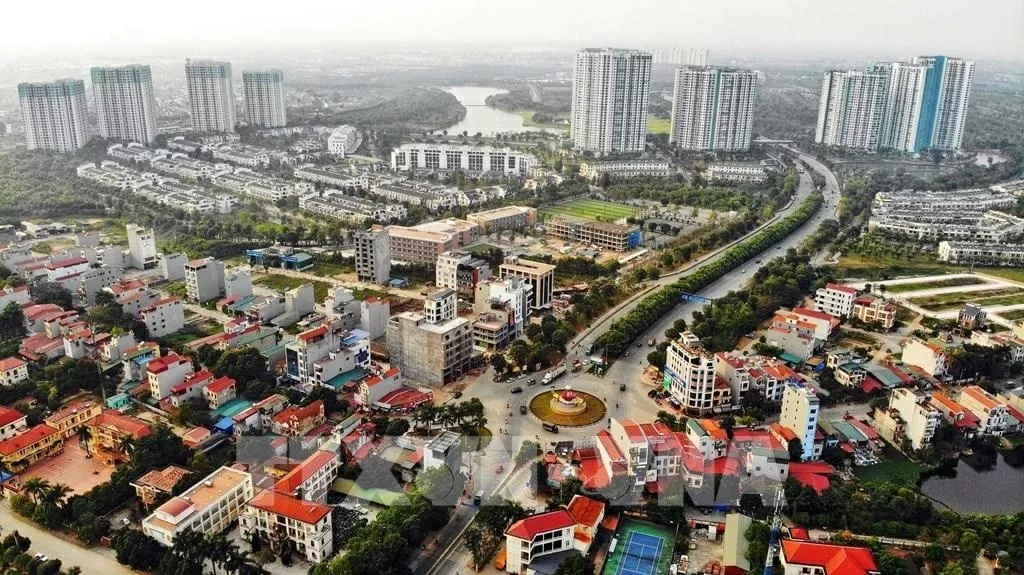
According to the adjusted Provincial Plan for the 2021-2030 period, with a vision to 2050, Hung Yen's urban system is oriented toward a network, multi-polar, multi-center, and linear model. During the 2026-2030 period, the province aims to establish 18 urban areas, including 4 class II and 14 class III. These urban areas are organized around functional zones and development corridors, creating links among industrial, commercial, and service centers, as well as coastal areas.
Notably, the province aims for an urbanization rate of over 55% by 2030. This is an important indicator for promoting the economic structure transformation process, developing social infrastructure, improving public service quality, and creating modern living spaces. The long-term vision is clearly defined in the plan: by 2035, Hung Yen will become a modern industrial province meeting class I urban criteria; by 2045, it aims to become a smart, ecological city directly under the central government, with a modern industry among the leading in the country and a strong maritime economic center in the North.
This orientation is also set within the requirement for synchronized development of transportation, water supply and drainage, energy, education, healthcare, and cultural facilities. Connecting existing urban areas with new development areas will help create a highly connected urban network, attracting residents, businesses, and investors. Investment attraction policies focus on high technology and sustainable development. To transform advantages in location, scale, and infrastructure into substantial development resources, Hung Yen is focusing on innovating investment promotion methods, improving the business environment, and building targeted support policies.
According to Decision No. 2224/QD-UBND dated December 19, 2025, the Hung Yen Investment Promotion Program for 2026 prioritizes attracting projects with high technology content, advanced technology, modern management, high added value, technology transfer capability, and linkages with domestic enterprises. The province focuses on approaching investors from countries with strengths in technology, capital, and capabilities in global supply chain participation, such as Japan, the Republic of Korea, Singapore, the United States, Germany, France, the Netherlands, and Australia.
A noteworthy point is that the province does not encourage projects that use outdated technology, are energy-intensive, or could pollute the environment. The goal for 2026 is to increase the number of new investment projects and newly established enterprises by 10% or more, with a focus on priority industries and fields.
In particular, Hung Yen has issued Resolution No. 773/2025/NQ-HDND dated November 17, 2025, stipulating several preferential and supportive policies for investment in the 2025-2030 period in areas such as digital transformation, cybersecurity, semiconductors, electronic components, laboratory construction, and innovation centers.
Under this policy, investors are supported in administrative procedures through a one-stop mechanism; financial support is provided for preparing dossiers for new investment policy approval or investment registration certificates, amounting to 20 million VND and 10 million VND, respectively. Investors are also provided free information on the investment environment, planning, land, raw material supply, and logistics services as per regulations.
Regarding human resource development, enterprises that recruit workers with permanent residence in Hung Yen and organize vocational training from the elementary level upwards may receive support of up to 5 million VND per person, not exceeding 500 million VND throughout the project lifecycle, subject to policy conditions. This support helps reduce initial costs, facilitate investor participation in project implementation, and encourage enterprises to develop human resources and enhance technological capabilities.
Additionally, the development of innovation centers, laboratories, semiconductor and electronic components, and cybersecurity will help lay the foundation for new economic sectors. This is also a suitable direction aimed at increasing the contribution of total factor productivity (TFP) to average GRDP growth during the 2026-2030 period to 50%.
Hung Yen's journey to rise is measured not only by the scale of investment capital or growth rate but also by the ability to transform existing advantages into long-term competitiveness, creating a modern, dynamic, and attractive development space in the Red River Delta.