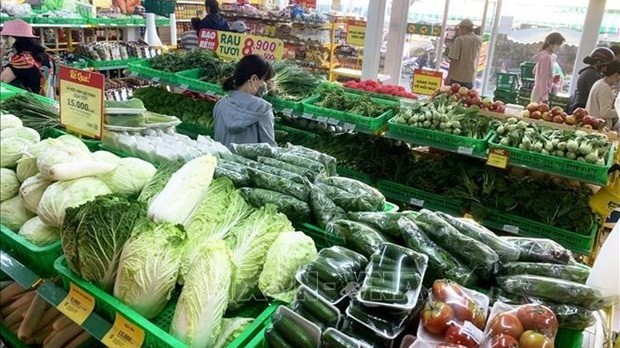








HCM City market reflects cautious Tet spending trends
Shoppers are adjusting their habits in response to ongoing economic uncertainty, opting for a more thoughtful and practical approach to spending compared to previous years.
Latest
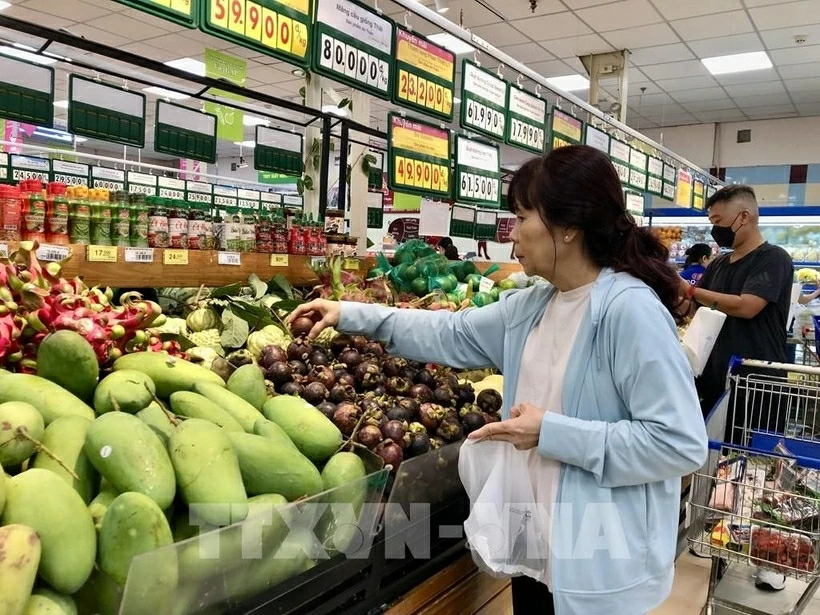 |
| A consumer buys fruits at a supermarket in Ho Chi Minh City. (Photo: VNA) |
This Tet season, leading up to the Year of the Horse 2026, Ho Chi Minh City’s market is revealing some interesting consumer trends. Shoppers are adjusting their habits in response to ongoing economic uncertainty, opting for a more thoughtful and practical approach to spending compared to previous years.
Tradition meets new trends
According to market experts, Tet 2026 is no longer viewed merely as a stand-alone traditional shopping period, but rather as a focal point where consumption trends that have taken shape throughout 2025 converge. Consumers are not spending impulsively; instead, they are calculating more carefully, comparing prices and making rather rational choices, prioritising practicality and convenience while still preserving the cultural values of the country’s biggest traditional holiday.
Based on an analysis of 2025 consumption data, Nguyen Phuong Nga, a business director at Numerator Vietnam (Kantar Vietnam – a leading global data and insights company), noted that Tet-related consumer goods continue to record strong growth compared with normal periods, indicating that Vietnamese consumers have not abandoned the tradition of giving Tet gifts. However, gift choices are shifting away from luxury or decorative items towards products with greater everyday utility.
“52% of consumers are spending more on their families, prioritising real usage over appearances. This is the most significant change this Tet season,” Nga explained. “Instead of preparing numerous formal gifts, they are focusing more on purchases for themselves, their families, and genuinely close relationships.”
She further observed that the rapid growth of processed foods – particularly frozen foods, sausages, ready-made seasonings and ‘ready-to-heat’ products – has come to dominate the market, clearly illustrating current consumption trends. This reflects the lifestyle of younger consumers, who may lack cooking skills but still wish to enjoy warm, home-style family meals.
Nguyen Trung Dung, CEO of Dh Foods, shared that in 2025, the company broadened its selection of convenient sauces and seasonings for both dipping and cooking, products warmly welcomed by younger consumers. “These product lines have continued to grow strongly, especially towards the year-end,” he said.
Notably, many consumers are also opting to shop for Tet online, via e-commerce platforms and livestream sales sessions. This modern trend is expected to surge this season and is being actively anticipated by many businesses.
Cautious spending and value-driven choices
Market experts have also highlighted a striking feature of this year: consumers are becoming increasingly cautious with their spending, carefully balancing needs against financial realities amid persistent inflation and high living costs.
Early Tet shopping has become more common among residents in the southern economic hub, allowing them to take advantage of promotions and discounts while spreading Tet expenses over a longer period. In response, many modern retail systems began stocking Tet goods and gift hampers as early as December, both to meet demand and to gauge market trends for more effective business strategies.
According to Tran Minh Van, a sales director for the supermarket channel at FrieslandCampina Vietnam, Tet continues to play a critical role in the revenue structure of fast-moving consumer goods companies, contributing 30-40% of first-quarter turnover. Consumer spending during this period is typically 1.5 to 2 times higher than in normal months. However, purchasing behaviour has clearly evolved, with consumers no longer buying out of habit but instead carefully weighing price, value and in-store experience.
Vu Kim Hanh, Chairwoman of the High-Quality Vietnamese Goods Business Association, noted that surveys show consumers are spending more cautiously and prioritising essential goods, pushing businesses to adjust or risk being left behind in the market.
“In a climate where consumers are cautious and highly selective, firms have changed considerably,” she said. According to her, instead of large packs, they are offering smaller sizes with more attractive packaging. Producers are also paying greater attention to standards and the use of local resources – sourcing ingredients locally to optimise costs and enhance practical value.
(Source: VNA)