




Elections of 16th National Assembly and People’s Councils: Political stability as the foundation of international trust
WVR - The March 15 election of the 16th National Assembly and People’s Councils at all levels for the 2026–2031 term carries significance beyond a routine political event.
Latest
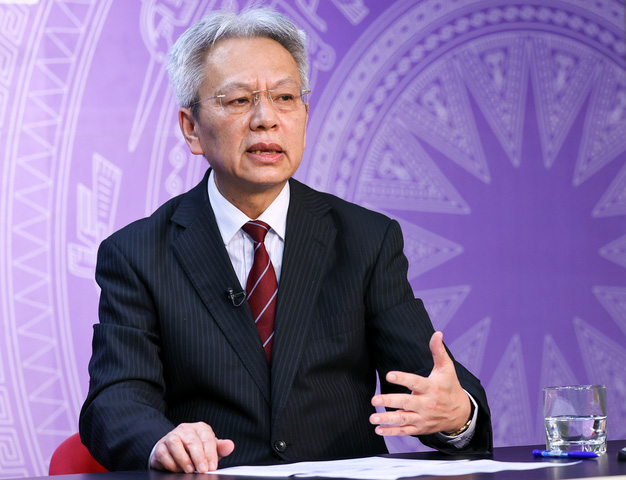 |
| Parliamentary elections: Dr. Nguyen Si Dung. (Source: VGP) |
In recent years, the world has not only changed more rapidly but also become more unpredictable. Strategic competition among major powers is intensifying, geopolitical conflicts are prolonged, global supply chains are being restructured, and new technologies are altering the balance of power and interests.
In this context, what investors, partners, and the international community seek is not only market potential but also institutional stability, the ability to maintain policy continuity, and ensure a predictable cooperative environment.
Conversely, for each nation, political stability is no longer merely an internal order but has become a form of "national capital", a foundation to attract resources, fulfill international commitments, and protect long-term interests.
It is in this context that the election of the 16th National Assembly and People's Councils at all levels for the 2026-2031 term on March 15 holds significance beyond a routine political event. It is a constitutional mechanism to reinforce the legitimacy of state power, ensure orderly transfer of responsibilities, and reaffirm the stable foundation of Vietnam's political system in a turbulent world.
Thus, each voter's ballot not only selects representatives but also contributes to reinforcing societal trust in the institution and international trust in a stable, consistent, and responsible Vietnam.
Elections – A mechanism to reinforce legitimacy and policy continuity
If political stability is the foundation of trust, then elections are the mechanism to periodically and constitutionally reinforce that foundation. In every modern rule-of-law state, the legitimacy of power is not only derived from history or developmental achievements but is also reaffirmed through public participation in the representative selection process.
The March 15 election signifies a "renewal of legitimacy" within the constitutional order. Through their ballots, voters delegate authority and simultaneously express expectations for responsibility. The processes of negotiation, candidate introduction, election campaigning, and voting are organized based on universal, equal, direct, and secret ballot principles – core principles ensuring the representative nature of state power institutions.
| “When voters participate in choosing representatives for the National Assembly of Vietnam and People's Councils at all levels, they not only select individuals representing their interests but also contribute to reinforcing a stable power mechanism – a condition for Vietnam's international commitments to be consistently implemented across terms.” |
At the national level, the role of the National Assembly of Vietnam extends beyond legislative functions; it is the center for institutionalizing development orientations, supervising implementation, and deciding on critical national issues.
At the local level, People's Councils at all levels convey community will and interests into specific policies. Elections are not merely about changing personnel but ensuring the continuous operation of a power structure organized according to the Constitution and law.
Notably, this continuity does not exclude innovation. On the contrary, it is precisely through periodic electoral mechanisms that the system can self-adjust within a stable framework. The inheritance between terms creates policy predictability; the addition of new personnel generates improvement momentum. These two factors combine to form a dynamic stability, meaning stability for development and development within stability.
In the context of deep integration, the ability to maintain policy continuity holds special significance. International commitments, trade agreements, and strategic cooperation programs all require consistency and long-term responsibility. A representative mechanism operating on a constitutional cycle, with broad voter participation, is a guarantee for that consistency.
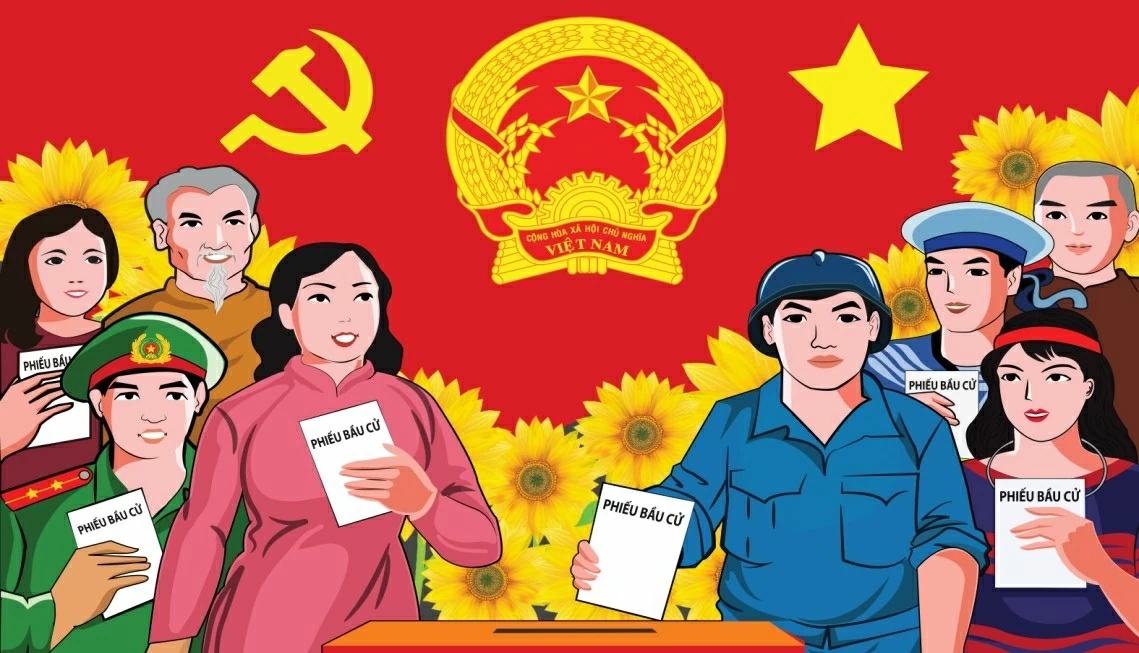 |
| Planning and ensuring order, traffic safety, and seamless communication during the election preparation and organization process. Illustrative photo. (Source: VGP) |
Political stability and international trust
In international relations, trust is not built merely by declarations but by the ability to consistently and predictably maintain commitments. Partners, investors, and international organizations, when evaluating a country, not only look at growth rates but also consider the sustainability of the political-institutional environment. Here, political stability acts as a "soft infrastructure" for international cooperation.
For Vietnam, the independent, self-reliant, multilateral, and diversified foreign policy has been consistently maintained across many terms. This consistency is not coincidental but is based on an orderly operating power structure, where major decisions are discussed, decided, and supervised within the constitutional framework. Periodic elections are the link ensuring that structure is maintained and renewed.
When voters participate in choosing representatives for the National Assembly of Vietnam and People's Councils at all levels, they not only select individuals representing their interests but also contribute to reinforcing a stable power mechanism – a condition for Vietnam's international commitments to be consistently implemented across terms. From new-generation free trade agreements to climate change agreements, from regional security cooperation to digital transformation, all require a highly continuous political foundation.
In the increasingly complex geopolitical competition context, countries maintaining internal stability and policy consistency are often viewed as reliable partners. Thus, political stability is not only an intrinsic benefit but also a foreign message: Vietnam is a responsible member of the international community, respecting international law and earnestly fulfilling its commitments.
It can be said that the 2026 election occurs at a special time when Vietnam is intensifying deep integration, upgrading relations with many partners, and increasingly actively participating in multilateral mechanisms. In this picture, stability reinforced through elections is not only a factor ensuring domestic political order but also a foundation of international trust – trust in policy continuity, in execution capability, and in Vietnam's long-term development orientation.
In a world where uncertainty increasingly becomes a constant state, the value of stability is more clearly recognized. However, sustainable stability is not a temporary calm; it is the ability to maintain order amidst change, ensure continuity in movement, and build trust in a complex competitive environment. For Vietnam, the election on March 15 is a vivid expression of that capability.
Voters' ballots not only choose representatives for the new term. They also help reaffirm the legitimacy of state power, reinforce the continuous operation of institutions, and lay the foundation for long-term decisions. From socio-economic development to international integration, from ensuring welfare to enhancing national status, all strategic goals require a stable political environment as a fulcrum.
For the international community, stability ensured by constitutional mechanisms and broad voter participation sends a clear message: Vietnam is steadfast in its development path, respects the law, and earnestly fulfills its commitments. Thus, trust is built not only from words but from how a nation organizes and renews its power within a transparent legal framework.
Stability for development and development for deeper integration is not just a policy choice but a strategic direction. The 2026 election, from this perspective, is not just a milestone of a term but the next step in the journey of reinforcing trust – the trust of the people in the institution and the trust of international friends in a stable, consistent, and responsible Vietnam in the international community.