




16th National Assembly’s first session: Ensuring benefits for staff at Vietnamese representative missions abroad
WVR - Amending the Law on Vietnamese Representative Missions Abroad is an urgent requirement to institutionalize the Resolutions of the Politburo, while drawing from the practical experiences of foreign affairs to safeguard peace and promote rapid, sustainable development amid international fluctuations.
Latest
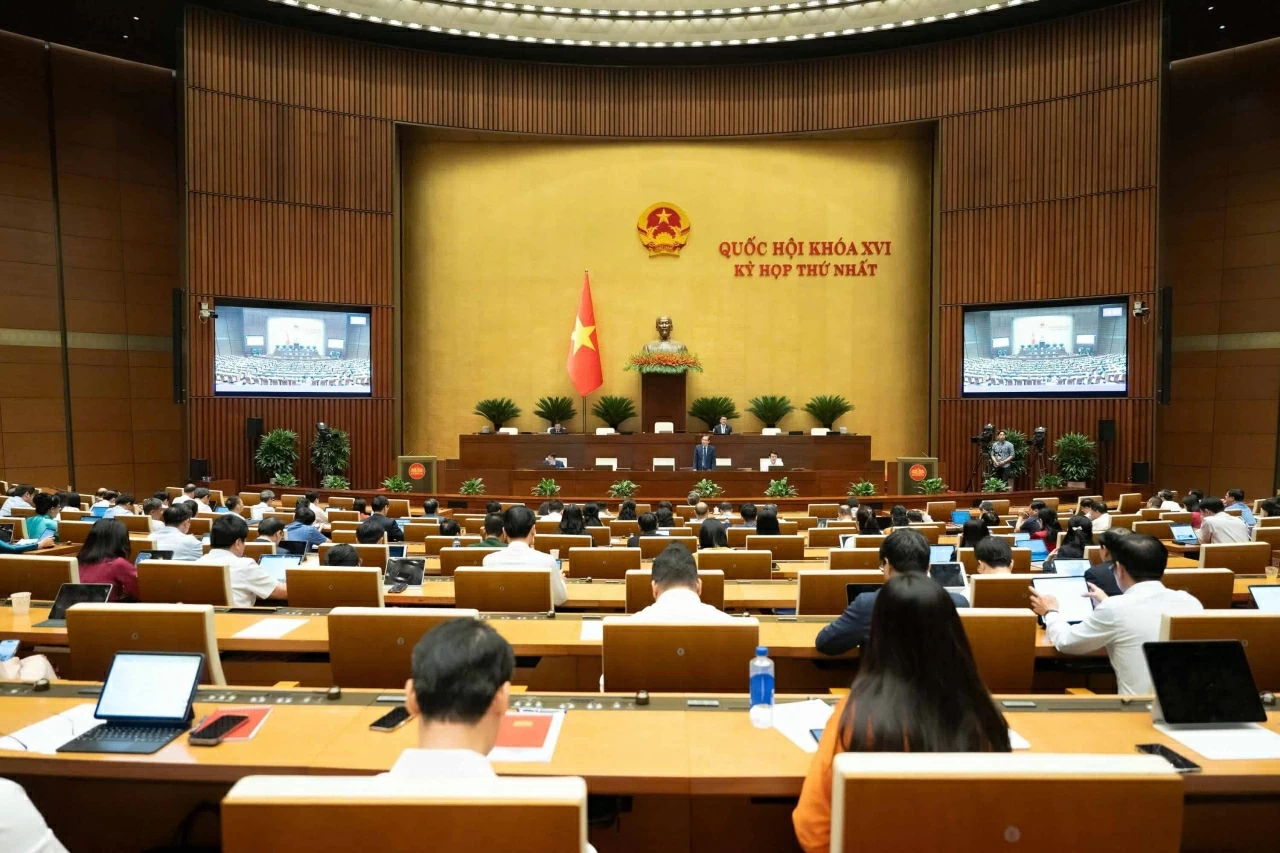 |
| Overview of the discussion session at the Hall on the afternoon of April 11, 2026. (Source: National Assembly) |
On the afternoon of April 11, continuing the program of the First Session, the 16th National Assembly, the National Assembly discussed in the hall the draft Law amending and supplementing several articles of the Law on Representative Missions of Vietnam abroad. Vice Chairman of the National Assembly, Senior Lieutenant General Nguyen Doan Anh, presided over the discussion session.
During the discussion, delegates expressed high agreement with the Government's Proposal and the Verification Report of the Committee on National Defense, Security, and Foreign Affairs on the necessity of amending the Law. This amendment and supplementation not only aim to institutionalize the Party's policy of promoting international integration but also address practical obstacles from the 2009 Law in the context of strategic competition and strong digital transformation.
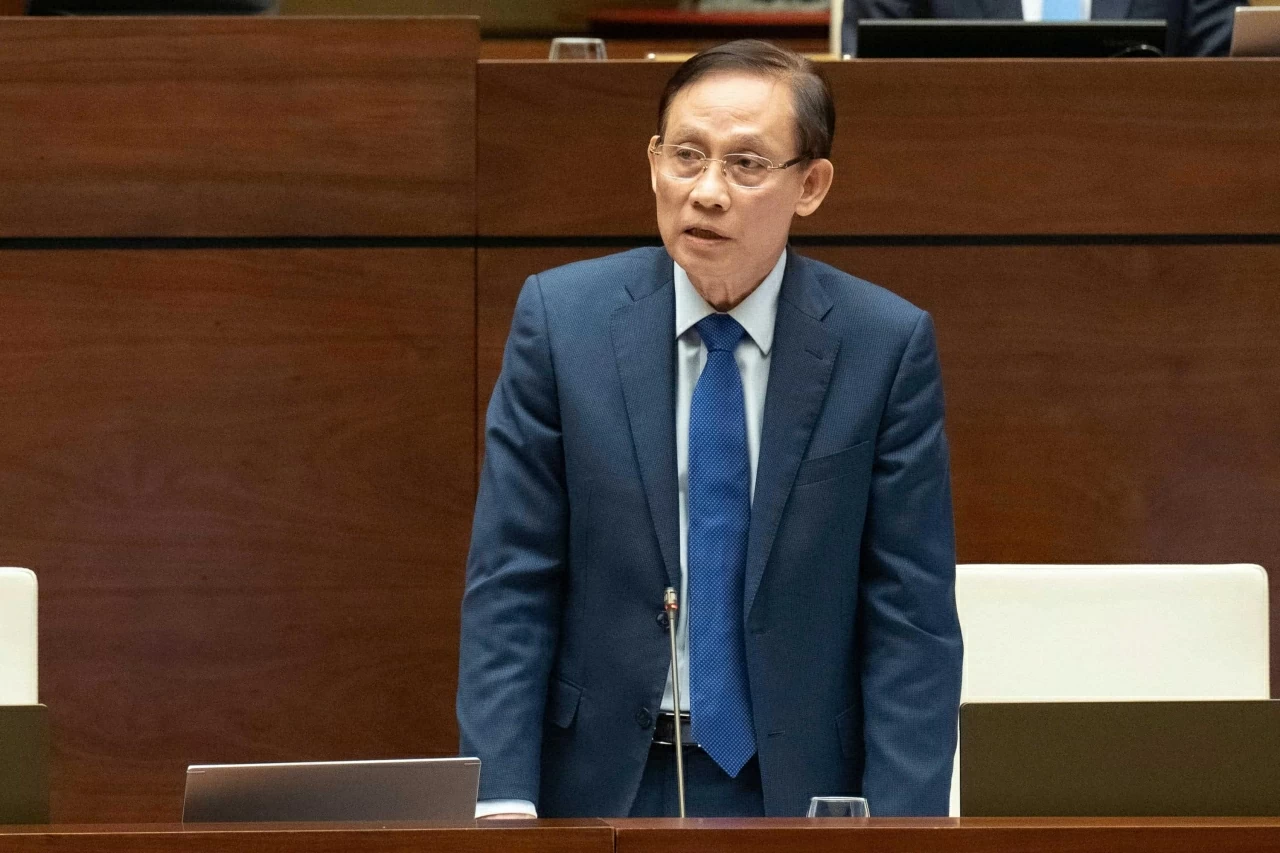 |
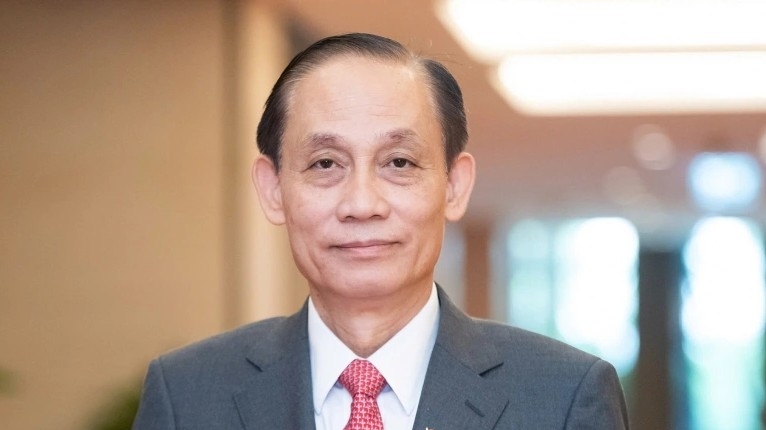
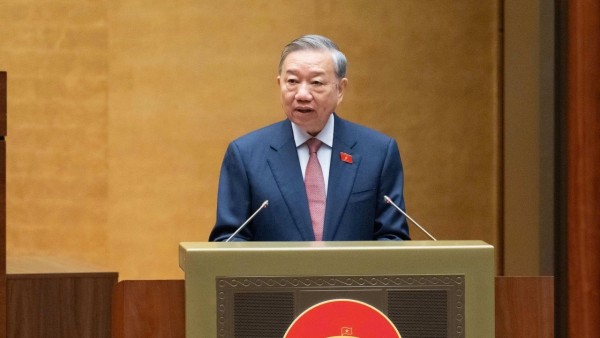
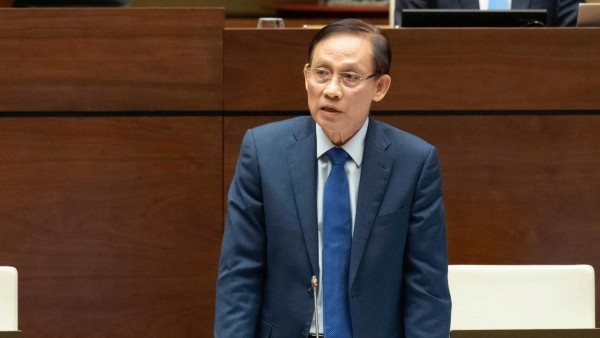
| Politburo Member, Minister of Foreign Affairs Le Hoai Trung speaks to clarify delegates' opinions at the Discussion Session. (Source: National Assembly) |
Institutionalizing breakthroughs in science, technology, and digital transformation
Providing opinions on specific contents in the draft Law, delegate Trang A Duong (Lao Cai delegation) proposed that for the content serving national development (Article 1), the field of agriculture should be added to the research and advisory contents of the representative agencies.
The delegate noted that the draft currently mentions fields such as commerce, industry, environment, and science and technology but lacks agriculture. Delegate Trang A Duong further analyzed that agriculture is not only a pillar but also a national competitive advantage with many of Vietnam's key products like coffee, pepper, and fruits having established their positions internationally. Therefore, adding this field is necessary to maximize the advisory role and market connectivity of representative agencies abroad.
Particularly, delegate Trang A Duong emphasized that in the technology era, enhancing digital capabilities for foreign affairs personnel has become an urgent requirement. Therefore, the delegate suggested that Article 17, clause 4a should adopt a holistic approach along the axis: digital people, digital capabilities, and digital governance. Specifically, the standards for personnel should clarify requirements regarding the ability to analyze, forecast, and process information in a digital environment.
Simultaneously, the responsibility of the head in directing the substantive implementation of digital transformation, linked with ensuring cyber safety and security, should be clearly stipulated. The delegate stressed that only when digital governance clearly defines responsibilities and individuals meet digital capabilities, can foreign affairs activities truly achieve high efficiency.
Continuing to provide opinions on the content of science, technology, and digital transformation, delegate Tran Viet Anh (Hanoi delegation) stated that the draft Law has institutionalized Resolution 57 of the Politburo on breakthroughs in the development of science, technology, innovation, and national digital transformation, ensuring consistency with the Law on Science, Technology, and Innovation 2025.
According to delegate Tran Viet Anh, adding strategic research tasks on technology and innovation for representative agencies is a concrete step to realize the goal that by 2030, Vietnam will be among the top three Southeast Asian countries in digital competitiveness.
Additionally, the delegate appreciated that the draft Law has focused on tasks to attract talents, experts, and scientists to contribute to the country's development in infrastructure and data to promote digital transformation and implement digital administration at representative missions, reflecting the correct orientation of developing modern digital infrastructure in Resolution 57 and the comprehensive digital transformation regulations in the Law on Science, Technology, and Innovation 2025. To ensure the law is quickly implemented, the delegate suggested that the Government urgently direct the construction of a shared data system and prioritize adequate budget for digital transformation activities at these missions.
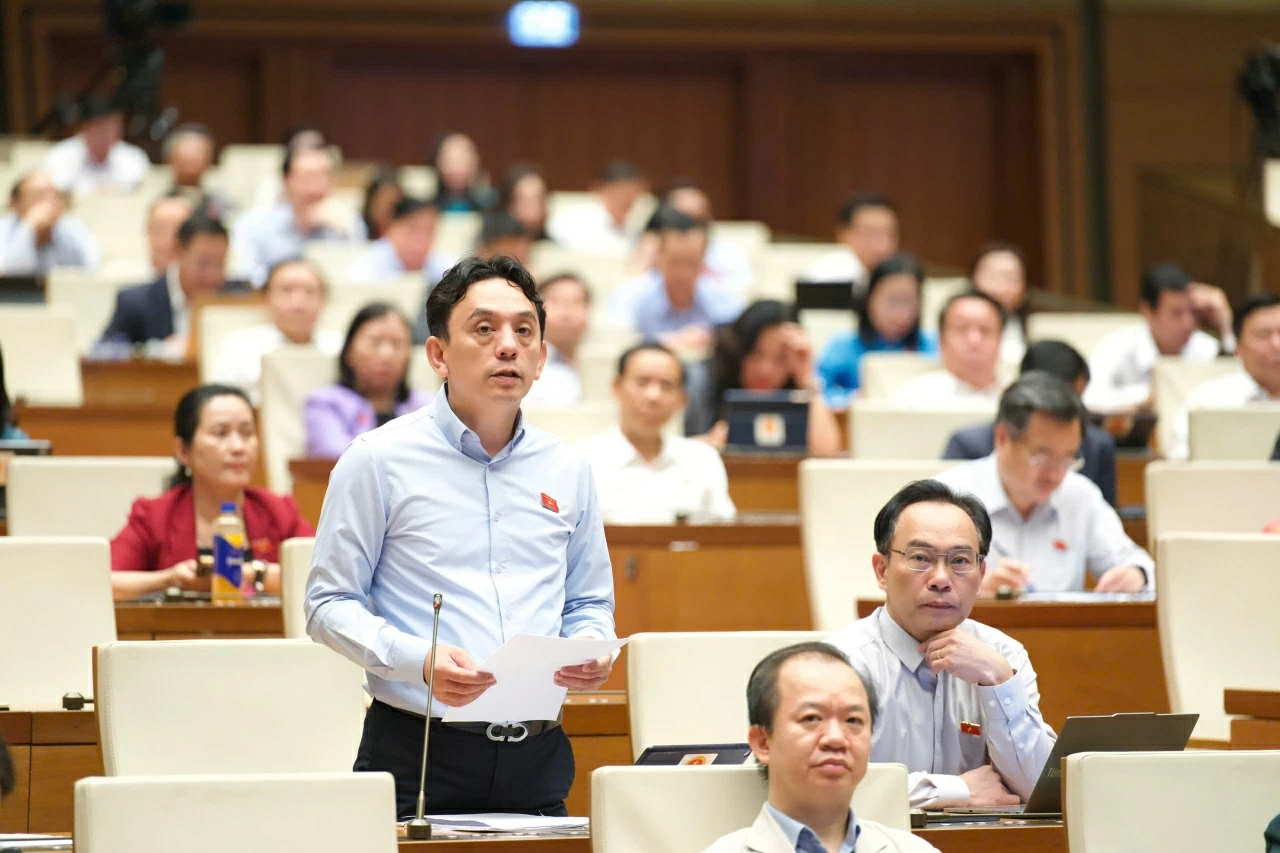 |
| Delegate Tran Viet Anh (Hanoi delegation). (Source: National Assembly) |
Regarding the regime and policies for members of representative missions and accompanying relatives, delegate Tran Viet Anh acknowledged the Government's efforts in improving benefits for members of representative missions and their relatives, such as: Adding regulations on concurrent allowances; travel and treatment allowances in third countries in cases of natural disasters, particularly dangerous epidemics, and civil wars directly threatening the representative agency, and tuition fees for accompanying children. These policies are expected to help officials feel secure in their work and fulfill their duties in deep international integration.
However, a practical issue pointed out by the delegate is the current health insurance level for members of representative missions and accompanying relatives. With the current regulation of 500 USD/person/year, the delegate believes this amount is no longer suitable for actual medical costs in host countries and does not meet the healthcare needs of officials and public servants working at representative missions.
“We need to refer to international experiences to propose this issue, ensuring that officials and their relatives enjoy better insurance contracts, suitable to the actual situation,” delegate Tran Viet Anh recommended.
Ensuring benefits for staff at "hotspots"
Continuing to contribute opinions on the regime and policies for members of representative missions and accompanying relatives, concerning the amendment of point c, clause 1, Article 26 on allowances and preferential regimes for officials working in areas experiencing armed conflict, natural disasters, epidemics, or under particularly difficult working conditions, delegate Dinh Ngoc Quy (Gia Lai delegation) generally agreed with the policy.
However, delegate Dinh Ngoc Quy expressed concern about consistency within the legal system. Specifically, the delegate suggested that the Drafting Agency should carefully compare with the Civil Defense Law. Accordingly, the concept of "disaster" in the Civil Defense Law encompasses both human-induced fluctuations and the consequences of war, while the current draft seems to limit this scope.
Particularly, regarding the regulation on travel and treatment allowances in third countries in cases of particularly dangerous natural disasters or epidemics, or civil wars, the delegate argued that this terminology does not fully cover reality. Citing conflicts in the Middle East, which are not necessarily civil wars but still pose direct threats to the lives of officials, delegate Dinh Ngoc Quy suggested using more comprehensive terminology to ensure the rights and safety of those working in particularly difficult areas, avoiding situations where officials have to suffer losses.
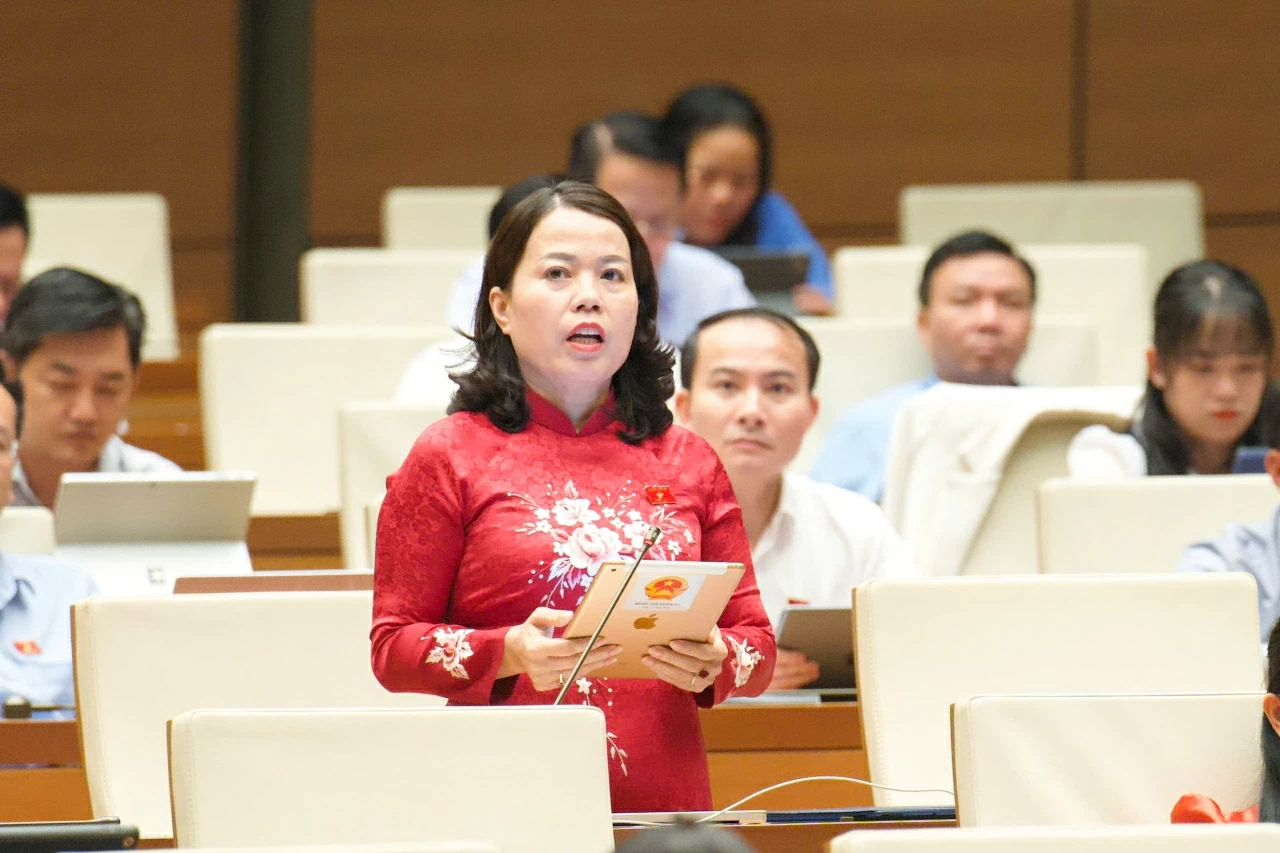 |
| Delegate Ly Thi Lan (Tuyen Quang delegation) speaks at the Discussion Session. (Source: National Assembly) |
Also particularly concerned about the policies for members of representative missions and accompanying relatives, delegate Ly Thi Lan (Tuyen Quang delegation) stated that while agreeing with proposals to enhance resources for foreign affairs work, the concepts of difficult areas in the draft remain qualitative.
Specifically, regarding the regulation on support in areas experiencing armed conflict, natural disasters, or epidemics, the delegate suggested that concepts need to be specified to avoid inconsistent application, causing obstacles in policy implementation. Delegate Ly Thi Lan proposed developing criteria or specific lists, suggesting that the Ministry of Foreign Affairs should announce and periodically update the list of applicable areas, possibly referencing classification standards from international organizations like the United Nations to ensure objectivity, consistency, and alignment with international practices.
Delegate Ly Thi Lan further recommended that the draft Law should clarify the content of "concurrent areas," clearly defining principles and levels of allowances commensurate with the actual workload. If not detailed in the law, it is suggested to authorize the Government to specify to ensure feasibility.
Simultaneously, the Tuyen Quang delegation affirmed that this law amendment must aim at the ultimate goal of transforming Vietnamese representative missions abroad into truly effective "extended arms" of the State.
“These agencies must be a practical support for localities, businesses, and citizens in the process of international integration,” delegate Lan emphasized. Additionally, the Drafting Agency is urged to continue reviewing and absorbing to maximize the effectiveness of connecting international resources for national development.
Representative Missions as "extended arms"
Speaking to clarify delegates' opinions at the discussion session, Politburo Member, Minister of Foreign Affairs Le Hoai Trung stated that this law amendment is an urgent requirement to institutionalize the Resolutions of the Politburo, while drawing from practical foreign affairs activities to safeguard peace and promote rapid, sustainable development amid international fluctuations.
The Foreign Affairs sector identifies the overarching goal as: Centering on businesses and citizens for service. Accordingly, representative missions will enhance their responsibility to support localities, domestic organizations, and protect the legitimate rights of Vietnamese legal entities and individuals abroad.
Particularly, to align with the digital transformation trend, this draft Law supplements content on digital administration, digital capabilities, and digital people. This is an important step to enhance governance efficiency and facilitate citizens when contacting representative agencies.
Foreign Minister Le Hoai Trung committed to fully absorbing the contributions of delegates at the discussion session, while continuing to thoroughly study the opinions to perfect the draft Law for submission to the National Assembly for approval, ensuring that representative missions truly become effective "extended arms" of the Nation abroad.