



Empowering Vietnamese women in leadership roles: Norwegian Ambassador
WVR - According to Norwegian Ambassador to Vietnam Hilde Solbakken, Vietnam is showing strong leadership in the region in getting more women in leadership roles in the country.
Latest
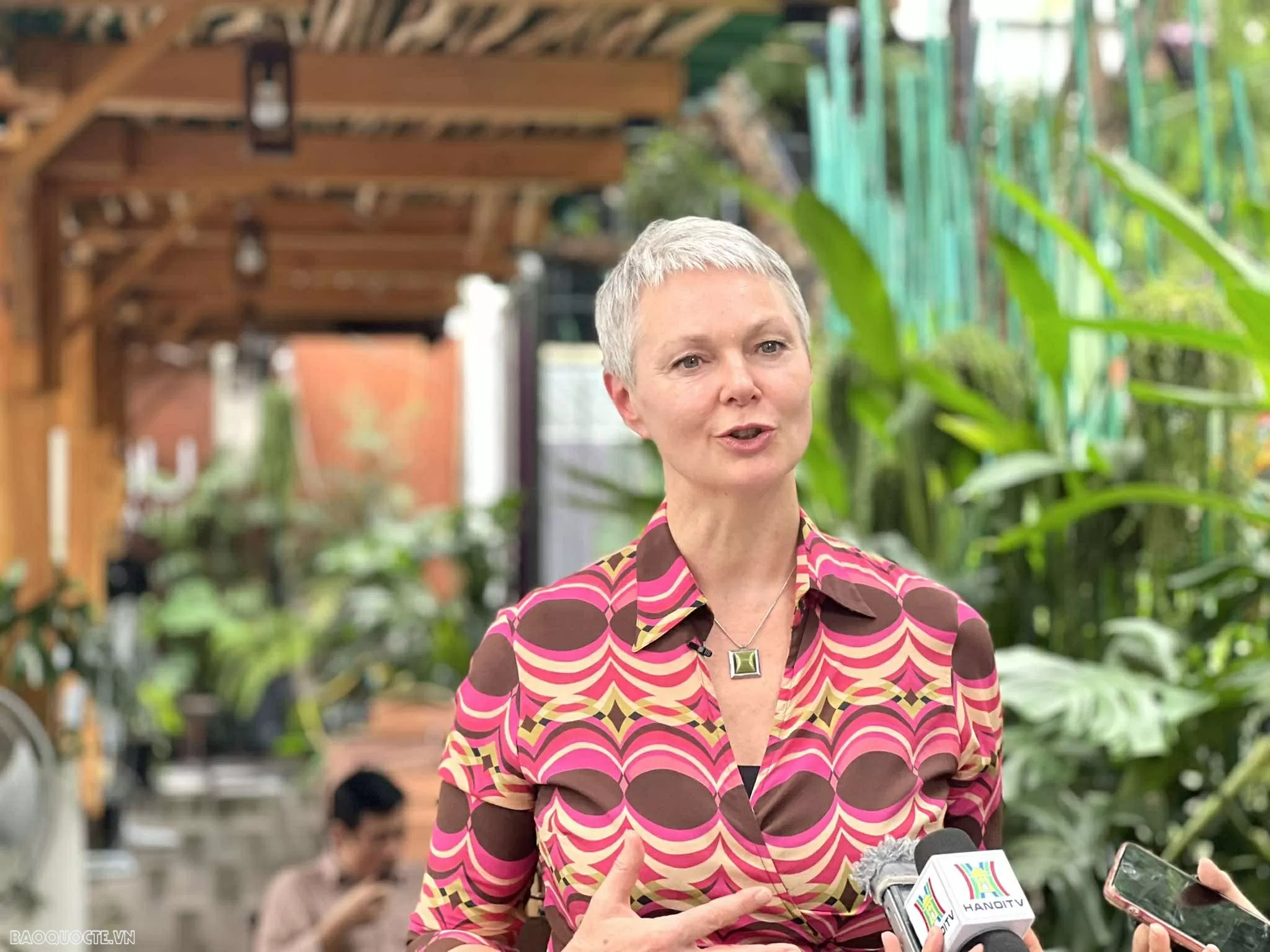 |
| Norwegian Ambassador to Vietnam Hilde Solbakken. (Photo: Thu Trang) |
On October 8, on the occasion of the seminar “Women in leadership: Breaking barriers” in Hanoi, Norwegian Ambassador to Vietnam Hilde Solbakken shared her thoughts on Vietnam's efforts to empowering women to lead, innovate and inspire.
How do you assess the environment and policies that the Vietnamese government and society have in place for women to assert their positions and demonstrate leadership?
First of all, Vietnamese women themselves through history have shown how strong and how resilient they are. I think the venue for this seminar – the Vietnam Women’s Museum – really shows that perfectly. Not least how much women contributed during the wars of resistance against imperialism to the victory in the end.
Nowadays, Vietnam is showing strong leadership in the region in having quite strong laws on promoting gender equality and good targets also in getting more women in leadership roles in the country.
But I think in Vietnam, as in so many other countries, there are also still barriers that remain. Some of them are institutional, some of them are linked to cultural norms and perceptions of women. So I think it's very good to have this kind of international exchange also between Vietnam and other countries so that we can learn from each other and for women to be able to learn from each other how to break those barriers for women to become leaders, contributing to society and the nation.
So what specific measures or experiences can Norway share to Vietnam in order to empower women more in the future?
I think I sort of point to three main areas:
First, strong legal and policy frameworks promote gender equality, including laws ensuring equal opportunities and mandatory gender quotas on corporate boards.
For example, in Norway, for a long time, we have implemented mandatory gender quotas, often requiring 40% for each gender, including in government.
Since 2005, Norway has mandated gender-balanced corporate boards, requiring at least 40% of directors from each gender. As of January 2024, these rules have been extended to private companies with over NOK 50 million in revenue or more than 30 employees. Thousands of companies are now adapting to ensure compliance, fostering diversity and inclusion in leadership.
Second, comprehensive social welfare policies—such as generous parental leave, affordable childcare, and flexible working arrangements—help balance family and career responsibilities, allowing both men and women to share caregiving roles.
Third, a progressive social mindset supports gender equality as a core national value, reducing stereotypes about women in leadership. In particular, men need to play a role too, because they need to support this. In addition, leadership training, mentorship programs, and gender-balanced recruitment practices in both public and private sectors create pathways for women’s advancement.
So a lot of different actions all pushing in the same direction, where women are empowered to lead and contribute across all sectors.
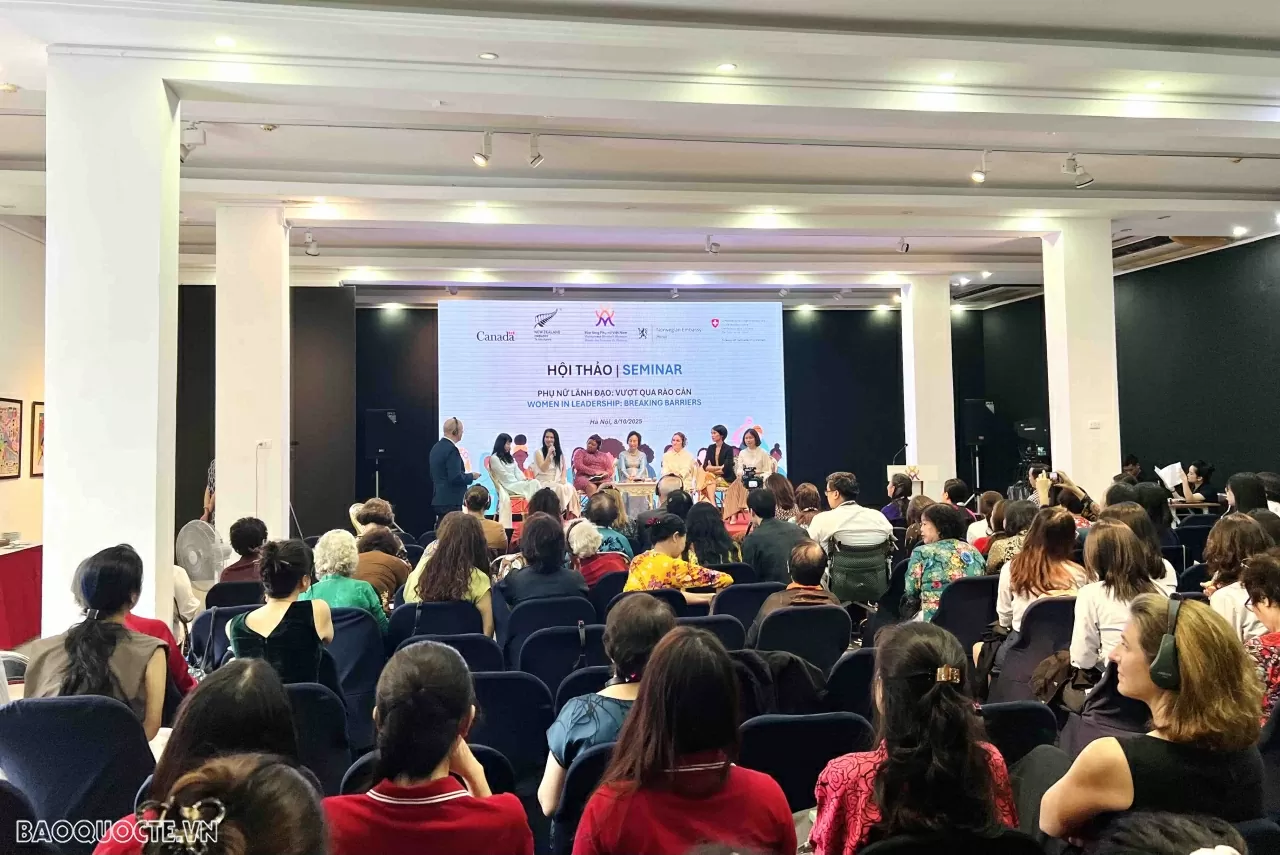 |
| The seminar “Women in leadership: Breaking barriers” in Hanoi on October 8. (Photo: Thu Trang) |
In recent years, Vietnam is actually participated in United Nations peacekeeping forces. How do you evaluate the role of Vietnamese women in this field?
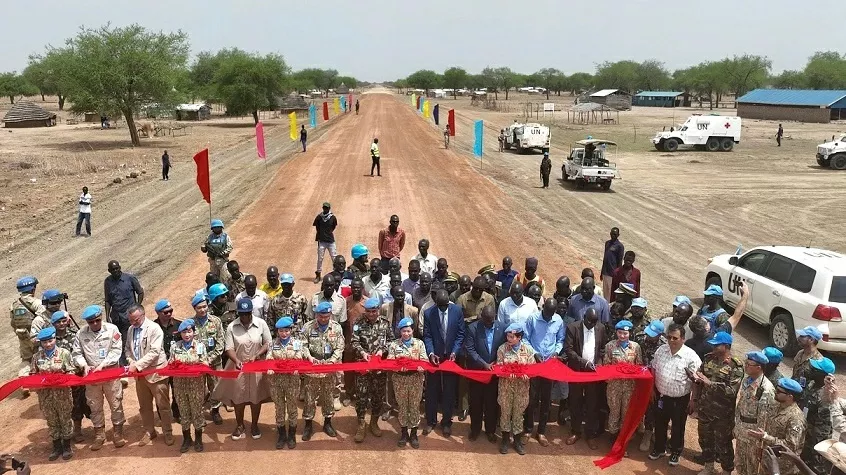
First of all, Vietnam is contributing more and more to UN peacekeeping operations. And I think it's very impressive the emphasis that's put on also having women as part of those peacekeeping troops.
In the context of conflict, the participation of women in peacekeeping missions is very meaningful, necessary, and effective. We all know that in conflicts, the vulnerable who need protection are mainly women and children. Women can more easily approach and build trust with these communities.
I believe the role of women is also very important within the internal environment of peacekeeping forces. The participation of women in peacekeeping forces creates a better working environment, ensuring awareness of the specific needs of women in the communities the forces are there to protect.
Can you give three words to describe Vietnamese women carrying out peacekeeping missions?
I have had the opportunity to meet some of them and I've also had reports back from those who've been leading peacekeeping missions. And I hear very good things about these women. They're very dedicated, very hard-working, and really they're earning the respect of both the communities and those they are working with.
Thank you, Ambassador!
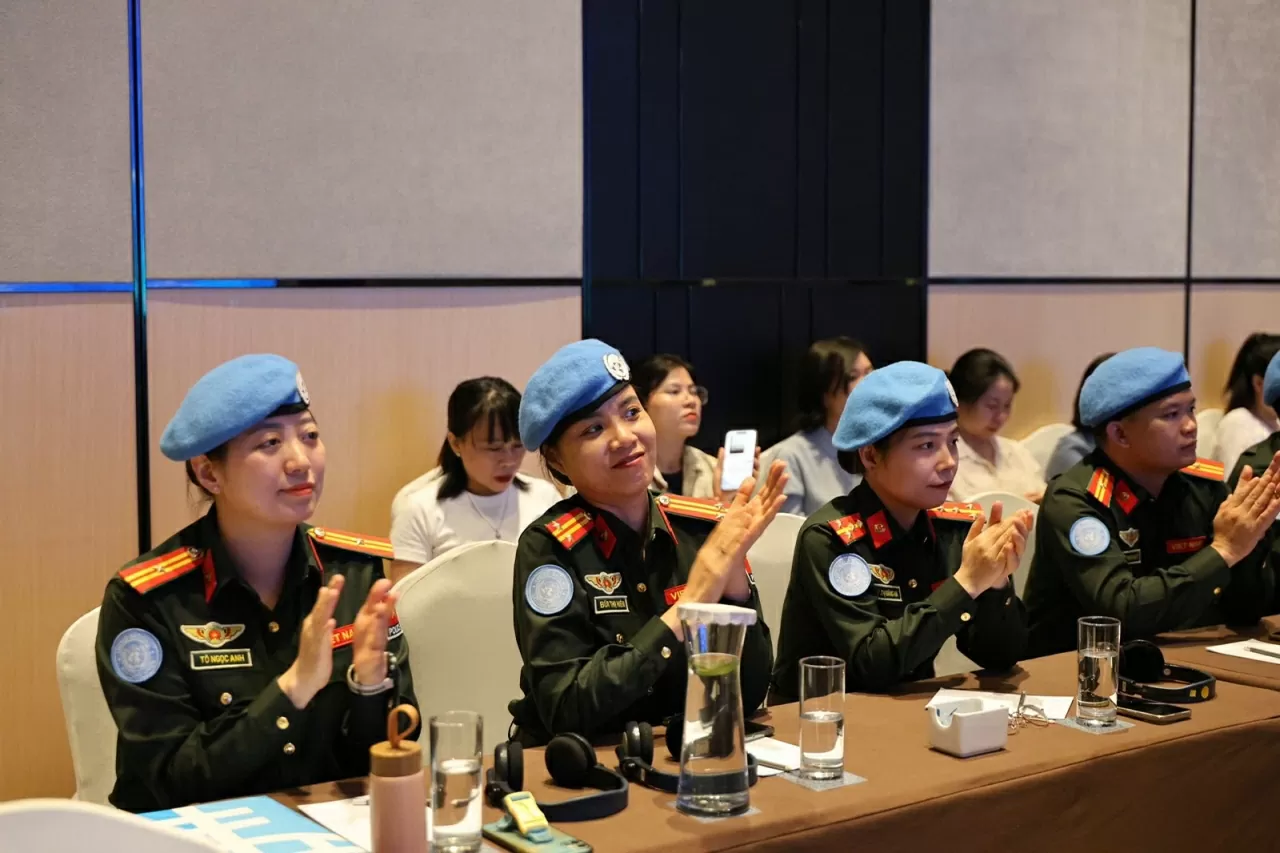 |
| Female police officers at the international forum on 'Enhancing the participation of female police officers in United Nations peacekeeping operations - Global perspectives and Vietnam’s contribution' on June 12 in Hanoi. (Photo: UN Women) |