




Czech Minister: EVFTA drives strong EU–Vietnam trade growth
WVR - Czech Industry and Trade Minister Lukáš Vlček has praised the robust growth of EU–Vietnam trade relations, five years after the EU-Vietnam Free Trade Agreement (EVFTA) took effect on August 1, 2020.
Latest
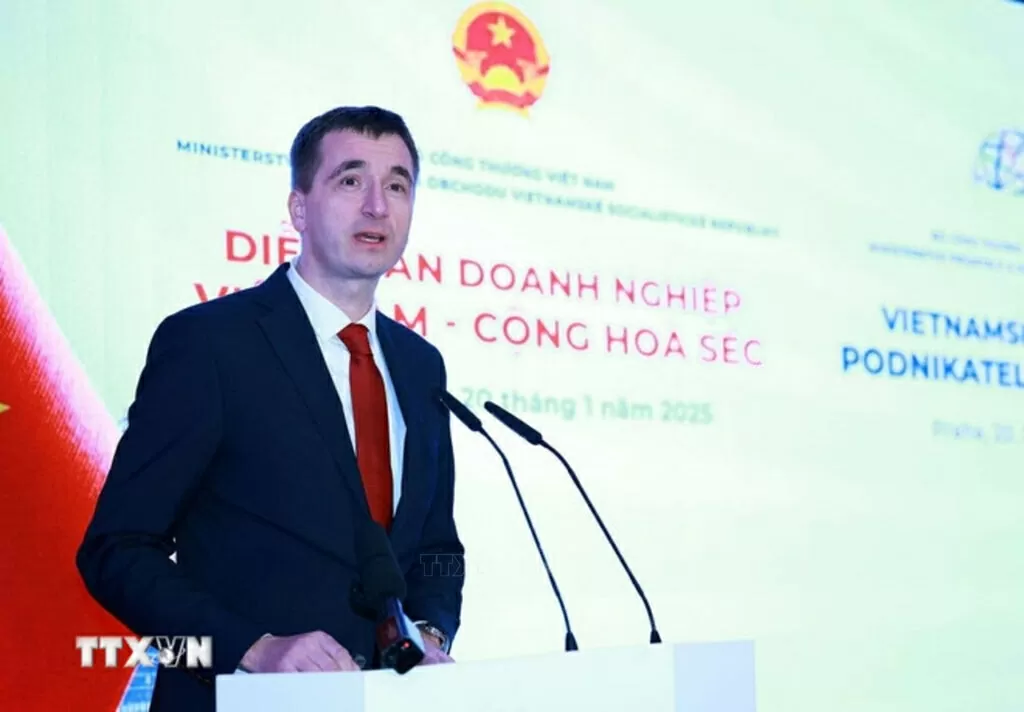 |
| Czech Industry and Trade Minister Lukáš Vlček addresses the Vietnam-Czech Business Forum in Prague on January 20, 2025. (Photo: VNA) |
Czech Minister Lukáš Vlček said bilateral trade between the EU and Vietnam has expanded by 12–15% annually, reaching over 60 billion EUR (70 billion USD) in 2024. The gradual elimination of tariffs under the EVFTA has helped Vietnam establish itself as the EU’s leading exporter within the Association of Southeast Asian Nations (ASEAN), contributing to higher economic growth, job creation, and greater consumer access to high-quality European goods.
Benefits and the Škoda auto example
While the EU continues to run a trade deficit with Vietnam, European businesses have gained significantly from broader access to ASEAN’s third most populous market and the diversification of global supply chains. This positive trend is also reflected in the rapid growth of economic relations between the Czech Republic and Vietnam. Vietnam is now the Czech Republic’s largest trading partner in ASEAN, with bilateral trade reaching a record 4 billion EUR in 2024. This growth is underpinned by strong high-level engagement between the two governments and the presence of a large Vietnamese community in the Czech Republic, the third largest in Europe, numbering about 70,000 people.
According to Minister Lukáš Vlček, the EVFTA has proven to be a vital economic tool, particularly in the context of global challenges such as the COVID-19 pandemic, rising geopolitical tensions, and protectionist trends. Sectors such as electronics, textiles, and food processing in Vietnam have thrived thanks to tariff cuts and growing EU demand. Vietnamese companies that quickly met EU standards were able to secure earlier market access.
For Czech industry, tariff reductions on auto parts and upcoming assembly regulations under the EVFTA have allowed leading brands such as Škoda Auto to localise production in Vietnam. Partnering with Vietnam’s Thanh Cong Motor, Škoda Auto entered the Vietnamese market in September 2023 and inaugurated a production line in Quang Ninh province on March 26, 2025.
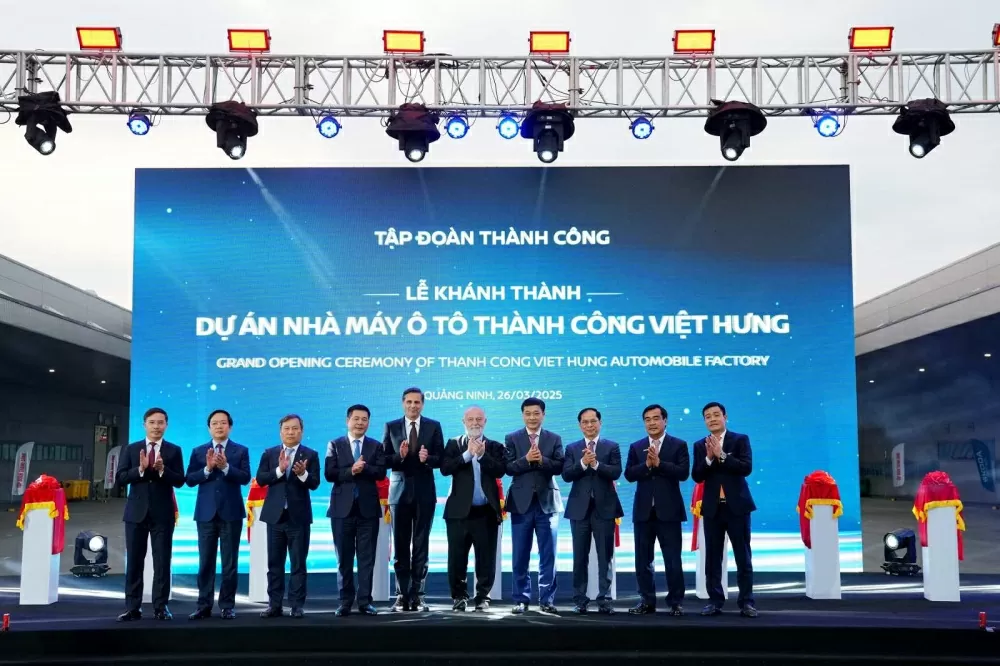 |
| Thanh Cong Group starts operations at the Thanh Cong Viet Hung car plant on March 26, 2025 in the northern province of Quang Ninh to build the first Skoda models in Vietnam. (Photo: VIR) |
The project marks a milestone in Czech–Vietnamese economic cooperation, creating jobs, expanding industrial capacity, and attracting further foreign investment to Vietnam. It positions Vietnam as a manufacturing hub for Škoda Auto and other Czech companies looking to expand across Southeast Asia.
The partnership between Škoda Auto and Thanh Cong Motor is an example of an emerging trend of joint ventures that combine Czech technology with Vietnam’s manufacturing capabilities, leveraging the EVFTA’s favourable rules of origin to create a scalable model for regional production.
Opportunities, challenges, and the road ahead
Minister Lukáš Vlček acknowledged that, as with other major free trade agreements, there is room to improve EVFTA implementation. Pending issues include delays in import registration for EU products, strict requirements even for EU-certified goods, and unresolved matters such as licensing for EU meat exports to Vietnam. Additional obstacles include complex regulations, inconsistent recognition of international standards, and technical barriers such as product certification and testing. Czech companies considering entry into the Vietnamese market also face language barriers and limited access to information about Vietnam’s business environment.
Describing Vietnam as an “economic dragon” of Asia and one of the fastest-growing markets in the world, the Minister noted the country’s ambitious development goals, including becoming one of the world’s top 15 destinations for foreign direct investment (FDI) and achieving net-zero carbon emissions by 2050. Ongoing reforms to reduce administrative burdens and improve the legal framework are positive signals for European businesses seeking market entry.
Minister Lukáš Vlček emphasised that the EVFTA’s ambition to remove nearly all tariffs has translated into increased bilateral trade and investment. However, the agreement’s full potential is still unfolding as both business communities navigate implementation complexities. He called on Vietnam to adopt more incentives for projects focused on environmental protection, green technologies, and e-mobility, including charging infrastructure.
One key step, he said, is the full ratification of the EU–Vietnam Investment Protection Agreement (EVIPA) to unlock the EVFTA’s complete benefits. The Czech Republic, one of the first EU countries to ratify the EVIPA, will continue urging other member states to finalise ratification as soon as possible.
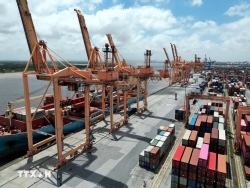
| EVFTA enhances strategic belief between Vietnam, EU The EU-Vietnam Free Trade Agreement (EVFTA) holds multifaceted significance in strategic political and socio-economic terms for both sides, as it has further strengthened the strategic ... |
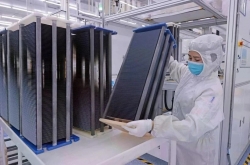
| Trade Counselor highlights gains, challenges, strategic path of EVFTA Five years after the EU-Vietnam Free Trade Agreement (EVFTA) took effect in August 2020, Vietnamese Trade Counselor in Germany Dang Thi Thanh Phuong described it ... |
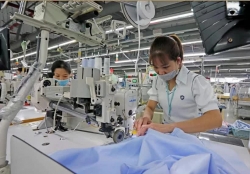
| Vietnam needs to make full use of FTAs for growing global trade volatility: Experts WVR/VNA - Exporters were advised to make full use of free trade agreements (FTAs), tap into niche markets, and seize new opportunities to overcome challenges ... |
| EVFTA generates positive outcomes after 5 years of implementation After five years of implementation, the EU-Vietnam Free Trade Agreement (EVFTA) has delivered many positive outcomes, including a robust growth of Vietnamese exports to the ... |

| Labour commitments in new-generation FTAs: Reform pressure can be a breakthrough opportunity WVR - According to some experts, labour commitments in new-generation free trade agreements (FTAs) are not merely "burdens." When approached strategically, they can serve as ... |