





Connecting overseas Vietnamese in the new era: Potentials, challenges and strengths
WVR - Amidst globalization and deepened international integration, our nation is entering a new stage of development filled with both opportunities and challenges. The Vietnamese community abroad has become a strategic resource for the cause of building, safeguarding, and developing the country.
Latest
Overseas Vietnamese are not only an inseparable part of the nation’s bloodline but also an important bridge linking Vietnam with the world, serving as ambassadors who help project the image of a dynamic, creative, and integrated Vietnam.
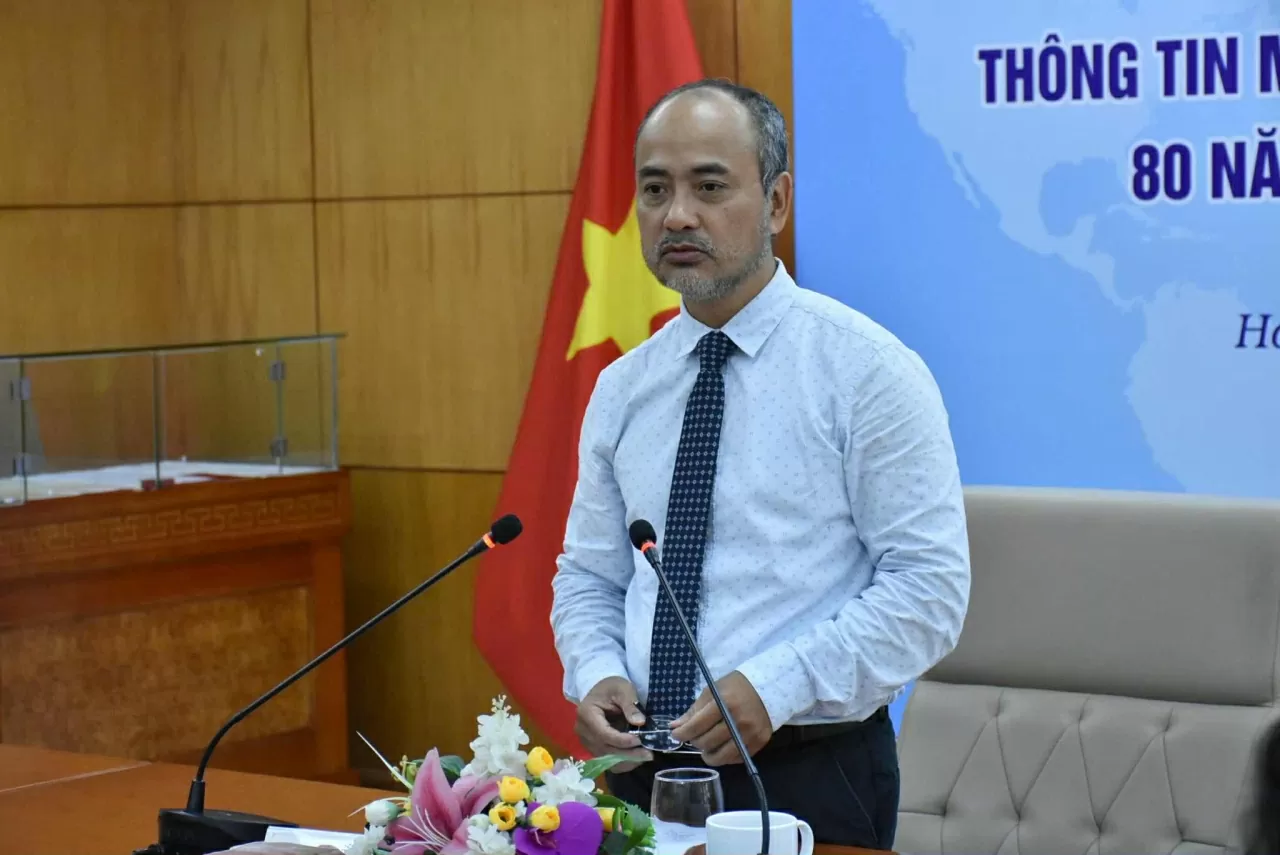 |
| Nguyen Trung Kien, Chairman of the State Committee for Overseas Vietnamese Affairs, under the Ministry of Foreign Affairs (Photo: WVR). |
Vast potential and resources of the overseas Vietnamese community
Along with Vietnam’s development and international integration, the overseas Vietnamese community has increasingly affirmed its position, not only in numbers but also in quality. This is a diverse and abundant treasure spread across many fields, capable of making practical and long-term contributions to the cause of nation-building and defense.
One of the community’s strongest assets is its intellectual and scientific–technological potential. It is estimated that among the 6 million overseas Vietnamese living, studying, and working in more than 130 countries and territories, over 600,000 hold university degrees or higher—accounting for about 10–15% of the community.
Many are distinguished scientists and experts in fields such as medicine, information technology, artificial intelligence, biotechnology, renewable energy, new materials, and aerospace. Some hold key positions in multinational corporations, leading research centers, and prestigious universities worldwide.
In recent years, overseas Vietnamese knowledge networks have flourished. Currently, there are 10 innovation networks in various countries with over 2,000 experts, along with more than 30 associations of Vietnamese professionals and intellectuals. Overseas Vietnamese actively cooperate with domestic research institutes, universities, and businesses, making important contributions to research and development (R&D), technology transfer, and innovative startups. This is a valuable resource that helps elevate Vietnam’s scientific and technological standing in the region and the world.
Beyond knowledge, the overseas Vietnamese community is also an important economic resource. Remittances to Vietnam have increased steadily, totaling more than 246 billion USD between 1993 and 2024—an amount equivalent to total disbursed FDI during the same period. Vietnam now ranks among the world’s top 10 remittance-receiving countries. These inflows have significantly contributed to improving the balance of payments, stabilizing the macroeconomy, and boosting consumption and investment.
In addition to remittances, overseas Vietnamese directly invest in Vietnam. By the end of 2024, there were 442 projects from overseas Vietnamese across 34 countries and territories, with a total registered capital of 1.725 billion USD. These projects focus on key sectors such as processing and manufacturing industries, real estate, tourism services, and hospitality. Such investments not only create jobs and train human resources but also foster technology transfer and support Vietnamese goods in expanding into international markets.
The community also plays an increasing role in promoting Vietnam’s image, culture, cuisine, language, arts, and tourism abroad.
Through associations, people-to-people exchanges, and public diplomacy, overseas Vietnamese contribute to building an image of Vietnam as friendly, peaceful, and culturally rich—creating favorable conditions for political, economic, and cultural cooperation with host countries.
The tradition of mutual support and solidarity is always preserved and promoted by overseas Vietnamese. During the Covid-19 pandemic, the community contributed more than 80 billion VND and medical supplies worth tens of millions of USD to support the homeland.
In 2020, after devastating floods in Central Vietnam, overseas Vietnamese donated nearly 1 million USD. In 2024, they contributed more than 57 billion VND to help compatriots affected by super typhoon Yagi. These contributions not only hold material value but also provide tremendous spiritual encouragement, reaffirming the deep bonds with the homeland.
Guidelines and policies of the Party and State
Throughout the country’s development, the Party and State have always considered the overseas Vietnamese community an inseparable part of the Vietnamese nation and an important resource for national development.
Policies toward overseas Vietnamese are consistently based on shared interests, cultural roots, and patriotism, encouraging voluntary and responsible participation. Major orientations outlined in Resolution 36-NQ/TW, Directive 45-CT/TW, and Conclusion 12-KL/TW have set clear long-term directions, recognizing overseas Vietnamese affairs as both emotional and strategic.
Most recently, the Politburo issued four breakthrough resolutions regarded as the “four pillars” (Resolutions 57, 59, 66, 68), creating favorable policy frameworks that enable overseas Vietnamese to participate more deeply in nation-building.
In addition, the National Assembly has passed amendments to the Law on Vietnamese Nationality (2025), easing conditions for overseas Vietnamese to acquire or regain nationality; the Law on Science, Technology and Innovation (2025); along with other important laws such as the Land Law 2024, the Housing Law 2023, and the Real Estate Business Law 2023.
These changes not only safeguard the legitimate rights of overseas Vietnamese but also reflect the State’s increasingly concrete and profound attention, connecting them more closely with the homeland.
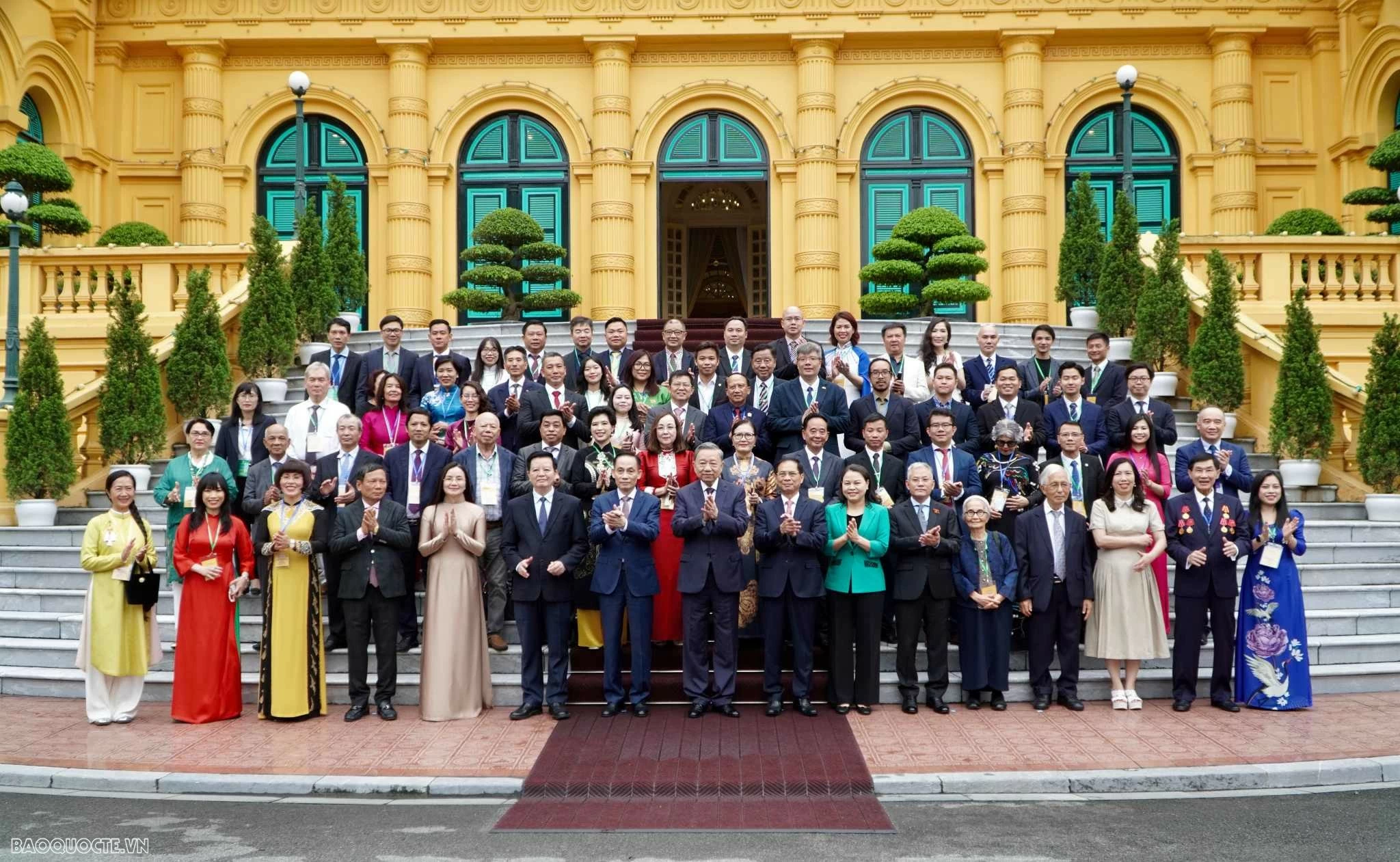 |
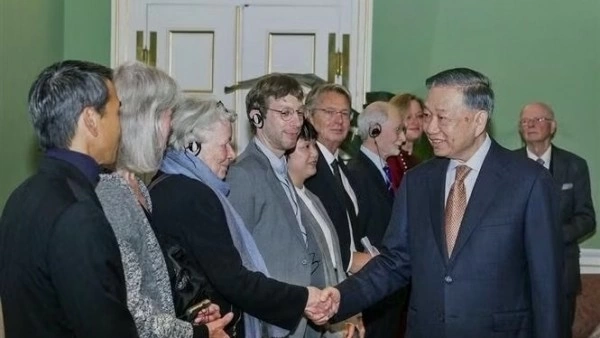
| General Secretary and State President To Lam with a delegation of exemplary overseas Vietnamese attending the 4th World Conference of Overseas Vietnamese and the Forum of Vietnamese Knowledge and Experts Abroad. (Photo: WVR) |
Alongside institutional improvements, activities to engage and unite the overseas Vietnamese community have become more diverse. During official trips abroad or when compatriots return home, senior leaders of the Party, State, the Central Committee of the Vietnam Fatherland Front, and the Ministry of Foreign Affairs always make time to meet and openly dialogue with overseas Vietnamese. This is not only symbolic but also a direct bridge ensuring policies better reflect the community’s needs and aspirations.
As the specialized agency, the State Committee for Overseas Vietnamese (Ministry of Foreign Affairs) has actively advised and implemented comprehensive solutions to connect and mobilize overseas Vietnamese resources.
Many major long-term projects have been launched, such as: The Project “Mobilizing overseas Vietnamese to participate in introducing, distributing, and developing channels for Vietnamese goods abroad, 2020–2024”; the Project “Honoring the Vietnamese language in the overseas Vietnamese community, 2023–2030”; the Project “Promoting overseas Vietnamese resources for national development in the new context”. These projects are all strategic breakthroughs with long-term significance.
In addition, many global-scale forums have been held to provide platforms for overseas Vietnamese to exchange ideas, contribute to policy-making, and join in national development.
Most recent are the 4th World Conference of Overseas Vietnamese and the Forum of Vietnamese Intellectuals and Experts Abroad (2024); and the 5-year review conference of the Project on promoting overseas Vietnamese in introducing and distributing Vietnamese products abroad (2020–2024).
Alongside these, annual programs for overseas Vietnamese, organized by the State Committee for Overseas Vietnamese, have attracted large participation. Prominent examples include the Homeland Spring program, the Vietnam Summer Camp for overseas youth and students, and delegations of overseas Vietnamese visiting the Truong Sa archipelago and DK1 platforms.
These activities have created a strong shift in overseas Vietnamese awareness, igniting national pride and their desire to contribute more to the country’s development.
Thanks to consistent attention and concrete efforts, support for overseas Vietnamese has become increasingly practical and effective, helping them stabilize their lives abroad, integrate into host societies, while also strengthening their legal status and protecting legitimate rights.
On this basis, the trust, confidence, and long-term attachment of overseas Vietnamese to their homeland have been strengthened—laying a solid foundation for continued companionship with the nation in its new stage of development.
Challenges arising in work related to overseas Vietnamese affairs
Despite important results, efforts to connect and promote overseas Vietnamese resources still face many challenges.
Objectively, differences in language, culture, and working/study conditions make it difficult to unite and connect the community. Generational gaps are increasingly evident: older generations maintain ties through memory and tradition, while younger generations born and raised abroad approach Vietnam with a modern outlook but lack deep cultural experience.
Moreover, globalization facilitates Vietnamese mobility for study, work, investment, marriage, and settlement abroad, leading to cultural blending and social integration pressures. These trends pose greater challenges in preserving and promoting Vietnamese identity, culture, and language among the diaspora.
Subjectively, coordination among ministries, sectors, and localities is sometimes inconsistent, and policy implementation remains slow.
Some overseas Vietnamese report difficulties with administrative and legal procedures when investing or doing business in Vietnam. Understanding of the specific needs and strengths of different groups remains limited, while misinformation on social media continues to risk eroding trust and attachment.
These barriers call for proactive, flexible, and multidimensional approaches—resolving not only technical issues but also addressing psychological, cultural, and perceptual factors—so that each connection is built on trust and shared interests.
Continuing to Inspire and spread the strength of the overseas Vietnamese community
Amidst deep international integration, harnessing the potential of the overseas Vietnamese community is not only an objective requirement but also a long-term strategic mission. To achieve this, clear directions and comprehensive solutions suited to new contexts are needed.
To begin with, three key areas of connection should be emphasized:
First is connection among overseas communities across countries and regions to form broad cooperative networks where different strengths—from science and technology to business and social engagement—can complement and reinforce one another.
Second is connection by field and profession, encouraging cross-disciplinary creativity to generate new business models and high-value products and services.
Third is direct connection between overseas Vietnamese and the homeland, as the core axis ensuring harmony between protecting the rights and lives of overseas Vietnamese and leveraging their potential for national development.
To make these three focal connections substantive, five basic groups of solutions should be implemented. These include continuing to review, supplement, and complete policies, laws, and mechanisms to further facilitate overseas investment, business, and cooperation—whether through direct return or remote collaboration; and developing modern digital infrastructure, including databases of experts, intellectuals, and entrepreneurs; platforms for sharing projects, ideas, and feedback.
Another important solution is to diversify forms of engagement—not only through large conferences but also by fostering smaller expert groups by field, pilot collaboration projects, mentoring programs between overseas specialists and domestic partners, as well as cultural, artistic, sports, and charitable activities—thereby strengthening both interests and emotional bonds.
Special attention should be given to younger generations of overseas Vietnamese, through summer camps, internships, and startup support in Vietnam—creating multidimensional connections not only economically but also in culture, history, and national identity.
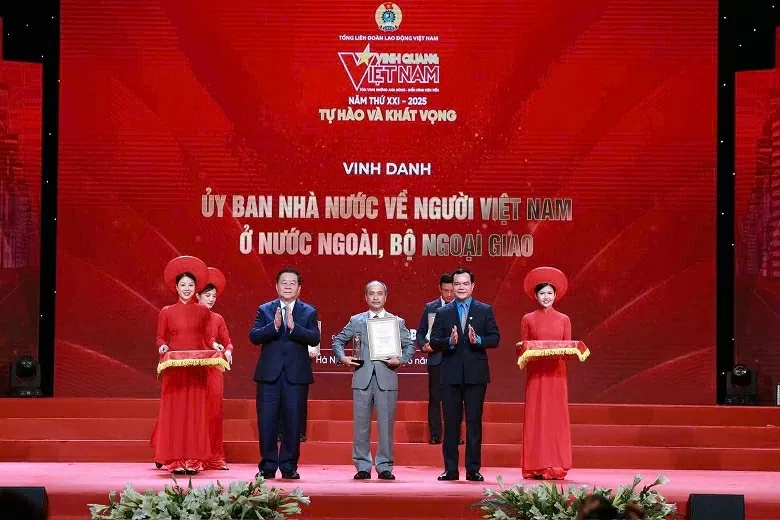 |
| The State Committee for Overseas Vietnamese Affairs honoured in the “Vietnam Glory 2025” program. (Photo: WVR) |
Finally, information and communication work must be strengthened, spreading success stories, inspiring trust and enthusiasm in the community, while proactively combating misinformation, building official, multilingual, and accessible communication channels.
Overall, in today’s process of development and international integration, the overseas Vietnamese community remains an inseparable part of the great national unity bloc.
In the context of globalization and the Fourth Industrial Revolution, connecting the overseas Vietnamese community is not just situational requirement but also a strategic mission—linked with the goal of fully mobilizing national potential, expanding development space, and enhancing Vietnam’s global position.
This is the time that calls for new vision, new methods, and new determination to make connections ever deeper, stronger, and more substantive—so that every Vietnamese, wherever they are, can join hands in writing the next chapter of the nation’s development story.
Whatever the specific goals, the ultimate and enduring destination remains the same: to maintain and strengthen the great national unity bloc, connect the community with the homeland, and inspire, connect, and spread the strength of Vietnam in the new era.


