


A Cuban friend’s aspiration for Vietnam-Cuba relations: Opening new horizons for sustainable development
WVR - The Vietnam-Cuba relationship is a traditional brotherly relationship and a special solidarity, forged in the struggle against imperialism and in the process of building socialism.
Latest
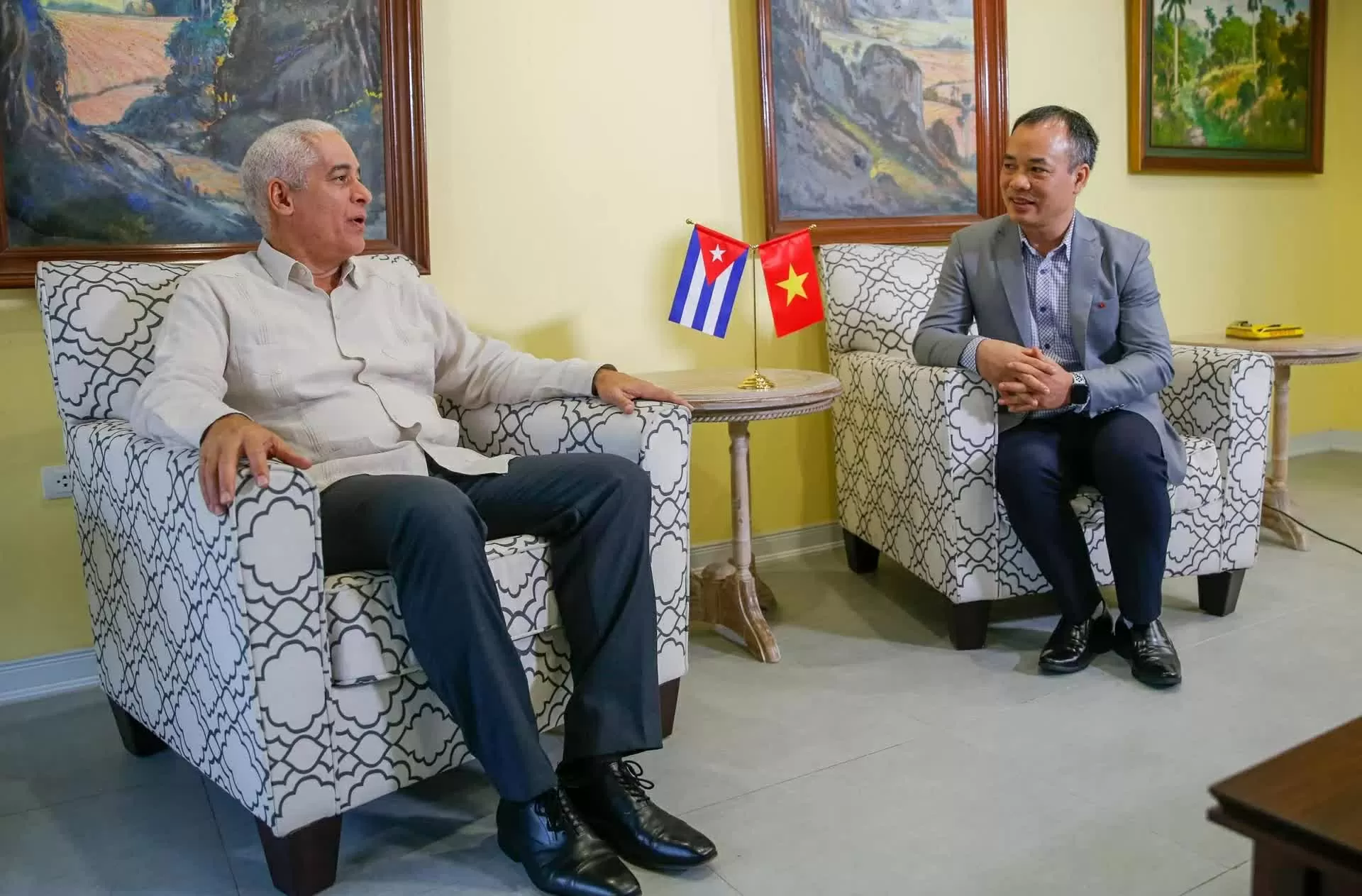 |
| First Deputy Minister of Foreign Affairs of Cuba Gerardo Peñalver Portal gives an interview to The World & Vietnam Report. (Photo: Anh Tuan) |
This is an invaluable heritage, a special testament to the relationship between peoples, overcoming geographical distance and historical-cultural differences.
First Deputy Minister of Foreign Affairs of Cuba, Gerardo Peñalver Portal, made this statement in an interview with the World and Vietnam Report on July 24, during his visit to Vietnam and his co-chairing of the 8th Political Consultation between the Ministry of Foreign Affairs of Vietnam and the Ministry of Foreign Affairs of Cuba.
The Deputy Foreign Minister stated that the ideology and legacy of Commander-in-Chief Fidel Castro Ruz and President Ho Chi Minh laid the foundation for this relationship, which continues to be strengthened by the leaders of both countries. He emphasized that it is the responsibility of the younger generations to preserve and enrich this relationship for the future generations of the two nations and peoples. The year 2025 has been designated by the two countries' leaders as the Vietnam-Cuba Friendship Year, marking the 65th anniversary of the establishment of diplomatic relations — an opportunity to jointly honor this special legacy.
The Cuban Deputy Foreign Minister affirmed that the potential for developing bilateral relations is immense. Based on the solid foundation of this exemplary relationship, both sides are committed to continuing the construction of a comprehensive, effective, practical, and sustainable cooperation. “Nothing can hinder the aspiration of the two Parties, two States, and peoples in reaching new heights of mutually beneficial integration and strengthening confidence in the future of our nations,” he emphasized.
A Gift and Shared Solidarity
Through shared political will, historic brotherhood, and a common vision for sustainable development, the two nations have built an exemplary alliance — forged in the struggle for independence and today nurtured by active cooperation in key areas such as agriculture, renewable energy, and healthcare.
According to Nhan Dan (People) newspaper, economic cooperation between the two countries has made notable progress. Since the bilateral trade agreement officially took effect in April 2020, trade volume between the two sides has increased significantly. In just the first eight months of 2024, total trade reached USD 134.7 million - a 187% increase compared to the same period in 2023. The agreement has not only helped reduce tariffs but also facilitated the diversification of products and services.
Vietnam has become the largest Asian investor in Cuba, with at least seven ongoing projects and a total committed capital of over USD 160 million, primarily focused in the Mariel Special Development Zone. Companies such as Thai Binh Cooperation, Viglacera, and Agri VMA have invested in diverse sectors such as diaper production, building materials, fertilizers, pharmaceuticals, and solar energy.
One of the most notable examples of cooperation is in rice production. Vietnam has not only shared its technology but also sent experienced technical experts to assist. Under the bilateral agricultural cooperation project that has been ongoing for over 10 years, more than 4,700 hectares of rice fields have been leveled using laser technology, and nearly 6,000 kilometers of irrigation canals and field roads have been upgraded. Cuba has adopted 25 Vietnamese rice varieties, some of which are in the process of being registered under the “ViBa” brand.
These advancements are concrete steps to help Cuba achieve food sovereignty and reduce dependence on imports. Additionally, there are joint projects in coffee, corn, and aquaculture, in which Vietnam provides seedlings, expertise, and management models. Notably, Cuba’s coffee yields have reached up to 5 tons per hectare — far exceeding the global average.
In the field of healthcare, the solidarity between the two nations has become even more evident in difficult times. During the COVID-19 pandemic, Vietnam was one of the first countries to purchase 5 million doses of Cuba’s Abdala vaccine and also received an additional 150,000 donated doses in September 2021 — a clear expression of brotherhood between the two governments.
Beyond vaccines, the two countries have implemented joint projects in biotechnology and pharmaceutical production, including technology transfer, human resource training, and clinical trials. Cuban doctors have worked in Vietnamese hospitals such as the Vietnam-Cuba Friendship Hospital in Quang Binh and private facilities like Vinmec, helping to improve healthcare service quality and strengthen professional ties between medical experts from both countries.
The Cuban Deputy Foreign Minister expressed deep gratitude for the generous gifts that Vietnam has provided to Cuba — particularly rice — as a clear sign of solidarity and support from the brotherly Vietnamese people.
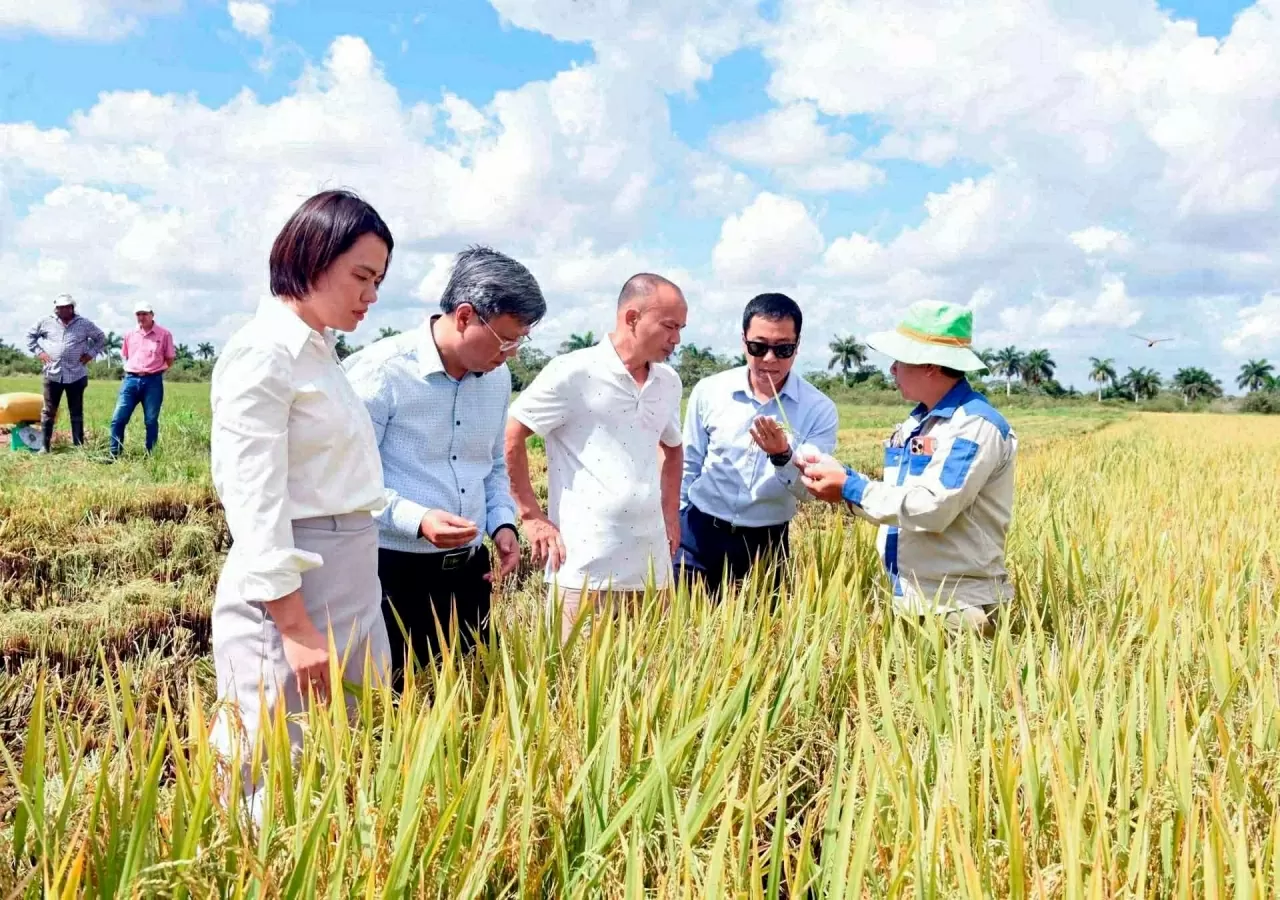 |
| Vietnamese Ambassador to Cuba Le Quang Long and experts visit rice fields in Cuba. (Source: VNA) |
Positive Cooperation Prospects
In discussing future cooperation directions, First Deputy Minister of Foreign Affairs of Cuba proposed three main priorities:
First, diversifying and modernizing economic cooperation. The two countries need to enhance bilateral investment in fields such as renewable energy, telecommunications, the pharmaceutical industry, and food production, making use of their complementary economic structures. Vietnam possesses technological capacity and financial strength, while Cuba has a highly skilled workforce and can serve as a gateway to the Latin American market. The Mariel Special Development Zone will play a pivotal role in this process.
Second, strengthening cooperation in science and agri-industrial development. The rice cultivation project in Los Palacios, Pinar del Rio Province, has tripled yields in certain regions of Cuba, clearly demonstrating the effectiveness of technical collaboration. This model should be expanded to other areas such as coffee, corn, and aquaculture to enhance food security. Moreover, existing programs in biotechnology, researcher exchanges, and technology transfer should be reinforced.
Third, promoting people-to-people and youth exchanges. To maintain this special friendship, it is vital to expand academic, cultural, and youth exchange activities. Cooperation between universities, two-way scholarships, cultural exchange programs, and joint historical commemorations will help younger generations better understand and appreciate the deep bonds between the two countries—bonds fostered by President Ho Chi Minh and Leader Fidel Castro.
Solidarity, Companionship, and Strength
In a message to the people of Vietnam, Deputy Foreign Minister Gerardo Penalver Portal emphasized that the beautiful shared history connecting the peoples and the cultural richness of both nations should be cherished and enjoyed more by the current generations of Cuba and Vietnam. Despite geographical distance and linguistic differences, both sides must find new ways to enhance exchanges.
“Our responsibility is to further facilitate efforts by travel agencies, tourism companies, and airlines to shorten the distance, so the peoples of both nations can truly experience each other’s people, cultures, and natural landscapes. The dances, music, literature, films, and other art forms of each country should be widely and regularly introduced,” he emphasized.
The Cuban official expressed strong confidence that Vietnam will achieve the development goals it has set. This belief stems from the impressive results after four decades of Doi Moi (Renewal), as well as the firm determination of the Vietnamese Party, State, and people in restructuring the political system, applying science and technology, driving innovation, and leveraging digital transformation as a key driver of socio-economic development.
Despite an unstable and complex international landscape, Vietnam has demonstrated exceptional capacity in addressing global challenges while firmly safeguarding sovereignty, independence, and self-determination, and steadfastly pursuing the path of socialist development.
First Deputy Minister Gerardo Penalver Portal affirmed that, just as in the heroic years when the Cuban people were ready to shed their own blood for Vietnam as declared by Leader Fidel Castro, in this new era of development, Cuba will always remain a strong pillar, a faithful companion, and a steadfast friend of Vietnam. Above all, he expressed his greatest aspiration: to promote a deeper and more widespread presence of Vietnam in Cuba and of Cuba in Vietnam.
Like a red thread running through history, the Vietnam–Cuba relationship continues to stand as a shining symbol of international solidarity. Every step forward in today’s cooperation not only enriches the enduring record of loyal friendship between the two nations but also opens up new horizons for sustainable development in a constantly evolving world.