


Vietnamese diplomacy at 81: A Perspective from across the Hemisphere
WVR - In the early days of August 2026, as the entire sector buzzed with the atmosphere of the 33rd Diplomatic Conference, on the other side of the hemisphere, from the meeting room of the newly inaugurated Embassy headquarters – a project that Minister Le Hoai Trung had just inaugurated at the end of June 2026 – I quietly followed each discussion session via the online screen.
Latest
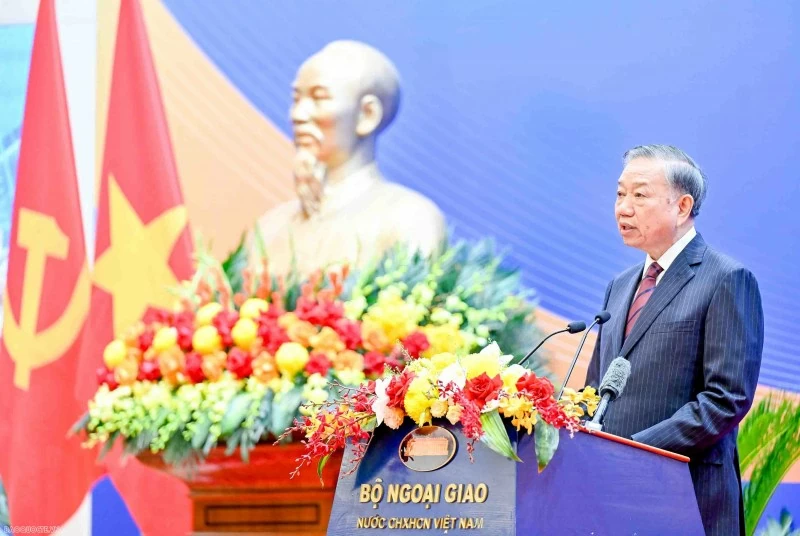 |
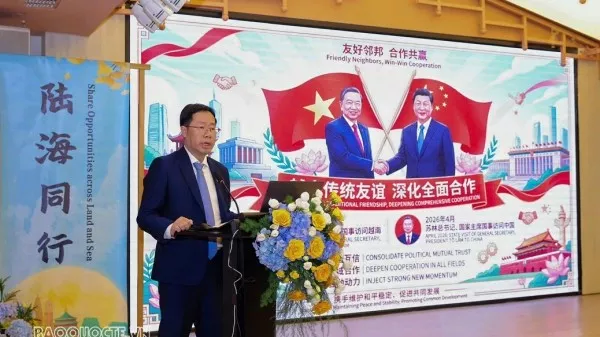
| General Secretary, President To Lam speaking at the Opening Ceremony of the 33rd Diplomatic Conference, August 1. (Photo: Nguyen Hong) |
For an Ambassador nearing the end of his term, this Conference not only holds strategic significance for the nation but also evokes poignant reflections on the profession and the glorious 81-year journey of Vietnamese diplomacy.
My monitoring of the Hanoi hub over the past days intertwined with a hectic schedule in South America. On the very day the Diplomatic Conference concluded (August 7), I was present at the University of Santiago de Cali, Cali City, Colombia, to attend the inauguration of President Abelardo de la Espriella.
The continuous shifts between time zones, political spaces, and the directives flowing from the Conference have provided me with a sharp, practical lens on the pulse of our nation's diplomacy during this historically transitional moment.
New momentum from a New Era
With over twenty years of honoured service in foreign affairs, primarily overseeing relations with the volatile Latin American region, I have always observed conferences from a multi-dimensional analytical perspective. The 33rd Diplomatic Conference (August 1-7) was truly a special one. It was the first diplomatic conference held right after the 14th National Party Congress, marking the beginning of a new era – an era of national growth and prosperity.
This year's Conference theme, “Promoting the Pioneering Role and Fulfilling the Crucial, Regular Tasks of Vietnamese Foreign Affairs in the New Era,” is not just a slogan but a call to action.
Listening to the directive speech by General Secretary, President To Lam during the opening session, what struck me most was the requirement to effectively transform relationship frameworks, commitments, and international agreements into specific projects, technologies, markets, and human resources for national development.
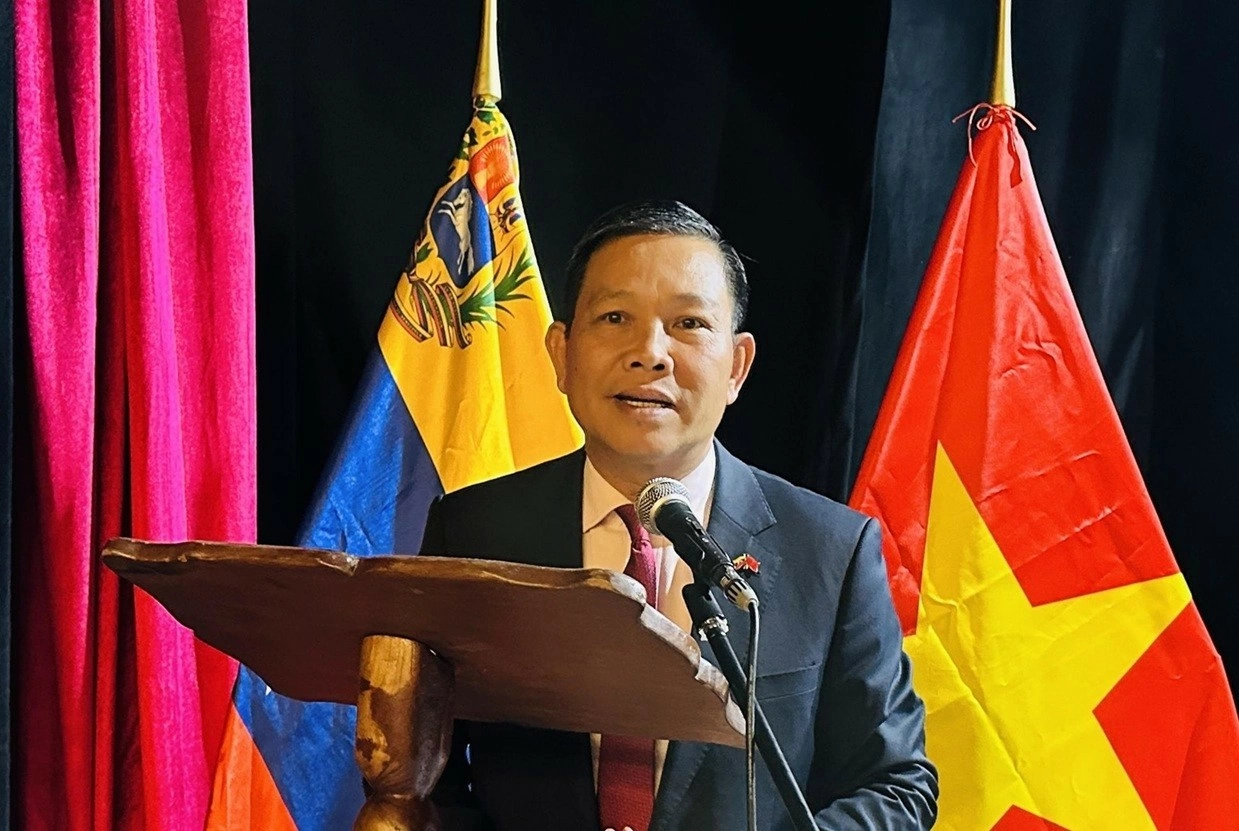 |
| Vietnamese Ambassador to Venezuela Vu Trung My. (Source: Vietnamese Embassy in Venezuela) |
This viewpoint was further deepened by Prime Minister Le Minh Hung during the plenary session on diplomacy for development, emphasizing the practical and measurable nature of foreign affairs outcomes.
Clearly, Vietnam is now not only telling the world what it wants but also proactively narrating its integration story in a way the world needs. The shift from “expanding relations” to “exploiting the depth of relations” requires each representative mission and each diplomat to truly become sensitive “antennas,” more substantively connected to the urgent development needs of the nation.
From a place halfway around the world from the homeland, I feel this requirement even more acutely. Geographic distance cannot be a gap in thinking or action. A piece of information about a new policy, a change in the investment environment, a technological cooperation opportunity, a new market demand, or a shift in the host country's foreign policy, if detected and handled promptly, can all become a useful “link” in the value chain serving national development.
This is also how I understand the word “pioneering” more deeply, to foresee one step ahead, connect one beat faster, and act a bit more decisively. In a world moving at unprecedented speed, if we only react when things have become a clear trend, the opportunity may have already passed.
As General Secretary, President To Lam emphasised in his opening speech at the 33rd Diplomatic Conference: “We must recognize opportunities early and turn them into results. We cannot sit and wait for favorable conditions, nor can we only handle situations when they have already occurred.” Therefore, diplomacy in the new era must have both strategic vision and feet firmly grounded in reality.
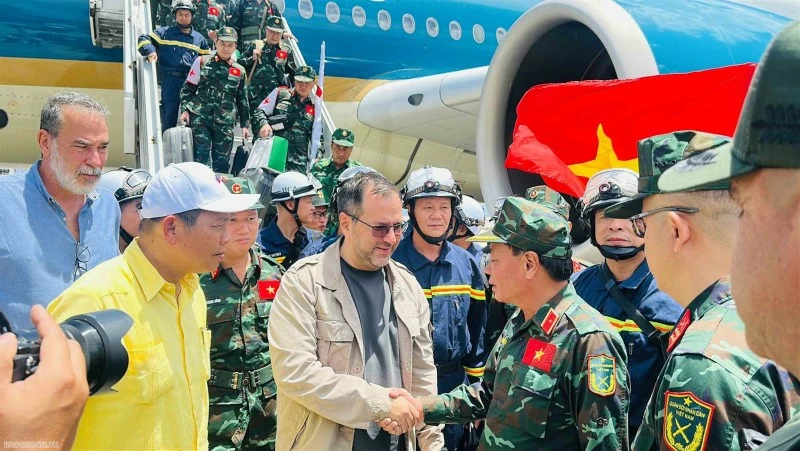 |
| Venezuelan Foreign Minister Yvan Gil Pinto (centre) with Vietnamese Ambassador to Venezuela Vu Trung My welcoming the Vietnamese rescue team at the airport. (Source: Vietnamese Embassy in Venezuela) |
Diplomacy from heart to heart
Reflecting on my journey with the Latin American region, I deeply appreciate the profound meaning of the directives from the Conference. Diplomacy never stops at grand declarations within velvet-lined meeting rooms. Diplomacy is about presence on the ground, concrete actions, and above all, sincere connections from “heart to heart”.
It is not just about smiles or handshakes in peaceful spaces, but sometimes it is about steadfast courage during moments filled with uncertainty, such as the shocking event when Venezuela was militarily attacked early on January 3, plunging the region into extremely complex and dangerous developments. Yet, amidst that tense silence, our representative mission staff remained calm, steadfastly holding their positions, and sensitively handling directives from home. Following those challenging moments was the overwhelming joy when the official visit to Venezuela by Politburo Member, Foreign Minister Le Hoai Trung, despite occurring during the twin earthquake disaster at the end of June 2026, still achieved great success...
But perhaps the most moving testament to the philosophy of “diplomacy from heart to heart” was the moment our representative mission staff welcomed the Vietnamese search and rescue team crossing half the globe to assist in overcoming the aftermath of the twin earthquake disaster also at the end of June.
The Embassy's swift deployment of preparations, support, and standing side by side with our rescue soldiers and the host authorities was not just a work duty but a mandate of camaraderie, national solidarity, and noble international unity.
The sweat of the Vietnamese rescue force falling on the rubble at the epicenter in La Guaira, the selfless coordination despite language differences or harsh conditions, touched the deepest emotional layers of the local people. During the farewell meeting with the rescue team, the tight hugs, the tearful thanks from leaders and local people to the Vietnamese delegation were invaluable diplomatic assets.
We came to you not only with skills and equipment but with an unconditional sharing heart. That is the greatest soft power of Vietnamese diplomacy: Always humane, loyal, and ready to sacrifice when international friends need it.
From such experiences, I am even more convinced that the strength of Vietnamese diplomacy lies not only in its increasingly elevated position on the international stage but also in how we treat friends in their most difficult times.
We give without ever demanding to receive. A nation may be remembered for the agreements signed, high-level visits, or international forums, but it can also be remembered for an outstretched hand at the right moment. And sometimes, those seemingly simple gestures create the most enduring foundation for trust between countries and peoples.
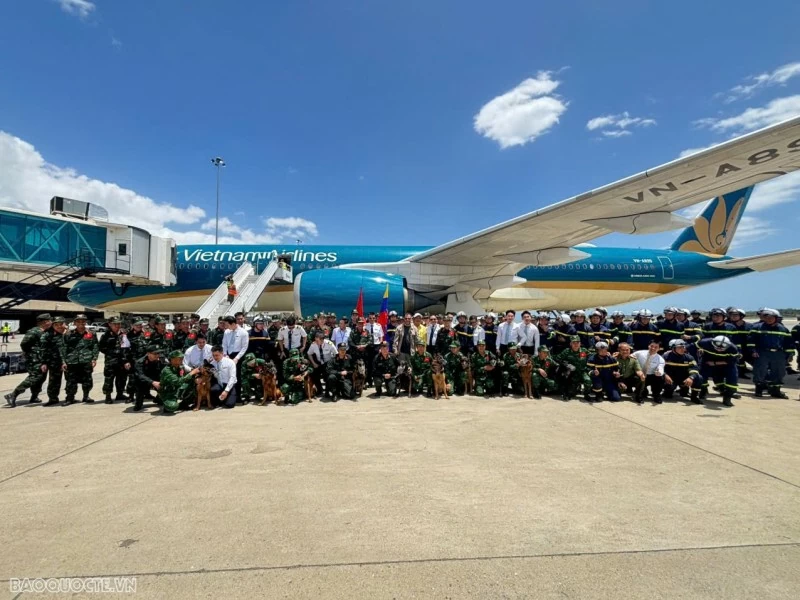 |
| The rescue team of the Vietnamese military and police forces and relief goods at Simón Bolívar International Airport in Maiquetía, Venezuela, June 29. (Photo: Duong Quang) |
Preparation for the return
The 33rd Diplomatic Conference concluded as the entire sector is gearing up to celebrate the 81st anniversary of its founding (August 28, 1945 - August 28, 2026). Looking back at history from the early days under the leadership of President Ho Chi Minh – the first Foreign Minister, we have the right to be proud of a comprehensive, modern, professional diplomacy imbued with humanity and compassion.
Eighty-one years is a long journey of steadfast principles but flexible strategies. In the new era, as the world faces “unpredictable” changes, the diplomatic sector at 81 carries a greater aspiration than ever: The aspiration to create a peaceful environment, directly contributing to the goal of making Vietnam a high-income developed country by 2045.
But to realize that aspiration, I believe it must start with each individual working in foreign affairs. The age of 81 for the sector is also the age of “maturity,” but it is not the age to be complacent with what has been achieved. On the contrary, it must be the age of new vitality, of the spirit of daring to think, daring to act, daring to take responsibility, and daring to go to the most challenging places. Each diplomat today must have both strong political courage and deep professional knowledge, the ability to quickly adapt to technology, foreign languages, and international culture, while always maintaining “the heart”.
From across the hemisphere, I also think a lot about the generation of young officers who are and will continue to stand on the front lines of foreign affairs. You have a much more open world than our generation ever had. You have the skills to use technology, with nearly unlimited ways to connect.
But the more modern tools we have, the more we need to uphold the core values that make up the identity of Vietnamese diplomacy: Patriotism, courage, sincerity, loyalty, and the spirit of serving the Fatherland. Because ultimately, technology can help us connect faster, artificial intelligence can help analyze millions of data, but no algorithm can completely replace the subtlety of a glance, the trust built over the years, or a gesture from the heart. These are the values that I believe will remain meaningful, no matter how the world changes.
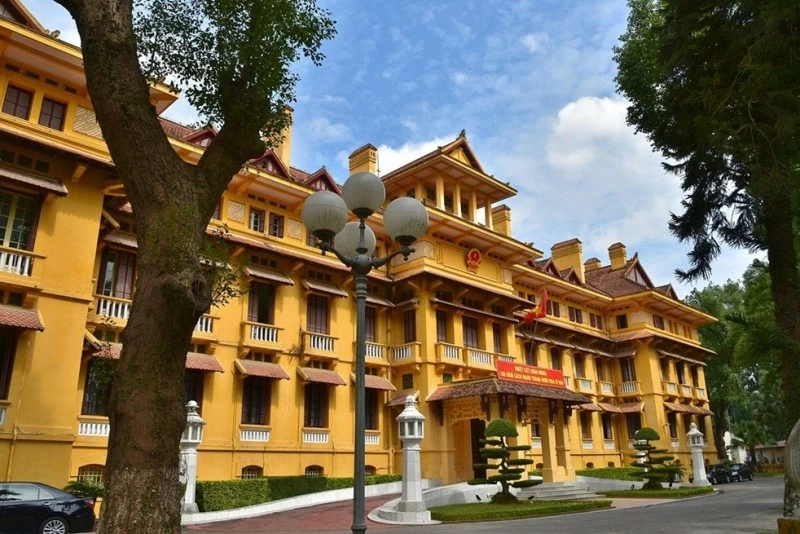 |
| The 33rd Diplomatic Conference concluded as the entire sector is gearing up to celebrate the 81st anniversary of its founding (August 28, 1945 - August 28, 2026). (Source: Ministry of Foreign Affairs) |
My term as Ambassador to Venezuela is coming to an end. My journey back to Hanoi carries not only the rich flavours of the famous Caracas rum, not only the vibrant memories under the Caribbean sun and wind, but also a deep pride in being a small part of the 81-year history of the sector.
For each diplomat, the work journey will eventually come to a close, but the journey of national diplomacy has never stopped. After each term is a new generation continuing the legacy, after each achievement are higher goals, and after each challenge is a resilience further honed.
Whether on the front lines or in the rear, whether attending in person or following from a screen halfway around the world, the heartbeat of those working in foreign affairs always beats in unison: All for the national interest, for a Vietnam that rises, full of compassion, independence, and resilience.