




50 Years of Thailand-Vietnam Relations: From the foundations of Ho Chi Minh’s legacy to a Comprehensive Strategic Partnership
WVR - The year 2026 holds special significance in Thailand-Vietnam relations, as the two countries commemorate the 50th anniversary of the establishment of diplomatic ties, according to Vietnamese and Thai scholars. The World and Vietnam Report is pleased to introduce their article published on the Nation on May 19, 2026.
Latest
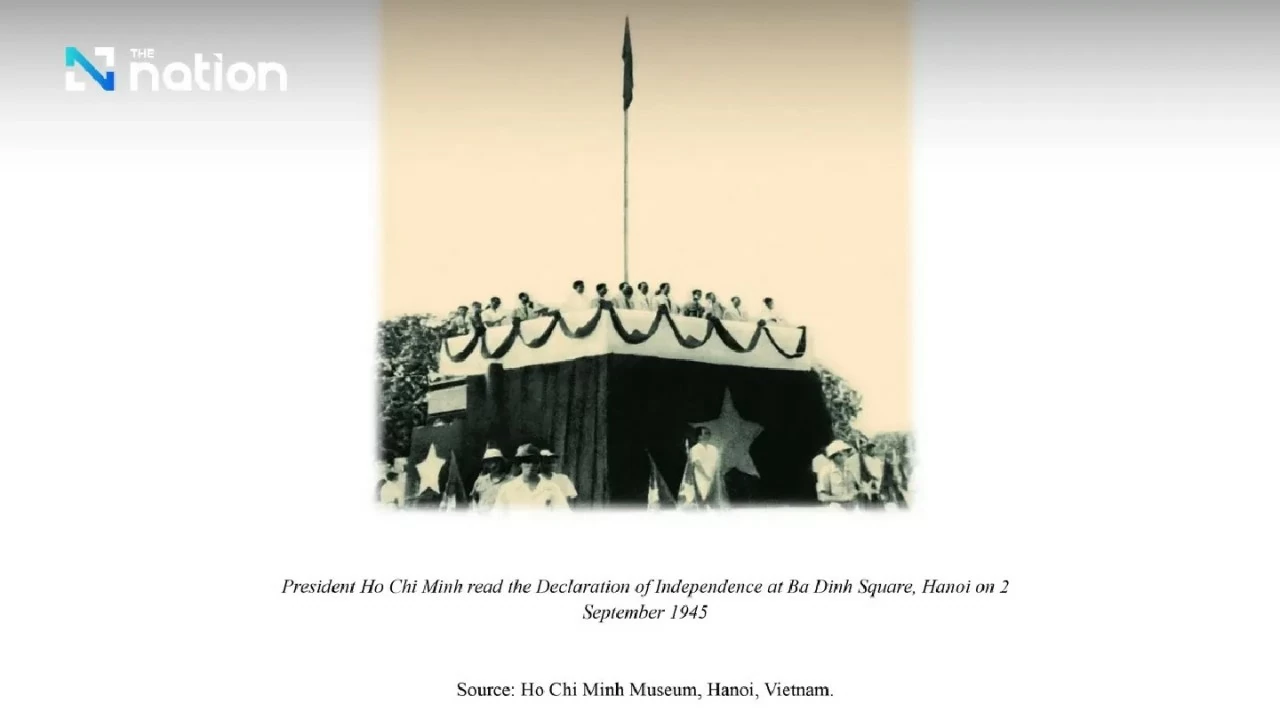 |
| 50 Years of Thailand-Vietnam Relations: From the foundations of Ho Chi Minh’s legacy to a comprehensive strategic partnership. (Source: The Nation) |
Throughout this process, the legacy of President Ho Chi Minh has been regarded as an important humanistic foundation that has contributed to the formation and development of the friendship between Vietnam and Thailand.
President Ho Chi Minh first came to Thailand in July 1928 with the aim of promoting patriotism among the Vietnamese expatriate community living and working there, thereby laying the groundwork for advancing the struggle against French colonialism in Vietnam.
During nearly two years of activities in Thailand, he traveled through many localities, including Bangkok, Ban Dong (Phichit), and several northeastern provinces such as Udon Thani, Sakon Nakhon, Nakhon Phanom, Amnat Charoen, Ubon Ratchathani, Mukdahan, and Nong Khai.
At the end of 1929, he left Thailand for Hong Kong (China). Around March 1930, he returned to northeastern Thailand to meet with Vietnamese cadres, then proceeded to Bangkok before departing Thailand in early 1930.
Although his time living and working in Thailand was not long, the sincere affection and support of the Thai people left a profound impression on him.
Therefore, wherever he went, President Ho Chi Minh always advised Vietnamese expatriates to work diligently, live honestly, obey the law, and respect Thai customs and traditions.
He particularly emphasized the importance of building solidarity between the Vietnamese community and the local Thai population, while affirming the close bond between the two nations.
Moreover, President Ho Chi Minh’s diplomatic philosophy of “making more friends and fewer enemies” was also one of the key factors in laying the foundation for a flexible, adaptive, and deeply humanistic approach to international relations.
This principle emphasizes building trust, enhancing mutual understanding, and respecting differences, thereby expanding cooperation and reducing conflict.
In Thailand-Vietnam relations, this philosophy is reflected in the emphasis on good-neighborliness and the promotion of shared East Asian cultural values such as community spirit, hospitality, and moral principles, which together create a sustainable foundation for long-term cooperation.
Accordingly, soon after Mr. Pridi Banomyong came to power in Thailand in 1946, the Thai government undertook many practical activities to support Vietnam, particularly in the field of foreign affairs during the early period following its independence.
In August 1946, a representative office of the Vietnamese Government was established in Bangkok, known as the Mission, based on a letter of introduction signed by Acting President Huynh Thuc Khang on July 7, 1946.
This office was responsible for liaising with governments and foreign representative missions, while also serving as a focal point for connecting with Vietnamese expatriate communities in various parts of the world and mobilizing support for the resistance at home.
In addition, the Mission included an information unit that published materials in Vietnamese, Thai, and English for distribution to expatriates, diplomatic agencies, and international organizations.
As a result, Vietnam’s position and image were gradually enhanced on the international stage, laying an important foundation for international support for the Vietnamese people’s resistance struggles.
Clearer signals of the establishment of diplomatic relations between Vietnam and Thailand emerged in a speech delivered by Thai Prime Minister Kukrit Pramoj on September 5, 1975: “We continue to pursue a policy of friendship with neighboring countries … Thailand hopes to soon open a liaison office with Hanoi.”
Accordingly, in August 1976, a delegation of the Thai Government visited Hanoi to officially negotiate the establishment of diplomatic relations. The negotiations were conducted in a frank, open, and mutually respectful atmosphere, although both sides also went through many intense debates before reaching a final consensus.
On August 6, 1976, the signing ceremony of the “Joint Communiqué on the Establishment of Diplomatic Relations between Vietnam and Thailand” was held, marking the official establishment of diplomatic ties between the two countries.
Although Vietnam-Thailand relations were established in 1976, they only truly began to flourish following the visit of Vietnamese Prime Minister Pham Van Dong to Thailand in September 1978. The period from 1979 to 1989 is considered a stagnation in bilateral relations due to disagreements related to the Cambodian issue.
From 1989 onward, the two countries initiated a process of normalization and achieved significant progress, particularly after the official visit to Thailand by General Secretary Do Muoi in October 1993. After Vietnam joined ASEAN in 1995, bilateral relations were continuously strengthened and expanded.
In February 2004, the two sides issued a Joint Declaration on the Framework of Vietnam-Thailand Cooperation. More notably, during the visit to Thailand by General Secretary Nguyen Phu Trong (June 25-27, 2013), the two countries upgraded their relationship to a “Strategic Partnership,” becoming the first two ASEAN members to establish such a framework with each other.
Subsequently, the Action Program for the implementation of the Strategic Partnership for the 2014-2018 period was signed during the official visit to Vietnam by the Prime Minister of Thailand in November 2014.
The process of upgrading relations from a Strategic Partnership (2013) to a Comprehensive Strategic Partnership (2025) reflects the profound and substantive development of bilateral ties.
Since 2013, the two countries have continuously strengthened cooperation in key areas such as politics, defense, economy, trade, and people-to-people exchanges.
Bilateral trade turnover has maintained steady growth, alongside the expansion of high-level dialogue and cooperation mechanisms, creating a solid foundation for upgrading the relationship.
In parallel with bilateral cooperation, Vietnam and Thailand have closely coordinated at regional and international forums such as ASEAN, APEC, and Mekong subregional cooperation mechanisms.
Within ASEAN, the two countries promote intra-bloc solidarity and the Association’s centrality; at APEC, both sides have actively contributed to initiatives on free trade and sustainable development; and in Mekong subregional cooperation, Vietnam and Thailand focus on water resource management, infrastructure development, and economic connectivity enhancement.
These efforts have contributed to strengthening strategic trust and enhancing the international standing of both countries.
On the foundation of the Comprehensive Strategic Partnership (2025), the realization of the “Three Connects” vision has been identified as a central direction to elevate bilateral cooperation in the context of rapid regional economic restructuring.
First, supply chain connectivity focuses on linking supporting industries, particularly in the automotive and electronics sectors, in order to leverage each country’s complementary strengths, form flexible production networks, and reduce dependence on extra-regional supply chains.
Second, connectivity between production bases and business communities plays a key role in expanding markets and promoting bilateral investment, aiming to achieve a trade turnover of USD 25 billion in the near future.
Finally, connectivity in sustainable development strategies is reflected in the alignment between Vietnam’s Green Growth Strategy and Thailand’s Bio-Circular-Green (BCG) Economy model, opening up prospects for deep cooperation in areas such as clean energy, green production, and the circular economy.
This convergence in development orientations contributes to enhancing coordination effectiveness in addressing climate change and promoting sustainable growth.
In the current context, the Vietnamese community and people of Vietnamese origin in Thailand continue to play an important role in promoting multidimensional relations between the two countries, not only in the economic sphere but also in cultural, social, and people-to-people diplomacy.
Over various historical periods, this community has developed steadily, becoming an integral part of Thai society while still preserving its national cultural identity.
In the economic field, Vietnamese people and Thai citizens of Vietnamese origin actively engage in business, trade, and investment, contributing to job creation, local economic development, and the promotion of bilateral commerce.
They also serve as an important bridge in strengthening economic cooperation between the two countries. In the cultural sphere, the Vietnamese community plays a significant role in preserving and promoting Vietnamese cultural values in Thailand through organizing traditional festivals, teaching the Vietnamese language, and maintaining customs, traditions, and folk beliefs.
At the same time, they help promote the image of Vietnam and its people to the international community, fostering cultural exchange and enhancing mutual understanding between the two nations.
From a social perspective, Vietnamese people in Thailand demonstrate a strong sense of solidarity, actively participate in community activities, and comply with local laws, thereby contributing to a stable and developing Thai society.
Many generations of Thai people of Vietnamese origin have achieved accomplishments in fields such as education, science, politics, and culture, thereby affirming the community’s position within Thai society.
Notably, in the field of people-to-people diplomacy, the Vietnamese community in Thailand serves as a bridge of friendship between the two nations.
Through exchanges, cooperation, and mutual support, the community contributes to strengthening the longstanding traditional relations between Vietnam and Thailand.
In the context of globalization, this role has become increasingly important, as people-to-people diplomacy is regarded as one of the key pillars of international relations.
In the vision for the next 50 years, Vietnam-Thailand relations should be oriented toward greater depth, sustainability, and high adaptability in order to maintain growth momentum and effectively address shared challenges.
The two countries need to strengthen cooperation in ensuring energy security, developing renewable energy, building interconnected regional power grids, and sharing energy storage technologies to reduce dependence on fossil fuels.
Regarding climate change, priority should be given to coordinating the management of water resources - especially in the Mekong River basin - while jointly implementing initiatives on emissions reduction and climate adaptation.
At the same time, both countries should promote digital transformation through the development of digital infrastructure, the digital economy, and innovation, thereby enhancing competitiveness in the digital era.
In addition, improving policy dialogue mechanisms, promoting public-private partnerships, and developing high-quality human resources will be key solutions contributing to a dynamic advancement of bilateral relations, while positively contributing to regional peace and shared prosperity.
* Assoc. Prof. Dr. Truong Thi Hang is an Associate Professor at Lampang Rajabhat University, Thailand, specializing in East Asian history and culture, Vietnam-Thailand relations, and President Ho Chi Minh’s legacy.
* Asst. Prof. Dr. Supawadi Yadi is an Assistant Professor at Lampang Rajabhat University, Thailand, with research expertise in cultural resource management, local history, and community-based developmen.
(Source: The Nation)


