







Vietnam-Japan collaboration for regional growth
WVR - I would like to extend my sincere congratulations, on behalf of JETRO, on the convening of the Vietnam-Japan Local Cooperation Forum once again this year, following its successful organization last year.
Latest
 |
| Mr OZASA Haruhiko, Chief representative of the Hanoi Office of the Japan External Trade Organization (JETRO Hanoi). |
We are delighted to see that, since Japan and Vietnam elevated their bilateral relationship to a Comprehensive Strategic Partnership in 2023, cooperation and exchanges between our two countries have continued to expand and deepen beyond government-to-government relations and economic and investment ties, encompassing local governments, human resource development, and people-to-people exchanges.
Vietnam's expanding market
Against the backdrop of Vietnam’s sustained economic growth and the unique industrial strengths and tourism resources of its provinces and cities, we believe that the potential for cooperation between Japanese and Vietnamese localities will continue to expand and play an increasingly important role in the development of bilateral relations in the years ahead.
Today, many Japanese companies regard Vietnam as one of the most promising markets for future growth. According to JETRO’s survey, 57% of Japanese-affiliated companies operating in Vietnam plan to expand their business over the next one to two years, the highest ratio among ASEAN countries for the second consecutive year.
The factor most highly valued by Japanese companies in Vietnam’s investment environment was its market size and growth potential, cited by 68% of respondents, significantly higher than the ASEAN average of 49%. These findings indicate that, alongside stable export opportunities, the continued expansion of domestic demand is increasingly supporting business growth in Vietnam.
At the same time, we are witnessing two notable shifts in the business expansion of Japanese companies in Vietnam.
The first is the growing focus on businesses targeting the domestic market. Consumer-oriented sectors, including retail and food services, are becoming increasingly vibrant. Even within manufacturing, particularly in food products and consumer goods, we are seeing a growing trend toward local production for local consumption. These business activities not only improve the quality of life for local communities but also contribute to a better living environment for foreign professionals, particularly highly skilled talent, including Japanese nationals.
The second trend is the expansion of service sectors that support the operations of existing investors . These include logistics, trading and wholesale services, finance, and insurance. Such sectors play an important role in creating a business environment where Japanese companies can operate with confidence while also encouraging further investment from Japan.
As both the business and living environments improve, Vietnam’s attractiveness as an investment destination becomes even stronger. This will help attract higher value-added investments in priority sectors such as high technology and semiconductors, while also promoting investment in higher-value functions, including research and development, even within existing industries. Furthermore, it will support efforts to attract and retain the highly skilled talent needed to drive these sectors forward.
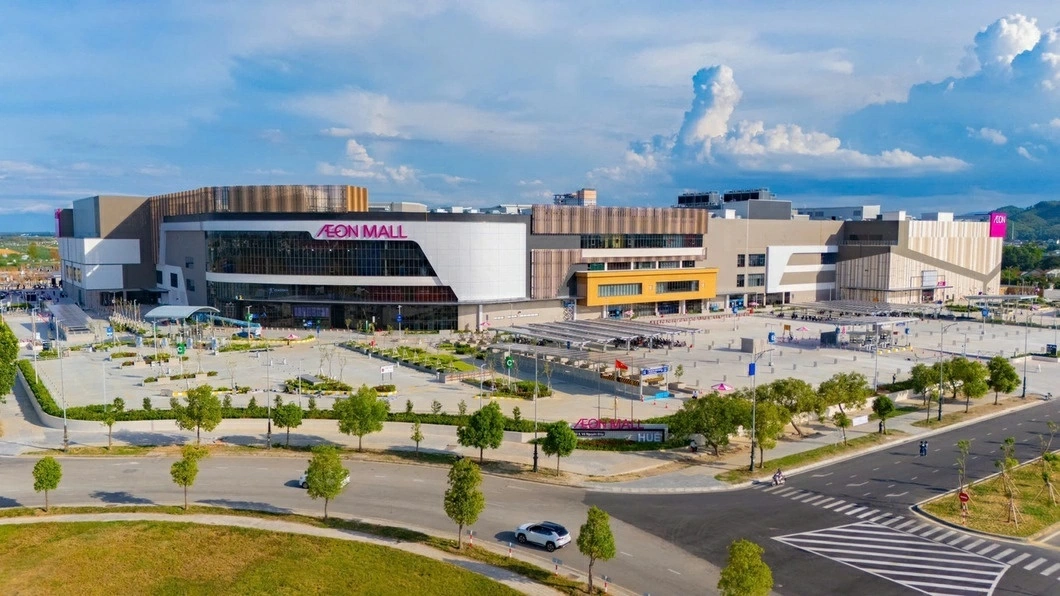 |
| AEON Hue. (Source: Dan tri) |
The appeal and potential of Hue city
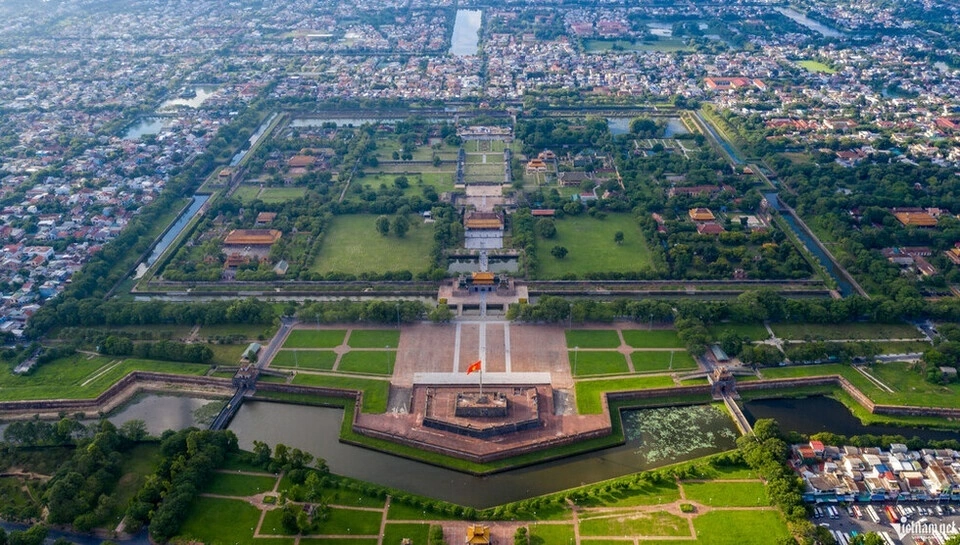
These trends are increasingly extending beyond major metropolitan areas to provincial cities as well. Hue City is not only renowned for its world-class cultural and historical heritage but also plays an important role within Vietnam’s Central Economic Region. While most Japanese investment in Hue is concentrated in manufacturing industries, the opening of AEON Mall Hue in 2024 serves as a notable example of how Hue is attracting Japanese business interest not only in manufacturing but also in consumer markets and service industries.
For many years, Japanese companies have contributed to Vietnam’s economic development through exports, industrial growth, and job creation, particularly in the manufacturing sector. Looking ahead, we believe Japanese businesses can also contribute to the further development of Vietnam and its localities by helping improve both the living and the business environment.
| Japan-Vietnam economic relations are entering a new stage of development. To ensure sustainable growth in this relationship, it is essential to deepen cooperation not only at the national level but also at the local level. With its rich cultural heritage, historical significance, and important role in the development of central Vietnam, Hue City is well placed to serve as one of the key drivers of this next phase of cooperation. |
That said, there are still challenges that must be addressed in order to fully realize this potential and translate it into concrete investment projects and business opportunities.
One of the most important issues concerns the investment environment. JETRO surveys continue to show that cumbersome administrative procedures and the incomplete or non-transparent implementation of laws and regulations remain among the key concerns for Japanese businesses operating in Vietnam. We highly appreciate the efforts made by both the Vietnamese central government and local authorities to advance administrative reform. However, for companies to make long-term investment decisions with confidence, a more predictable investment environment is important.
In particular, when introducing new policies or regulations, it is important to provide clear implementation roadmaps with adequate preparation periods and to engage in meaningful dialogue with relevant stakeholders, including the business community. Greater predictability enables companies to plan their adaptation to new regulations more effectively and facilitates decisions regarding new investment and business expansion. This would contribute not only to Hue City's attractiveness as an investment destination but also to enhancing Vietnam’s overall investment competitiveness.
 |
| (Source: Vietnamnet) |
Advancing Japan-Vietnam collaboration
The value that Japanese investment brings extends far beyond capital inflows and employment creation. Through technology transfer, human resource development, expansion of local procurement, and participation in global supply chains, Japanese companies also contribute to the upgrading and strengthening of local industries.
This is fully aligned with the objectives of Resolution No. 10 on foreign-invested enterprises and Resolution No. 68 on private sector development, which are complementary in nature. These two resolutions are mutually reinforcing. By combining the market knowledge and domestic networks of Vietnamese enterprises with the technology, expertise, and international networks of foreign-invested companies, including Japanese firms, new value can be created.
Strengthening cooperation between Hue City and Japanese companies can help improve the competitiveness of local enterprises, enhance technological capabilities, develop human resources, and reinforce supply chains. Such outcomes are consistent with the goals of Resolution No. 10, including attracting high-quality FDI, promoting technology transfer, and strengthening industrial linkages. They also support Hue City's aspirations for stronger economic growth and industrial upgrading.
JETRO is committed to actively supporting these efforts. At present, we are engaged in initiatives that promote collaboration between Japanese companies and Vietnamese startups, encourage local sourcing by Japanese manufacturers operating in Vietnam, and support the success of highly skilled Vietnamese professionals in Japan. These initiatives are designed to help Japanese and Vietnamese companies grow together and build even stronger and more sustainable partnerships.
Japan-Vietnam economic relations are entering a new stage of development. To ensure sustainable growth in this relationship, it is essential to deepen cooperation not only at the national level but also at the local level. With its rich cultural heritage, historical significance, and important role in the development of central Vietnam, Hue City is well placed to serve as one of the key drivers of this next phase of cooperation. JETRO will continue to strengthen its collaboration with Hue City and contribute to the sustainable growth and shared prosperity of both Japan and Vietnam.


