


Vietnamese intellectuals realize innovation – Joining hands to build bridges
WVR - Science and technology, innovation, and digital transformation are unlocking unprecedented development opportunities for Vietnam. Besides attracting and utilizing talent, a pressing requirement is to build effective bridges to connect the global Vietnamese intellectual resources to accompany the country.
Latest
From different perspectives, experts, scientists, and overseas intellectuals have shared proposals to remove barriers, enhance connectivity, and expand the connection space, contributing to turning Vietnam's innovation aspirations into reality.
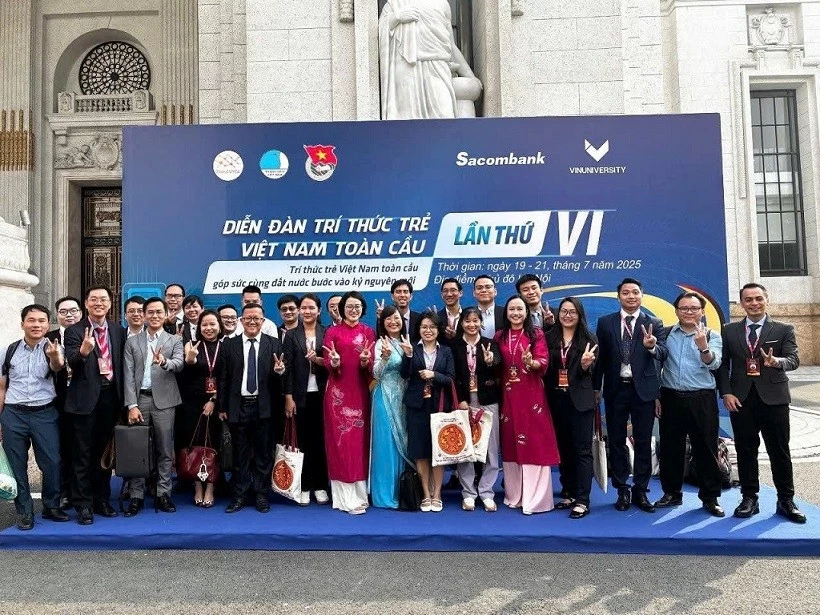 |
| Delegates attending the Global Vietnamese Young Intellectuals Forum 2025. |
Identifying the "drop points" to offer solutions
As the leader of the Association of Vietnamese Scientists and Experts Global (AVSE Global) with a network of members in over 20 countries, Prof. Nguyen Duc Khuong believes that the government's approval of the national strategy for developing the intellectual workforce by 2030, with a vision to 2045, aiming to place Vietnamese intellectuals among the top in the region, clearly affirms the crucial role of intellectual resources both domestically and abroad.
Additionally, there is a direction to establish preferential mechanisms regarding income, working environment, and senior appointments to attract and utilize scientists, experts, technology entrepreneurs, and Vietnamese talents overseas.
Prof. Nguyen Duc Khuong shared: “I want to emphasize the spirit, breakthrough thinking, and innovation of policies, especially Resolution 57 on breakthroughs in science and technology development and digital transformation. The overall resolutions, strategies, and new laws are creating a consistent policy framework to attract and promote Vietnamese intellectuals both at home and abroad. Accordingly, reducing invisible barriers, increasing transparency, expanding experimental spaces, accepting risks, and providing legal safety for overseas intellectuals who wish to contribute.”
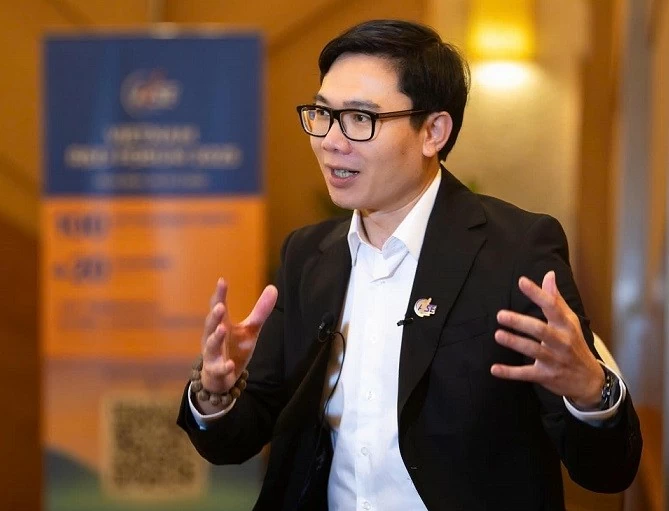 |
| Prof. Nguyen Duc Khuong, Chairman of AVSE Global. (Photo NVCC) |
According to him, the above strategic priorities align with the strengths of many Vietnamese intellectuals abroad in strategic technology fields such as renewable energy, environmental technology, artificial intelligence, biomedicine, and sustainable urban development. This helps them clearly identify the "drop points" to contribute. More importantly, current political commitments are being institutionalized comprehensively, demonstrating a determination to act substantively, with specific evaluation criteria, rather than stopping at general calls for the overseas community.
Investing in people is investing in the future
For Dr. Nguyen Duy Lan, a cybersecurity expert in the United States, the key factor for the success of the innovation process lies not only in technology or capital but primarily in people. Having returned to Vietnam multiple times and witnessed the remarkable development of digital technology in his homeland, he aspires for Vietnam to become a powerhouse in cybersecurity.
However, to achieve this, the government must strategically invest in developing the cybersecurity industry step by step, as well as continuously research, propose, and adjust policies and regulations that both directly protect cyberspace and lay the foundation for the development of the cybersecurity industry.
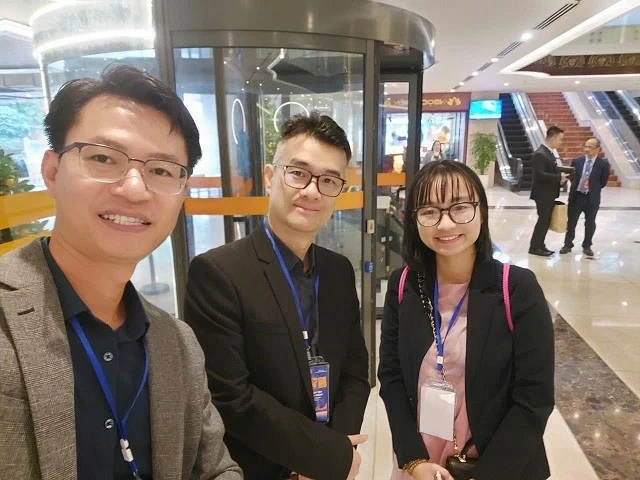 |
| Dr. Nguyen Duy Lan (center) with overseas intellectuals attending the Homeland Spring program in Vietnam. (Photo NVCC) |
“I believe that Vietnamese people have excellent qualities for science and technology. For the overseas intellectual community, it is important not only to have opportunities for cooperation but also to feel recognized, respected, and trusted by domestic agencies and organizations.
When people are placed at the center of the development strategy, Vietnam will have the foundation to form a team of experts capable of mastering strategic technologies and creating new breakthroughs in the future,” Dr. Nguyen Duy Lan expressed optimism.
Innovating education and developing human resources
According to Dr. Nguyen Hong Son, Chairman of the Union of Vietnamese Associations in Japan, education is one of the fields with great potential for cooperation between Vietnam and Japan, and it is also an important foundation for developing high-quality human resources to serve innovation.
In recent times, the Union has actively connected associations, universities, training institutions, and the Vietnamese intellectual community in Japan to promote educational cooperation, academic exchange, and human resource development.
Dr. Nguyen Hong Son also highly appreciates the role of the Association of Vietnamese Intellectuals in Japan (AVIJ) in gathering Vietnamese scientists, experts, and researchers, creating academic connection forums and sharing knowledge between the two countries.
According to him, to effectively mobilize the intellectual resources of the Vietnamese expert community in Japan, there needs to be a systematic, transparent, and long-term connection mechanism. The state should create conditions for overseas intellectuals to participate more deeply in national development programs in strong fields such as high technology, digital transformation, healthcare, education, and green development.
Dr. Nguyen Hong Son emphasized: “When listened to, trusted, and given opportunities to contribute, the overseas intellectual team will become 'knowledge ambassadors', helping to promote educational innovation, enhance the quality of human resources, and the competitiveness of Vietnam in the digital era.”
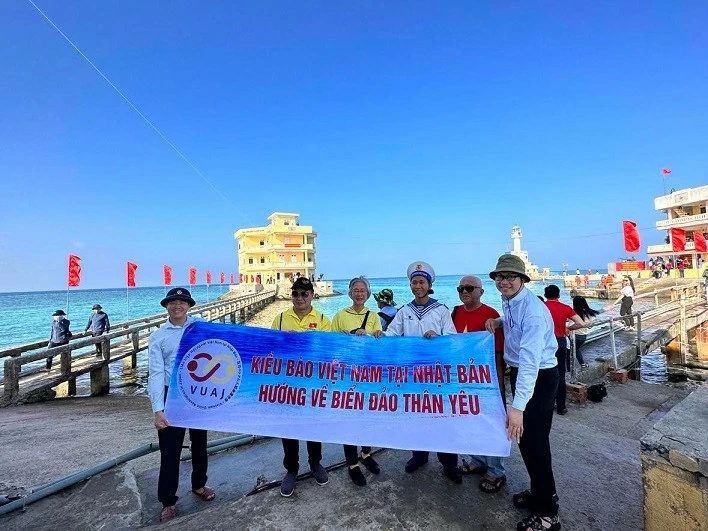 |
| Dr. Nguyen Hong Son (far right) with the Japanese overseas delegation visiting Truong Sa. (Photo: Courtesy by author) |
Removing key "bottlenecks"
From the practical perspective of an overseas intellectual expert directly involved in connecting and implementing scientific-technological and innovation cooperation activities between Vietnam and international partners, Dr. Tran Hai Linh, Member of the Central Committee of the Vietnam Fatherland Front, Founding Chairman of the Vietnam-Korea Experts and Intellectuals Association (VKEIA), believes that to make science and technology, innovation policies truly come to life, it is necessary to focus on removing some key "bottlenecks".
Currently, mobilizing overseas intellectuals still lacks a sufficiently authorized focal point for unified coordination. Therefore, it is necessary to soon establish a transparent inter-sectoral coordination mechanism, clearly define responsibilities, and ensure effective reception and evaluation of contributions.
On the other hand, many intellectuals and experts abroad are willing to participate in domestic projects but face difficulties in recognizing expertise, signing scientific contracts, funding payments, or accessing public research programs. Therefore, it is necessary to continue reforming towards simplifying, digitizing processes, approaching international standards, creating favorable conditions for overseas intellectuals to participate flexibly, either short-term or long-term, depending on actual conditions.
“To attract and retain intellectual resources, it is necessary to build an open working environment, respect creativity, accept risks in research and technology experimentation. At the same time, there should be mechanisms to protect intellectual property rights, fairly distribute benefits, and closely link research – application – market.
In my opinion, the biggest "bottleneck" is the implementation mindset. If resolutions only stop at political determination without specific pilot models, without someone responsible to the end, it is very difficult to create breakthroughs. When the mindset of "open", "trust", and "accompany" is thoroughly implemented from central to local levels, the resolutions and amended laws will truly become a driving force for overseas intellectuals to contribute effectively to the country's development,” Dr. Tran Hai Linh expressed his aspirations.
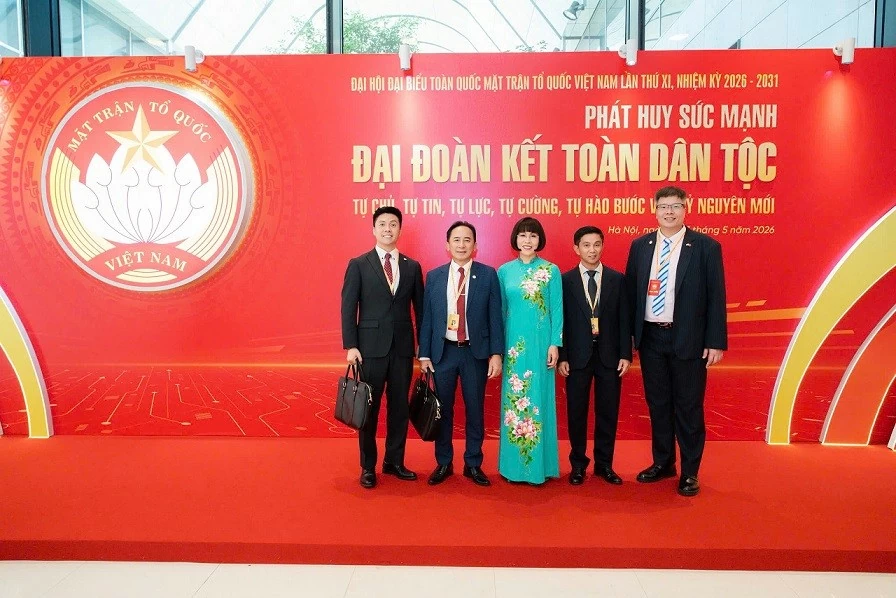 |
| Dr. Tran Hai Linh (far right) with overseas delegates attending the 10th National Congress of the Vietnam Fatherland Front. (Photo NVCC) |
From the shared insights of Vietnamese intellectuals and experts in various countries, it is evident that the overseas community's resources lie not only in scientific achievements or management experience accumulated abroad but also in the ability to connect Vietnam with global technology, knowledge, and innovation trends.
Proposals for applying artificial intelligence and drones in urban management, healthcare, agriculture by Prof. Dr. Nguyen Quang Phuoc (Republic of Korea), the strategy for developing the semiconductor industry based on design, research, and intellectual property by representatives of the Vietnam Innovation Network in Australia, or the initiative to build the global knowledge connection platform V-NEXUS by the Vietnamese Liaison Committee in Singapore demonstrate that overseas intellectuals are bringing valuable international experiences to Vietnam's development process.
Especially in the context of digital transformation blurring geographical boundaries, the government's issuance of a program to attract Vietnamese experts and scientists abroad, aiming to attract 1,500 experts and scientists to teach, research, and cooperate with domestic educational and research institutions by 2035, shows a strong determination to turn intellectual resources into a development driver.
When the bridges of connection are built wide enough, sustainable enough, and trustworthy enough, Vietnamese intellectual resources worldwide will converge into a common strength, contributing to realizing the aspiration to elevate Vietnam in the new era of development.
| “With hundreds of thousands of experts and intellectuals living in developed countries, working for leading technology corporations, and renowned research institutes worldwide, the overseas community is in a position to capture and bring advanced technology to Vietnam, participate in policy consulting, build legal frameworks, digital governance models, and innovation strategies suitable for the country's development in the global trend.” Deputy Minister of Foreign Affairs Le Thi Thu Hang |