




Vietnam-Switzerland: Expanding cooperation, enhancing growth quality
WVR - The visit of Swiss Federal President Guy Parmelin to Vietnam on October 17–18 opens opportunities to boost bilateral economic relations, as the two countries celebrate 55 years of diplomatic relations and enhance cooperation in trade, investment, science, and technology.
Latest
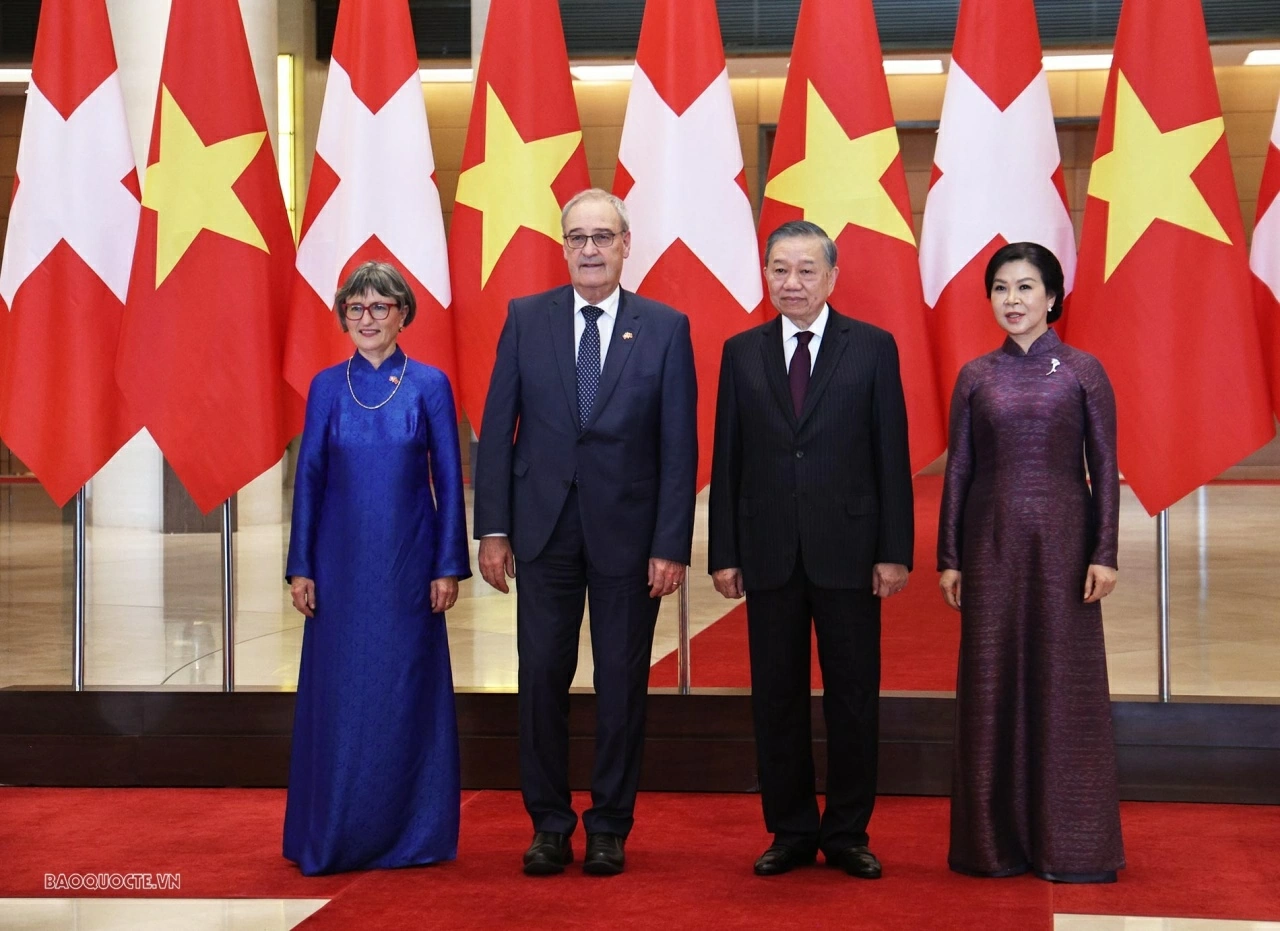 |
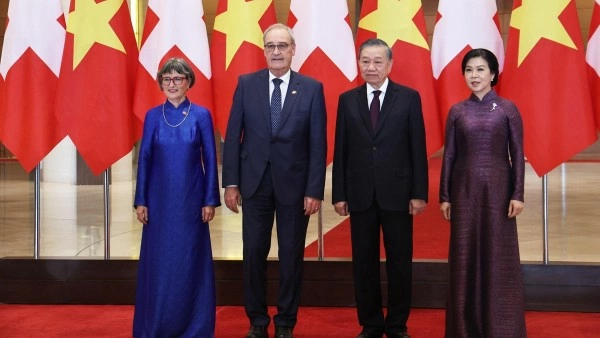
| General Secretary, President To Lam and his wife Ngo Phuong Ly hosted the official welcoming ceremony for Swiss President Guy Parmelin and his wife Caroline Parmelin at the National Assembly House on October 17. (Photo: Thanh Long) |
The signing of the Vietnam–EFTA Free Trade Agreement provides additional momentum for the two countries' relations. The key issue is how to transform these opportunities into drivers to enhance Vietnam's competitiveness and growth quality.
A new milestone in Vietnam-Switzerland relations
The official visit of Swiss Federal President Guy Parmelin to Vietnam on October 17–18 is a noteworthy event in the relations between the two nations. After 55 years of diplomatic relations, Vietnam-Switzerland cooperation has expanded from diplomacy and development cooperation to trade, investment, education, scientific research, and innovation. Establishing the Comprehensive Partnership framework in January 2025 provides additional political foundations for this process.
A significant highlight of the visit is the signing of the Free Trade Agreement between Vietnam and the European Free Trade Association (EFTA), which includes Switzerland, Norway, Iceland, and Liechtenstein. The agreement is expected to improve market access conditions, increase the predictability of the trade environment, and facilitate businesses on both sides. However, the signing should be distinguished from the time the agreement officially takes effect; specific incentives depend on procedures and implementation timelines.
The significance of the visit, therefore, lies not only in expanding goods exchange. In the context of the global economy restructuring supply chains, accelerating digital and green transformation, Vietnam-Switzerland relations can become an important channel for Vietnam to access technology, capital, and management experience for long-term development.
Two economies with complementary advantages
Switzerland is an economy with a relatively small population size but outstanding international competitiveness in many high-value sectors. Key industries include pharmaceuticals, biotechnology, precision machinery, automation, industrial equipment, luxury watches, financial services, and insurance.
Switzerland's economic strength does not primarily rely on natural resources or a large domestic market. Instead, the country develops based on labor productivity, quality human resources, scientific research, technology, and the ability to commercialize knowledge. Corporations like Roche and Novartis showcase strengths in pharmaceuticals; ABB operates in electrification and automation; Nestlé holds an international position in the food industry. Besides large corporations, Switzerland also has an ecosystem of small and medium-sized enterprises specializing in engineering, equipment, and industrial services.
Meanwhile, Vietnam has advantages in market size, workforce, geoeconomic position in Southeast Asia, and increasing international integration. The developing economy has a high demand for production technology, infrastructure, healthcare, energy, education, and professional services.
The differences in economic structure create complementary possibilities. Switzerland can provide technology, capital, equipment, and management experience; Vietnam offers a developing market, investment opportunities, and connectivity with the regional production network. However, these advantages will only translate into tangible results if both sides choose suitable cooperation areas and design effective implementation mechanisms.
The Free Trade Agreement expands cooperation space
The Vietnam–EFTA Agreement provides a basis for both sides to consider expanding trade and economic cooperation in various fields, from goods, services, investment to intellectual property and sustainable development.
For Vietnam, the agreement may facilitate easier access for goods to EFTA markets. Industries such as textiles, footwear, electronics, machinery, seafood, and processed products can explore opportunities to expand markets, depending on tariff commitments, rules of origin, and applicable standards.
However, the Swiss market demands high quality, product safety, traceability, and sustainability. Therefore, Vietnamese businesses need to invest in technology, quality management, product design, and brand building instead of relying solely on low-cost advantages.
Conversely, Swiss businesses have more opportunities to develop operations in Vietnam in machinery, industrial equipment, pharmaceuticals, medical technology, and professional services. The expanding Vietnamese market can create conditions for Swiss businesses to develop distribution networks, technical centers, production facilities, and relationships with local suppliers.
Nevertheless, the free trade agreement does not automatically guarantee new investment flows or technology transfer. Effectiveness depends on businesses' ability to leverage incentives, infrastructure quality, human resources, and the transparency of the business environment.
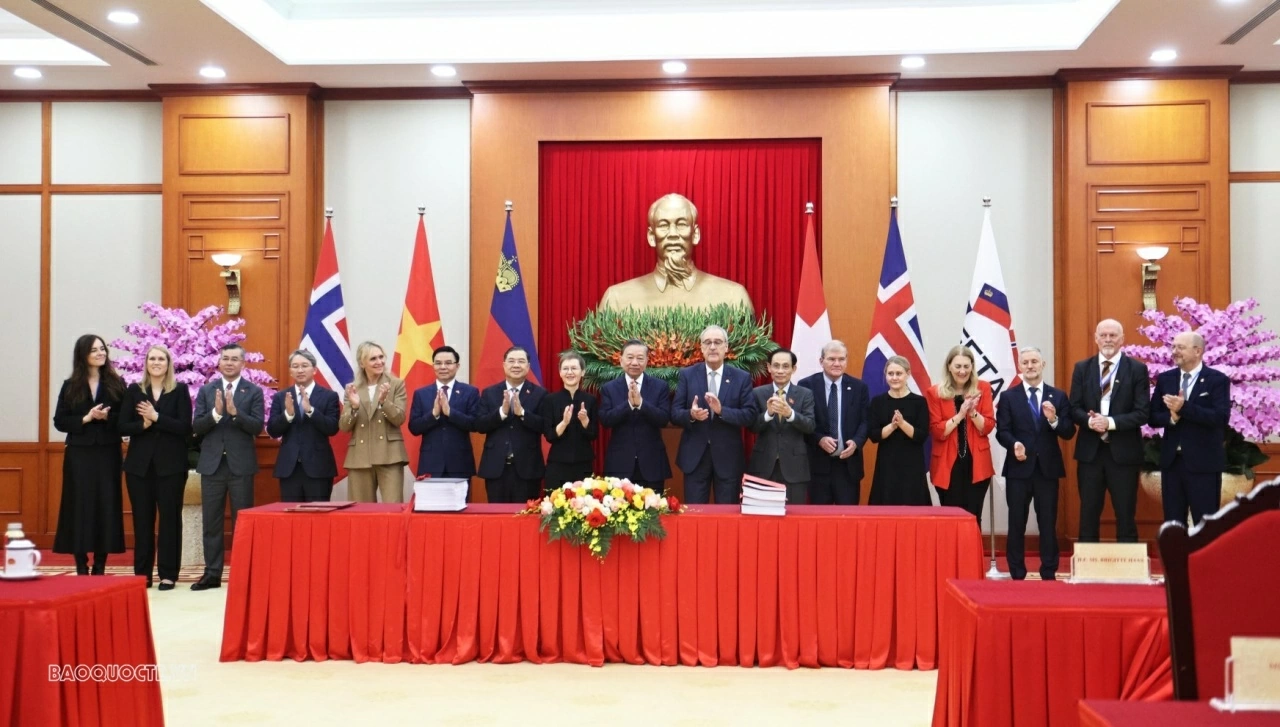 |
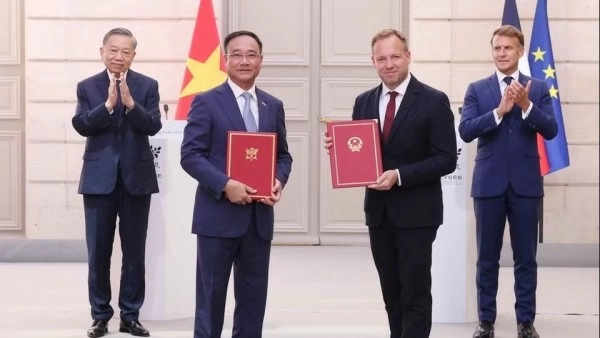
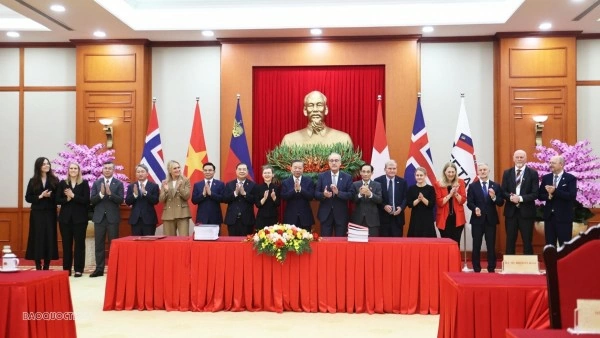
| On October 18, General Secretary, President To Lam witnessed the signing of the Free Trade Agreement between Vietnam and the member countries of the European Free Trade Association (EFTA). (Photo: Thanh Long) |
High-tech industry: From investment attraction to production capacity upgrade
One of the most strategically significant cooperation areas is the high-tech industry. Vietnam has deeply integrated into the international production network, especially in electronics, processing, and export sectors. However, a long-term challenge is how domestic enterprises can participate more deeply in design, technology development, component production, and high-value-added technical services.
Switzerland has strengths in precision machinery, automation, measurement technology, quality control, and production organization. Businesses from both countries can collaborate in upgrading production lines, developing technical service centers, training engineers, and building a network of local suppliers.
A Vietnam-Switzerland industrial cooperation program could focus on three areas: supporting Vietnamese businesses in applying advanced technology; training technicians and quality management experts; promoting cooperation between businesses, technical universities, and research institutes.
The goal should not only be to attract factories using imported equipment but to enhance the ability to master technology, increase labor productivity, and help Vietnamese businesses participate more deeply in the international supply chain. This is also a way for foreign investment to create a spillover effect on the entire economy.
Pharmaceuticals and medical technology: Science-based cooperation
Pharmaceuticals and life sciences are areas with clear cooperation potential. Switzerland possesses international companies in research, development, and pharmaceutical production, along with capabilities in biotechnology, diagnostics, and drug development.
Vietnam needs to improve healthcare quality, develop the pharmaceutical industry, and expand access to advanced medical technology. Both sides can cooperate in diagnostic equipment, testing technology, workforce training, pharmaceutical quality control, clinical research, and developing production capacity to meet international standards.
Connecting Swiss pharmaceutical companies with medical universities, research institutes, and Vietnamese businesses can enhance domestic research capacity while creating market development opportunities. However, this field requires significant capital, long-term investment, intellectual property protection, and strict management mechanisms. Therefore, projects need to be designed based on clear benefits and access to medical products at reasonable costs.
Green finance and Innovation
Switzerland holds an international position in banking, asset management, insurance, and risk management. These experiences can support Vietnam in developing the capital market, improving corporate governance quality, and mobilizing resources for infrastructure.
A noteworthy area is green finance. Vietnam needs substantial capital for clean energy, grid upgrades, public transportation, water treatment, and technology transition in industry. Swiss financial institutions and businesses can participate in consulting, capital mobilization, risk management, and developing financial instruments for projects meeting environmental criteria.
Cooperation can also extend to supporting small and medium-sized enterprises, developing financial technology, and enhancing the quality of information disclosure. These activities help Vietnamese businesses access capital more easily while improving their ability to meet international standards.
The Swiss economic cooperation program for Vietnam for the 2025–2028 period identifies three focus areas: sustainable trade and innovation; sustainable public and private finance; industrial and urban development adapting to climate change. These priorities provide policy foundations for promoting highly practical projects.
Green transition and sustainable urban development
Vietnam's industrialization and urbanization process increases demand for energy, clean water, transportation, and waste management. Switzerland has experience in environmental technology, efficient energy use, and resource management, creating opportunities for cooperation in these fields.
The two countries can develop eco-industrial park projects, helping businesses reduce energy consumption, reuse water, manage waste, and control emissions. Suitable solutions can simultaneously reduce production costs, limit environmental impact, and enhance the ability to meet export market standards.
At the urban level, cooperation can focus on water management, sustainable transportation, digitizing public services, and planning to adapt to climate change. The important thing is to choose technology suitable for Vietnam's economic conditions, based on total investment costs, operating costs, maintenance capability, and long-term benefits.
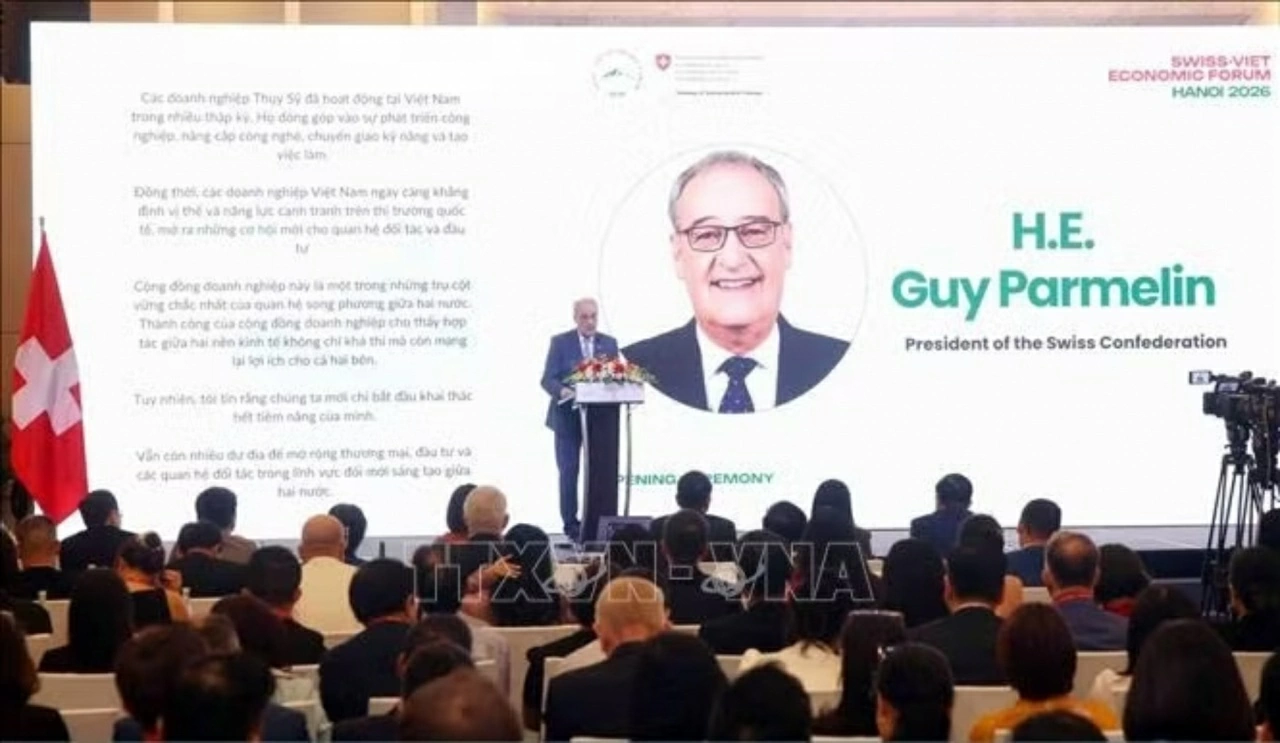 |
| President Guy Parmelin speaking at the Vietnam-Switzerland Economic Forum 2026 on October 18. (Source: VNA) |
Education and human resources: The foundation of long-term cooperation
No sustainable industrial upgrade process can succeed without high-quality human resources. Switzerland has experience in vocational training combining educational institutions and businesses, helping learners develop skills suitable for production needs.
Vietnam can study this model in training precision mechanics, automation, biotechnology, food technology, medical equipment, and quality management. Universities and research institutes from both countries can also expand scholar exchanges, develop joint research programs, and build training courses linked to business needs.
Scientific cooperation should be promoted towards increasing the applicability and commercialization of research results. When scientific discoveries are transformed into products, technology, and services, the benefits of cooperation will not only stop at academic exchange but also directly contribute to productivity and competitiveness of the economy.
From diplomatic opportunities to action programs
For Vietnam-Switzerland relations to develop substantively, the two countries need to transform political commitments into programs with clear objectives, resources, and evaluation mechanisms.
First, it is necessary to enhance market information provision and business connectivity, especially for small and medium-sized enterprises. Next, pilot projects in high-tech industry, green finance, food processing, and vocational training should be promoted. Effective models can be expanded based on independent evaluation.
Vietnam also needs to continue improving the investment environment, regulatory transparency, policy predictability, and intellectual property protection mechanisms. These are important factors for businesses operating in high-tech and long-term research fields.
Notably, the effectiveness of cooperation should be measured not only by registered capital or trade turnover but also by labor productivity, the number of trained personnel, the level of Vietnamese businesses' participation in supply chains, domestic value-added, and energy use efficiency.
Towards a partnership for growth quality
The visit of President Guy Parmelin and the signing of the Vietnam–EFTA Free Trade Agreement create new momentum for the two countries' relations. Switzerland can find in Vietnam a developing market, an increasingly important production hub, and opportunities to expand cooperation in Southeast Asia. Vietnam can access advanced technology, capital, management experience, and Switzerland's international research network.
However, the greatest benefit for Vietnam is not just increasing trade turnover or attracting more investment. More importantly, it is transforming international cooperation into domestic production capacity, research capability, and human resource quality.
In the context of Vietnam aiming to become a high-income country by 2045 and achieve net-zero emissions by 2050, cooperation with Switzerland can contribute to the transition to a growth model relying more on productivity, innovation, and sustainable development.
Therefore, President Guy Parmelin's visit is not only a diplomatic milestone but also an opportunity for the two countries to identify development priorities that can yield tangible results in the coming decade.
The ultimate measure of success is not the number of documents signed but the extent to which these agreements help Vietnamese businesses advance in the value chain, workers acquire better skills, technology is more widely applied, and the economy becomes more productive, resilient, and competitive.