



Vietnam-Brazil foster cooperation in innovation and digital transformation
WVR - From August 17-19, Vietnamese Ambassador to Brazil Bui Van Nghi led a delegation from the Embassy on a visit and working trip to the capital Porto Alegre, Rio Grande do Sul, Brazil.
Latest
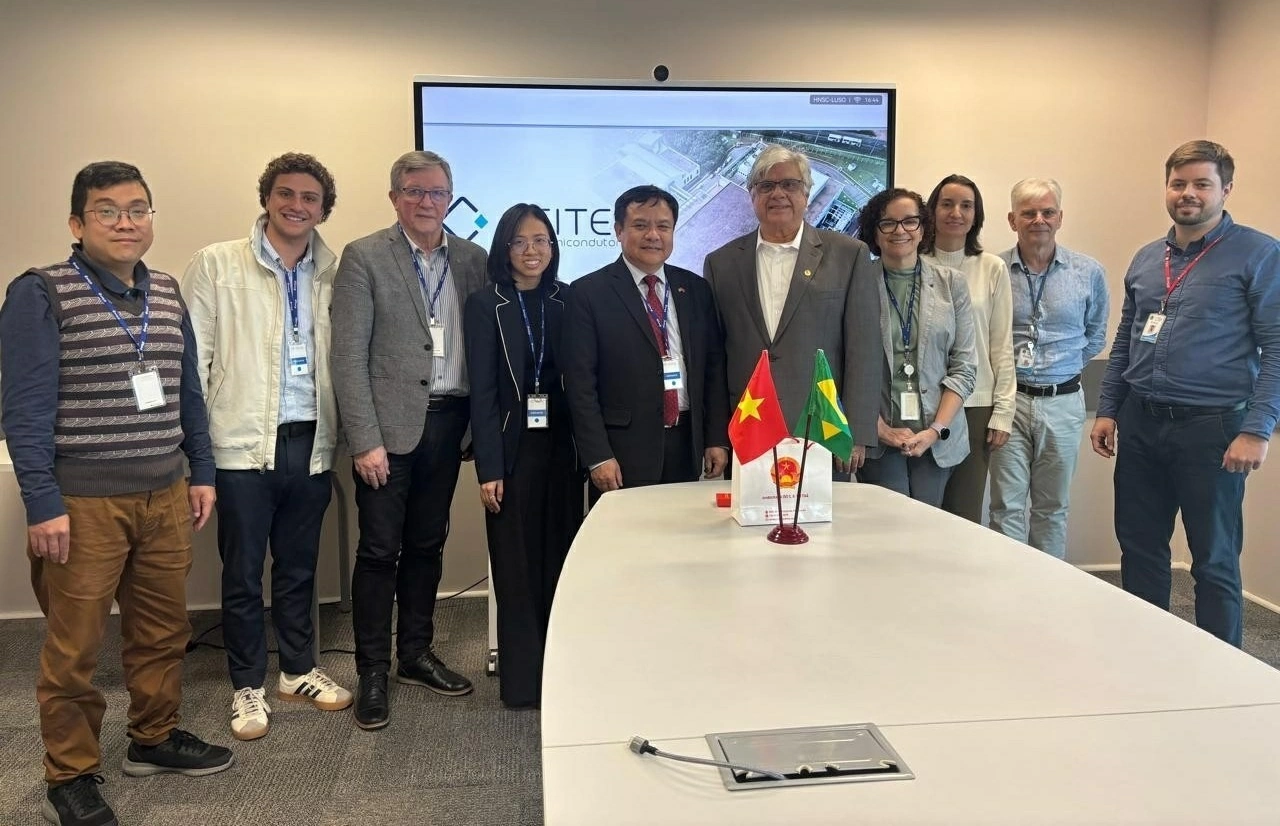 |
| Vietnamese Ambassador to Brazil Bui Van Nghi working with representatives of CEITEC's leadership. (Source: Vietnamese Embassy in Brazil) |
The mission aimed to implement the Vietnam-Brazil Strategic Partnership, expand cooperation with Brazilian localities, and promote connections between management agencies, universities, research institutes, and businesses of the two countries in potential fields such as the semiconductor industry, artificial intelligence, digital transformation, high-tech agriculture, and human resource training.
Promoting science-technology ecosystem connectivity
On August 17, immediately after arriving in Porto Alegre, the delegation worked with Mr. Leandro Borges Evaldt, Secretary of State for Economic and Social Development of Rio Grande do Sul.
During the meeting, Ambassador Bui Van Nghi provided an overview of Vietnam's socio-economic development achievements, priorities for science, technology, innovation, and digital transformation, and emphasized the need to enhance international cooperation in strategic technology fields.
Both sides discussed the potential for connecting agencies and businesses in Rio Grande do Sul with Vietnamese partners, particularly in high-tech agriculture, processing industries, semiconductor production, artificial intelligence, educational technology, and digital transformation.
The Ambassador requested the state to help introduce research centers, technology companies, and investors interested in the Vietnamese market, and to collaborate in organizing business networking activities and specialized delegation exchanges in the future.
On the same day, the delegation visited and worked at CEITEC, operating in microelectronics and semiconductor technology in Porto Alegre, chaired by Director Augusto Cesar Gadelha Vieira. The delegation was introduced to the unit's capabilities in research, design, production, and application of microchips, as well as CEITEC's role in Brazil's semiconductor ecosystem.
During the exchange, the two sides discussed potential cooperation in training engineers and experts, exchanging experiences in microchip design, researching semiconductor technology applications, and connecting CEITEC with Vietnamese universities, training facilities, and technology companies.
The Ambassador emphasized that Vietnam is prioritizing the development of the semiconductor industry, from human resource training, research, and microchip design to gradually participating more deeply in the global supply chain. In this context, the expertise and experience of facilities like CEITEC can form the basis for practical cooperation programs between the two countries.
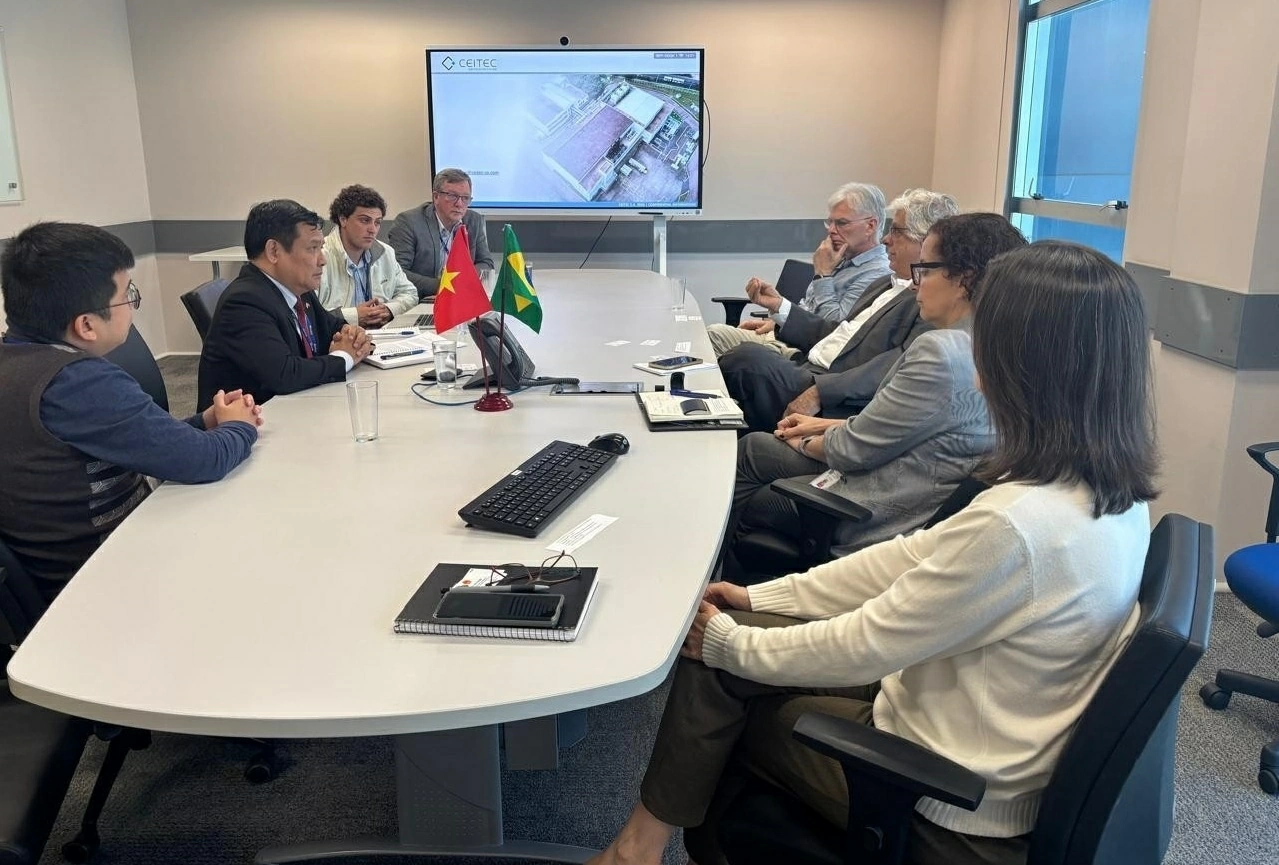 |
| Scene of the meeting with representatives of CEITEC's leadership. (Source: Vietnamese Embassy in Brazil) |
As part of the program, on the afternoon of August 18, at the Fernando Ferrari Administrative Center (CAFF), Ambassador Bui Van Nghi worked with Ms. Lisiane Lemos, Secretary of State for Innovation, Science, and Technology of Rio Grande do Sul. Ms. Lisiane Lemos, who previously worked at Google and Microsoft, is currently responsible for developing and implementing state policies on science, technology, innovation, and startup ecosystem development.
During the meeting, the two sides exchanged views on the policies and development programs of Rio Grande do Sul in science and technology, as well as the potential for connecting the state's innovation ecosystem with Vietnamese ministries, sectors, localities, universities, and businesses.
Identified areas with significant cooperation potential include the semiconductor and microelectronics industry, artificial intelligence, digital transformation, educational technology, innovative startups, precision agriculture, and high-tech human resource training.
Ambassador Bui Van Nghi introduced Vietnam's orientation of considering science, technology, innovation, and digital transformation as key drivers for national development in the new phase. The Ambassador requested Ms. Lisiane Lemos's agency to support connecting Vietnam with research centers, universities, technology companies, and investment funds of Rio Grande do Sul; and to explore the possibility of organizing expert exchange programs, human resource training, joint research, and business connections in areas of mutual interest.
Focus on startups and innovation
On the morning of August 18, the delegation visited Instituto Caldeira, a center connecting innovation, technology, business, and startups in Porto Alegre. The delegation explored the Institute's operational model, which focuses on building an innovation community, supporting startups, promoting collaboration between large enterprises and new technology companies, and developing human resources to meet the demands of the digital economy.
Ambassador Bui Van Nghi assessed that the connection model between businesses, universities, investors, and public authorities at Instituto Caldeira has many points of interest for Vietnam.
The two sides discussed the potential for connecting Vietnamese startups and innovation centers with Instituto Caldeira's partner network; collaborating on organizing expert exchange programs, training young entrepreneurs, supporting technology startups, and seeking investment opportunities in artificial intelligence, digital education, fintech, and smart agriculture.
The delegation also proposed that Instituto Caldeira consider participating in innovation promotion activities organized by the Embassy and Vietnamese partners, thereby gradually building a technology cooperation network between Vietnam and Rio Grande do Sul.
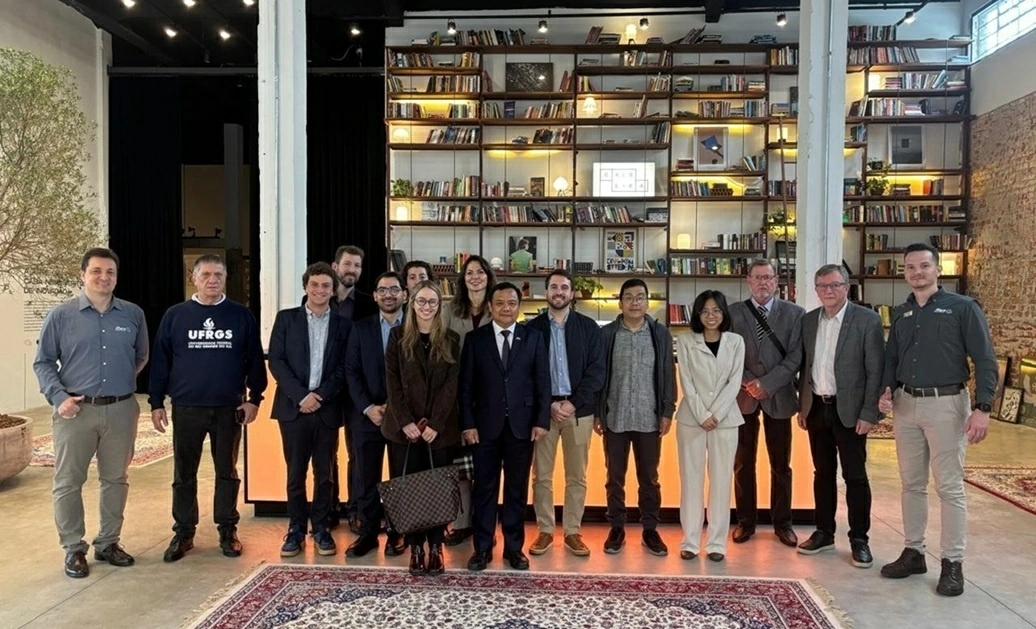 |
| Ambassador Bui Van Nghi working with representatives of Instituto Caldeira and some companies, corporations within the organization. (Source: Vietnamese Embassy in Brazil) |
Expanding local cooperation
On the afternoon of the same day, Ambassador Bui Van Nghi had an official meeting with Deputy Mayor of Porto Alegre Betina Worm. The two sides discussed the city's development situation, Porto Alegre's strengths, and the potential for expanding cooperation with Vietnam.
The Ambassador noted that local cooperation is an important component of the Vietnam-Brazil Strategic Partnership, contributing to deepening bilateral relations and creating specific cooperation opportunities for businesses, universities, and citizens.
Based on this, the two sides discussed the possibility of establishing a friendship and cooperation relationship between Porto Alegre and a suitable locality in Vietnam.
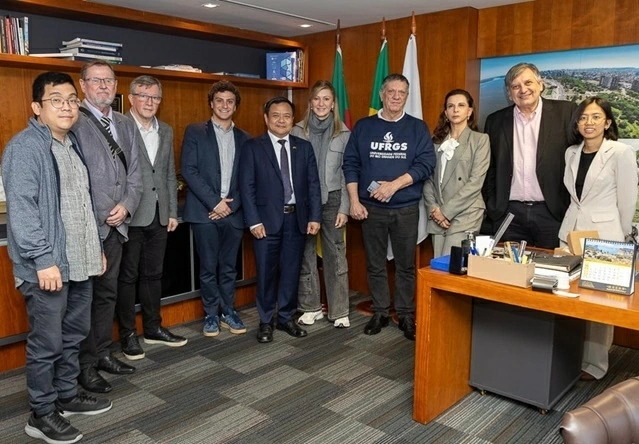 |
| Working with Deputy Mayor of Porto Alegre Betina Worm. (Source: Vietnamese Embassy in Brazil) |
Potential cooperation areas mentioned include urban planning and management, smart cities, digital transformation in administrative management, developing innovation ecosystems, education-training, culture, tourism, and sustainable development.
The Ambassador suggested that Porto Alegre's authorities study and identify priority areas and partners for further discussions, gradually building an appropriate cooperation framework. Deputy Mayor Betina Worm welcomed the Ambassador's visit and delegation, appreciating the initiative to strengthen connections between Porto Alegre and Vietnamese localities.
The meeting contributed to establishing direct contact between the Embassy and the city government, laying the groundwork for future exchange and cooperation activities.
Promoting educational cooperation
On the afternoon of August 18, Ambassador Bui Van Nghi visited the Interdisciplinary Center for New Technologies in Education at the Federal University of Rio Grande do Sul. Here, the Ambassador worked with UFRGS Vice Rector, Prof. Dr. Pedro de Almeida Costa, and CINTED staff and experts on cooperation directions between UFRGS and Vietnamese educational and research institutions.
The two sides focused on cooperation in research and training in artificial intelligence, digital transformation, educational technology, semiconductors, microelectronics, and precision agriculture.
Topics of interest included: developing joint research programs; exchanging lecturers, students, and postdoctoral researchers; collaborating on training science-technology human resources; organizing specialized seminars and connecting UFRGS with Vietnamese universities, research institutes, and technology companies.
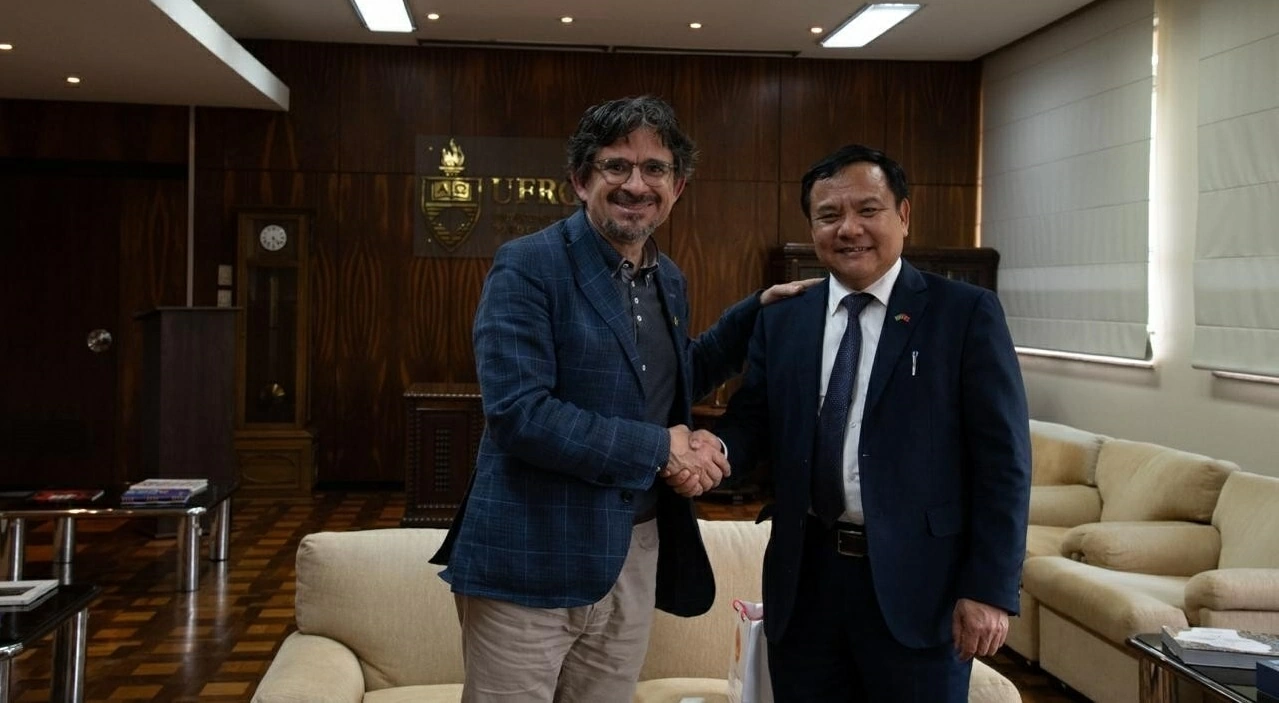 |
| Working with UFRGS Vice Rector Prof. Dr. Pedro de Almeida Costa. (Source: Vietnamese Embassy in Brazil) |
The Ambassador proposed that UFRGS develop a long-term cooperation roadmap with Vietnamese universities, initially focusing on programs that can be specifically implemented, such as expert exchanges, co-supervising doctoral students, organizing short-term training courses, and developing joint research projects.
The two sides also discussed long-term goals towards establishing a focal point or regular presence of UFRGS in Vietnam to support educational and science-technology cooperation programs.
The Ambassador affirmed that the Vietnamese Embassy in Brazil is ready to act as a bridge, supporting UFRGS in establishing relationships with suitable educational institutions, research institutes, and businesses in Vietnam. Both sides agreed to continue discussions to identify priority partners and develop specific cooperation proposals with clear roadmaps and implementation focal points.
Organizing the Vietnam-Latin America Forum on Innovation and Digital Transformation
On the morning of August 19, at CINTED/UFRGS, the Vietnamese Embassy in Brazil, in collaboration with the Federal University of Rio Grande do Sul, organized the Vietnam-Latin America Forum on Innovation and Digital Transformation.
The forum was attended by UFRGS Rector Marcia Barbosa, Ambassador Bui Van Nghi, Professor Dante Barone, representatives of management agencies, universities, research institutes, technology companies, and experts from Rio Grande do Sul.
In his opening speech, Ambassador Bui Van Nghi emphasized that science, technology, innovation, and digital transformation are becoming key drivers for Vietnam's development in the new phase. Vietnam is prioritizing investment in digital infrastructure, research and development, training science-technology human resources, artificial intelligence, semiconductor industry, and technology application in economic sectors.
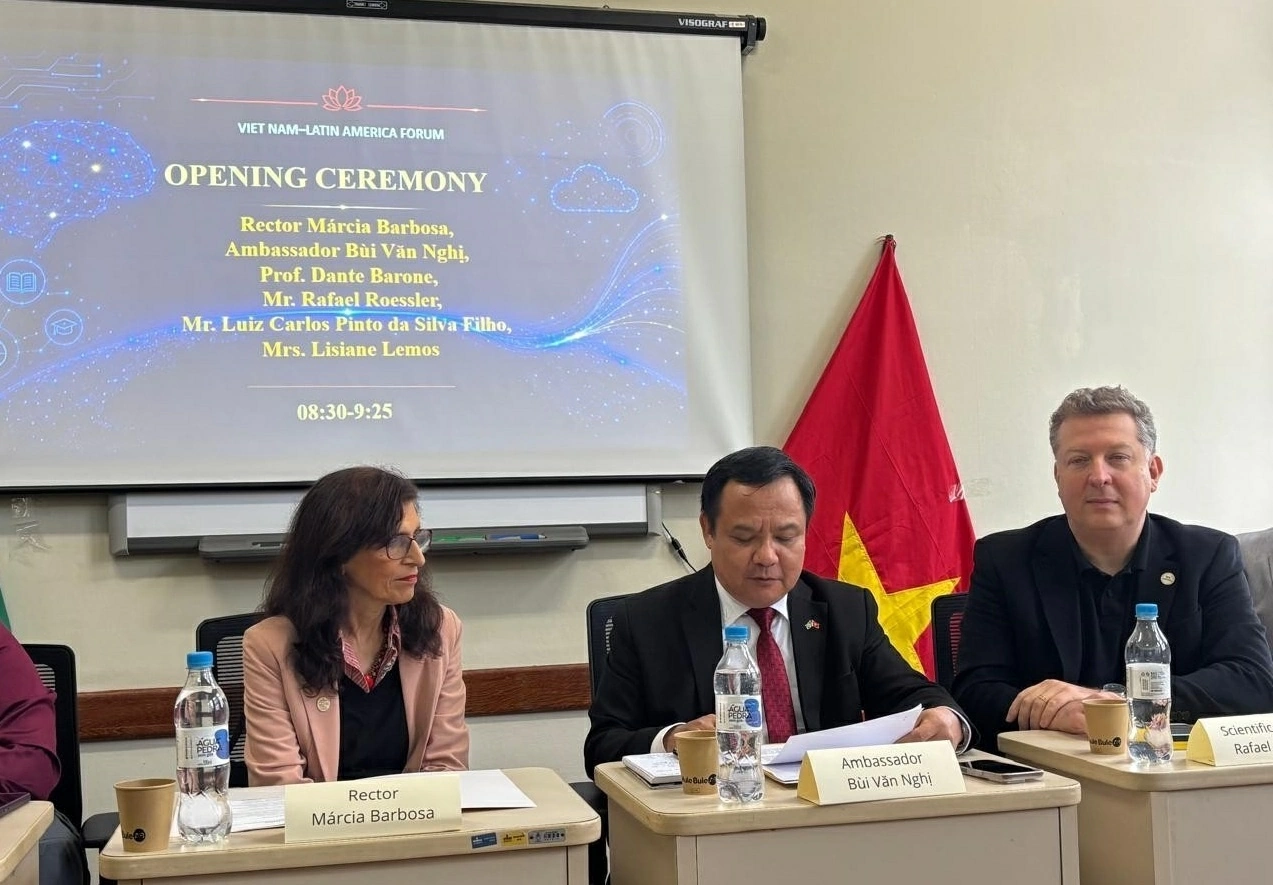 |
| Ambassador Bui Van Nghi (center) delivering the opening speech at the event. (Source: Vietnamese Embassy in Brazil) |
UFRGS Rector, Ms. Marcia Barbosa, and Professor Dante Barone highly appreciated the initiative to organize the Forum, considering it an opportunity for UFRGS and partners in Rio Grande do Sul to better understand Vietnam's development needs and cooperation potential.
The delegates emphasized the role of universities in connecting scientific research with the needs of businesses and society, and expressed a desire to expand relations with Vietnamese educational and research institutions.
The three discussion sessions focused on Vietnam's increasing role in the global South; the impact of digital transformation and artificial intelligence on education, research, and workforce development; and analyzed the potential applications of semiconductors, sensors, big data, and automation in precision agriculture.
The delegates also proposed enhancing cooperation between UFRGS, universities, and businesses in Rio Grande do Sul with Vietnamese partners in training semiconductor engineers, microchip research, digital education, and developing technological solutions for agriculture.
| Ambassador Bui Van Nghi's mission in Rio Grande do Sul contributed to expanding Vietnam's relations with one of Brazil's key centers for education, technology, industry, and agriculture. The meetings and Forum created additional cooperation links between local governments, universities, research institutes, and businesses of the two countries, while laying the foundation to transform cooperation potentials into specific programs and projects in the near future. |