

Vietnamese Embassy in the United States: Ensuring no sacrifice is forgotten
WVR - Vietnamese Ambassador to the United States Nguyen Quoc Dung affirmed the Embassy's commitment to implementing the "500 Days and Nights Campaign" to ensure no sacrifice is forgotten.
Latest
Vietnamese Ambassador to the
Ambassador, how has the Vietnamese Embassy in the United States implemented the search, gathering, and identification of Vietnamese martyrs' remains, and what results have been achieved so far?
First, it must be affirmed that cooperation in addressing war legacies, particularly the search for missing soldiers from both sides, is a highlight in the relationship between Vietnam and the United States. This cooperation significantly contributes to the reconciliation process and the building of strategic trust between the two nations.
Over 30 years since the normalization of relations in 1995, the Vietnamese Government has consistently facilitated the United States' efforts in searching, gathering, and repatriating the remains of U.S. soldiers missing in action in Vietnam. Conversely, the United States has gradually supported Vietnam in the search, gathering, and identification of Vietnamese martyrs' remains. A significant milestone was the signing of the Memorandum of Understanding on the “Vietnam War Accounting Initiative/VWAI” between the Ministry of National Defence of Vietnam and the US Department of Defence in July 2021.
According to the Social Policy Department under the Vietnamese Ministry of National Defence, after five years of implementation, by the end of fiscal year 2025, the United States officially provided Vietnam with 46 dossiers, including mass graves of martyrs, of which Vietnam received and verified 45 dossiers. Additionally, the United States has returned more than 40 war relics to Vietnam on multiple occasions.
Contributing to these results, the Vietnamese Embassy in the United States acts as a bridge between relevant Vietnamese agencies, directly the Office of the National Steering Committee 515, and U.S. partners in developing annual cooperation plans, organizing field study visits, connecting with new partners, and implementing new initiatives such as expanding the participation of veterans, non-governmental organizations, the business sector, and families of U.S. veterans in the search for missing Vietnamese soldiers.
Following the directives of the National Steering Committee on the search, gathering, and identification of martyrs' remains, directly under the guidance of the Party Committee of the Ministry of Foreign Affairs, the Vietnamese Embassy in the United States has proactively developed a work program focusing on lobbying the U.S. Government and Congress to continue supporting and prioritizing resources for the effective implementation of the VWAI initiative for the 2025-2030 period.
The results achieved have been very positive. The U.S. Department of Defence has expressed a desire to continue promoting positive bilateral defence cooperation, including addressing war legacies in general and implementing the VWAI initiative in particular. This is also one of the top priorities of the administration of President Donald Trump and the U.S. Department of Defence.
Notably, the draft National Defence Authorization Act (NDAA) for 2026 includes provisions to extend the implementation period of the VWAI to 2031, with requirements to enhance digitalization, data sharing, and capacity building for Vietnam in the search, verification, and repatriation of remains of those missing in action, providing a better legal basis for the United States to improve and expand the implementation of the VWAI.
In addition to political lobbying, the Embassy has actively supported and contributed to accelerating the search for information on missing Vietnamese soldiers through the coordinated actions of the tripartite partnership involving the U.S.-ASEAN Business Council (USABC), Mission POW/MIA Organization, and Texas Tech University. Texas Tech University plays a role as a research agency leveraging its strengths in digitized data archives on the Vietnam War and its research capabilities in war records over many years; USABC leverages its strengths in mobilizing resources and technology from the private sector/businesses; Mission POW/MIA Organization acts as a bridge to expand the participation of U.S. veterans and their families in the search for martyrs' remains and the return of war relics.Ambassador Nguyen Quoc Dung, Vietnamese Ambassador to the United States
Some specific results achieved include:
First, arranging programs for Texas Tech University to work with Vietnamese agencies, including the Office of the Steering Committee 515, the DNA Testing Centre - Institute of Biotechnology; National Archives Centre I, II, the University of Social Sciences and Humanities under Vietnam National University, Hanoi; Hue University; Fullbright University... to exchange images (maps), information, and documents to support the search for missing Vietnamese soldiers and identify mass graves; and to return some war relics to the families of martyrs through the Office of the Steering Committee 515.
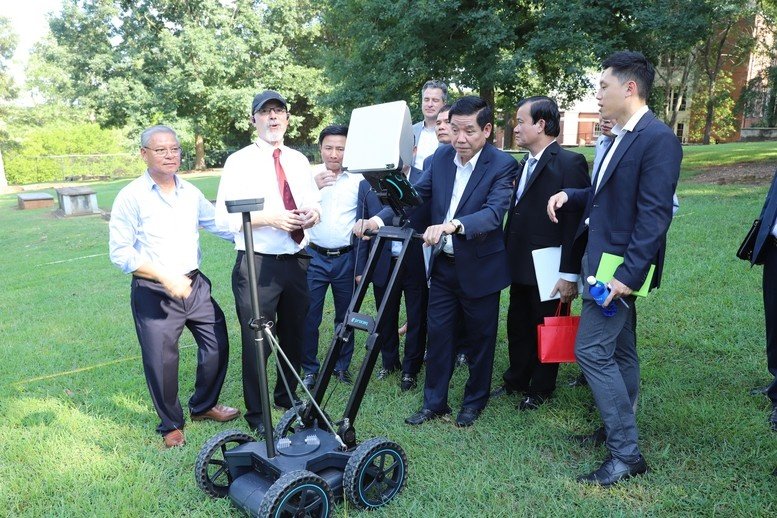
Second, connecting the Franklin College of Arts and Sciences at the University of Georgia to invite the Vietnamese Ministry of National Defence to send personnel to the United States for a free course on ground-penetrating radar (GPR), magnetometry, and forensic archaeology to support the search and excavation of fragile remains or mixed remains.
Third, supporting the Mission POW/MIA delegation in bringing U.S. veterans to revisit areas where they fought and meet with Vietnamese veterans in April 2026; connecting with some Vietnamese agencies/organizations such as the Office of the Steering Committee 515; Ho Chi Minh Trail Museum, Vietnam Military History Museum, Air Force Museum, Thanh Hoa Provincial Museum, and Hoa Lo Prison in June 2026 to search for and return war relics.
Fourth, the Ambassador and Embassy staff visited and worked at the National Archives and Records Administration (NARA) to promote aerial photography and mapping research to support the search for mass graves within the VWAI initiative in May 2026.
Fifth, coordinating with domestic agencies to arrange content and programs to invite Mr. Conner Robert Ambrose – a former U.S. veteran who fought at the strategic airbase Bien Hoa (now Dong Nai province) to Vietnam to attend the “Workshop on mass graves of martyrs buried at Chi Hoa - Cho Quan Cemetery” at the invitation of Deputy Prime Minister Pham Thi Thanh Tra, Head of the National Steering Committee on the search, gathering, and identification of Vietnamese martyrs' remains.
After attending the workshop in Vietnam, Mr. Conner Robert Ambrose sent a letter of thanks to the Vietnamese Embassy in the United States and recommended that both sides promote cooperation through a high-tech approach, such as using satellites and drones to search for martyrs' graves; expressing willingness to further exchange with the Vietnamese side if a Vietnamese Government delegation visits the United States for the search for martyrs' remains.
According to information from the National Steering Committee, the hotline of the “500 Days and Nights Campaign” at numbers 18008022 and 0965.001.222 has become a direct information channel, connecting families of martyrs, veterans, and the public with relevant agencies in the process of searching and gathering martyrs' remains. From June 15 to August 12, 2026, the “500 Days and Nights Campaign” hotline received 39,600 calls, including more than 13,000 calls from families of martyrs seeking graves and about 1,800 calls providing information on burial sites of martyrs.
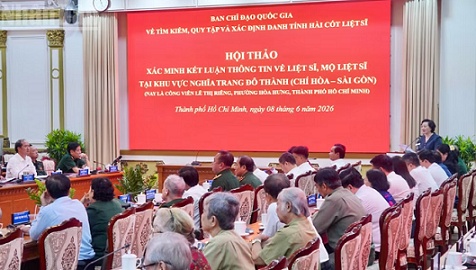
On the morning of June 8, Deputy Prime Minister Pham Thi Thanh Tra, Head of the Steering Committee 515, chaired a workshop on verifying and concluding information on mass graves of martyrs buried at Chi Hoa-Cho Quan Cemetery (formerly). Source: Nhan Dan Newspaper 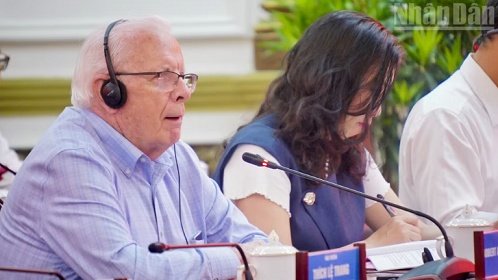 Workshop on verifying and concluding information on mass graves of martyrs buried at Chi Hoa-Cho Quan Cemetery (formerly). Source: Nhan Dan Newspaper
In the process of implementing the VWAI initiative and the “500 Days and Nights Campaign,” the Embassy has identified the following advantages and challenges:
Regarding advantages, the Comprehensive Strategic Partnership between Vietnam and the United States is being strengthened and enhanced by both sides. The administration of President Donald Trump has shown a strong commitment to relations with Vietnam, particularly U.S. Secretary of War Pete Hegseth and Secretary of State Marco Rubio, who have consistently expressed interest in addressing war legacies, including the search for missing soldiers.
The U.S. Department of War recently conducted a comprehensive review of the VWAI Initiative and concluded that while the program is “good, it is not enough”; thus, there is a need to increase the scale, speed, and quality of information processing. Additionally, the Embassy has consistently received close guidance from the Party Committee of the Ministry of Foreign Affairs, especially from Party Secretary and Minister Le Hoai Trung, regarding the search for martyrs' remains.
U.S. partners such as the U.S.-ASEAN Business Council (USABC), Mission POW/MIA Organization, Texas Tech University, the University of Georgia, and the Defense POW/MIA Accounting Agency (DPAA) have consistently shown respect, support, and solidarity with the Vietnamese Government and people in the search, gathering, and identification of martyrs' remains.
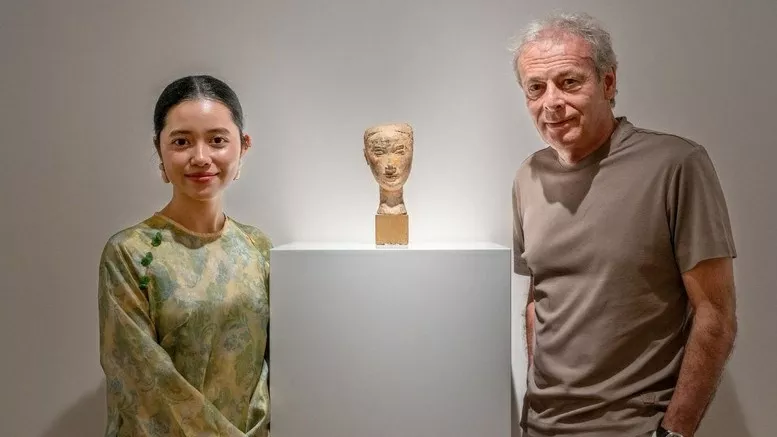
Furthermore, many U.S. Congress members, such as former Senator Patrick Leahy, and former U.S. veterans like Bob Conner, Richard Magner, and Bob March, have always shown support, sincere affection, and willingness to contribute to the search for missing Vietnamese soldiers.
Regarding challenges, as time passes, collecting documents and searching for martyrs' remains becomes increasingly difficult due to the aging and passing of living witnesses; changes in terrain, geology, and reference points compared to archived records. Human and material resources, as well as technical means for this work, have increased but remain limited compared to the task requirements. Additionally, the coordination of information exchange between domestic and international entities needs to be more timely and effective. Moreover, the United States currently sets higher requirements for the return of war relics for soldiers identified as missing. However, responses to these requests from our side have been slow, and a contact point for communication is needed.
During a meeting between Senior Lieutenant General Nguyen Van Gau, Deputy Minister of National Defence, Standing Deputy Head of the Steering Committee, and the Defence POW/MIA Accounting Agency (DPAA) of the U.S. Department of War in August 2026, Vietnam requested that U.S. authorities expedite the declassification and transfer of relevant files and documents as comprehensively as possible; actively encourage U.S. veterans to provide additional information on burial sites of Vietnamese soldiers; enhance the sharing of technical processes, transfer comprehensive, multi-disciplinary, modern solutions for DNA extraction and sequencing of new generation DNA such as SNPs, optimize mitochondrial DNA, nuclear DNA testing methods; forensic anthropological processes; new methods such as stable isotope analysis; support equipment, testing reagents, and open advanced training programs for Vietnam's specialized teams.
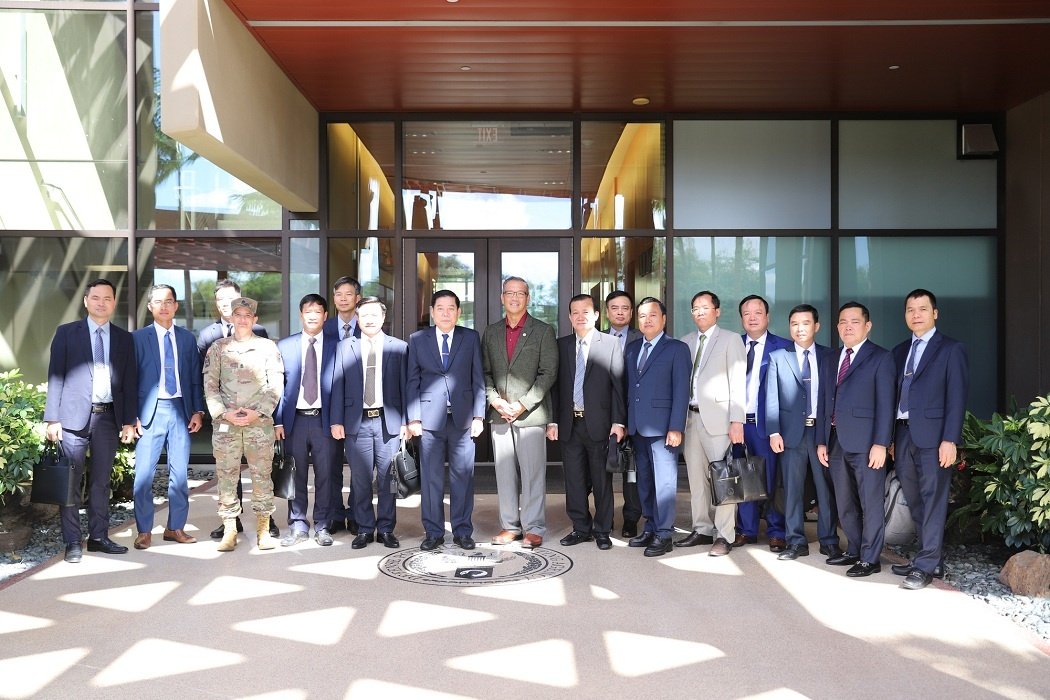
In the coming time, what will be the focus areas for the Vietnamese Embassy in the United States in continuing this work, Ambassador?
One of the key tasks for the Embassy in the coming time is to build basic dossiers to support the search, gathering, and identification of Vietnamese martyrs' remains, including: Dossiers on archival centres, potential contact points for research on martyrs' information; dossiers on U.S. veterans (living witnesses) to support the search for martyrs; dossiers on companies, businesses, and schools that can provide technological support for the search and identification of martyrs' remains; dossiers on U.S. Congress members who are supportive and sympathetic to Vietnam, especially those who support reconciliation and addressing war legacies, to enhance lobbying efforts.
Additionally, the Embassy will continue to collaborate with U.S. partners and the Office of the Steering Committee 515 to effectively implement the Memorandum of Understanding (MOU) on the Vietnam War Accounting Initiative VWAI, specifically with Texas Tech University to enhance research support and information sharing on missing Vietnamese soldiers during the war; with the University of Georgia to invite Vietnamese students to attend courses on ground-penetrating radar for searching mass graves of Vietnamese soldiers; and with the Mission POW/MIA Organization to mobilize U.S. veterans to provide information on Vietnamese soldiers, locations of martyrs' graves, and search for and return war relics.
The Embassy will also collaborate with the Vietnam Television film crew, resident news agencies, the World & Vietnam Report, and local media to promote external information dissemination about the “500 Days and Nights Campaign” and U.S.-Vietnam cooperation related to the search and identification of martyrs' remains, as well as addressing war legacies in general.