



Urban Diplomacy: From friendship commitments to sustainable development and innovation drivers
At the Mayors' Conference within the framework of the 3rd Ho Chi Minh City Friendship Dialogue 2026 (FD 2026), leaders of provinces and cities discussed urban diplomacy, green economic development, resilience enhancement, smart city construction, and logistics connectivity.
Latest
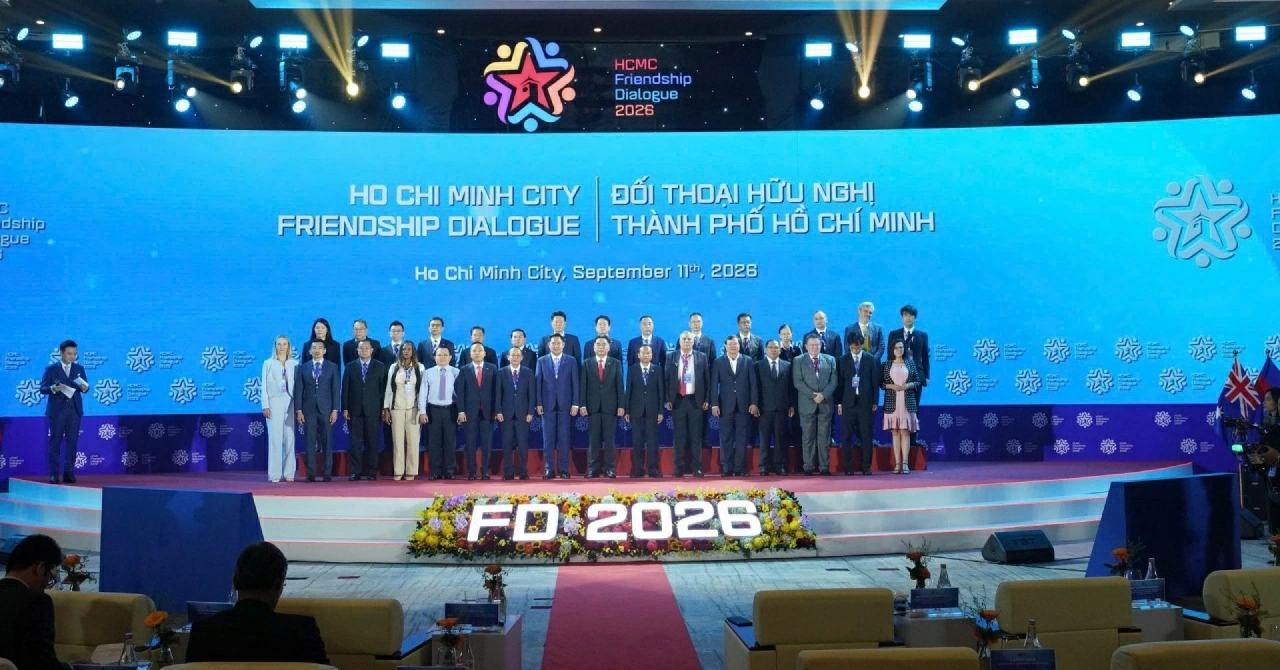 |
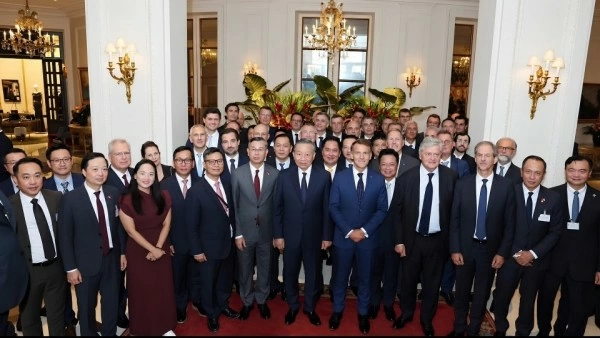
| Delegates take a group photo at the Mayor's Conference. (Source: FD 2026) |
Now, local-level diplomacy has evolved beyond traditional ceremonial activities or formal twinning documents to become a practical tool for mobilising economic resources, technology transfer, climate change response, and directly improving community living standards.
Through diverse perspectives, the presentations at the Conference vividly depicted the landscape of multilateral urban cooperation with highly specific insights, data, and project proposals.
Smart urban governance and digital transformation
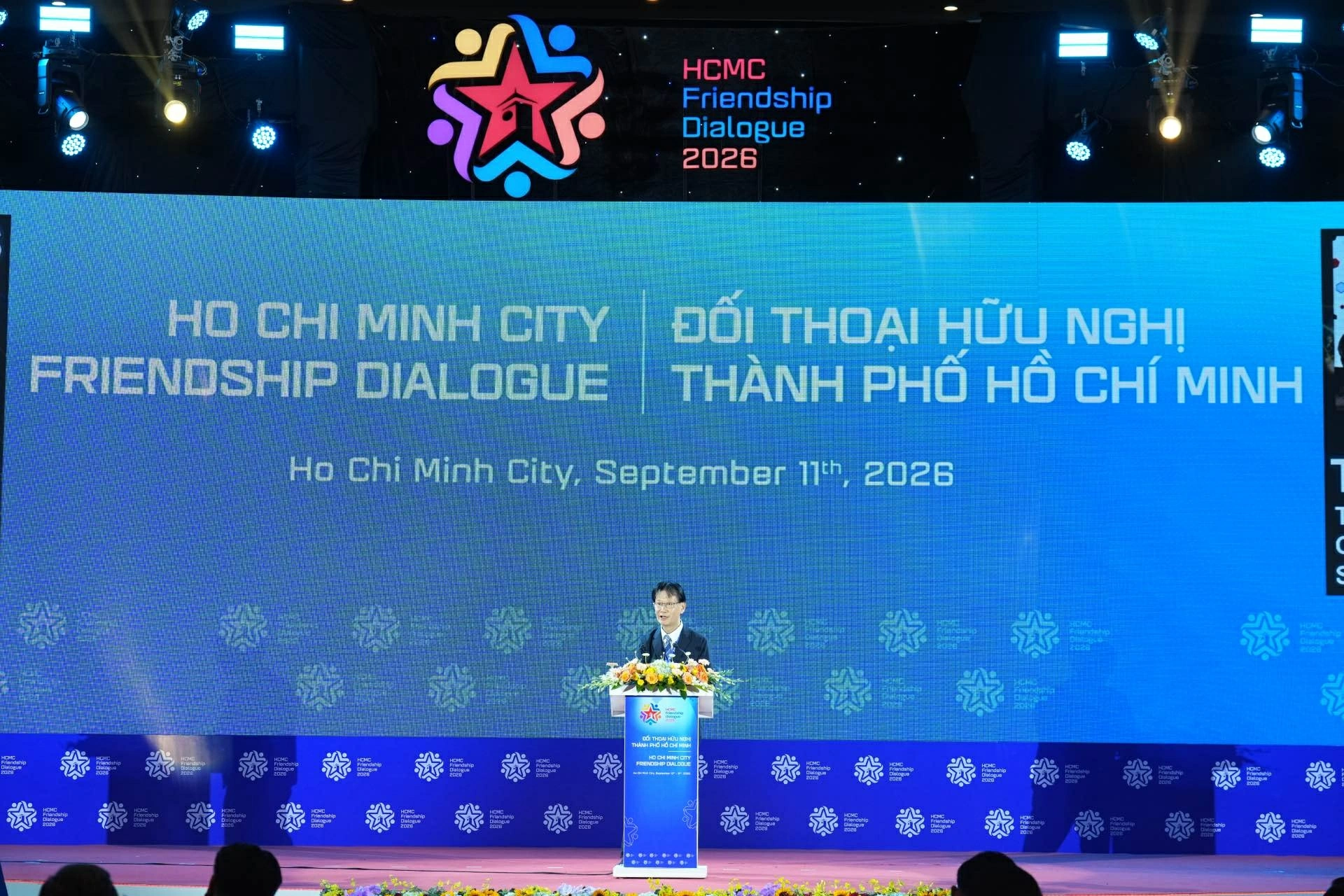 |
| Mr. Tomohide Sato, Deputy Governor of the Tokyo Metropolitan Area (Japan). (Source: FD 2026) |
Amid the global digitalisation trend, technology applications and big data are identified by urban leaders as essential governance infrastructure for enhancing citizen services. Emphasising the role of urban diplomacy in the technological era, Mr Tomohide Sato, Deputy Governor of the Tokyo Metropolitan Area (Japan), affirmed that Tokyo prioritises horizontal intercity cooperation as a core policy through network platforms like G-NETS and TOKYO-SEADS.
Unlike purely theoretical approaches, Tokyo directly integrates technology into citizen safety by operating an AI-driven river water-level forecasting system and integrating data from 175 surveillance cameras along 55 river routes for real-time public access, enabling residents to proactively plan safe evacuations during natural disasters.
Meanwhile, concretising the smart city development roadmap in Southeast Asia, Mr. Sok Thol, Deputy Governor of Siem Reap (Cambodia), shared practical experiences as Siem Reap officially joined the ASEAN Smart Cities Network (ASCN) in 2018 and developed the Smart City Roadmap for 2019–2023 with technical support from the Japan International Cooperation Agency (JICA).
Specifically, Siem Reap implemented 10 highly specific pilot projects in phase 1: from installing illegal parking monitoring sensors, equipping GPS devices on garbage collection vehicles, transitioning tourism statistics to cloud-based GIS dashboards, digitising internal document tracking processes, installing PM2.5 air monitoring sensors at Angkor monuments, to establishing 24/7 online emergency communication hubs and AI cameras for weapon and security incident detection.
Entering phase 2, the city continues to expand 8 eco-urban management projects, backed by an investment project exceeding USD 150 million to upgrade 38 inner-city roads with integrated underground cables and smart LED lights, and to operate Siem Reap Angkor International Airport at level 4E.
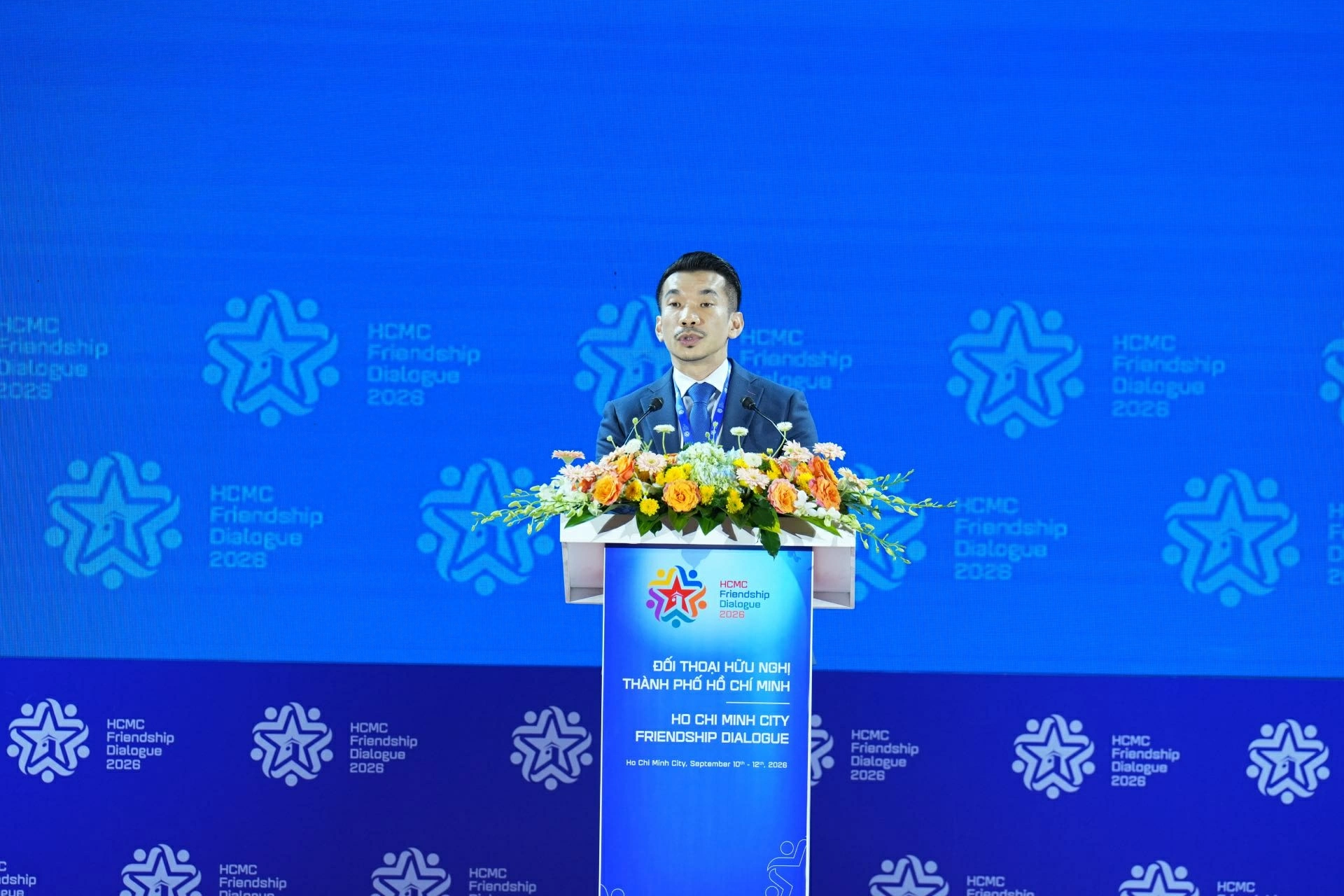 |
| Mr. Seng Vannak, Deputy Mayor of Phnom Penh City, Kingdom of Cambodia. (Source: FD 2026) |
Sharing the orientation to promote innovation from local institutions, Mr. Seng Vannak, Deputy Mayor of Phnom Penh City (Cambodia), noted that innovation is not merely technology but also a tool to enhance public service quality and support inclusive economic development. Phnom Penh has pioneered the Phnom Penh Smart City Hub at Wat Phnom, a real-world testing space for smart urban solutions.
Mr Seng Vannak emphasised a four-party linkage model between government, businesses, academia, and international partners to implement a “problem-to-solution” approach, thereby creating conditions for startups to test digital products and commercialise R&D results into real urban infrastructure.
Building resilient cities
The intensifying climate change and urban crises require local governments to play a key role in building resilient, carbon-neutral cities.
Speaking at the Conference, Mr. Ricardo Concepción Rodríguez, Governor of Artemisa Province (Cuba), noted that global crises, from natural disasters and inequality to housing crises, are directly impacting residents' lives, and central governments cannot solve all problems alone. The Governor of Artemisa Province also emphasised the message “cities cannot act alone,” affirming that urban diplomacy is about sharing practical solutions for green transformation and industrial digital transformation, and ensuring access to housing as essential social infrastructure for urban cohesion.
Praising Ho Chi Minh City's dual transformation strategy, Mr Ricardo Concepción Rodríguez called on urban leaders to institutionalise cooperative relationships through sustainable mechanisms beyond ordinary twinning agreements, with a focus on specific projects in education, public health, and sustainable development.
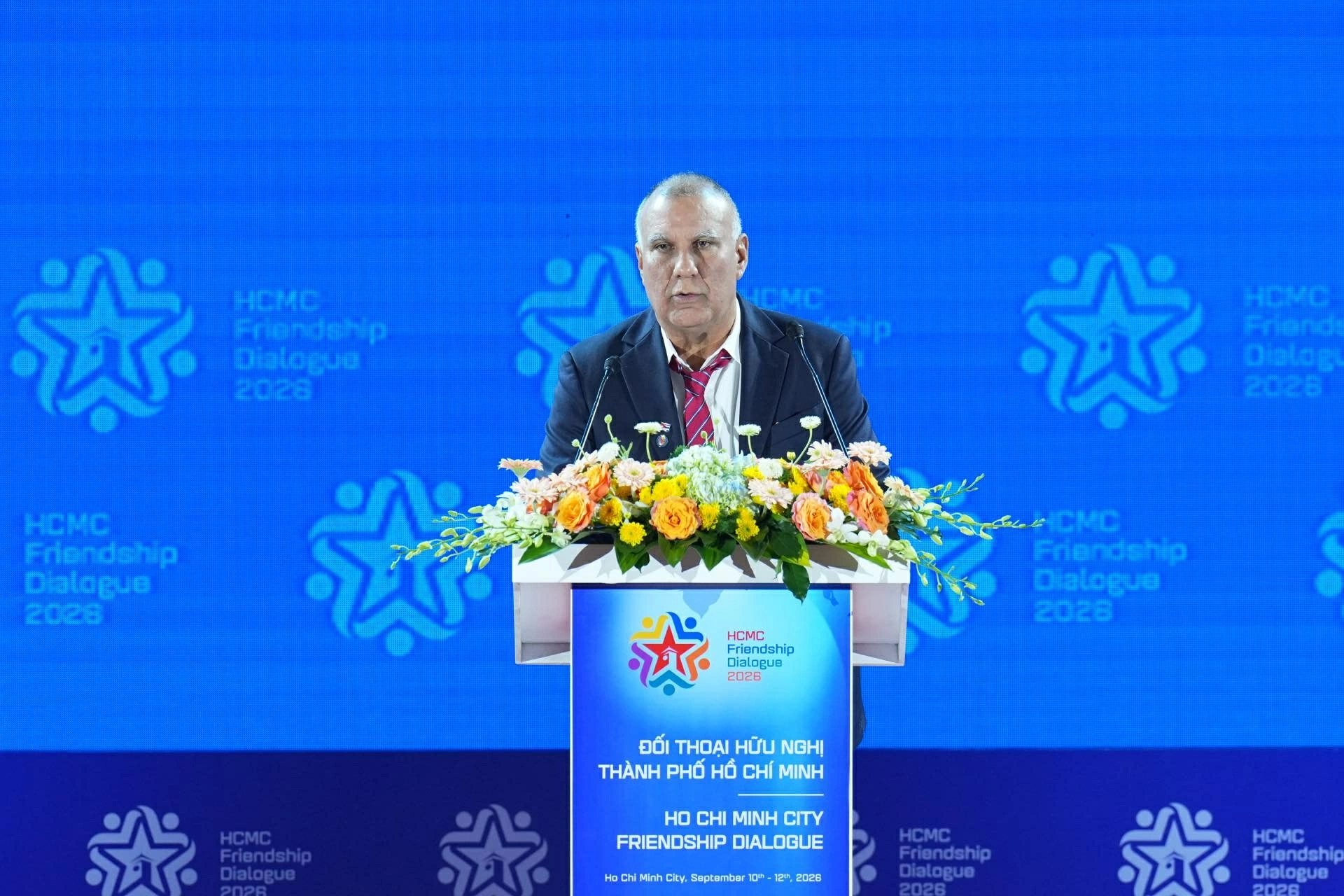 |
| Mr. Ricardo Concepción Rodríguez, Governor of Artemisa Province (Cuba). (Source: FD 2026) |
Additionally, to address the financial challenges of long-term risk response projects, Deputy Governor of the Tokyo Metropolitan Area Sato Tomohide shared experiences in implementing the TOKYO Resilience Project, with a total investment of up to 17 trillion yen (approximately USD 110 billion), to prepare for five groups of natural disaster risks by 2040. Tokyo has proactively increased the storage capacity of the riverbank reservoir system to 2.73 million m³ (2.3 times higher than in 2005), built 15 flood barriers and 2 coastal drainage pump stations, reducing flood damage costs by more than half over the past decade. Notably, to ensure sustainable investment capital, Tokyo pioneered the issuance of TOKYO Resilience Bonds on the international market, successfully raising USD 330 million from foreign investors to fund resilient infrastructure projects.
Economic cooperation, logistics, and interregional value chain linkages
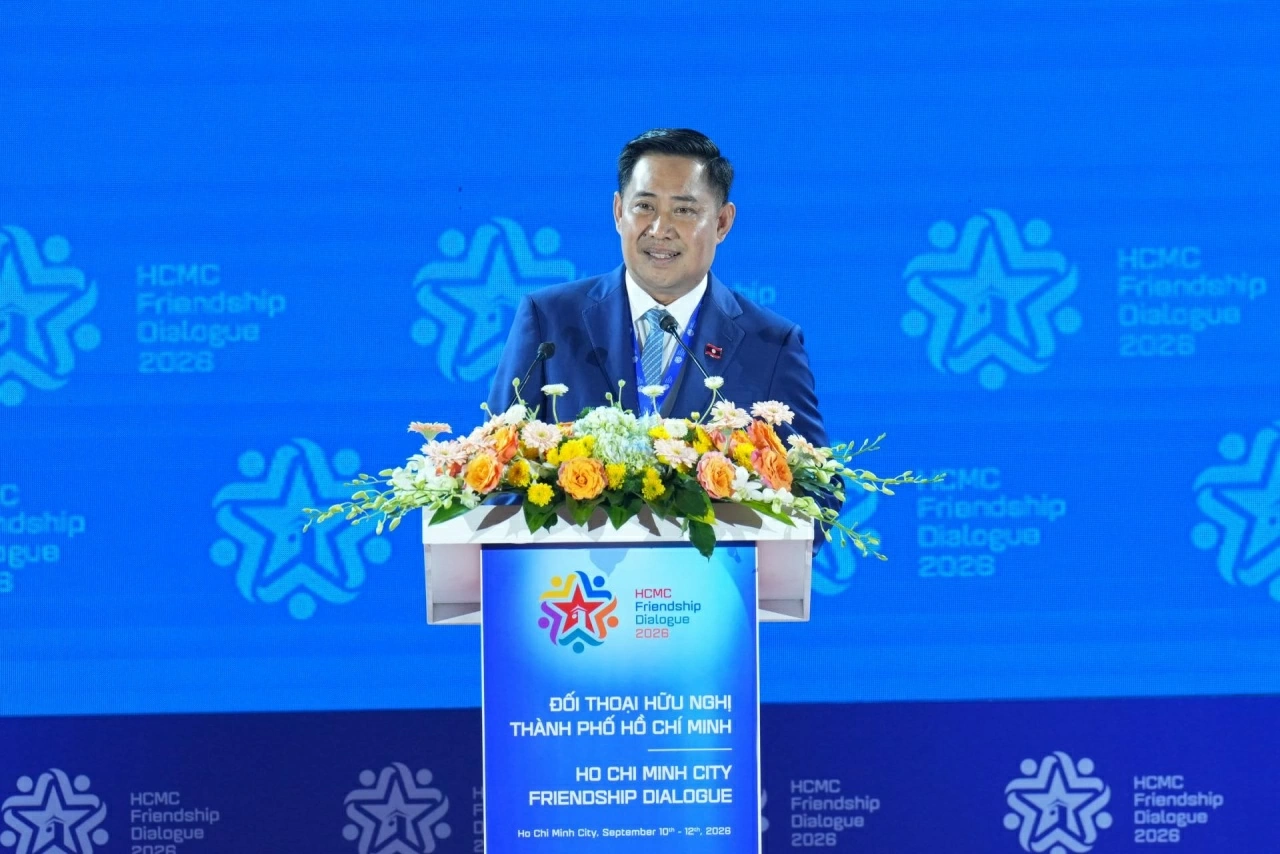 |
| Mr. Alounxai Sounnalath, Member of the Central Committee of the Party, Secretary of the Provincial Party Committee, Chairman of the People's Council of Champasak Province (Laos). (Source: FD 2026) |
One of the key discussion topics at FD 2026 is supply chain connectivity, logistics, and the attraction of direct investment flows. Dr. Alounxai Sounnalath, Secretary of the Provincial Party Committee, Chairman of the People's Council of Champasak Province (Laos), affirmed that for Champasak, local diplomacy is a practical development tool to transform diplomatic relations into factories, farms, hotel rooms, and jobs for the people.
Located in central Southern Laos within the East-West Economic Corridor (EWEC) and the CLV Development Triangle, Champasak has consistently pursued local diplomacy for over two decades to attract 685 investment projects worth USD 5.6 billion from 21 countries. Reflecting on 25 years of friendship and cooperation with Ho Chi Minh City since 2001, the two localities have implemented large-scale economic projects such as 10,000 hectares of Laos-Vietnam rubber, 5,245 hectares of Yotiang rubber, 75 hectares of blueberries, and developing the Bolaven Plateau coffee region, helping Vietnamese businesses rise to the top 5 largest investors in the province with 44 projects worth USD 487 million.
To elevate cooperation in the new phase, Dr. Alounxai Sounnalath proposed 4 specific initiatives with Ho Chi Minh City: Establishing a working group to study rail-sea logistics connectivity between Ho Chi Minh City's port system and the railway line through Laos; sharing digital transformation experiences and supporting small and medium enterprises (SMEs); promoting investment in deep processing of coffee and agricultural products; and collaborating on developing the “Ho Chi Minh City - Southern Laos - Vat Phou - Si Phan Don” linked tourism route. Additionally, the representative of Champasak Province expressed a desire to officially join the Friends of Ho Chi Minh City group.
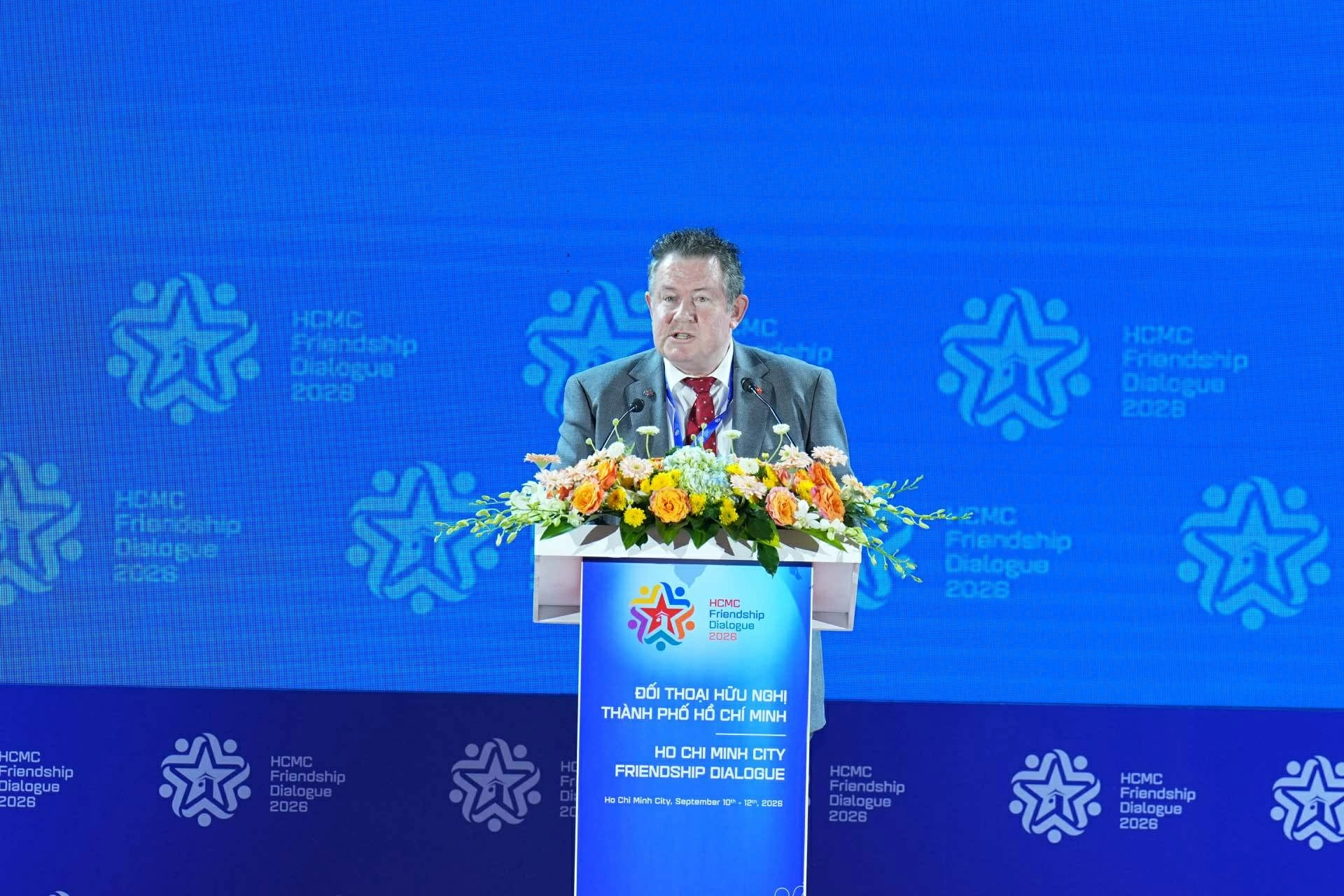 |
| Mr. Grant Smith, Mayor of Palmerston North City, New Zealand. (Source: FD 2026) |
In line with the mindset of practical economic cooperation, Mr. Grant Smith, Mayor of Palmerston North City (New Zealand), summed up the foreign relations orientation with the message: “Friendship lays the foundation; cooperation, collaboration, and co-creation bring purpose and meaning to that friendship.” Mayor Grant Smith affirmed that Palmerston North and the Manawatū region are ready to share their leading strengths in agri-food innovation, food technology, and promote logistics supply chain connectivity through the Central New Zealand Distribution Hub (Te Utanganui).
Additionally, from the perspective of multilateral industrial cooperation, Ms. Olga Popelnukha, Deputy Minister of Economic Development of the Rostov Region (Russian Federation), introduced the large-scale economic potential with a regional gross product (GRP) of USD 36.9 billion and an export network to 117 countries. The Rostov Region affirmed its superior industrial capacity, as the Rostselmash group here can supply up to 90.7% of combine harvesters in Russia, and it can produce heavy helicopters Mi-26, amphibious aircraft Be-200, and agricultural output exceeding 13 million tons of grain.
Ms. Olga Popelnukha emphasised the strategic similarities between the Rostov Region and Vietnam, as well as Ho Chi Minh City, in terms of river/sea gateway locations, developed port infrastructure, coffee culture, and love for the arts, thereby opening up vast cooperation opportunities in logistics, processing industries, and bilateral trade.
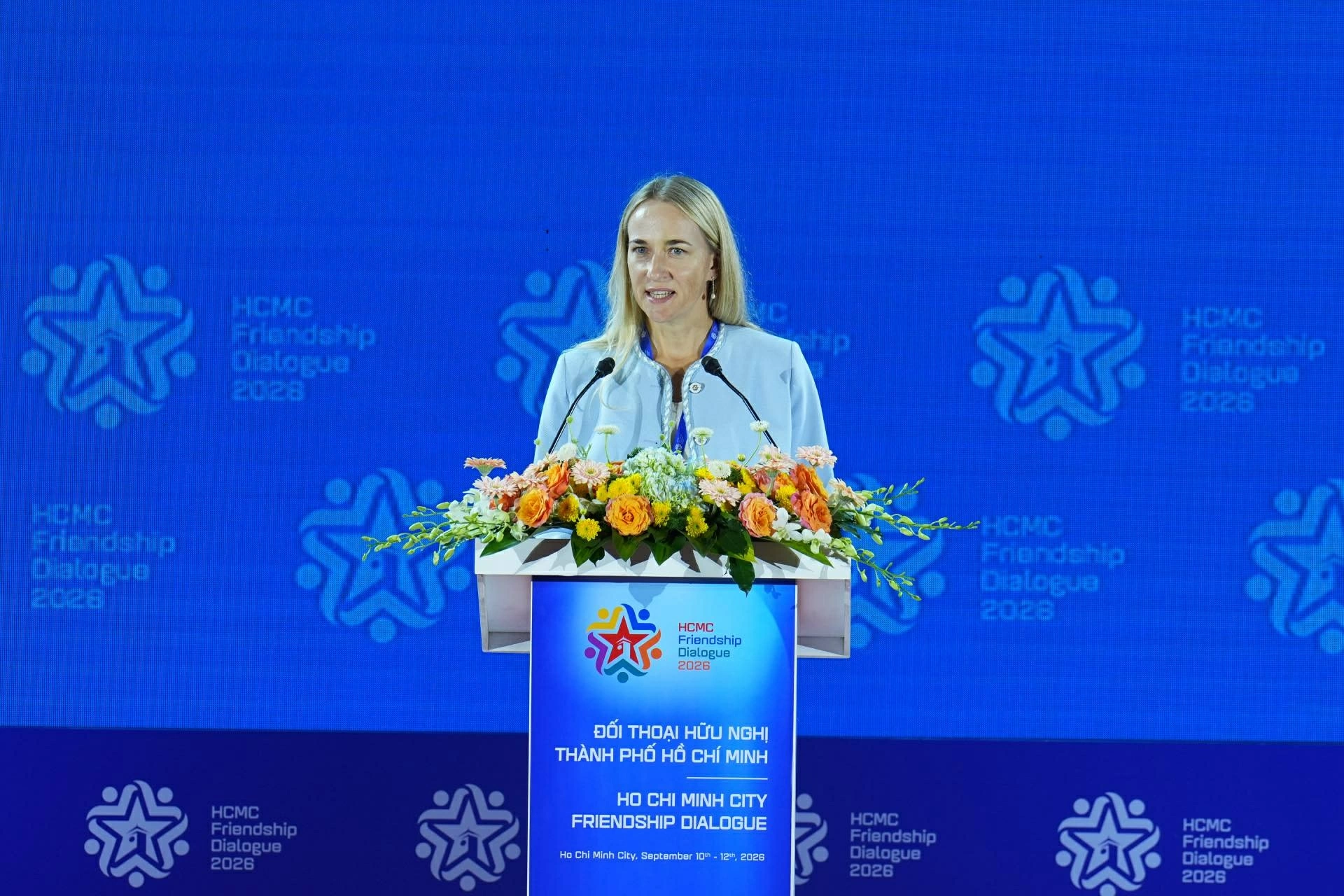 |
| Ms. Olga Popelnukha, Deputy Minister of Economic Development of the Rostov Region, Russian Federation. (Source: FD 2026) |
People at the centre of development
Besides economic growth indicators or technology projects, urban leaders unanimously agree that people must be placed at the centre and be the ultimate measure of all development policies.
Analysing the humanistic pillar, Mr. Va Than, Governor of Kratie Province (Cambodia), affirmed that economic prosperity or urban development is not the ultimate goal; the true value lies in improving people's living standards, dignity, security, and opportunities. Governor Kratie noted that evaluating a nation should not be based solely on GDP or trade volume, but rather on whether people are living better, more safely, and with more hope. In this spirit, Governor Va Than suggested that urban diplomacy should promote youth exchange programs, educational, cultural, and media cooperation to enhance mutual understanding between generations.
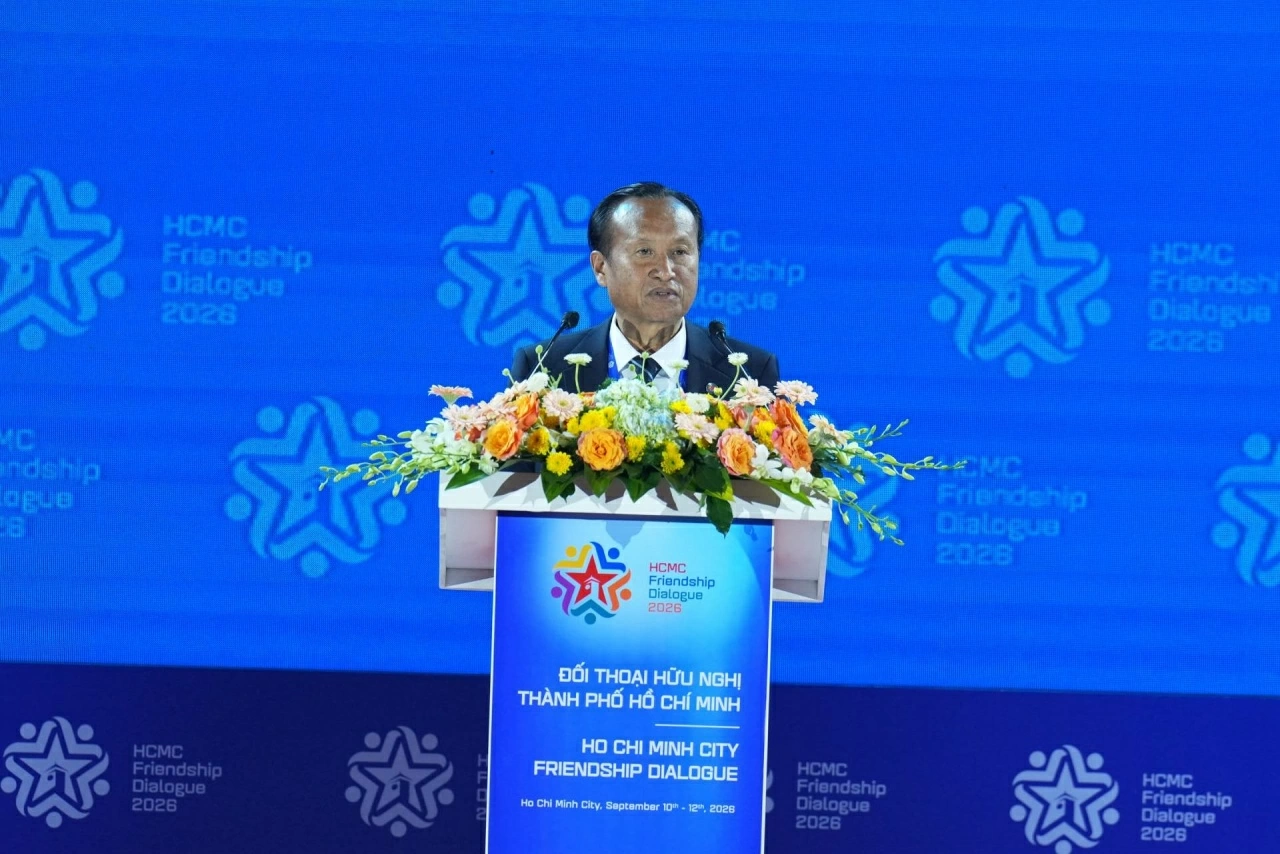 |
| Mr. Phouvong Ounkhamsen, Member of the Central Committee of the Party, Secretary of the Provincial Party Committee, Chairman of the People's Council of Xiengkhouang Province (Laos). |
In connecting cultural heritage with international networks, Assoc. Prof. Dr Phouvong Ounkhamsen, Secretary of the Provincial Party Committee and Chairman of the People's Council of Xiengkhouang (Laos), shared lessons learned on harmonising Party diplomacy, State policy, and people-to-people diplomacy. He emphasised that UNESCO's recognition of the Plain of Jars as a World Heritage Site has become a bridge for Xiengkhouang to participate in international heritage city networks, promoting cooperation with UNESCO, UNDP, and Ho Chi Minh City in heritage conservation linked to eco-tourism and the development of clean agriculture. Moving into a new phase, leaders of Xiengkhouang proposed three areas of cooperation: establishing a channel for sharing experiences in urban management and digital transformation; promoting investment based on complementary advantages; and expanding cultural and educational exchanges to develop high-quality human resources.
For her part, reaffirming the historical solidarity foundation between Vietnam and Cuba, Ms. Enai Diamela Palacios Acosta, Chairwoman of the People's Council of Santiago de Cuba Province, cited the thoughts of Commander-in-Chief Fidel Castro Ruz and President Ho Chi Minh as the guiding principles for the strong cooperation between the two nations. She shared that vibrant cultural exchange programs, where the distinctive son and trova music of Cuba blend with Vietnamese dance and theatre arts, connect the younger generation. Simultaneously, the city is promoting fair trade cooperation, attracting investment in renewable energy, sustainable tourism, and supporting small and medium enterprises, with the city named after Uncle Ho.
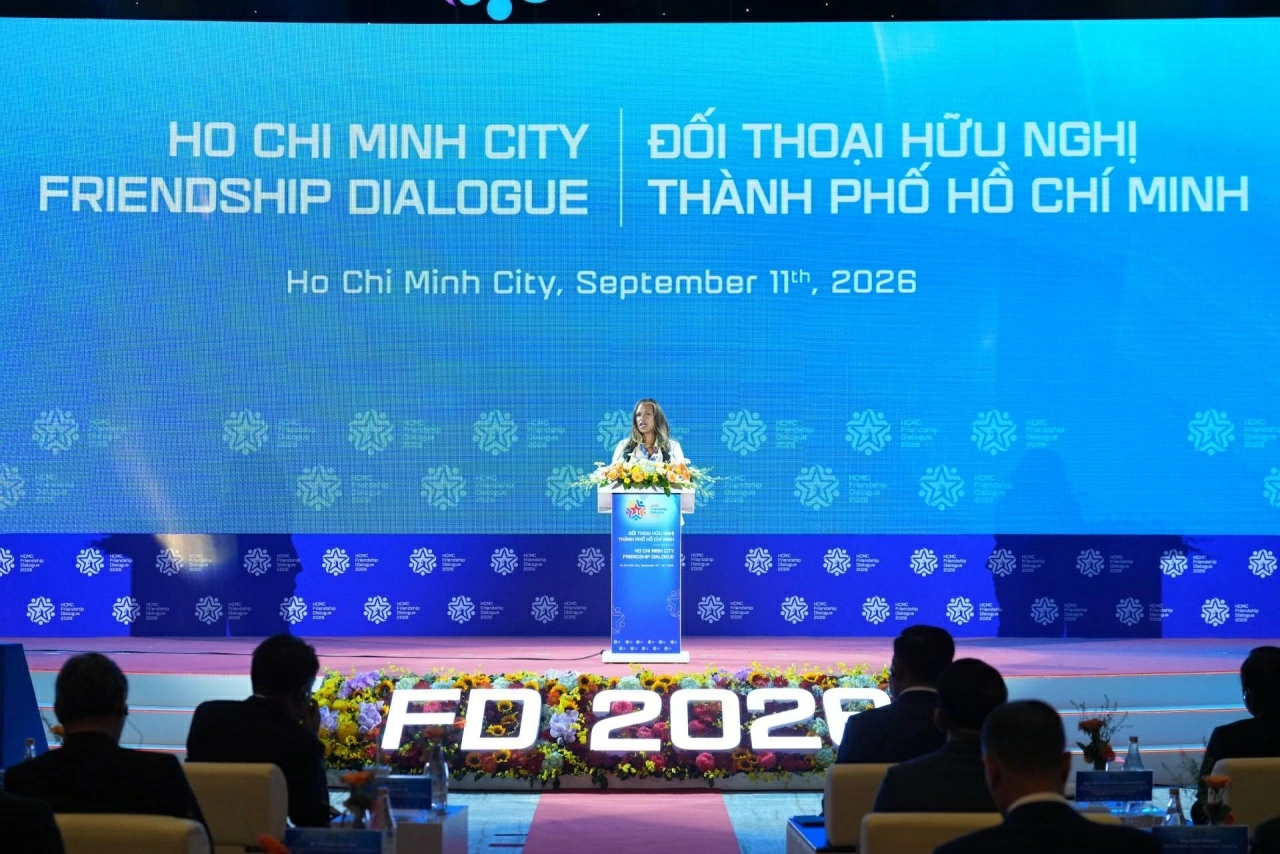 |
| Enai Diamela Palacios Acosta, Chairwoman of the People's Council of Santiago de Cuba Province (Cuba). (Source: FD 2026) |
It can be said that, through the rich perspectives and strong commitments of international and local leaders at the FD 2026 Mayors' Conference, it has been affirmed that urban diplomacy is no longer a supplementary support channel but has become an important component of the overall foreign relations structure. Connecting smart urban solutions, building climate resilience capacity, promoting connected economic thinking, and a development philosophy centred on people have created a comprehensive framework for cooperation.
| On the morning of September 11, in Vung Tau, within the framework of the 3rd Ho Chi Minh City Friendship Dialogue 2026 (FD 2026), the FD 2026 Mayors' Conference officially opened, marking the start of the official working day of the Dialogue. The Conference focused on discussing and clarifying the proactive role of local governments in implementing national foreign policy, while promoting practical cooperation models suited to each locality's needs and strengths. |
| International Conference on Development Economics: Finding new drivers for Vietnam's economic growth Vietnam needs to innovate its growth model, relying more on productivity, knowledge, innovation, and institutions to overcome the middle-income trap. |
| Vietnam taps community tourism potential for sustainable development The tourism market is shifting from sightseeing towards living and connecting with destinations. Visitors increasingly seek authentic and locally rooted experiences, interaction with local people, ... |
Tags: