






Vietnam taps community tourism potential for sustainable development
The tourism market is shifting from sightseeing towards living and connecting with destinations. Visitors increasingly seek authentic and locally rooted experiences, interaction with local people, culture and nature, as well as small-group and personalised trips with limited environmental impact and clear benefits for communities.
Latest
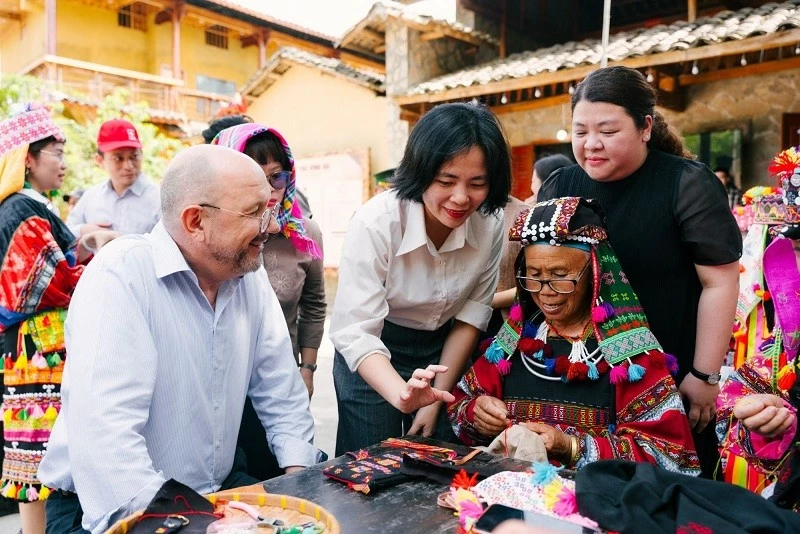 |
| The Lo Lo Chai community tourism village in Tuyen Quang province. (Photo: VNA) |
Vietnam has strong potential to develop sustainable tourism, particularly through community-based and agricultural tourism that preserves local culture, creates livelihoods and delivers lasting value to both visitors and communities, experts and local officials said at the ongoing 20th Ho Chi Minh City International Travel Expo (ITE HCMC 2026).
The event, taking place from August 27-29, has featured discussions on sustainable tourism and the potential of Vietnamese destinations to meet the standards of the Best Tourism Villages by UN Tourism.
The tourism market is shifting from sightseeing towards living and connecting with destinations. Visitors increasingly seek authentic and locally rooted experiences, interaction with local people, culture and nature, as well as small-group and personalised trips with limited environmental impact and clear benefits for communities.
Experts said this trend means community-based tourism can turn local residents from beneficiaries into active stakeholders in destination development, while preserving culture by bringing it into everyday life and linking agriculture, handicrafts, cuisine, nature and accommodation.
A survey conducted by Booking.com found that 85% of travellers prioritise sustainability, while 30% choose green destinations. Travelers are also paying greater attention to environmental and community impacts and favouring responsible travel experiences.
Nguyen Thi Huyen, head of the Tourism Management Division under the Tuyen Quang provincial Department of Culture, Sports and Tourism, said a key challenge for community-based destinations is turning existing community assets into quality products that can reach the market while preserving local identity and ensuring tangible benefits for residents.
Tuyen Quang currently has 54 potential community cultural tourism villages, including 28 meeting standards for serving tourists. Ten villages and community tourism models have also been recognised as three- to four-star OCOP products.
Several destinations have gradually established their brands. Lo Lo Chai was recognised by UN Tourism as one of the Best Tourism Villages 2025, while Nam Dam has received ASEAN tourism awards several times. The Pa Vi Mong ethnic community cultural tourism village was honoured at the Vietnam Tourism Awards 2025, while Tha, Khau Trang and Nam Hong villages have also developed distinctive tourism products.
Tra Su cajuput forest in An Giang province attracts visitors with its rich biopersity (Photo: VNA)
These experiences show that community tourism villages cannot follow a single model, Huyen said, noting that each community needs to identify its unique values, the experiences it can offer and what will make visitors remember the destination and want to return or recommend it.
Vo Pham Tan, Deputy Director of the Dong Thap provincial Department of Culture, Sports and Tourism, said linking agriculture with tourism and promoting cultural values can increase the value of agricultural products, create livelihoods and open up a green, sustainable and distinctive tourism development orientations.
In the first eight months of 2026, Dong Thap welcomed about 3.6 million tourists, including around 1.25 million visitors to agricultural and craft village tourism models. Its tourism revenue reached approximately 1.9 trillion VND (72.8 million USD).
Experts said agricultural tourism associated with culture is not merely a trend but a suitable direction for sustainable tourism development. Rather than creating more destinations, the priority should be to turn existing assets into products with compelling stories and experiences, connect them to markets, and develop them into tourism routes and tours.
Vu Nam, an expert from the Swiss Tourism for Sustainable Development in Vietnam” (ST4SD) project, said developing sustainable community tourism destinations under the Best Tourism Villages by UN Tourism standards can contribute to rural development, heritage conservation and sustainable development.
Drawing on the Swisstainable tourism model of Switzerland, the ST4SD project encourages destinations to upgrade themselves through a pathway from pre-commitment and commitment to implementation and readiness to apply for recognition.
As of 2026, more than 1,000 applications had been submitted to the Best Tourism Villages programme, with 319 villages recognised and 83 villages from 65 countries participating in the upgrading programme.
(Source: VNA)


