





The Ministry of Industry and Trade strives to accelerate growth targets for Q4/2026
WVR - Deputy Minister of Industry and Trade Phan Thi Thang recently signed Official Dispatch No. 8293/BCT-KHTC on October 12, 2026, regarding the update of growth scenarios, target identification, and task assignment for Q4/2026 to the Ministry's units.
Latest
 |
| Based on the performance results and the annual growth requirements, the Ministry of Industry and Trade has determined a single management scenario aimed at achieving the 2026 targets, with a specific roadmap for each month of October, November, and December. (Source: Industry and Trade Newspaper) |
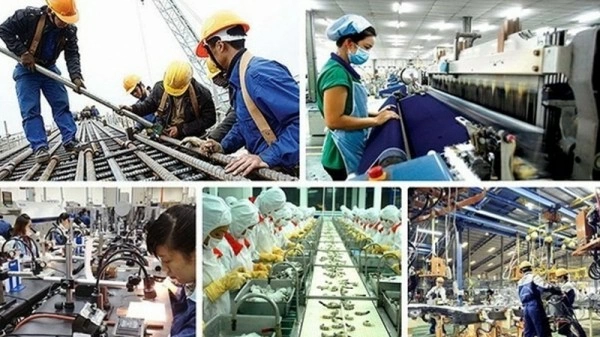
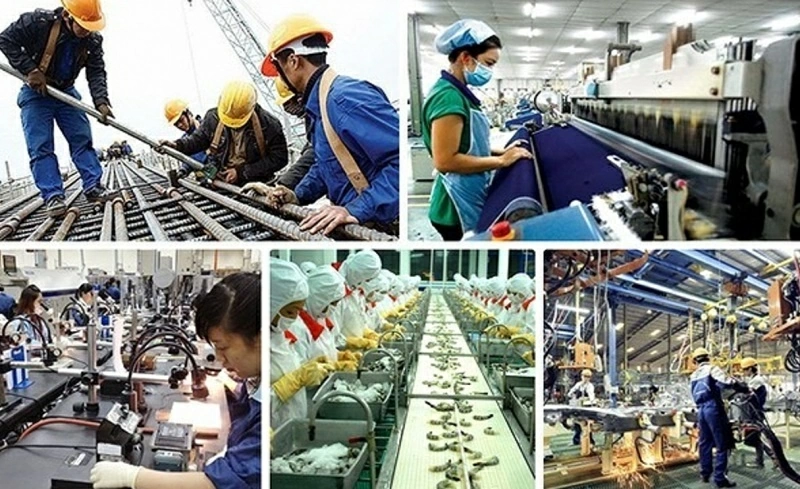
Accordingly, out of the eight growth targets assigned by the Government, six have met or exceeded the implementation progress after the first nine months of 2026. The Industrial Production Index (IIP) increased by approximately 12.3%; total electricity production and import reached 266.58 billion kWh, up 9.65%; and the power source reserve ratio reached about 25.97%.
In the first nine months of 2026, exports increased by 24.5%; total retail sales of goods and consumer service revenue rose by 13.4%; and the proportion of enterprises applying e-commerce reached 61%. In September alone, export turnover reached 59.48 billion USD, up 39.1% compared to the same period last year; the trade balance recorded a surplus of 1.27 billion USD.
The two targets that need focus in Q4 are the total power source capacity and the growth rate of B2C e-commerce. These are areas identified by the Ministry of Industry and Trade as requiring close management solutions to ensure the achievement of the 2026 goals. Currently, the total power source capacity is about 85,594.88 MW, needing an additional 2,570.12 MW to reach a minimum scale of 88,165 MW by the end of the year. Meanwhile, the B2C e-commerce market is growing at 19.5%, 0.5 percentage points lower than the lowest target range of 20 - 22%.
Based on the performance results and the annual growth requirements, the Ministry of Industry and Trade has determined a single management scenario aimed at achieving the 2026 targets, with a specific roadmap for each month of October, November, and December. The progress made in the first nine months is identified as a safety buffer, not to be used to reduce management requirements in the final months of the year.
For exports, the management focus shifts to maintaining a reasonable growth rate, enhancing growth quality, controlling product origin, minimizing trade risks, and reducing dependence on foreign direct investment (FDI) sectors.
A notable point in the new scenario is the application of a risk management mechanism with three warning levels: green, yellow, and red for each monthly target. When a target hits a warning threshold, the leading unit must immediately activate prepared solutions without waiting for a quarterly evaluation. Specifically, no target should remain at the Red level for more than a month without a solution and report.
This approach indicates that the management requirements of the Ministry of Industry and Trade are shifting strongly from evaluating results to proactively identifying, preventing, and addressing risks, closely following actual developments to timely adjust solutions.
According to the updated scenario, the average IIP for the last months of the year is expected to reach around 12.5 - 13%, ensuring the annual growth rate falls within the target range of 12 - 14%. Total electricity production and import in Q4 are estimated at about 88.55 billion kWh, bringing the total annual output to approximately 355.13 billion kWh, an increase of about 9.92%. Annual export turnover is projected to increase by about 22.8%, while total retail sales of goods and consumer service revenue are expected to rise by about 13.3%.
For B2C e-commerce, the growth rates for October, November, and December are projected to be 21%, 23%, and 26% respectively, bringing the annual growth rate to about 20.5%. The proportion of enterprises applying e-commerce is expected to reach about 68%, about 6 percentage points higher than the upper limit of the set target.
To realize these goals, the Ministry of Industry and Trade requires maximizing the year-end shopping peaks and the Online Friday 2026 program; collaborating with major e-commerce platforms to implement programs promoting Vietnamese goods consumption, supporting shipping and payment fees. Simultaneously, efforts are being made to bring enterprises, cooperatives, and OCOP products onto platforms, expanding logistics services and digital payments in rural areas.
The Department of E-commerce is tasked with shifting the focus from expanding the number of participants to increasing substantial transactions. Key tasks include enhancing seller verification, ensuring transparency of product information, managing livestream activities, affiliate marketing, and cross-border e-commerce; while also perfecting methods to measure the scale of the B2C e-commerce market, ensuring data accurately reflects reality.
For the electricity sector, the Ministry of Industry and Trade requires compiling a list of backup projects with a total capacity not less than 120% of the remaining capacity shortfall, equivalent to about 3,100 MW.
Additionally, efforts should be made to expedite the recognition of commercial operation dates (COD) for each unit, each part of the project that meets conditions; shortening testing and acceptance times to quickly bring power sources into operation.
In the domestic market sector, key tasks include implementing the second National Concentrated Promotion Program, conducting the “Vietnamese People Prioritize Vietnamese Goods” campaign, proactively preparing goods for Tet, and implementing market stabilization solutions.
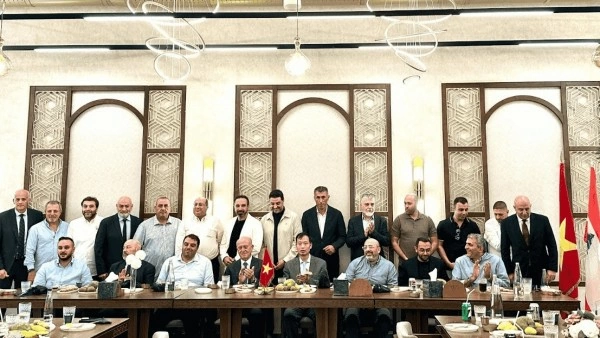
In export activities, the Ministry of Industry and Trade focuses on controlling product origin, enhancing the effective utilization of free trade agreements (FTAs), while expanding markets in the Middle East, Africa, Latin America, and Halal markets.
The update of growth scenarios by month, linked with a risk warning mechanism and specific responsibilities of each unit, serves as a basis for the Ministry of Industry and Trade to proactively address bottlenecks, concentrate resources on challenging targets, and commit to achieving the 2026 growth goals, laying the foundation for development in 2027.