


 |
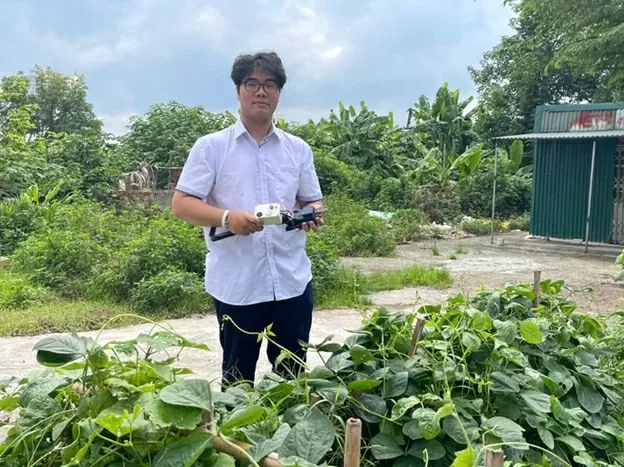
| Phan Hoang Lam and his invention - smart moisture measuring shovel. (Photo: Ly Ly) |
Powered by IoT technology, this device measures soil moisture and nutrient levels, while also reminding farmers to check their fields regularly and manage crop rotations more efficiently.
The smart moisture measuring shovel is the brainchild of Phan Hoang Lam, a 12th-grade student at Hanoi–Amsterdam High School for the Gifted. With a burning passion for programming, Lam has spent months experimenting through trial and error to bring this device to life.
The inspiration originated from his visits to his grandparents in Ha Tinh, his hometown, where he saw firsthand the challenges of traditional farming methods that rely heavily on unpredictable weather. His grandmother often watered the plants as soon as the sun appeared, but she had to be cautious—too much water could damage the crops.
Measuring soil moisture and nutrient levels was largely a matter of experience, guided by intuition and the rhythm of rainy and dry seasons. This made it difficult for farmers to detect subtle yet crucial changes in soil conditions.
Aware of this problem, Lam emphasized the importance of accessible technology for small-scale farmers. He noted that while existing monitoring devices can help track soil quality, they are often too expensive or inefficient for local farms.
The shovel features a compact design and an IoT-based moisture measurement system. Farmers only need to connect the shovel's built-in Wi-Fi interface to their smartphones. Once inserted into the soil, the device automatically updates moisture readings on the website nongsmartinsight.com, which also provides customised recommendations for improving soil and air quality.
The shovel is built with affordable, commonly available sensors, and most of its hardware components and casing are 3D-printed, making production both cost- and energy-efficient. Unlike traditional soil testing methods that require sample collection and multiple manual steps, this device provides instant, real-time data.
As a result, it saves farmers significant time and labour while enhancing productivity and crop health. By continuously updating sensor data, it allows for more informed decision-making and reduces waste by ensuring precise irrigation and fertilisation based on real soil conditions.