







Seminar: Joining hands to ease the suffering of Agent Orange victims in Vietnam
WVR - On October 21, a seminar titled “65 Years of the Vietnam Agent Orange Disaster” was held in Hanoi, focusing on recognizing the prolonged consequences of Agent Orange/dioxin, sharing responsibilities, and promoting practical solutions to support victims and address environmental pollution.
Latest
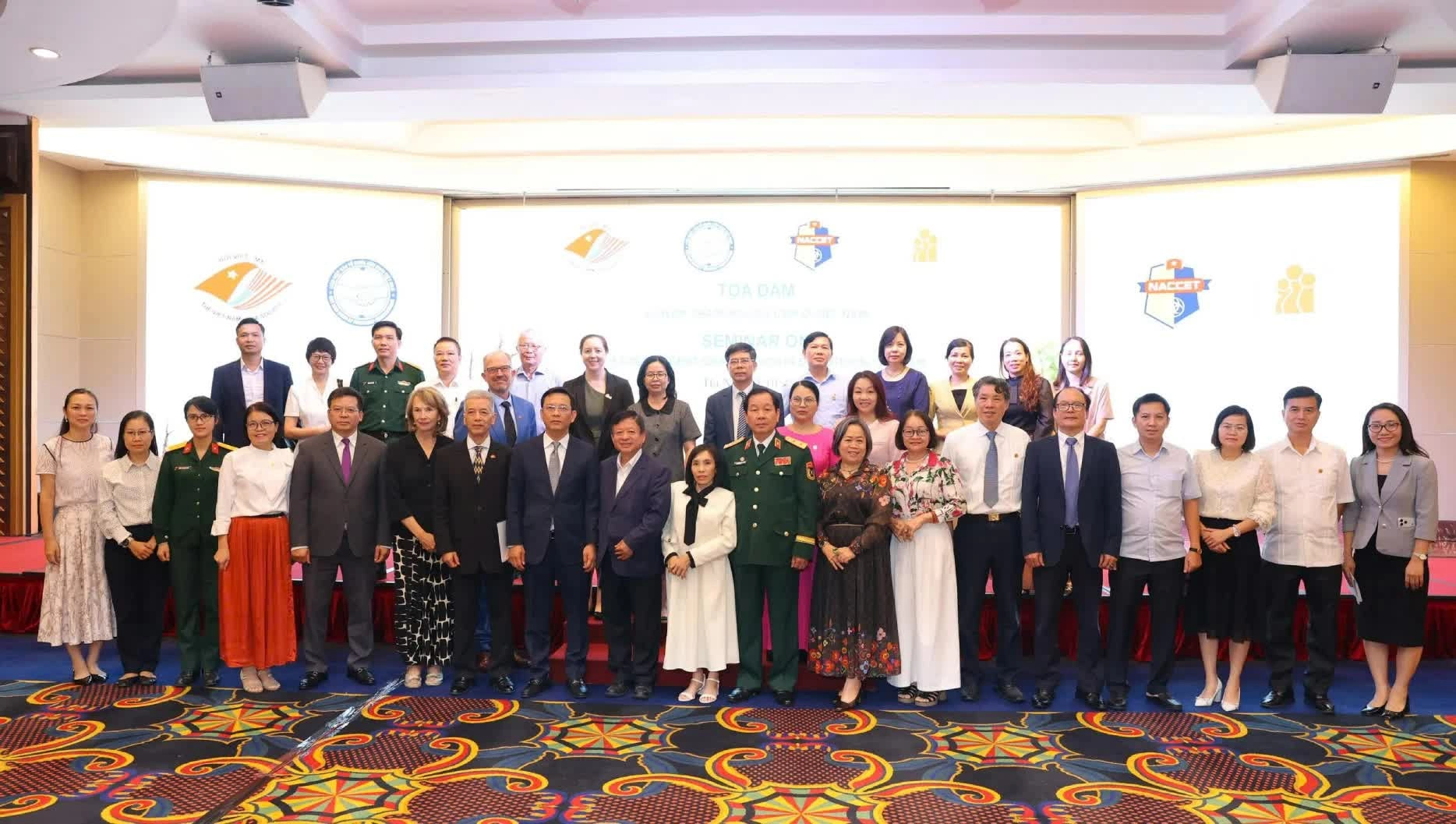 |
| Delegates attending the seminar pose for a commemorative photo. (Photo: Dinh Hoa) |
The program was chaired by the Vietnam Union of Friendship Organizations (VUFO), in collaboration with the Vietnam Association for Victims of Agent Orange/dioxin (VAVA), the National Action Center for Chemical and Environmental Treatment (NACCET), the Office of the Standing Committee of the National Steering Committee for the Settlement of Post-war Unexploded Ordnance and Toxic Chemicals in Vietnam (Office 701), and the Vietnam-USA Society.
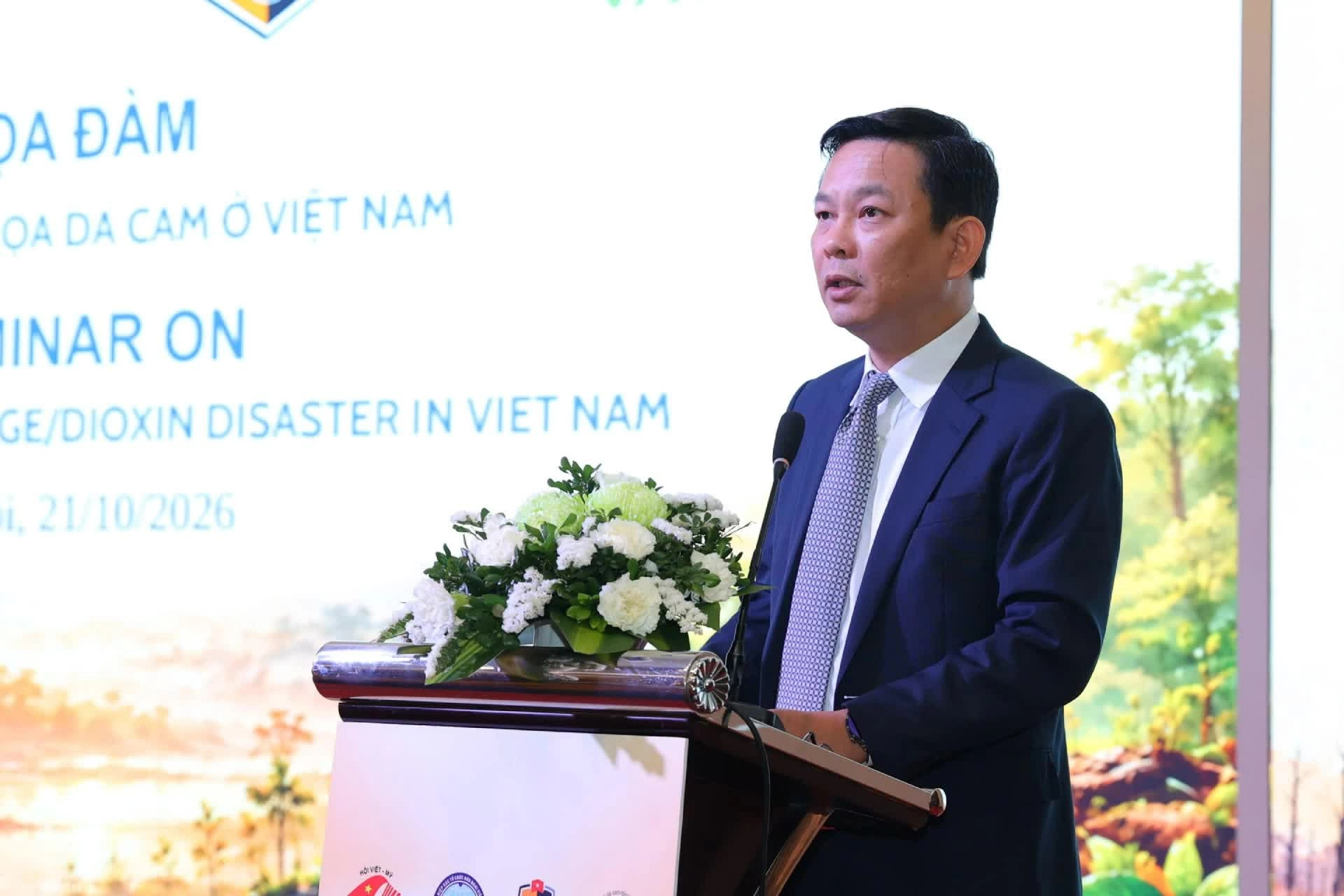 |
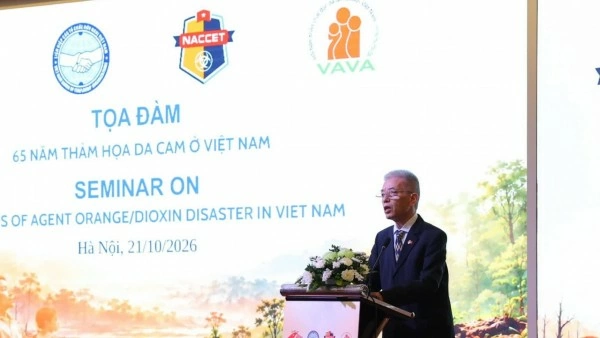
| Vice President of the Vietnam Union of Friendship Organizations (VUFO) Dong Huy Cuong delivers the opening speech at the seminar. (Photo: Dinh Hoa) |
In his opening remarks, Vice President of the Vietnam Union of Friendship Organizations Dong Huy Cuong emphasized that although the war has receded over half a century ago, the consequences of Agent Orange/dioxin still linger in the lives of many families and communities.
Vietnam has identified addressing the aftermath of chemical warfare as an urgent, long-term task, linked with healthcare, ensuring social welfare, supporting victims in rehabilitation, and community integration.
A representative from the Vietnam Union of Friendship Organizations stated that alongside policies to support victims and efforts to address contaminated areas, Vietnam needs to continue mobilizing the joint efforts of organizations, businesses, and international partners to tackle the prolonged consequences of war.
Additionally, Vice President Dong Huy Cuong appreciated the support from the Government and people of the United States, as well as international organizations, NGOs, and benefactors in addressing dioxin pollution, supporting persons with disabilities, and clearing unexploded ordnance.
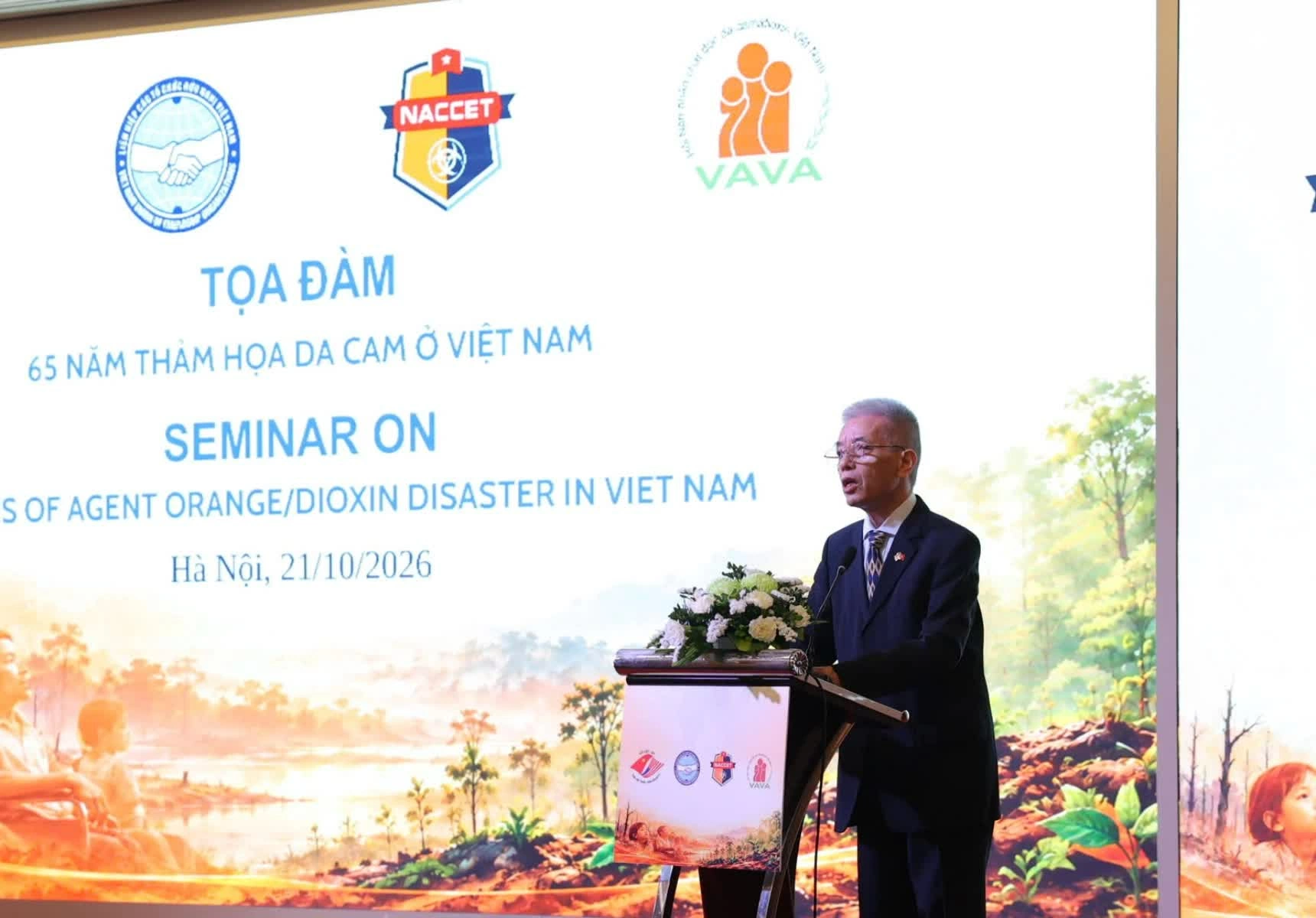 |
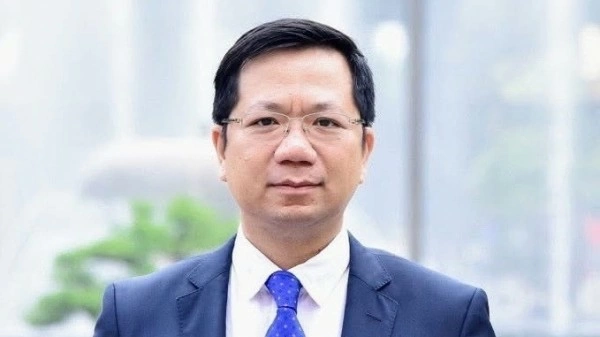
| Ambassador Bui The Giang, Vice President of the Vietnam-USA Society, speaks at the seminar. (Photo: Dinh Hoa) |
In his keynote address at the seminar, Ambassador Bui The Giang, Vice President of the Vietnam-USA Society, noted that Vietnam still faces three severe consequences of war: (1) unexploded ordnance threatening lives and livelihoods; (2) nearly half a million martyr remains yet to be found, identified, and repatriated; (3) the prolonged effects of Agent Orange/dioxin on humans and the environment.
The Vice President of the Vietnam-USA Society stated that addressing these consequences requires long-term commitment and commensurate resources in finance, technology, and expertise, with tangible, assessable, and sustainable results.
Based on this reality, Ambassador Bui The Giang emphasized three priorities in international cooperation to address the aftermath of war.
First, enhancing research, knowledge sharing, training, and technology transfer to improve Vietnam’s capacity, aiming for self-reliance in resolving long-term issues.
Second, promoting healthcare, rehabilitation, education support, vocational training, and sustainable livelihood creation for Agent Orange victims, prioritizing those with severe disabilities and families in particularly difficult circumstances.
Third, mobilizing international resources in finance, technology, and expertise to thoroughly address dioxin contamination hotspots, restore the environment, and mitigate negative impacts on people's lives and socio-economic development.
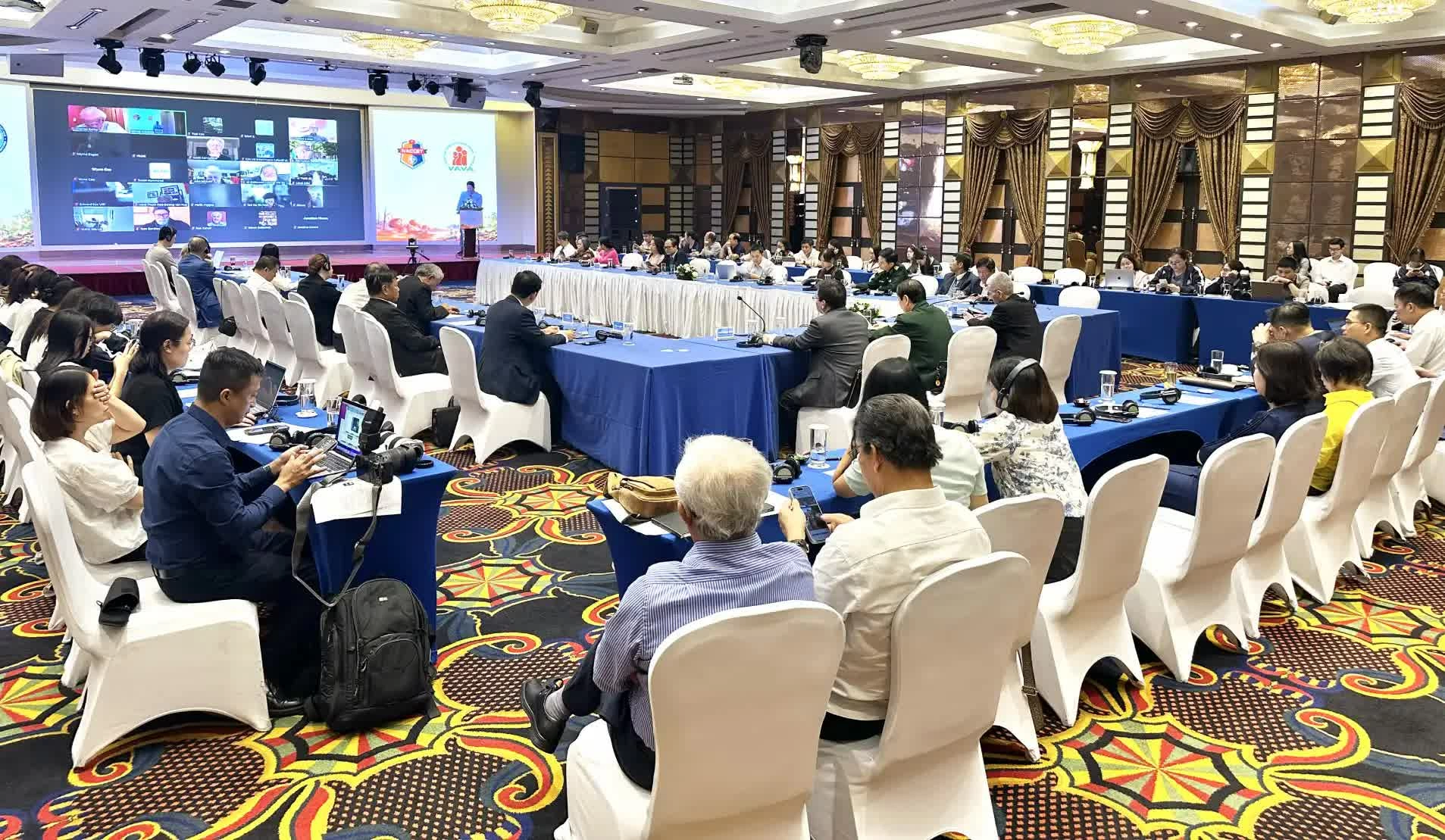 |
| Overview of the seminar. (Photo: Trung Anh) |
Presenting an overview of the impact of Agent Orange/dioxin, Colonel Dr. Nguyen Quoc Hung, Foreign Affairs Assistant at the National Action Center for Chemical and Environmental Treatment (NACCET), stated that approximately 80 million liters of chemical agents were sprayed in Vietnam from 1961-1971.
The result is about 4.8 million people exposed and over 3 million victims of Agent Orange.
Following the directives of the Party and State, Vietnam has implemented numerous programs to address pollution, restore the environment, and support victims.
According to Colonel Nguyen Quoc Hung, the decontamination of polluted land at Da Nang Airport and A So Airport has been completed. Meanwhile, Vietnam continues to focus resources on decontamination activities at Bien Hoa Airport.
Simultaneously, healthcare, rehabilitation, and livelihood support programs are being implemented for over 40,000 persons with disabilities. Families of victims in difficult circumstances also receive housing support.
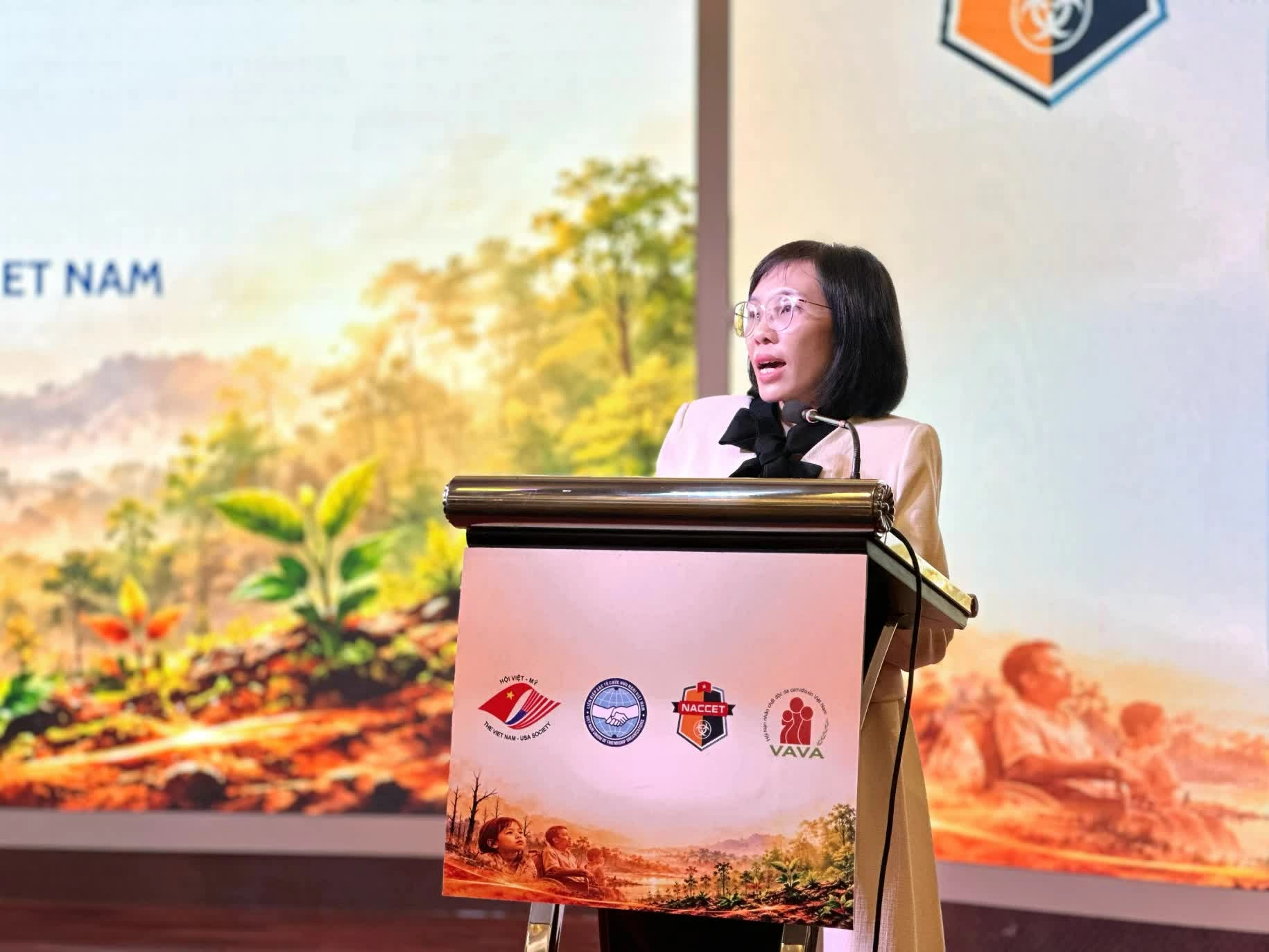 |
| Ms. Vuong Thi Quyen, a Vietnamese Agent Orange victim, shares her story and the long-lasting effects of Agent Orange across generations. (Photo: Trung Anh) |
During the discussion session at the seminar, Ms. Vuong Thi Quyen, a second-generation Agent Orange/dioxin victim currently working at the Social Protection Center under the Vietnam Association for Victims of Agent Orange/dioxin, shared her personal story about the long-lasting war effects across generations.
Born in 1989 in Quang Tri, she suffers from congenital deformities, including kyphosis and scoliosis, identified as consequences of Agent Orange from her father who fought in the Southeastern battlefield.
Overcoming her personal challenges, Ms. Vuong Thi Quyen wishes to bring her story and those of victims who have not had the opportunity to voice themselves closer to the international community.
Sending a message to global youth, she calls for the promotion of responsibility, creativity, and the role of people-to-people diplomacy in supporting Agent Orange victims, particularly through healthcare activities, environmental pollution treatment, and sustainable livelihood creation.
Emphasizing the shared responsibility in addressing the consequences of war, Ms. Vuong Thi Quyen affirmed: “Justice for Vietnamese Agent Orange victims is a testament to the dignity of humanity, asserting that no war has the right to take away the future of future generations!”
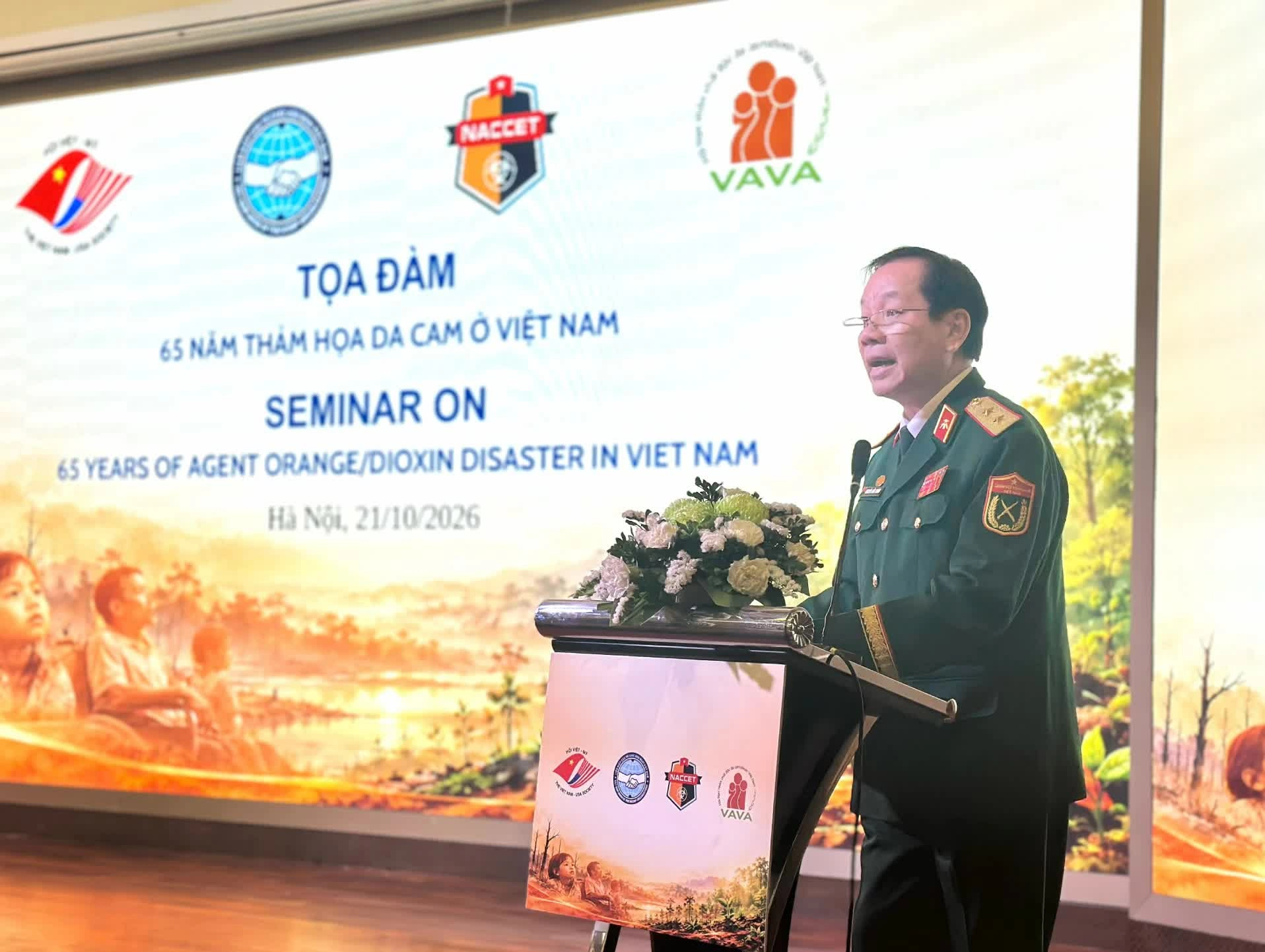 |
| Lieutenant General Nguyen Huu Chinh, President of the Vietnam Association for Victims of Agent Orange/dioxin, delivers the concluding remarks and announces the Call for Support for Agent Orange Victims. (Photo: Trung Anh) |
In his concluding remarks at the seminar, Lieutenant General Nguyen Huu Chinh, President of the Vietnam Association for Victims of Agent Orange/dioxin, called for turning empathy into practical cooperation programs, mobilizing sustainable resources to care for victims and address dioxin pollution.
Lieutenant General Nguyen Huu Chinh also announced the Call for Support for Agent Orange Victims, aimed at compatriots at home, overseas Vietnamese, and international friends, to join hands in improving the lives of victims and addressing the remaining consequences.
|


