


Ministry of Foreign Affairs hosts seminar to evaluate results and future directions of international integration
WVR - On November 2, the Ministry of Foreign Affairs organized a scientific seminar titled “Vietnam's International Integration: Achievements, Bottlenecks, and Future Directions” to objectively and scientifically assess the current state and progress of Vietnam's international integration (II) after nearly two years of implementing Resolution No. 59-NQ/TW of the Politburo. The seminar aimed to propose fundamental solutions and prioritize objectives for efforts in the next 2-3 years.
Latest
The seminar was chaired by member of the Party Central Committee and Permanent Deputy Minister of Foreign Affairs Nguyen Minh Vu, and attended by approximately 50 delegates, including experts, scientists, representatives from research institutions, policy advisory bodies, and industry associations.
In his opening remarks, Permanent Deputy Minister Nguyen Minh Vu emphasised that Resolution No. 59-NQ/TW of the Politburo has redefined the role of international integration as a “crucial and regular” task for the entire population and political system, serving as an “important driving force” for the nation to enter a new era.
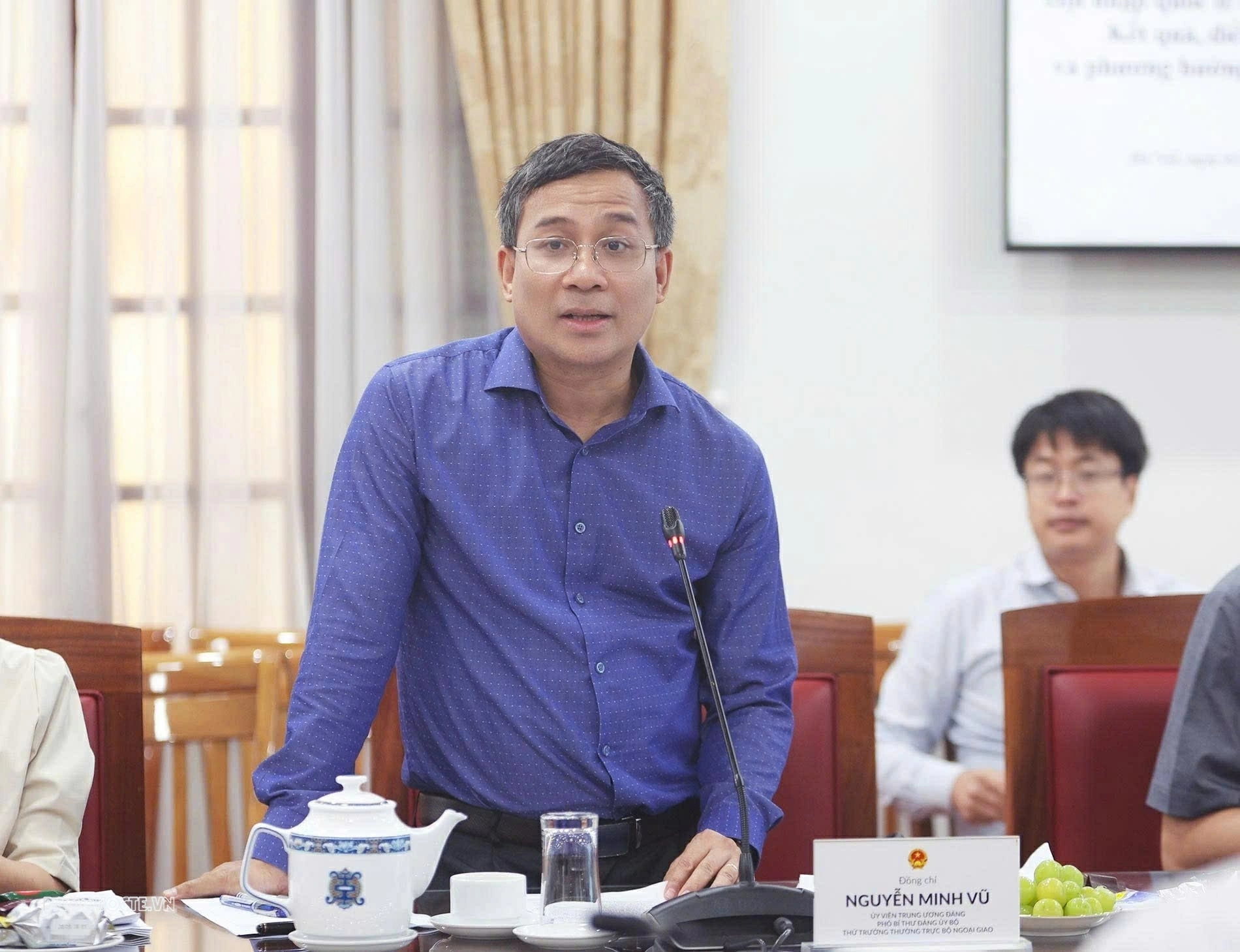 |
| Nguyen Minh Vu, member of the Party Central Committee and Permanent Deputy Minister of Foreign Affairs, delivers the opening remarks at the seminar. (Photo: Phuc Vu) |
The Deputy Minister highlighted directives from General Secretary and President To Lam, Head of the Central Steering Committee on Foreign Affairs and International Integration, regarding the review and substantive evaluation of the implementation of Resolution No. 59-NQ/TW, using the benefits to citizens and businesses as the measure of II effectiveness.
With this spirit, the Ministry of Foreign Affairs organized the seminar to gather insights from researchers and experts with scientific perspectives, alongside industry associations with practical experience directly impacted by integration.
Focusing on evaluating the results and impacts of II on all aspects of socio-economic life, the seminar's discussions provided scientific analyses and objective, candid evaluations of the achievements in international integration across various fields, including economy, trade, investment, finance, science and technology, labor, education and training, and culture.
The participants agreed that a significant outcome of the two-year implementation of Resolution No. 59-NQ/TW is the noticeable expansion of institutions, with the pace and scale of integration of Vietnamese enterprises and goods increasing. Moreover, international integration has been widely implemented and synergized across all sectors and fields since the issuance of Resolution No. 59-NQ/TW within the framework of the Politburo's core and strategic resolutions.
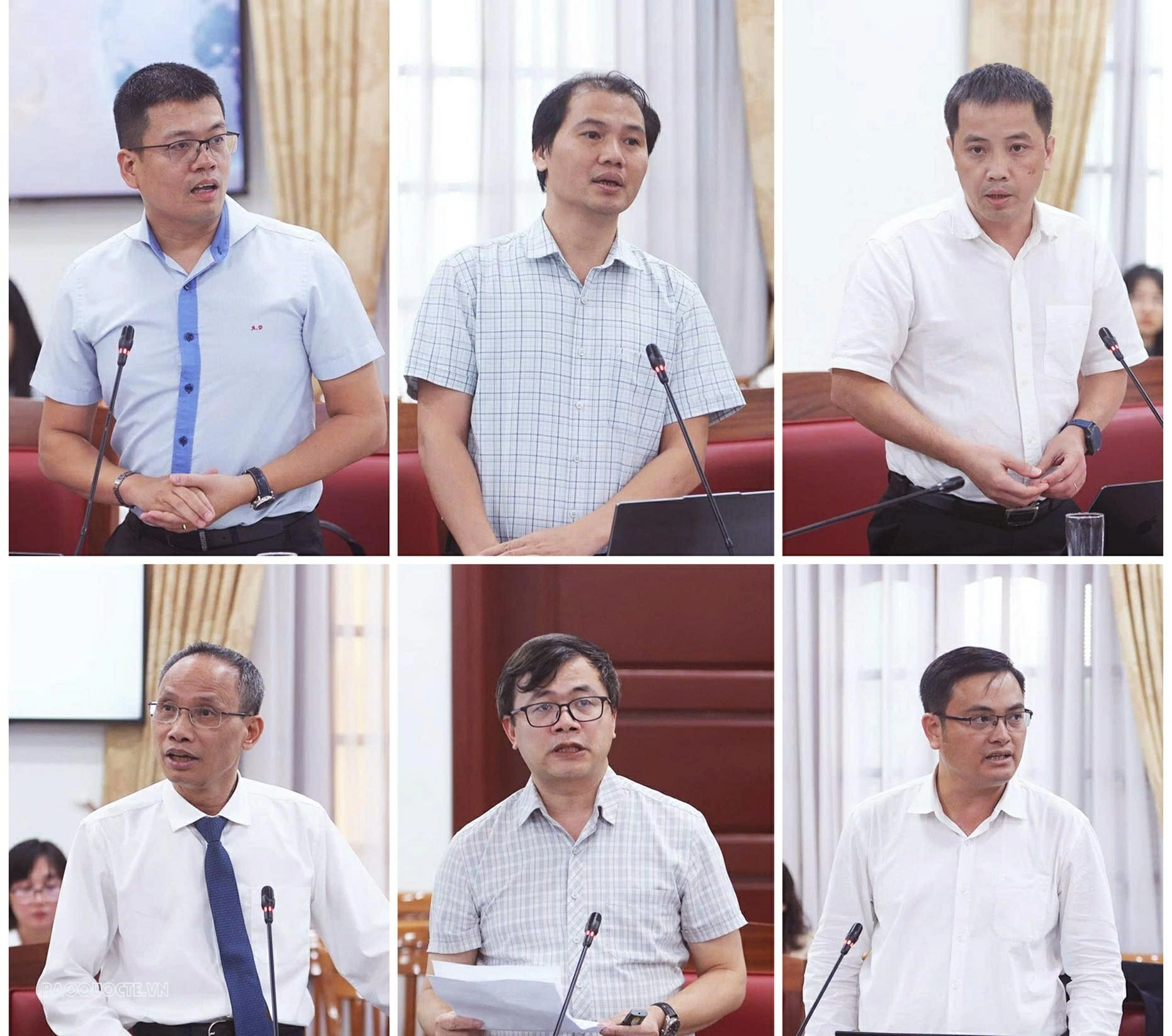 |
| Experts present their opinions at the seminar. (Photo: Phuc Vu) |
Additionally, the experts candidly pointed out existing issues, limitations, and bottlenecks in II over the past period, particularly the insufficient quality of integration, as evidenced by the capacity to leverage international trade agreements, the contribution of domestic value in export turnover, and the role of foreign-invested sectors in enhancing human resource quality.
The delegates offered numerous specific recommendations to the Government in general and the Ministry of Foreign Affairs in particular, to ensure that II efforts delve deeper and bring tangible benefits to citizens and businesses, creating resources for development.
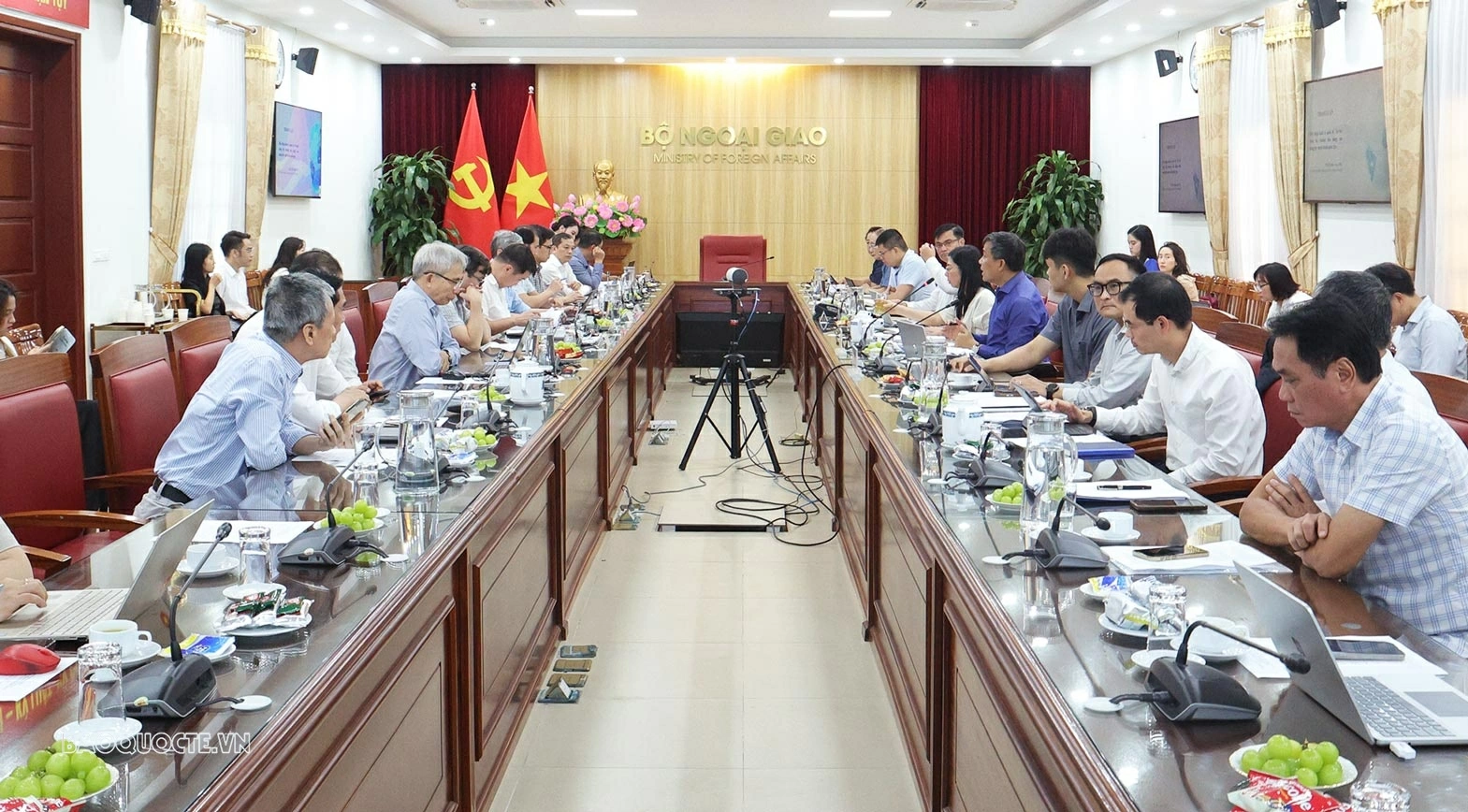 |
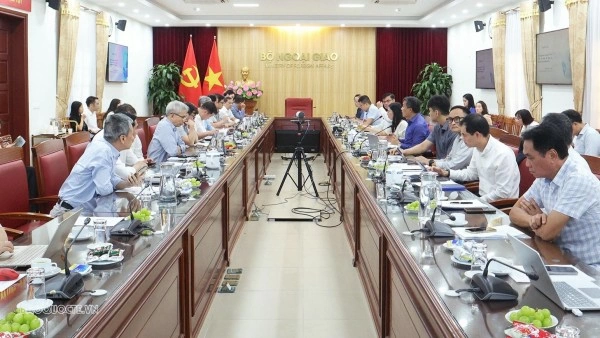
| Overview of the seminar. (Photo: Phuc Vu) |
In his concluding remarks, Deputy Minister Nguyen Minh Vu highly appreciated the heartfelt, practical, and objective contributions from the delegates, experts, and scientists. He emphasized that determining the evaluation criteria for II in the coming period must be in-depth and measurable; each sector must develop a specific integration roadmap, with economic efficiency as the highest priority.
The seminar provided numerous data points and scientific evaluations from researchers and businesses, offering multi-dimensional perspectives from all stakeholders and beneficiaries of II, clarifying new requirements for integration efforts in the upcoming phase.