





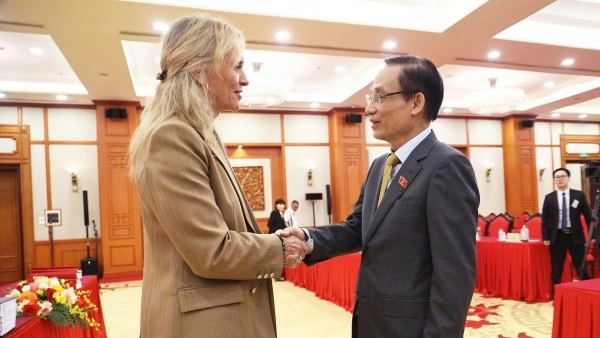


65 Years of the Agent Orange Disaster: A continuing journey for justice and compassion
WVR - The year 2026 marks 65 years since the Agent Orange/dioxin disaster in Vietnam. Over the decades, the consequences of war remain evident, affecting not only those directly exposed but also extending to subsequent generations.
Latest
In an interview with The World and Vietnam Report, Lieutenant General Nguyen Huu Chinh, President of the Vietnam Association for Victims of Agent Orange/Dioxin, shared significant achievements in caring for and supporting victims, the journey for justice, and future directions to continue garnering international community support in addressing the aftermath of Agent Orange.
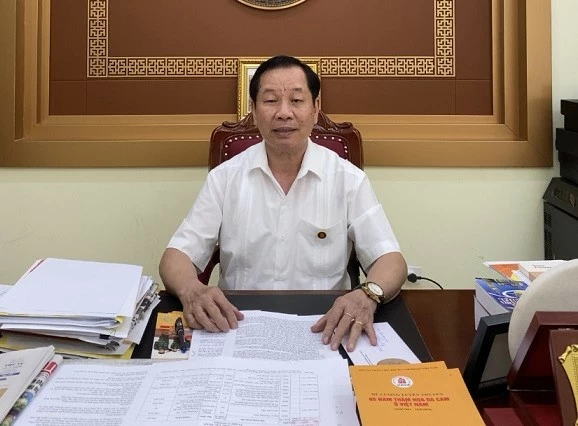 |
| Lieutenant General Nguyen Huu Chinh, President of the Vietnam Association for Victims of Agent Orange/Dioxin. (Photo: Minh Hang) |
The year 2026 marks 65 years since the Agent Orange disaster in Vietnam (10/8/1961 - 10/8/2026). Looking back, in your opinion, what are the significant achievements in caring for and supporting Agent Orange/dioxin victims and fighting for justice for these victims?
First, it must be affirmed that the Agent Orange/dioxin disaster conducted by the U.S. in Vietnam from 1961-1971 has left extremely severe consequences on the environment and human health.
Regarding the environment, about a quarter of the area of southern Vietnam, from Da Nang to Bien Hoa (Dong Nai), was sprayed with chemical toxins. Approximately 4.8 million Vietnamese were exposed, with over 3.1 million being Agent Orange/dioxin victims. It can be said that this is one of the most serious disasters of humanity in the 20th century, serving as a warning for the world to never repeat such a catastrophe.
For the care of Agent Orange/dioxin victims and other policy beneficiaries, the Party and State have always given special attention. Despite socio-economic difficulties, the Party and State have always prioritized caring for those who have contributed to the nation, including Agent Orange victims.
In recent years, the Party and State have issued many important directives and policies, such as the Secretariat's Directive on strengthening the Party's leadership in addressing the consequences of chemical toxins used by the U.S. during the Vietnam War and the National Action Plan to address the aftermath of chemical toxins/dioxin post-war in Vietnam for the 2021-2030 period. Besides macro-level attention, localities have actively implemented various practical activities to care for, support, and assist victims.
Over the past 20 years, the Association has mobilized over 4,000 billion VND from social resources. This funding has been used to build and repair housing, provide wheelchairs and essential equipment, establish social protection centers for victims, and support livelihoods and regular allowances for many difficult cases. It can be affirmed that the Party, State, and society have allocated the best possible resources to care for and assist victims, helping to alleviate the pain of Agent Orange.
Additionally, we acknowledge the interest and support of international friends in caring for victims. Notably, on April 1, 2025, the Belgian Parliament became the first in the world to pass a resolution supporting Vietnamese Agent Orange victims. On the same day, the Vietnam Association for Victims of Agent Orange/Dioxin and the Aquitara Charity Fund (Belgium) officially exchanged and agreed on principles for supporting Agent Orange victims. This is a significant milestone, demonstrating the increasingly practical support of the international community in caring for and supporting victims.
Recently, based on the Central Association's advice and proposals, support for eliminating temporary and dilapidated housing for Agent Orange victims, especially the offspring of resistance fighters—mostly second and third-generation victims—continues to receive attention. It is evident that the Party and State's directives and policies always align with the country's socio-economic development realities and the needs of policy beneficiaries, thereby providing great motivation for Agent Orange victims.
Currently, many Agent Orange victims have reached the second, third, and even fourth generations. What new requirements does this pose for caring for, protecting the rights, and supporting the livelihoods of these victims in the future, Lieutenant General?
Caring for and assisting victims is always a top priority and a central task of the Vietnam Association for Victims of Agent Orange/Dioxin. For the offspring of resistance fighters and second and third-generation victims, we focus on four key tasks.
First, enhancing care for victims at social protection centres.
Second, continuing to mobilize domestic and international resources to directly support victims in localities.
Third, mobilizing resources to create livelihoods for victims, helping them gradually integrate into the community and participate in social life according to their conditions.
Fourth, during the process of streamlining the organization, at the upcoming Congress, we will focus on two breakthrough areas. The first breakthrough is to direct efforts towards the grassroots, towards the victims, as caring for victims is the highest goal of the Association. The second breakthrough is to strengthen the mobilization and gathering of resources to care for and assist victims.
Only by fulfilling these tasks can we contribute to alleviating the pain of Agent Orange.
 |
| Groundbreaking ceremony for building houses for second-generation Agent Orange victims in An Duong Ward, Hai Phong City. (Photo: Courtesy by author) |
The Party and State have issued many directives and policies to care for those who have contributed to the nation and Agent Orange victims. In your opinion, what key tasks will the Vietnam Association for Victims of Agent Orange/Dioxin focus on to continue effectively implementing these policies?
First, the mission of the Vietnam Association for Victims of Agent Orange/Dioxin is to advise the Party and State on the fight for justice for Agent Orange victims. This is not only a story of Vietnam's history but also a humanitarian issue. Therefore, we need to continue promoting external communication to help the international community better understand the Agent Orange disaster in Vietnam and fully recognize the long-term consequences of war, thereby increasing support in caring for and assisting victims.
Second, we will advise and propose conducting a comprehensive survey and investigation of Agent Orange/dioxin victims. Over the past 20 years, the Association has carried out this work, but in reality, the number of victims, especially second, third, and even fourth-generation victims, needs to be fully documented and accurately assessed.
Based on this, the Association will continue to advise the Party and State to improve support policies, such as livelihood support, housing construction, and researching appropriate adjustments to allowance regimes so that victims can sustain their lives. Most of them are unable to work or care for themselves, so the support of the State and society is extremely important.
In recent years, the Vietnam Association for Victims of Agent Orange/Dioxin has implemented many cooperative activities with international organizations, non-governmental organizations, and friends worldwide. Can you share the significant achievements of people-to-people diplomacy and the role of international support in addressing the consequences of Agent Orange in Vietnam?
For people-to-people diplomacy, we focus on three key tasks.
First, continue to promote communication to help international friends fully, deeply, and specifically understand the Agent Orange/dioxin disaster in Vietnam.
Second, strengthen mobilization of the international community to support resources for caring for and assisting victims.
One of the significant achievements is the Belgian Parliament becoming the first in the world to pass a resolution supporting Vietnamese Agent Orange victims. This is a milestone of great significance, demonstrating the increasingly strong support of the international community for Agent Orange victims.
Additionally, we persistently support the lawsuit of Mrs. Tran To Nga. This lawsuit is significant not only for Mrs. Tran To Nga personally but also contributes to clarifying the severe consequences of Agent Orange, thereby urging the parties involved, especially the U.S., to take more responsibility in addressing the war's aftermath in Vietnam.
Third, the Association continues to mobilize and gather domestic and international resources to have more conditions to care for, support, and share with Agent Orange victims.
What directions and solutions will the Association have to continue garnering international support, spreading the truth about the long-term consequences of Agent Orange, and mobilizing more resources for victim support and addressing war consequences?
First, we will continue to strengthen external communication.
Recently, I had a working trip to six European countries and the U.S. Soon, at the invitation of the Veterans for Peace (VFP) in the U.S., I will attend and speak about the situation of Agent Orange victims in Vietnam. This is an opportunity to continue spreading information, helping international friends, especially the American people, better understand the long-term consequences of Agent Orange.
Besides, the Association will continue to survey, investigate, and update more fully and accurately the situation of victims, especially the health conditions of victim generations, as a basis for advising the Party and State to improve policies on healthcare, medicine, living conditions, housing, and appropriate social welfare policies for Agent Orange victims.
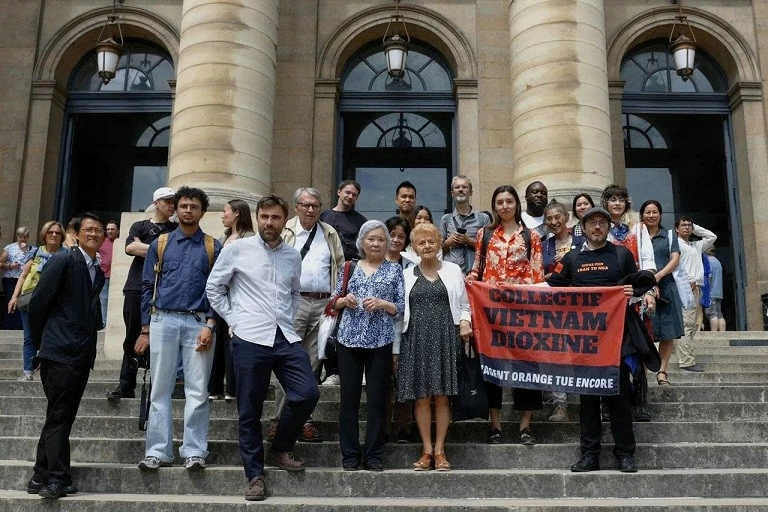 |
| Support activities for Mrs. Tran To Nga and Vietnamese Agent Orange victims in France, June 16, 2026. (Photo: Courtesy by author) |
What message would you like to convey to the international community, organizations, individuals at home and abroad, and younger generations about the shared responsibility in addressing war consequences, protecting peace, and preserving humanitarian values?
The first message I want to convey is: “Let’s join hands to alleviate the pain of Agent Orange.” The second message is: “Solidarity – Responsibility – Compassion for Agent Orange victims.”
As the President of the Vietnam Association for Victims of Agent Orange/Dioxin, I always believe that: “If someone gives me 1,000 VND, I will gladly accept it. Many contributions of 1,000 VND will accumulate into resources to care for and assist victims.” Along with this, we will continue to strengthen and build the Association’s organization at all levels, making it a reliable support for Agent Orange victims and their families.


