


Russian Ambassador Gennady Bezdetko: Significant milestone in advancing Russia-Vietnam Comprehensive Strategic Partnership
WVR - On the occasion of General Secretary and President To Lam's upcoming visit to Russia (September 7-9), Russian Ambassador to Vietnam Gennady Stepanovich Bezdetko shared with The World &Vietnam Report the significance of the visit and the comprehensive developments in Vietnam-Russia cooperation in recent times.
Latest
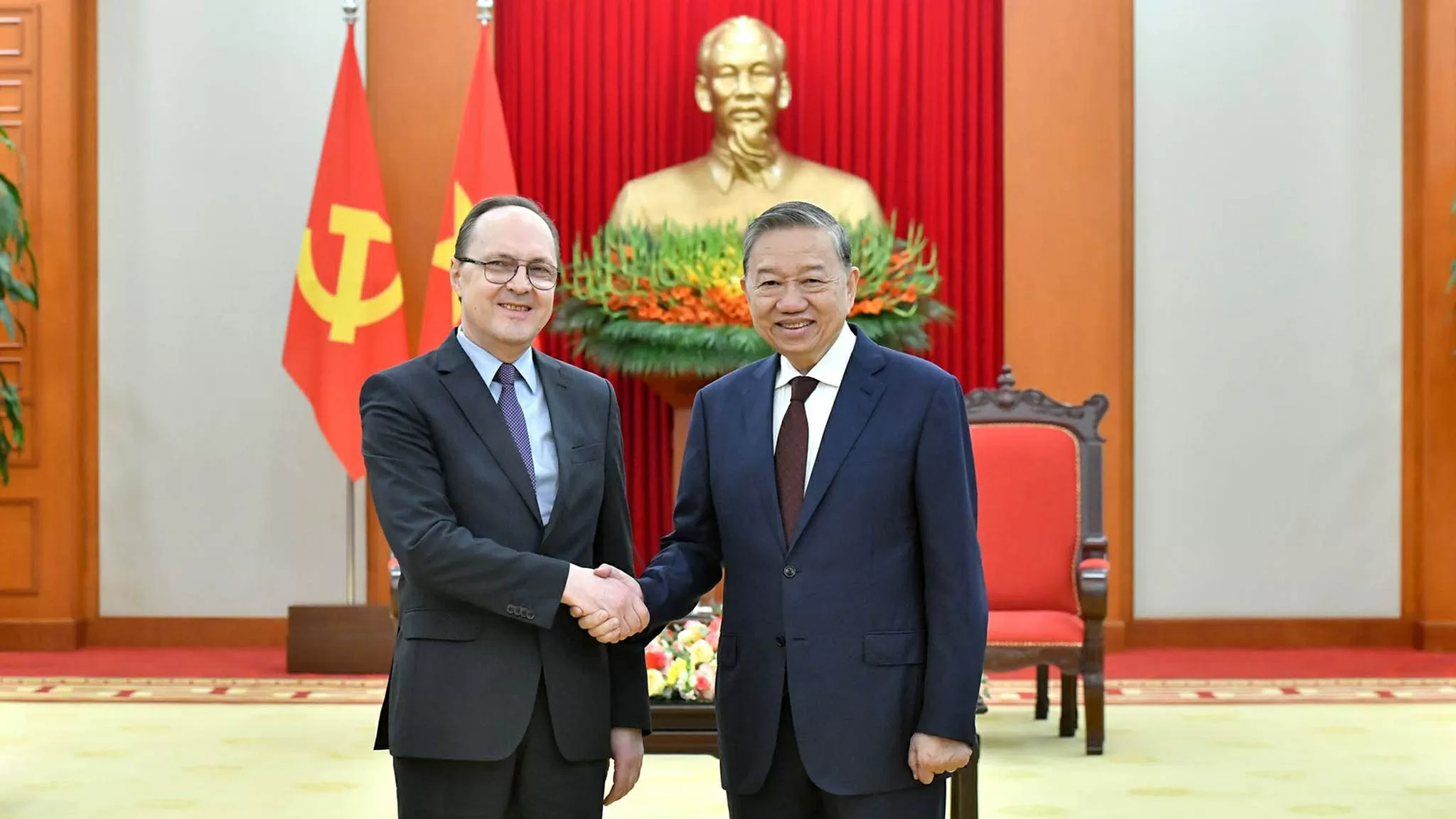 |
| General Secretary and President To Lam and Russian Federation Ambassador to Vietnam Gennady Bezdetko. (Source: Nhan dan Newspaper) |
Dynamic development in various aspects
Currently, Russia-Vietnam relations are dynamically developing across various fields and aspects, based on the solid foundation of friendship and mutual understanding cultivated over many years.
Regular and substantive political dialogue at all levels, especially at the high level, has significantly contributed to strengthening the relations between the two countries. Constructive and trustworthy dialogues help both countries share similar views on international and bilateral agendas.
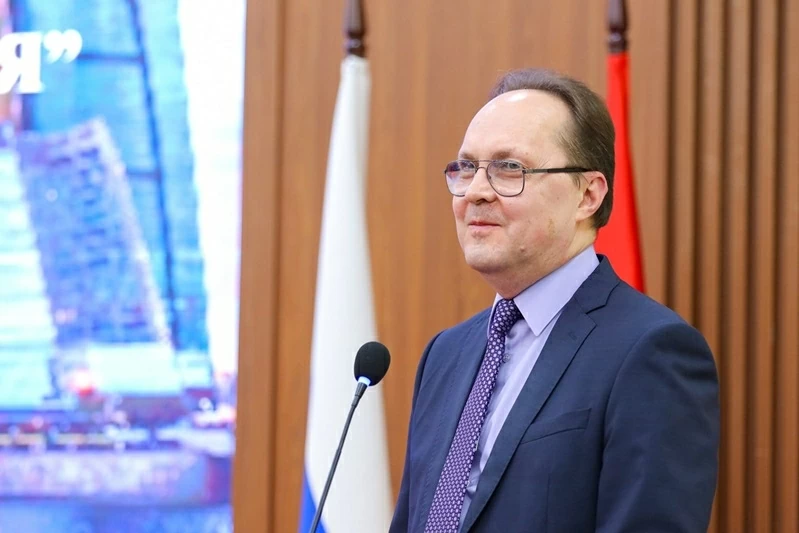 |
| Russian Ambassador to Vietnam Gennady Stepanovich Bezdetko. (Photo: Chu Van) |
This year, the Prime Minister of Vietnam has visited Russia twice. Member of the Politburo of the Central Committee of the Communist Party of Vietnam, Minister of Foreign Affairs Le Hoai Trung visited Moscow as the Special Envoy of the General Secretary of the Central Committee of the Communist Party of Vietnam To Lam.
A number of high-level Russian delegations led by leaders of parliamentary bodies, localities, ministries, and federal agencies, as well as scientific and educational institutions, and trade associations have visited Vietnam. These visits have provided additional impetus for cooperation in trade-investment, science-technology, and social fields.
Representatives of the two countries actively engage on the sidelines of multilateral events. Member of the Politburo of the Central Committee of the Communist Party of Vietnam, Permanent Deputy Prime Minister Pham Gia Tuc attended the Saint Petersburg International Economic Forum; Vietnam's Minister of Finance Ngo Van Tuan participated in the Eastern Economic Forum in Vladivostok. I believe this contributes to establishing useful and effective dialogue between officials and the business communities of both countries.
We regard the upcoming visit to Russia by the General Secretary of the Central Committee of the Communist Party of Vietnam, President of the Socialist Republic of Vietnam To Lam as a significant milestone in the development of the Comprehensive Strategic Partnership between Russia and Vietnam. We expect both sides to have substantive discussions on all issues in the bilateral agenda, agree on new long-term cooperation directions, and make specific decisions to further solidify the relations between the two countries.
Vibrant economic cooperation
Economy, trade, and investment are key areas to effectively exploit the potential for substantive cooperation between Russia and Vietnam. The development of these areas has been identified as a fundamental priority in documents such as the Joint Declaration on Major Directions of the Comprehensive Strategic Partnership in the New Phase, adopted in May 2025 during the visit to Moscow by General Secretary and President To Lam, and the Master Plan until 2030 signed on the occasion of the official visit to Vietnam by Russian Prime Minister M.V. Mishustin in January 2025.
The Free Trade Agreement between Vietnam and the Eurasian Economic Union, approaching its 10th anniversary on October 5, is an important tool for maintaining economic cooperation between the two countries amid the current complex global conditions.
Despite restrictive measures, sanctions, and geopolitical instability, trade turnover in recent years has grown steadily. In 2025, total trade turnover increased by 6%, and in the first six months of this year, it rose by 14%. The leaders of both countries have set a target to raise this figure to 15 billion USD in the medium term. We intend to persistently strive towards this goal.
We acknowledge the important coordinating role of the Intergovernmental Committee on Economic-Commercial and Scientific-Technical Cooperation, with the next session expected to be held in the fourth quarter of this year. We believe that strengthening economic relations will meet the fundamental interests of the peoples of both countries. Vietnam is a dynamically developing country with a favourable geographical location, abundant human resources, and is one of the production and logistics centers of Southeast Asia. Russia has modern technology, capabilities in energy, industry, transportation, scientific knowledge, and natural resources. These factors create favorable conditions for mutually beneficial long-term cooperation.
The fuel-energy complex traditionally remains one of the priority areas of Russia-Vietnam cooperation. The “Vietsovpetro” joint venture operating on Vietnam's continental shelf since 1981 is a testament to effective cooperation. Since 2008, the “reciprocal” joint venture “Rusvietpetro” has been operating in the Nenets Autonomous District. Last year, the two sides signed an Intergovernmental Agreement to expand the area of geological exploration and oil and gas extraction on Vietnam's continental shelf and on the territory of the Russian Federation, aimed at expanding the activities of enterprises.
The two countries are exploring the possibility of supplying liquefied natural gas (LNG) from Russia to Vietnam and building the necessary production infrastructure with the participation of the public joint-stock company “NOVATEK”. New cooperation opportunities in related fields are also opening up, including low-carbon energy and renewable energy sources.
In March this year, the two sides signed an Intergovernmental Agreement on cooperation in building the first nuclear power plant on Vietnam's territory with the participation of the State Corporation “Rosatom”. The agreement provides a legal basis for implementing this large-scale project, including the construction of two power units based on Russian design, technical maintenance, fuel supply, and human resource training. Both sides have completed domestic procedures for the document to take effect and are actively preparing for its implementation.
We see great potential for effective cooperation in machine manufacturing, processing industry, transportation, shipbuilding, agriculture, fisheries industry, and digital technology. We are ready to enhance cooperation in the food sector. Last year, the two-way agricultural supply turnover increased by 16%.
Cooperation in pharmaceuticals, healthcare, and tourism holds promising prospects. According to the latest data, Vietnam has become one of the top three favorite tourist destinations for Russians. The number of Russian citizens visiting Vietnam is approaching the 1 million mark. The increase in direct flights and the expansion of flight networks have led to a surge in tourist numbers. In 2025, the two countries launched 31 flights on 15 new routes.
Cooperation between localities of the two countries significantly contributes to promoting bilateral relations in general. Cities like Moscow, Saint Petersburg, Kazan, and Yekaterinburg are actively fostering multifaceted exchanges with Vietnamese cities and provinces.
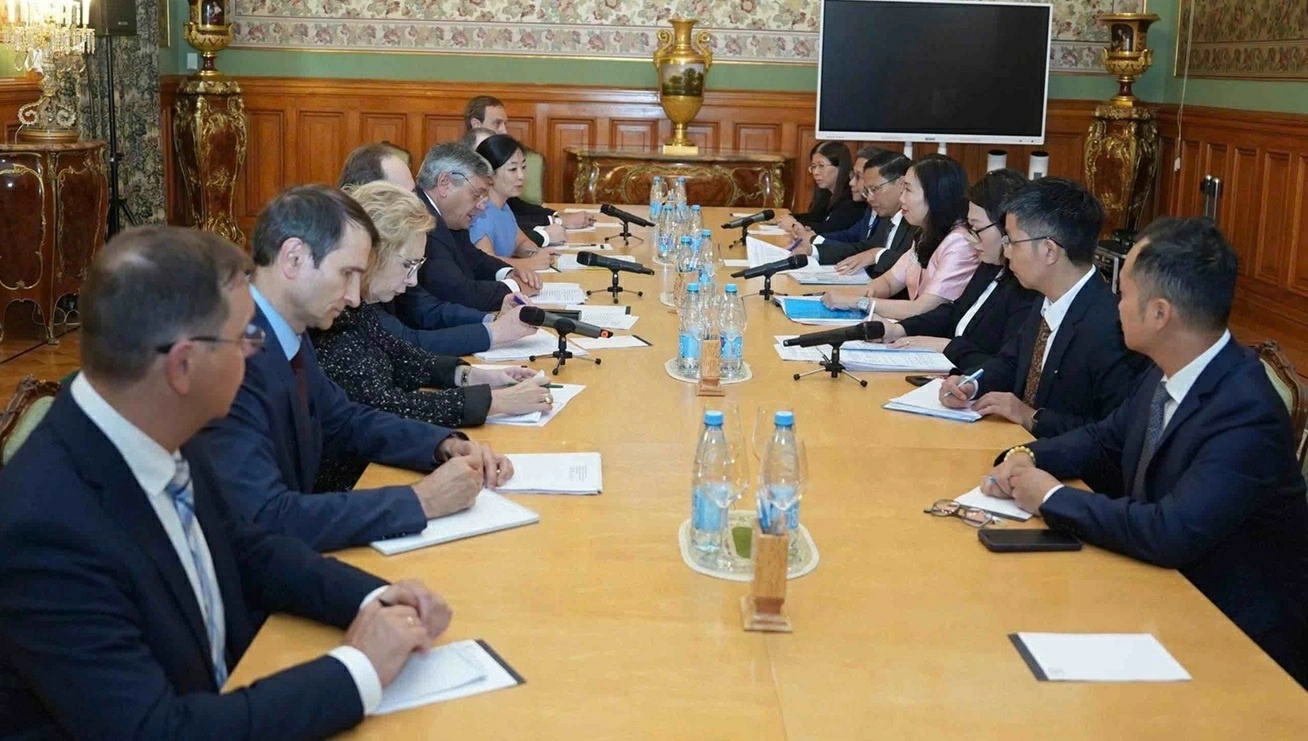 |
| Political consultations at the Deputy Foreign Minister level between Vietnam and Russia. (Photo: Bao Chi) |
Long-term priority areas
Cooperation in science, technology, and innovation has a long history and tradition. The Russia-Vietnam Joint Tropical Scientific and Technological Research Centre will celebrate its 40th anniversary in March 2027. Both sides are conducting diverse research, including marine research, ecology, climate change, medicine, materials science, human resource training, and other fields.
Applied scientific research on biotechnology, prevention of dangerous infectious diseases, and ensuring the safety of crops is increasingly urgent. For decades, the Tropical Center has implemented joint projects and research programs serving the interests of both countries, acting as a unique cooperation tool in specialized fields and in the creation of scientific knowledge.
This cooperation direction is a priority. It is no coincidence that 2026 has been declared the “Year of Russia-Vietnam Cooperation in Science and Education”. This creates favorable opportunities to expand academic exchanges and form long-term technological links.
We particularly emphasize promoting cooperation in high-tech sectors, especially in the context of the “Fourth Industrial Revolution”. Relevant agencies and organizations of both sides are cooperating in building “smart cities”, providing public services through a “one-stop” system, ensuring database security, as well as applying digital solutions in transportation and the industrial sector.
Artificial intelligence and information security are among the prioritized areas of cooperation. In the current geopolitical context, pooling resources and exchanging advanced experiences in strategic sectors is an urgent requirement.
We value cooperation in the peaceful use of nuclear energy. This cooperative relationship encompasses many fields, including medicine, pharmaceuticals, new material production, and agriculture. Russia possesses one of the world's largest scientific and technological potentials in this field.
We particularly emphasize cooperation in building the Nuclear Science and Technology Center in Vietnam. Both sides are continuing to work on this project. In November 2025, the specialized unit of the State Corporation “Rosatom” supplied the next batch of fuel for the Da Lat Research Nuclear Reactor, sufficient for use in the coming years. Several other activities have been outlined in the Roadmap for Nuclear Technology Development until 2030, jointly implemented by “Rosatom” and Vietnam's Ministry of Science and Technology.
Reliable human resources
People are perhaps the most “reliable” and sustainable resource of our two countries. Many Vietnamese citizens trained in the Soviet Union and Russia have become political activists, scientists, engineers, high-level managers, and renowned entrepreneurs in various fields, making significant contributions to the development of their country.
It is essential to preserve these fine traditions while adjusting educational cooperation to current conditions and the needs of both sides. We are ready to continue supporting our Vietnamese friends in training high-level specialists within the budget provided by the Russian Federation Government. Let me remind you that this budget allocates 1,000 scholarships annually.
Within the framework of close traditional relations in the humanitarian field, we are working to promote the Russian and Vietnamese languages. This is an important premise for preserving the tradition of friendship and solidarity between the peoples of the two countries in the long term.
We aim to develop joint educational and scientific programs, implement dual degree systems, and academic exchange projects. A notable example of cooperation in education and science is the third Forum of Rectors of Russian and Vietnamese Universities, held on May 22, 2026, at the Hanoi University of Transport. The forum became a venue for discussing current cooperation issues to pool efforts from leading scientific schools of Russia and Vietnam.
We have organized meetings within the framework of the Alliance of Russian-Vietnamese Technical Universities, bringing together leading universities in various fields, aiming to increase the number of students in technical majors. Currently, more than 500 cooperation agreements are being implemented.
On this occasion, I would like to invite Vietnamese youth to participate in joint educational programs, international Olympiads, and competitions organized by Russia, opening prospects for pursuing higher education at Russia's best universities.
If we combine the human resources “accumulated” over decades with new innovative strategies and technological advancements, educational cooperation will become a driving force for large-scale scientific, technological, and economic projects between Russia and Vietnam.