



Prime Minister Pham Minh Chinh's visit to Kuwait: A timely opportunity to elevate bilateral relations to new heights
WVR - On the occasion of Prime Minister Pham Minh Chinh and his spouse's upcoming official visit to Kuwait, Vietnamese Ambassador to Kuwait Nguyen Duc Thang shared with The World &Vietnam Report the significance and key focuses of the visit.
Latest
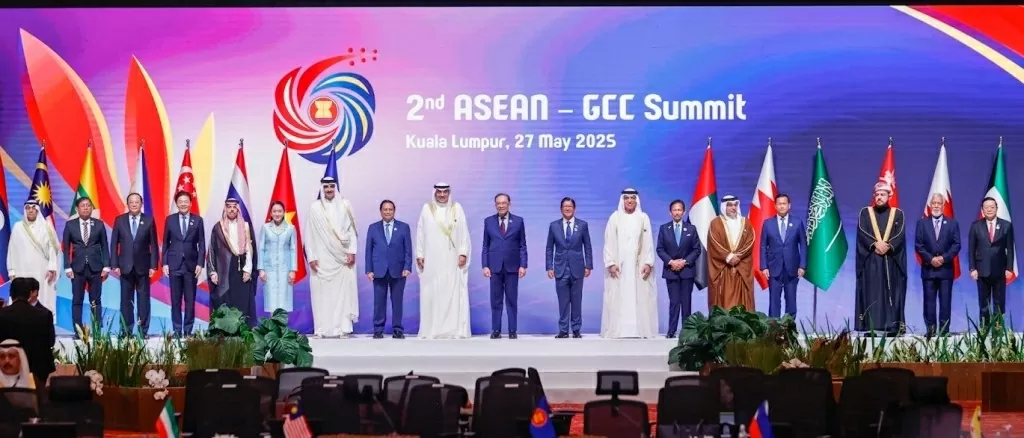 |
| Prime Minister Pham Minh Chinh's visit to Kuwait: Prime Minister Pham Minh Chinh and ASEAN-GCC leaders attend the ASEAN-GCC Summit on May 27 in Malaysia. (Photo: Quang Hoa) |
How does the Ambassador assess the significance and key focuses of Prime Minister Pham Minh Chinh's visit to Kuwait as the two countries approach the 50th anniversary of diplomatic relations (1976-2026)?
Prime Minister Pham Minh Chinh's visit to Kuwait holds immense significance, not only for the bilateral relations between Vietnam and Kuwait but also in affirming Vietnam's policy of fostering relations with the region.
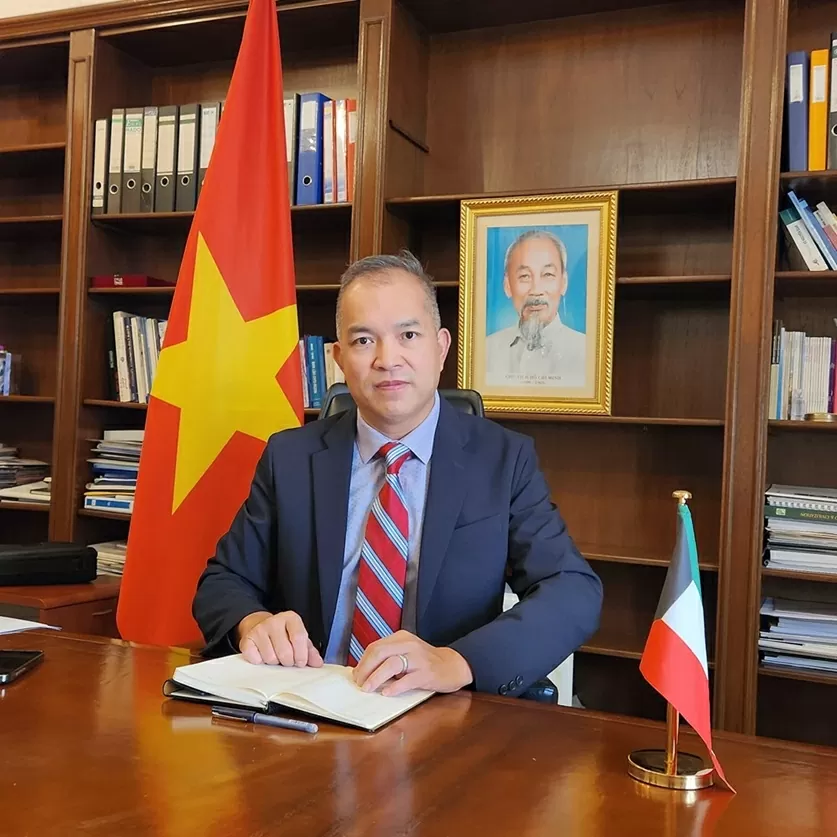 |
| Vietnamese Ambassador to Kuwait Nguyen Duc Thang. (Source: Vietnamese Embassy in Kuwait) |
This diplomatic activity follows Prime Minister Pham Minh Chinh's visit to three Gulf countries in 2024, demonstrating Vietnam's determination to implement its foreign policy strategy for the Middle East, promptly realizing Resolution 59-NQ/TW on international integration in the new context.
Through high-level diplomatic activities, we continue to strengthen friendly relations, enhance political trust, expand markets, and explore potential areas of cooperation with Kuwait.
This is the first visit to Kuwait by a high-ranking Vietnamese leader in 16 years, coinciding with the two countries preparing to celebrate the 50th anniversary of diplomatic relations in January 2026.
It can be affirmed that this is a ripe moment for the two countries to consolidate and enhance bilateral relations, elevating them to new heights, contributing practically to the development goals of both nations.
For Vietnam, the goal is to become a modern industrialized developing country and be among the top 30 economies in the world by 2030, striving to become a developed, high-income, prosperous, and happy nation by 2045. For Kuwait, the "Vision 2035" aims to make the country a leading financial and commercial hub in the region and the world.
Moreover, Prime Minister Pham Minh Chinh's visit to Kuwait comes as the country assumes the role of President of the Gulf Cooperation Council (GCC). Recently, Kuwait has adjusted its policies to pay more attention to Asian countries, including ASEAN members.
Kuwait proactively signed the Treaty of Amity and Cooperation in Southeast Asia (TAC) in September 2023. In the recent ASEAN-GCC summits (October 2023 and May 2025), Kuwait played an active role, participating in many important issues in cooperation between the blocs.
With its full potential and position, Vietnam can join Kuwait in acting as a bridge to promote inter-regional cooperation between ASEAN and GCC. Simultaneously, we hope Kuwait will leverage its role in initiating negotiations for a free trade agreement (FTA) between Vietnam and GCC within 2025.
During the visit, Prime Minister Pham Minh Chinh will engage in numerous important activities, including meetings with Emir Sheikh Meshal Al-Ahmad Al-Jaber Al-Sabah and Crown Prince Sheikh Sabah Al-Khaled Al-Hamad Al-Sabah, official talks with Kuwait's Prime Minister Sheikh Ahmad Al-Abdullah Al-Ahmad Al-Sabah, and meetings with several ministers and leaders of key economic corporations.
Both sides will review the progress made in nearly half a century of friendly and cooperative relations and discuss, agree on directions, measures, and define a broader framework for cooperation in the coming time.
The highlight of the visit will be Prime Minister Pham Minh Chinh's policy speech at the Kuwait Diplomatic Academy, a traditional academic institution meeting the demands for developing diplomatic human resources in Kuwait, commensurate with its stature in the Arab region and the world.
Through the speech, the Prime Minister will convey a strong message about Vietnam's steady progress in socio-economic development, while highlighting Vietnam's policies and priorities in fostering multifaceted relations with the Middle East in general and with Kuwait in particular, within a long-term strategic vision.
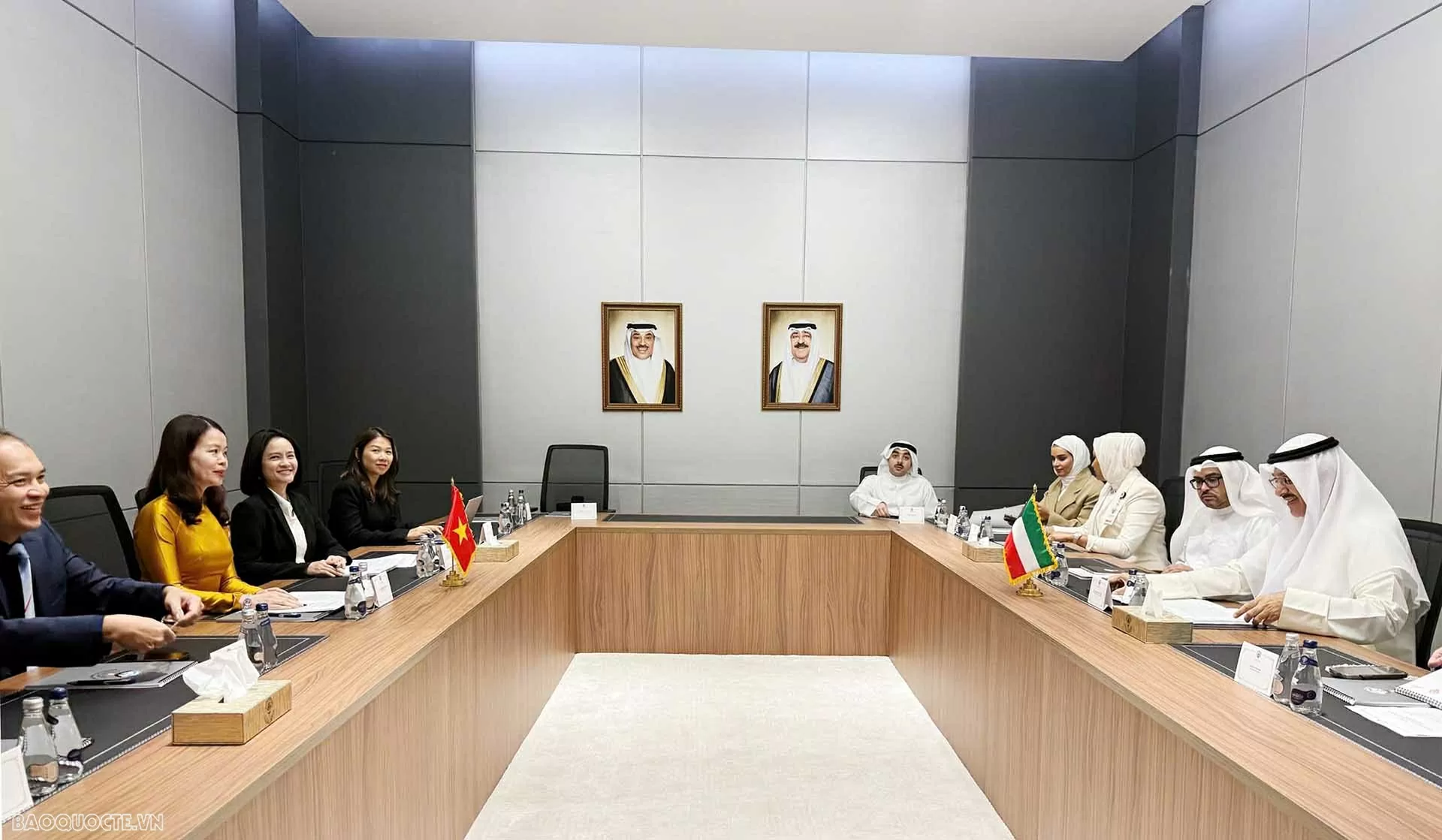 |
| Deputy Foreign Minister Nguyen Minh Hang holds political consultations with Assistant Foreign Minister of Kuwait Sameeh Issa Gohar Hayat on September 22. |
Looking back on nearly five decades of bilateral relations, what are the most notable highlights in the cooperation between the two countries, according to the Ambassador?
Investment and oil trade are standout features in the current relationship between the two countries. The Kuwait Investment Authority (KIA) manages a sovereign fund with the fourth-largest total capital globally, approximately $1.065 trillion, playing a crucial role in overseas investment allocation.
As of now, Kuwait is the Middle Eastern country with the largest total investment capital in Vietnam, most notably the Nghi Son Refinery and Petrochemical Complex project, with a capital contribution of up to $3.5 billion. The stable oil supply from Kuwait has enabled the Nghi Son Refinery to contribute up to 35% of the domestic fuel consumption.
Additionally, the two countries maintain other areas of cooperation that have yielded positive results. The Kuwait Fund for Arab Economic Development has supported essential infrastructure projects in Vietnam over the years, with a total value of $182 million through 15 projects in various provinces.
In local cooperation, there are existing agreements connecting Ho Chi Minh City with Ahmadi Province, Thanh Hoa Province with Farwaniya Province, promoting delegation exchanges, trade promotion, and people-to-people exchanges.
In education and training, the Kuwaiti government has facilitated scholarships for many Vietnamese students to study Arabic at Kuwait University annually since 2013.
After 50 years of diplomatic relations, Vietnam and Kuwait are witnessing open opportunities to develop potential-rich areas such as energy security, food security, investment in financial centers and technology infrastructure, and tourism cooperation.
In the context of a global shift towards renewable energy, Vietnam and Kuwait have numerous opportunities to collaborate in developing green and clean energy, meeting each country's international goals and commitments.
Moreover, Vietnam is confident as one of the world's leading agricultural and seafood exporters, capable of providing a diverse, stable, long-term, and Halal-compliant product supply to the Kuwaiti market. Both governments are also advancing digital transformation, considering data construction and AI applications as crucial foundations for each nation's upcoming development phase.
Vietnam and Kuwait recently celebrated the 30th anniversary of the Bilateral Trade Agreement (May 3, 1995 - May 3, 2025); the total import-export turnover between Vietnam and Kuwait in 2024 reached $7.3 billion – the highest bilateral trade level for Vietnam in the Middle East. How do these milestones, according to the Ambassador, motivate Vietnam-Kuwait economic cooperation in the new phase?
After three decades, Vietnam-Kuwait trade cooperation has made significant progress in both scale and quality. It can be affirmed that oil and gas have been the most crucial components contributing to bilateral trade activities between the two countries to date.
The large oil imports from Kuwait aim to ensure a stable supply for the Nghi Son Refinery's operations. Oil and energy cooperation between the two countries can now be expanded in many new directions based on the project's foundation. Vietnam has all the conditions to become the largest oil storage and distribution center in Southeast Asia, helping Kuwait gain broader access to regional markets.
Additionally, our exports to the Kuwaiti market have become increasingly diverse and of higher value in recent years, including agricultural and aquatic products, fruits, wooden furniture, machinery, and electronic products. Vietnamese exports consistently receive positive feedback from consumers in Kuwait, where the local population has one of the highest incomes globally.
In the future, the two countries can also promote cooperation in other major economic projects, such as establishing new financial centers in the region.
Vietnam can serve as a gateway for Kuwait to expand investments into Southeast Asia, while Kuwait acts as a strategic partner helping Vietnam access the Middle Eastern and neighboring markets.
The results from the Bilateral Trade Agreement are creating additional momentum for implementing other agreements and documents in various fields such as finance, agriculture, aviation, culture, and tourism. This forms an essential foundation for Vietnam and Kuwait to build a strong, friendly cooperative relationship, further connecting the people of both countries in the future.
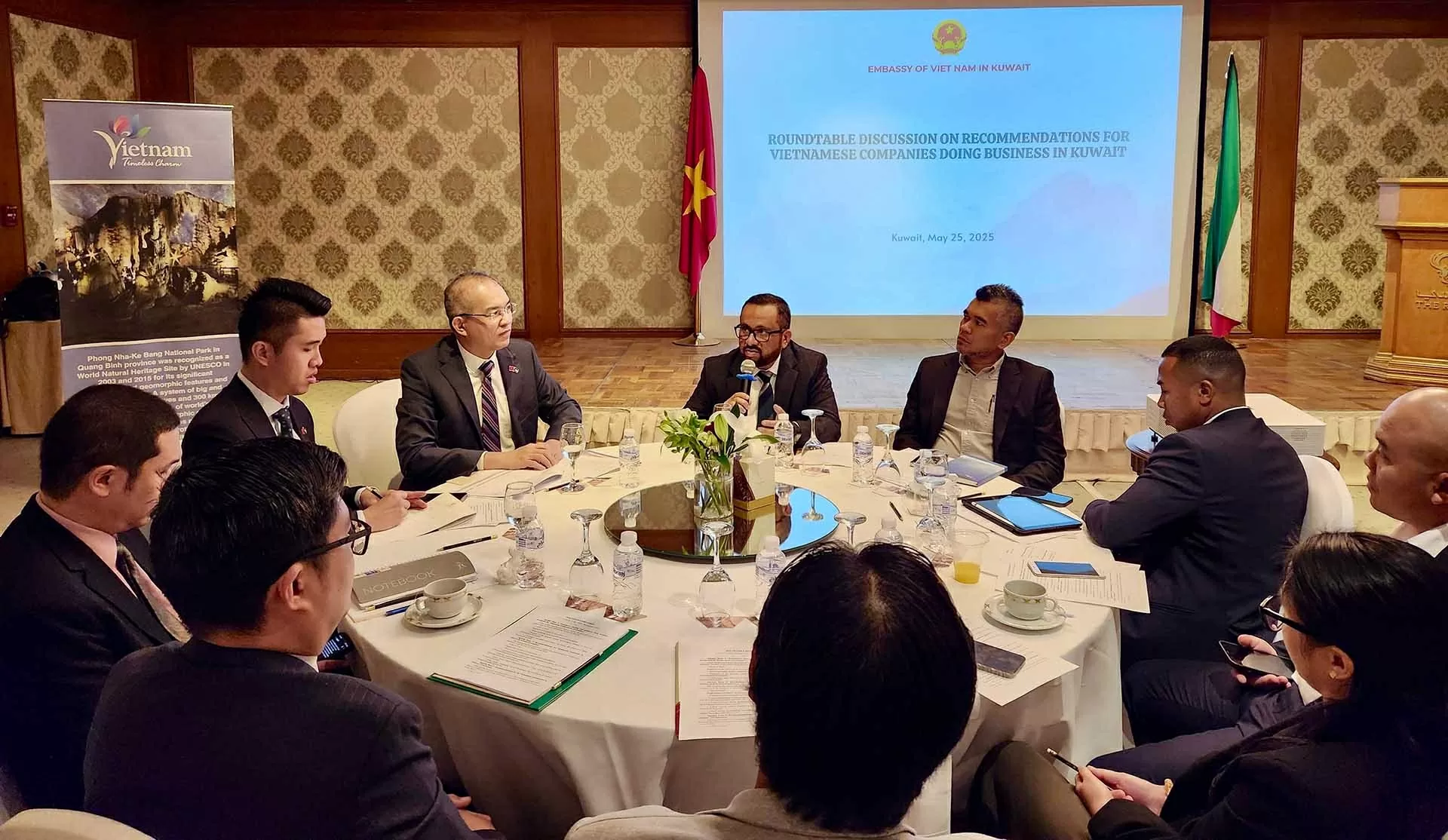 |
| Ambassador Nguyen Duc Thang listens to Kuwaiti businesses share market entry experiences during the 30th anniversary of the Vietnam-Kuwait Trade Agreement on May 25. (Source: Vietnamese Embassy in Kuwait) |
The Southeast Asia-Gulf connection is increasingly realized through strong cooperation between ASEAN and the Gulf Cooperation Council (GCC) in recent times. What significance do these multilateral connections hold for Vietnam-Kuwait cooperation, and how can Vietnam-Kuwait cooperation contribute to linking the two regions, Ambassador?
Vietnam and Kuwait have consistently maintained a tradition of supporting each other at international forums, including important mechanisms and committees at the United Nations where both countries are members. On a multilateral cooperation level, the two countries can benefit significantly from the Southeast Asia-Gulf connection being promoted recently.
The ASEAN-GCC cooperation process has become more defined through two summits in the past three years. Both sides have outlined an Action Plan for the next five years, yet there is a lack of a leading nation to coordinate from each bloc.
As one of the nine ASEAN countries with a permanent representative office in Kuwait, Vietnam currently plays an active role in various activities to promote practical cooperation and enhance the image of Southeast Asia to Kuwaiti officials, scholars, and citizens. Vietnam is also leveraging Kuwait's support – the current GCC President – to push for initiating negotiations for a Vietnam-GCC Free Trade Agreement.
In a world of many changes, the coordination between Vietnam and Kuwait in promoting multilateralism, peace, sustainable development, and active participation in humanitarian missions will enhance both countries' roles on the international stage.
More importantly, both countries are ready to become bridges promoting cooperation between ASEAN and GCC on both political and economic fronts, opening a promising linkage process between the two regions in the future.
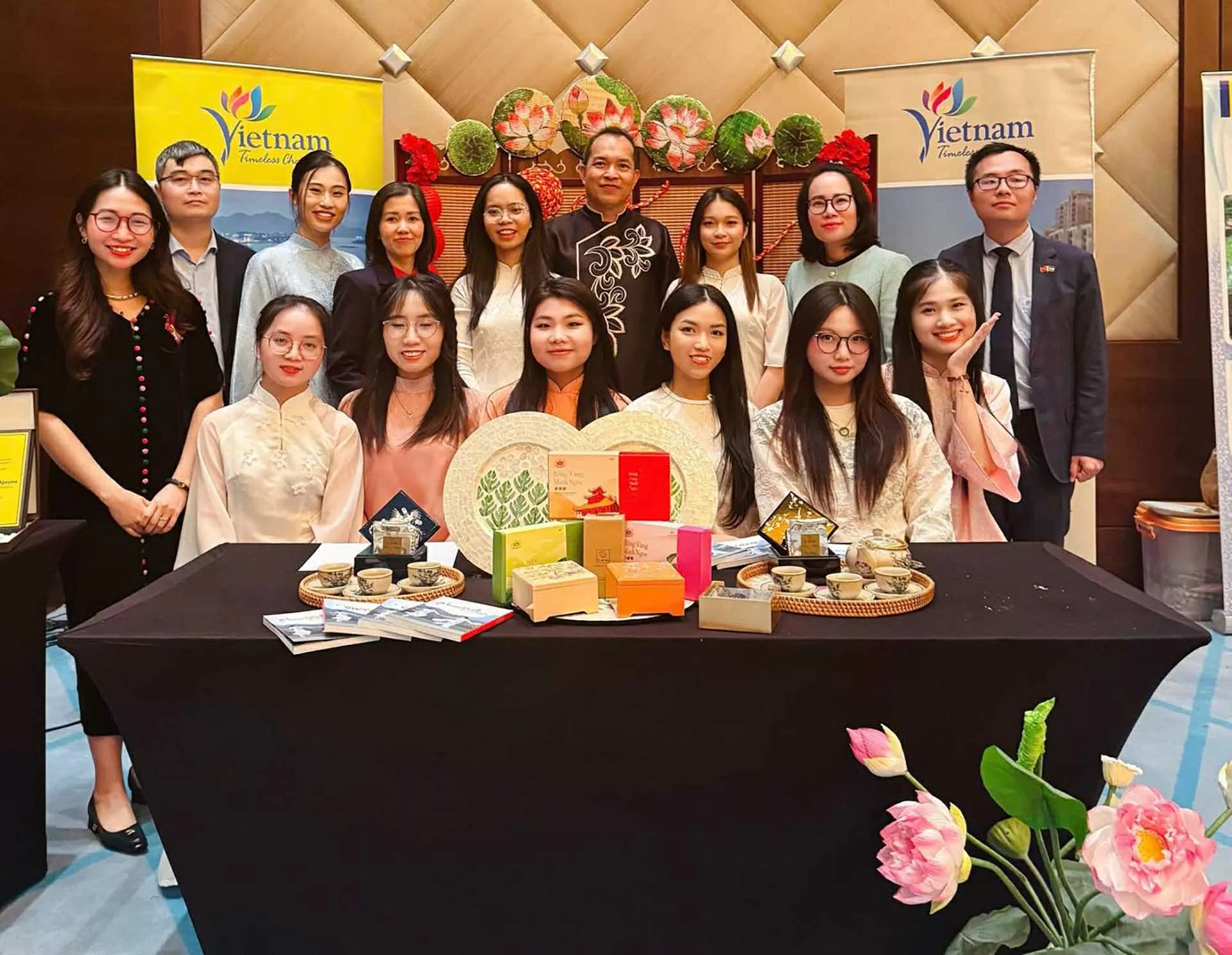 |
| The Vietnamese Embassy co-hosts an event promoting ASEAN countries' culture and tourism in Kuwait on May 18. (Source: Vietnamese Embassy in Kuwait) |
Could the Ambassador share the plans for 2026, marking the 50th anniversary of bilateral relations?
The 50th anniversary of diplomatic relations coincides with a time when Vietnam-Kuwait relations are being established at a higher, more comprehensive framework, requiring efforts from both sides.
The Vietnamese Embassy in Kuwait will prioritize implementing practical and effective activities and measures next year to set the stage for a new phase of cooperation between the two countries.
First is to immediately implement the results and commitments achieved during Prime Minister Pham Minh Chinh's official visit to Kuwait this time.
We must quickly develop action plans for each cooperation field with a long-term, strategic vision to exploit each country's potential and strengths. Specifically, priority should be given to promoting cooperation with Kuwait in oil and gas, energy, investment, food security, digital transformation, civil infrastructure construction, and tourism.
The embassy will continue to prioritize close coordination between the two foreign ministries to maintain and promote high-level delegation exchanges, not only through official visits but also at forums and multilateral events.
Through regular friendly interactions between the leaders of the two countries in various forms, both sides will strengthen trust and establish effective close-knit channels between high-level leaders, leading to ministries, sectors, and functional agencies to enhance coordination on important issues.
The embassy will also actively promote the two sides to hold the Intergovernmental Committee on Economic, Trade, and Scientific and Technical Cooperation, Foreign Ministry-level Political Consultations, and delegation exchanges between ministries, sectors, and localities of the two countries more frequently and substantively.
Through this, both sides can review and assess the progress of work, promptly address arising obstacles. In fact, Kuwait's traditional culture values direct work and friendly relations as the first basis for long-term cooperation.
After half a century, the Vietnam-Kuwait friendship needs to be further nurtured, especially through local and people-to-people connections via cultural diplomacy activities. Increasingly, more Kuwaitis choose Vietnam for leisure, exploring nature, cuisine, and Eastern culture.
The embassy will focus on implementing cultural promotion activities, tourism promotion, and tapping into the significant potential of Kuwaiti tourists in particular and the Middle East in general.
The political commitment between the two countries, close and synchronized coordination across levels and sectors, will be the key for Vietnam and Kuwait to overcome difficulties and differences, maximize each side's opportunities and potential, and resolutely bring bilateral relations to a new chapter of strategic and sustainable development.
Thank you very much, Ambassador!