



Prime Minister Pham Minh Chinh in dialogue with WEF: Asserting Vietnam's aspiration for green and digital transformation
WVR - On the afternoon of November 26, within the framework of the Autumn Economic Forum 2025, speaking in a “60 Minutes with the Prime Minister” program, Prime Minister Pham Minh Chinh had a high-level policy dialogue with World Economic Forum (WEF) Managing Director Stephan Mergenthaler, under the theme "Science and Technology Shaping Vietnam in the Era of Growth".
Latest
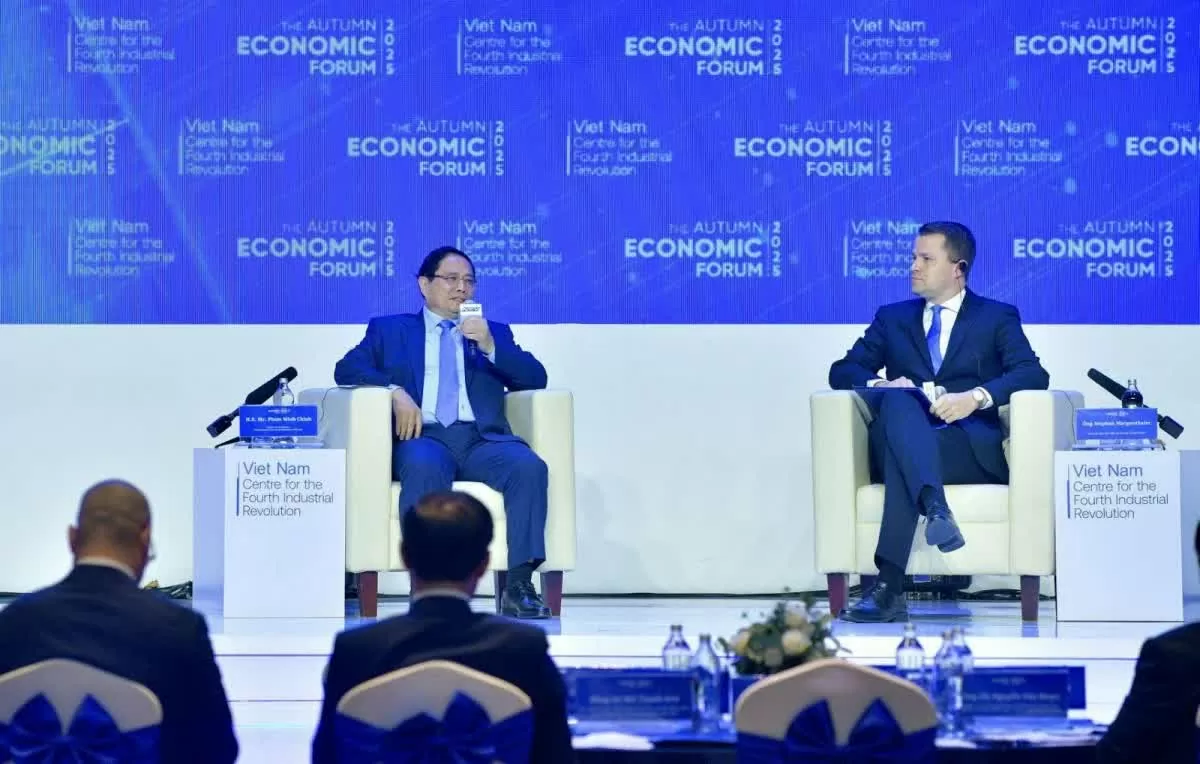 |
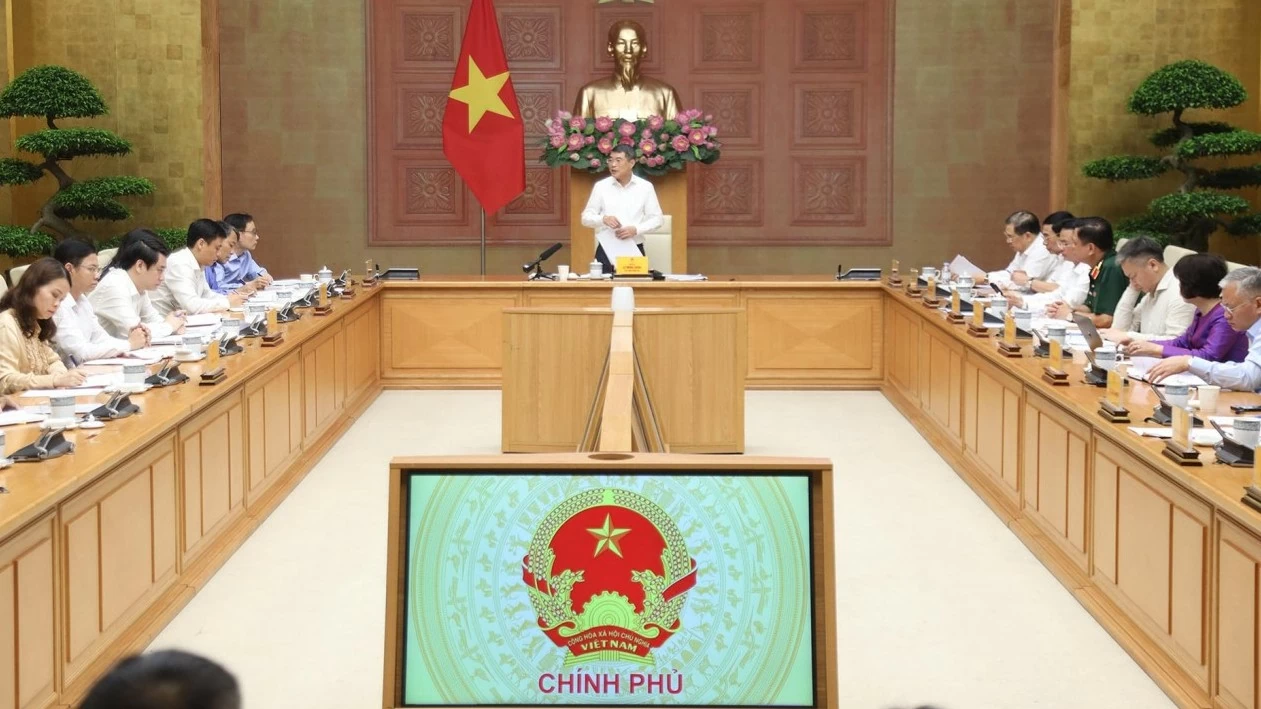
| Prime Minister Pham Minh Chinh attends the high-level dialogue on November 26. (Source: Organizing Board) |
Leaving the past behind, looking to the future
Responding to WEF Managing Director Stefan Mergenthaler's question on past lessons for future orientation and key decisions to realize Vietnam's vision of becoming a high-income country by 2045, Prime Minister Pham Minh Chinh shared a profound philosophy: “No one lives in the past, but we must not forget it, and from the past, we must draw lessons to build a better future.”
Recalling Vietnam's challenging historical journey: 80 years of independence, 50 years of national reunification, including 40 years of war and 30 years of embargo (from 1964 to 1994); the Prime Minister emphasized the harshness and lingering consequences of war that Vietnam endured; yet the S-shaped country chose to “leave the past behind, respect differences, and leverage commonalities to move forward.”
“During the war, we fought on the battlefield but also engaged in negotiations to bring peace, independence, and self-reliance to the nation. We are ready to work with WEF and partners to promote dialogue in conflict areas, where there is suspicion and lack of trust, to bring peace, cooperation, and development to all nations, ensuring no one is left behind,” the Prime Minister stated.
Regarding economic development, Prime Minister Pham Minh Chinh detailed three decisive factors: Agriculture as the foundation that helped Vietnam transition from a poor, backward, food-deficient nation post-war to one that is food-secure, successfully reducing poverty and emerging as a developing country.
Industry serves as the driving force that has propelled Vietnam to become a developing country with upper-middle-income status. Science and technology are identified as the crucial keys to the future. The Prime Minister asserted that only science and technology can help Vietnam achieve its goal of becoming a developed, high-income nation by 2045.
Emphasizing the need to “think big, act boldly,” the Prime Minister affirmed that the Party and State have no other goal than national sovereignty and ensuring a prosperous, happy life for the people, both materially and spiritually.
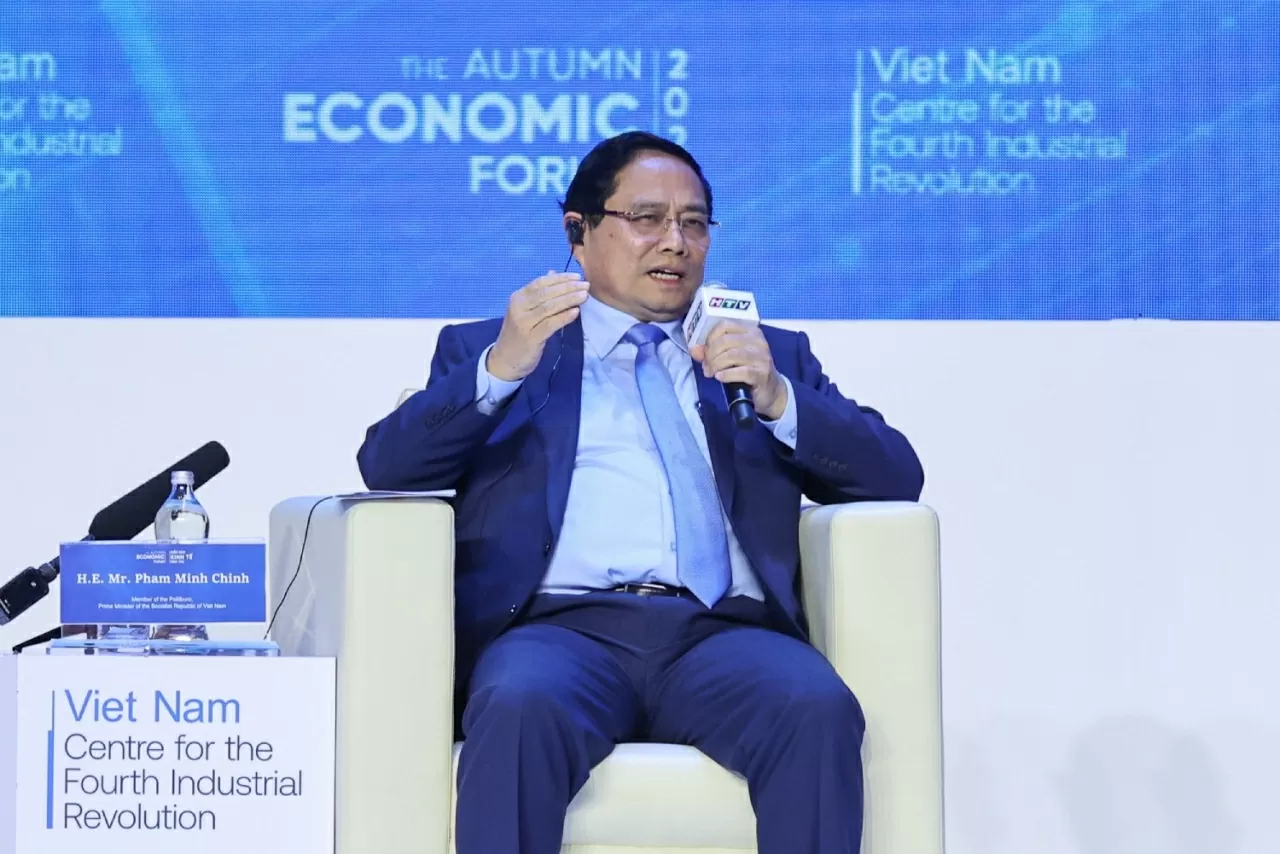 |
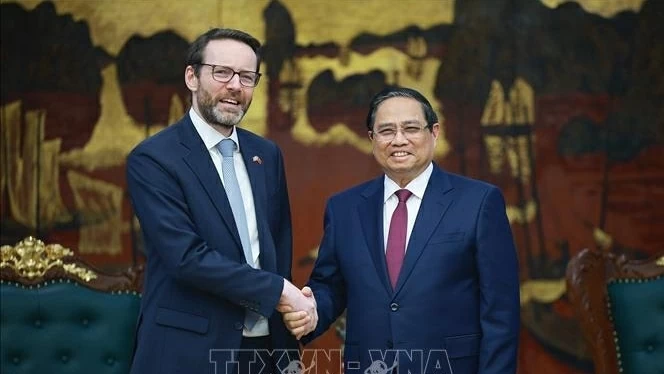
| Prime Minister Pham Minh Chinh asserts that Vietnam chooses to “leave the past behind, respect differences, and leverage shared common ground to move forward.” (Source: VGP) |
Turning challenges into opportunities in a turbulent world
When Mr. Mergenthaler requested a deeper analysis of factors enhancing Vietnam's resilience in a volatile world, Prime Minister Pham Minh Chinh observed that the world faces unprecedented risks as “politics polarize, economies fragment, institutions divide, and development diverges.”
The Prime Minister outlined several current challenges: Slowing global economic growth, protectionism disrupting supply chains, and non-traditional security issues. Domestically, the past year witnessed severe natural disasters, with rainfall reaching up to 1,700 mm/day in some areas, an unprecedented level. Vietnam also confronts an aging population, resource depletion, and the potential impact of AI on employment.
However, from these challenges, the Prime Minister asserted that “the greater the pressure, the greater the effort”; he believes difficulties are a catalyst for humanity to strive higher. He highlighted three optimistic points: (i) The trend of peace, cooperation, and development remains dominant; (ii) digital transformation, green transition, and creative economy are emerging as new drivers, acting as a “connecting thread” among nations; (iii) efforts to enhance economic linkages among countries are increasing to compensate for shortages.
Notably, regarding Vietnam's role on the international stage, the Prime Minister emphasized that the S-shaped country is committed to an independent, self-reliant, diversified, and multilateral foreign policy, being a good friend and reliable partner to all countries worldwide, and a responsible member of the international community, aiming for peace, cooperation, and development.
“Therefore, we are ready to serve as a bridge for countries to engage in dialogue. We are prepared to build international and regional dialogue programs,” the Prime Minister pointed out.
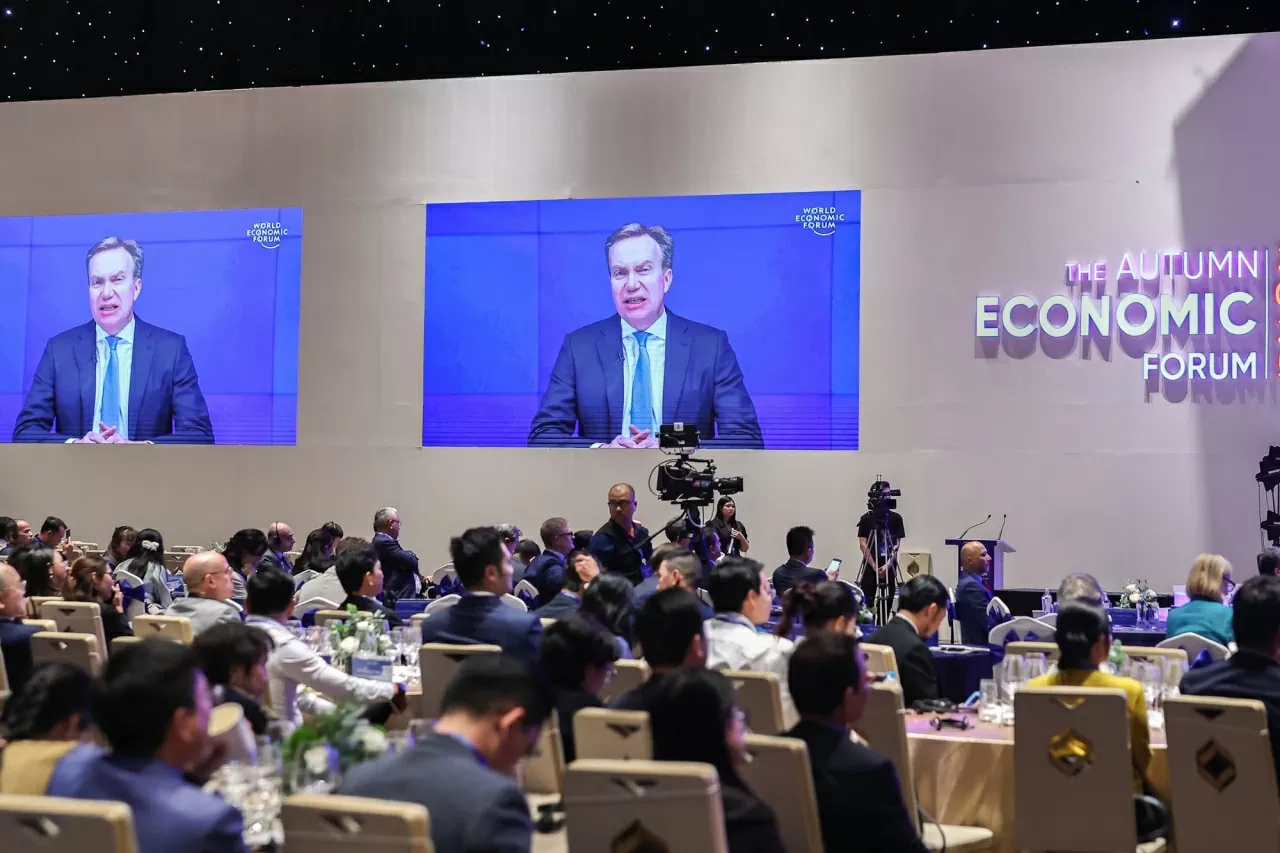 |
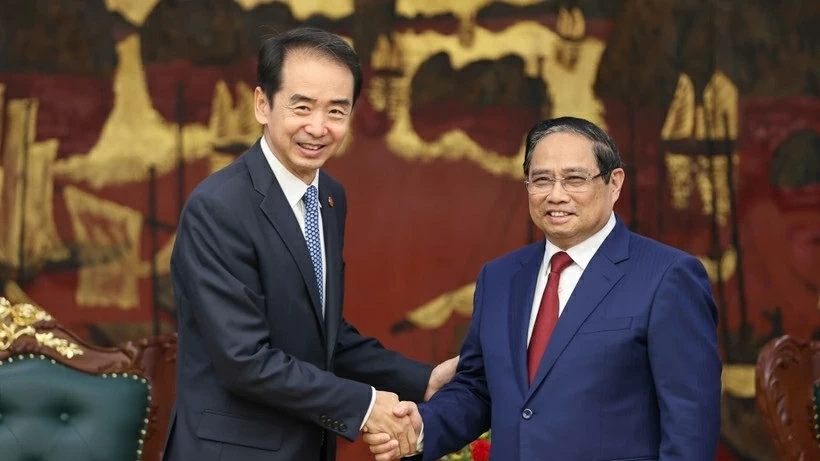
| WEF Executive Chairman Borge Brende delivers a recorded speech on WEF's strategic direction in promoting global dual transformation and enhancing cooperation with countries, including strategic partnerships with Vietnam. (Source: VGP) |
Green and digital transformation: A close relationship
When asked to share about the role of dual transformation (digital and green transformation) for Vietnam, Prime Minister Pham Minh Chinh emphasized that this is an objective requirement, a strategic choice, and a top priority for Vietnam in its rapid and sustainable development process; digitization and greening are two parallel facets of a process, closely related and mutually reinforcing.
Accordingly, to transform, it is first necessary to raise awareness of the position, role, and importance of dual transformation; then translate it into action, specific, feasible, and effective solutions comprising five groups. These include completing the institutional framework, with institutions leading the way—Vietnam is striving to turn institutions from bottlenecks into national competitive advantages; developing green and digital infrastructure, notably energy infrastructure, including green power sources, green power transmission, green power distribution, green power usage, and green power pricing; building accurate, sufficient, clean, and live databases; training human resources to meet transformation needs; and applying smart governance.
Simultaneously, there must be mechanisms and policies to mobilize resources, promote public-private partnerships, effectively exploit state resources, with state capital playing a leading, activating role, and mobilize all social resources, non-state resources, business resources, and people's resources; mobilize external resources, with internal resources being fundamental, strategic, long-term, and decisive, and external resources being important and breakthrough. Regarding external resources, the Prime Minister specified cooperation in attracting capital, technology transfer, human resource training, and governance...
Vietnam is vigorously implementing three strategic breakthroughs in institutions, infrastructure, and human resources. Accordingly, institutional breakthroughs facilitate people and businesses, reducing compliance costs; modern infrastructure reduces input costs for businesses and integrates into the global value chain; and high-quality human resource training meets transformation needs.
ASEAN Vision and three strategic breakthroughs
Regarding regional vision, Prime Minister Pham Minh Chinh affirmed that Vietnam's development is closely linked with ASEAN—a dynamic development region with the motto of unity and diversity. The ASEAN vision is the vision of the era, which is rapid and sustainable development, aiming to become a developed region by 2045. To achieve this, unity and consensus within ASEAN are paramount, and for development, stability is essential, thus conflicts must end.
Moreover, according to the Prime Minister, cooperation is needed to exploit the unique potential, outstanding opportunities, and competitive advantages of each nation and turn them into the advantages and opportunities of the entire region.
Furthermore, ASEAN needs the solidarity and support of the international community and businesses, and must strengthen cooperation with other countries, regional, and international organizations. In the spirit of a facilitating state, harmonizing institutions between national, regional, and global levels, with businesses taking the lead, public-private partnerships, national development, and benefits for people and businesses. From there, build a prosperous, peaceful, and thriving ASEAN region, contributing to global peace and development.
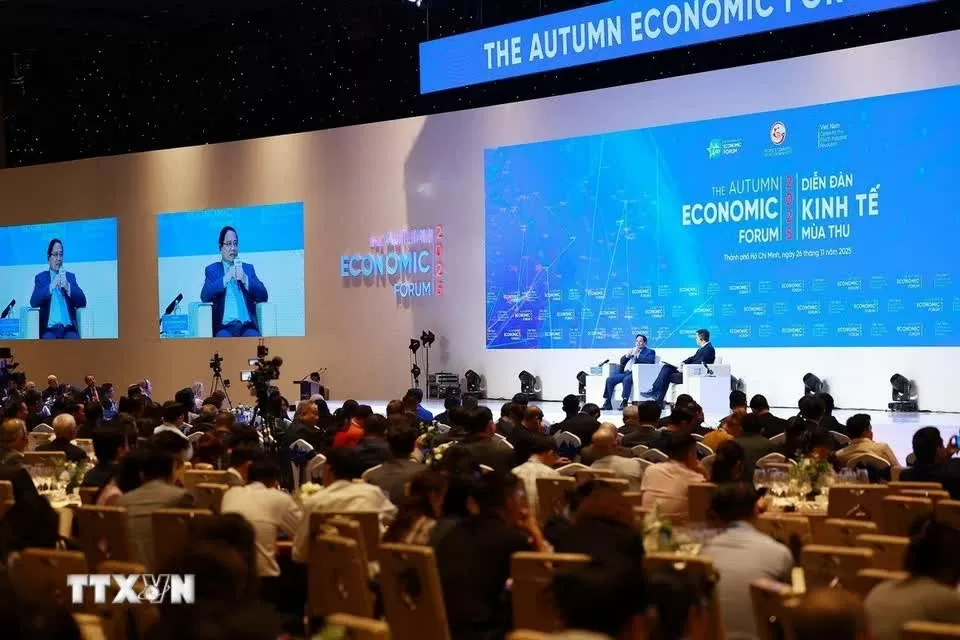 |
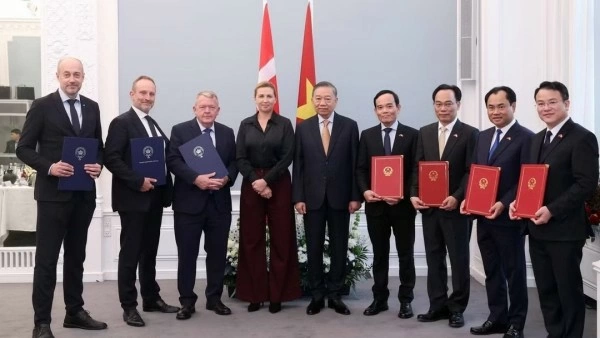
| Overview of the dialogue session. (Source: TTXVN) |
The driving force of dual transformation
In response to a question about the role of small and medium enterprises (SMEs) and innovative startups from WEF's Executive Director, Prime Minister Pham Minh Chinh affirmed that SMEs are a crucial component of the economy, accounting for 95-97% of all enterprises in Vietnam, making significant contributions to GDP, and playing a particularly important role in job creation and social security.
Specifically, referring to Resolution 68 on private economic development, the Prime Minister highlighted that SMEs need a conducive institutional environment, seamless infrastructure, and policies for human resource training and management development. Besides approximately 1 million enterprises, Vietnam also has about 5 million business households, which should be supported to develop into enterprises.
Regarding innovative startups, the Prime Minister noted that Vietnam has many programs, movements, activities, and policies encouraging this among students, supporting startup activities. Vietnamese people in general and students, in particular, are passionate about innovation and eager to contribute to the nation.
“From the root of patriotism, we encourage, support, and train to make innovative startups a movement and trend, and we hope WEF will contribute to this, especially in emerging industries like artificial intelligence, quantum computing, semiconductors... The state must facilitate, and the youth must pioneer in entrepreneurship,” the Prime Minister stated.
Empowering the youth to innovate
Regarding preparing the young workforce for AI tools, the Prime Minister noted that the nation's movement requires everyone's participation. Under the leadership of the Communist Party of Vietnam, in preparation for the 14th National Party Congress, Vietnam has established a foundation of policies and guidelines in strategic, key, and important areas to enter a new era of prosperous, civilized, and happy development, advancing towards socialism. In all these policies, people remain the center, the subject, the goal, the resource, and the driving force for development, including the younger generation.
Prime Minister Pham Minh Chinh emphasized the need to help the younger generation raise awareness about green and digital transformation; create opportunities for them through institutions and legal frameworks to contribute and innovate, leading in digital transformation; provide knowledge foundations and enhance their skills through education and training; encourage and support the younger generation in entrepreneurship regarding taxes, fees, interest rates...; support in training and recruitment to attract talented and capable individuals; help connect with global youth, sharing experiences of successes and failures...
“We must both raise awareness for the young, make them confident, equip them with knowledge, support resources, and create space for them to innovate and contribute fully, with a spirit of accepting risks, protecting them when they encounter risks, so that if they face risks, they do not suffer too much impact; the spirit is harmonious benefits, shared risks,” the Prime Minister stated.
Finally, expressing gratitude to WEF and Managing Director Stefan Mergenthaler, Prime Minister Pham Minh Chinh concluded with a powerful message: “Since we have 'partnered' with each other, we must be more determined, make greater efforts, and act more decisively. Let us share the vision, share the actions, and share the results. Resources originate from thinking, motivation comes from innovation, and strength comes from the people and businesses.”