



Post-CEF III Action Framework Announced, Measuring Business Productivity and Competitiveness as Key Outcomes
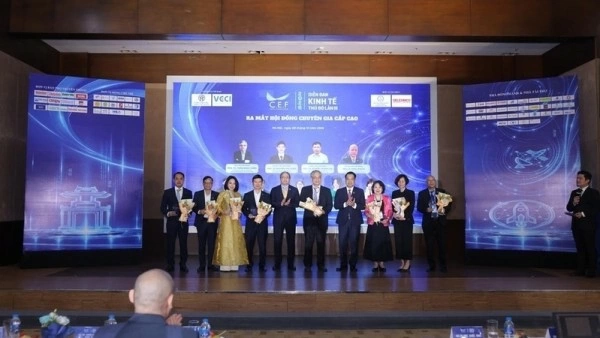
On October 8, at the 3rd Capital Economic Forum (CEF III), Prof. Dr. Mac Quoc Anh announced the Post-CEF III Action Framework.
Latest
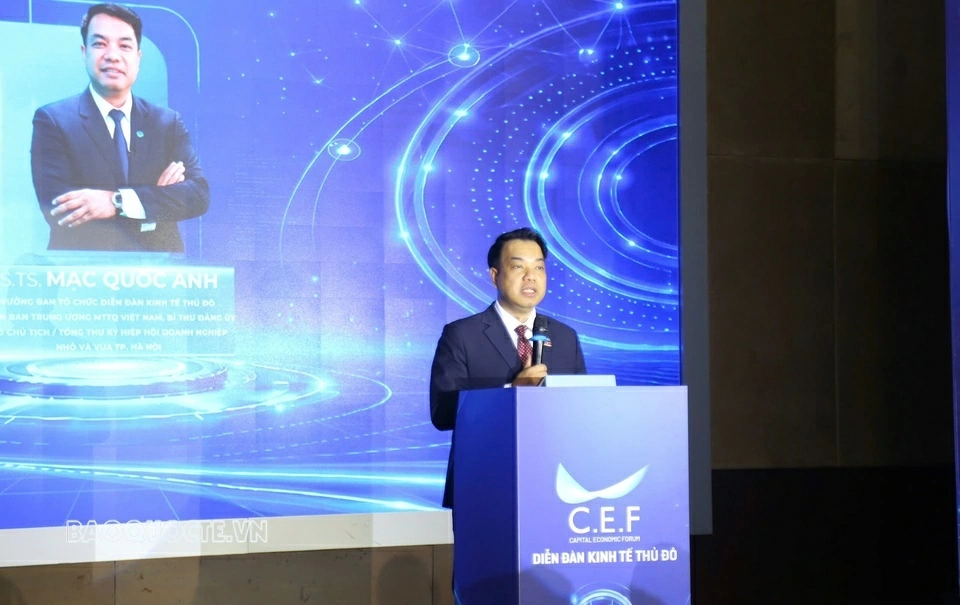 |
| Prof. Dr. Mac Quoc Anh stated that after serious and focused discussions, CEF III has completed its proposed agenda. (Photo: Trung Anh) |
For CEF III to Create Practical Changes
According to Prof. Dr. Mac Quoc Anh, Vice Chairman and General Secretary of the Hanoi Association of Small and Medium Enterprises (HANOISME), Head of the CEF III Organising Committee, the Post-Forum Action Framework aims to translate opinions and recommendations into specific tasks, using productivity, innovation, and business competitiveness as measures of success. Specifically, it includes the following five components:
First, identify the right priority issues. The Senior Expert Council, in collaboration with 18 co-hosting units, selects 5-7 bottlenecks from reports, dialogues, and business needs. Each issue must clarify capacity gaps, objectives, solutions, and outputs; inheriting technology, market, capital, and value chain content from CEF I and CEF II.
Second, transform needs into cooperation and pilot projects. Connect businesses, training institutions, and experts to implement recruitment, training, and retraining according to job requirements; develop management, finance, M&A, technical, production, retail, and value chain personnel. Choose training models based on orders, shared experts; expand international cooperation to meet needs. Pilots are only implemented when there is an agreed-upon unit and resources.
Third, refine recommendations and scientific and technological tasks. Compile scientific, technological, and innovation proposals linked to major issues of the capital; identify objectives, products, application potential, and coordinating units. Classify recommendations, forward to competent authorities for consideration; do not equate proposals at the Forum with approved or funded tasks.
Fourth, clearly assign responsibilities. HANOISME serves as the coordination hub; the Secretariat manages the list and tracks progress; the Expert Council provides advice and critique; co-hosting units connect with and monitor businesses; businesses and training institutions execute agreed-upon tasks. Each task has a person in charge, a coordinating unit, a deadline, and a verifiable product.
Fifth, monitor results within 100 days. Within 7 days post-Forum, complete minutes, recommendation reports, and task confirmations. At 30 days: standardise needs, connect partners, select pilots; 60 days: review implementation, address obstacles; 100 days: evaluate results, propose maintenance or expansion. Results must be confirmed by businesses, reflected in applied skills, productivity, quality, processing time, and problem-solving effectiveness.
The Vice Chairman and General Secretary of HANOISME emphasised: “The Organising Committee urges all parties to collaborate in implementation, honestly update progress and results, so that CEF III brings practical changes to the capital's business community.”
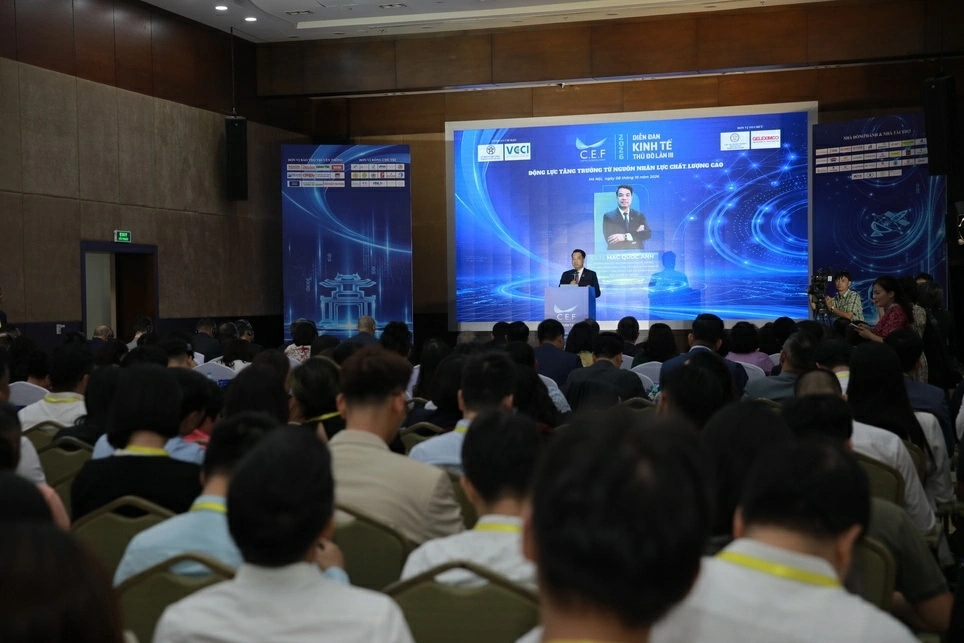 |
| After CEF III, the Organising Committee and the Senior Expert Council will continue to compile opinions, survey data, and recommendations presented at the Forum to complete the Action Framework. |
The Forum Must Conclude with Actions, Not Just Messages
In his closing remarks, Prof. Dr. Mac Quoc Anh stated that after serious and focused discussions, CEF III has completed its proposed agenda.
CEF III began with a very specific question: In the context of Hanoi aiming for double-digit growth, where are the capital's businesses lacking in productivity, technology, capital, markets, chain linkages, and human resources, and what human capacities are needed to overcome these weaknesses and achieve substantial growth?
Through reports on Hanoi, thematic reports, and expert synthesis sessions, the human resource narrative has been properly placed in relation to business growth capacity.
The key consensus is that high-quality human resources cannot be reduced to the number of highly educated workers or management staff. Quality must be measured by the ability to generate productivity, innovation, competitiveness, technology and capital absorption, market expansion, product quality enhancement, and deeper participation in the value chain.
“Today's thematic groups show that businesses need a comprehensive capacity system. This includes recruitment and team development capabilities linked to job requirements; high-tech, AI, data, and automation capabilities; leadership, management, finance, investment, and M&A capabilities; market, e-commerce, export, and logistics capabilities; and technical, production, retail, and value chain operations capabilities.
These groups are not isolated, as a business can only grow sustainably when people can coordinate resources into tangible business results,” Prof. Dr. Mac Quoc Anh emphasised.
Simultaneously, the expert synthesis session was designed not to repeat discussions but to focus on connecting issues into a solution system.
The overall spirit is to move from identifying shortages to prioritising tasks; from training based on supply capabilities to training based on actual business needs; from talking about human resources to measuring human resource effectiveness through productivity, quality, sales, capital absorption capacity, and market and value chain participation.
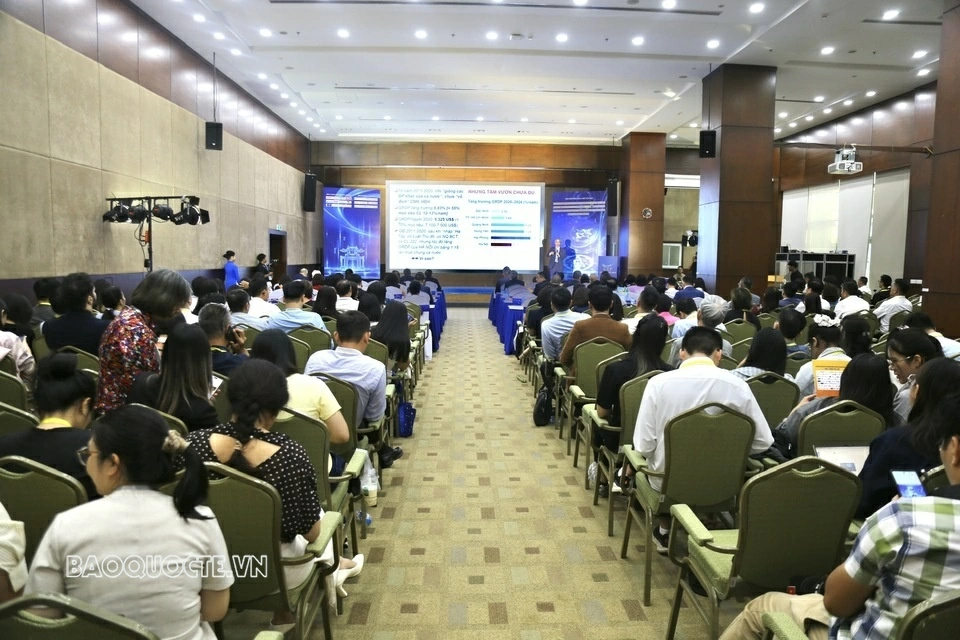 |
| CEF will become a regular working mechanism capable of creating specific programs for the business community. (Photo: Trung Anh) |
After CEF III, the Organising Committee and the Senior Expert Council will continue to compile opinions, survey data, and recommendations presented at the Forum to complete the Action Framework.
For HANOISME, in its role as the organising and coordinating hub, the Association will define its responsibility beyond organising an event.
The Association will continue to connect business needs with experts, training institutions, and co-hosting units; compile skill and capacity gaps; promote training, retraining models, and the use of experts linked to specific business orders; and monitor the potential for proposals to translate into practical results.
“We hope the Senior Expert Council and 18 co-hosting units will continue to accompany us not only today but in the post-Forum implementation phase.
Each unit has its strengths, network, and different business groups; if these resources are connected according to priority issues, CEF will become a regular working mechanism capable of creating specific programs for the business community.
The spirit of concluding CEF III is very clear: The Forum must conclude with actions, not just messages. This is also the Organising Committee's commitment to continue pursuing the agreed-upon conclusions,” Prof. Dr Mac Quoc Anh affirmed.
| RELATED NEWS | |
 | CEF III: Building stronger businesses for global competitiveness |
| Vietnam develops an integrated framework for sustainable use of marine and ocean resources: Philippine Ambassador |