





Positioning Vietnam’s tourism in the era of integration: From local treasures to global connections
WVR - Marking its 65th anniversary, Vietnam’s tourism sector affirms its role as a key economic driver and stands ready to make breakthroughs in the era of integration and sustainable development.
Latest
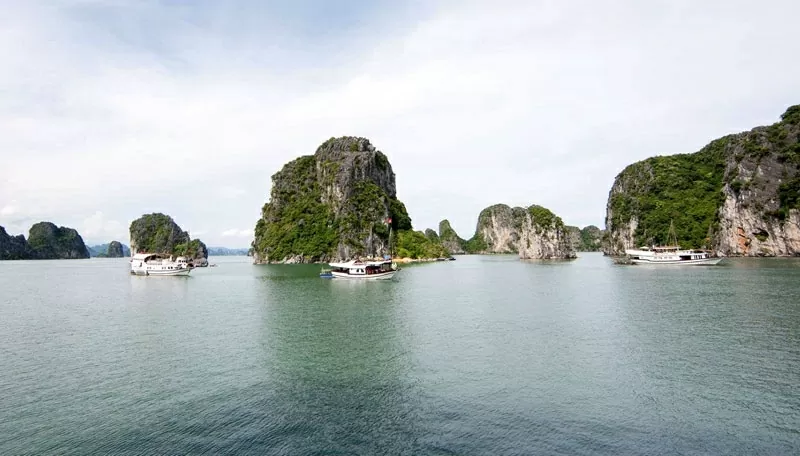 |
| Ha Long Bay is a famous tourist destination in Vietnam. (Phgto: WVR) |
From political task to a key economic sector
On July 9, 1960, Vietnam’s tourism sector was officially born when Prime Minister Pham Van Dong signed a decree establishing the Vietnam Tourism Company under the Ministry of Foreign Trade. Initially, tourism served diplomatic purposes, welcoming international delegations and experts, amid a divided nation.
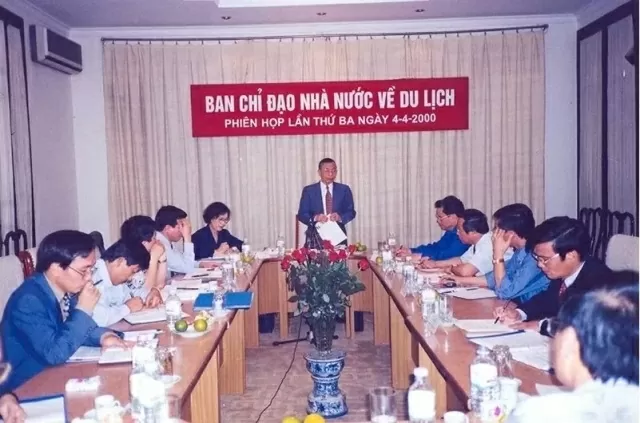 |
| Positioning Vietnam’s tourism in the era of integration: Deputy Prime Minister Nguyen Manh Cam chaired the third meeting of the National Steering Committee on Tourism in April 2000. (Source: Vietnam National Authority of Tourism) |
Though not yet seen as an economic sector, this period laid the groundwork for professional tourism services. After the 1986 Doi Moi (Renewal) process, tourism began to emerge as a key service industry, contributing to job creation and foreign currency earnings.
With the establishment of the Vietnam National Administration of Tourism (1987) and progressive legislation, including the Tourism Law (2005, revised in 2017), Vietnam created a solid legal framework to support new tourism models such as community-based tourism, smart tourism and homestays. Improved visa policies and more strategic promotion efforts have helped raise Vietnam’s profile as a growing destination on the global tourism map.
Impressive strides
Bold policies quickly delivered impressive results.From 2015 to 2019, international arrivals to Vietnam surged from 7.9 million to 18 million, with an average annual growth rate of 22.7 percent, among the fastest in the world. Tourism accounted for nearly 10 percent of GDP and was officially recognized as a key economic sector in national policy.
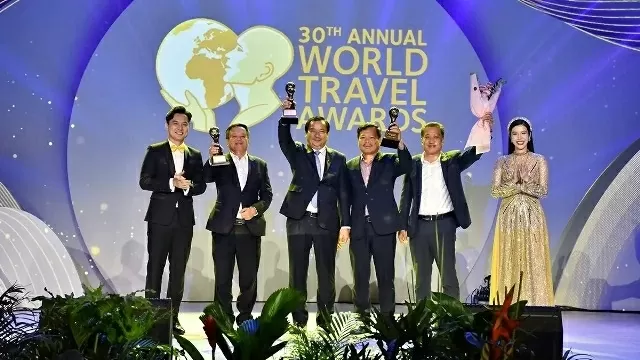 |
| Positioning Vietnam’s tourism in the era of integration: The Vietnam National Authority of Tourism was honoured for the fourth time as Asia’s Leading Tourism Board in 2023. (Source: Vietnam National Authority of Tourism) |
The COVID-19 pandemic caused an unprecedented disruption, effectively freezing the industry for two years. In response, the Vietnam National Authority of Tourism introduced broad support measures for businesses and workers, ranging from tax relief to digital transformation in promotion and services.
Recovery began in 2022 and accelerated in subsequent years, with international arrivals reaching 12.6 million in 2023 and 17.6 million in 2024, 98 percent of pre-pandemic levels and the highest recovery rate in ASEAN. In the first half of 2025, Vietnam recorded 10.7 million foreign visitors, 77.5 million domestic trips and tourism revenue of approximately VND 518 trillion. Vietnam’s tourism sector is regarded as a bright spot in the socio-economic landscape and a key driver of post-pandemic recovery.
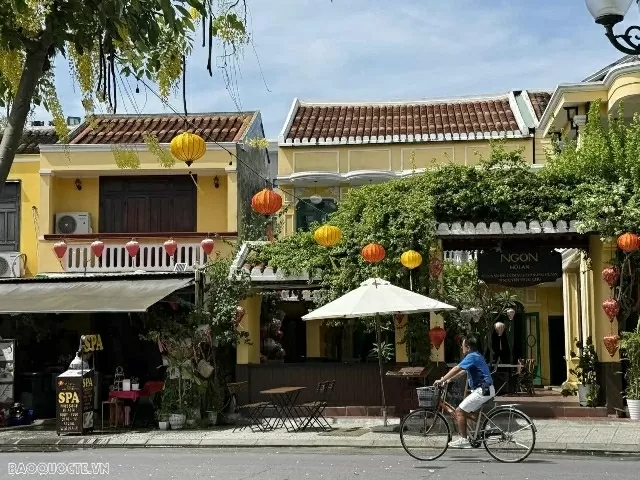 |
| Positioning Vietnam’s tourism in the era of integration: Tourists cycling through the ancient town of Hoi An, Da Nang City. (Photo: Dieu Linh) |
Moreover, during the 2023–2025 period, the Government introduced a series of strategic policies to promote long-term tourism development. These include Resolution 82/NQ-CP, Directive 08/CT-TTg, Official Dispatch 06/CD-TTg, and the Tourism Development Master Plan for 2021–2030, with a vision to 2045. Key measures, such as the revised electricity pricing for accommodation providers, are helping to remove structural barriers and create favorable conditions for sustainable investment and growth across the tourism sector.
A new era, a new momentum
In 2025, Vietnam marks a major administrative milestone by consolidating its 63 provinces into 34 larger units. This shift goes beyond governance reform, it presents a rare opportunity to redesign the national tourism map, redefine destinations and create more integrated regional tour routes.
 |
| Trang An Scenic Landscape Complex, Ninh Binh province. (Photo: Nguyen Hong) |
According to Vu The Binh, Chairman of the Vietnam Tourism Association, the expansion of administrative boundaries enables a more holistic approach to managing natural, cultural and historical tourism resources. For example, the merger of Ninh Binh, Nam Dinh and Ha Nam gives rise to a province boasting over 5,000 heritage sites, the dual World Heritage site of Trang An, a 70-kilometer coastline and a diverse year-round tourism ecosystem. Other regions are also moving quickly to reshape their offerings, such as the new Tuyen Quang - Ha Giang unit focusing on cultural and historical tourism.
Hanoi, though unaffected by the merger, is strengthening Red River Delta cooperation to build a sustainable tourism ecosystem.
On this occasion, Minister of Culture, Sports and Tourism Nguyen Van Hung sent a Congratulatory letter to the Vietnamese tourism sector, highlighting the sector’s remarkable transformation. He noted that international arrivals have increased 72-fold since 1990 and emphasized the sector’s vital role in national development. Throughout its 65-year journey, the Minister underscored, Vietnam’s tourism sector has consistently overcome challenges and fulfilled its responsibilities with distinction.
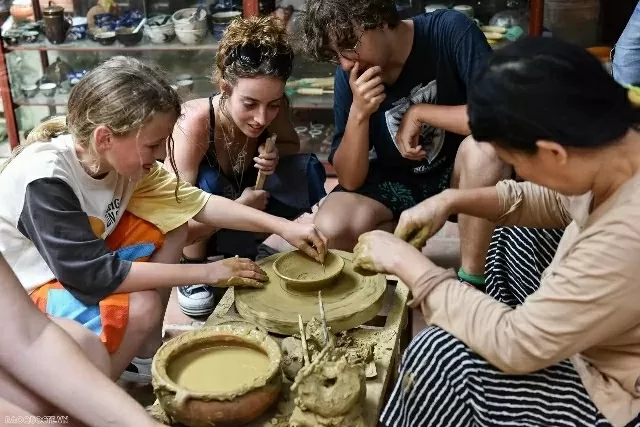 |
| Positioning Vietnam’s tourism in the era of integration: Visitors trying their hand at pottery in Thanh Ha Pottery Village, Da Nang City. (Photo: Nguyen Hong) |
Minister Hung further stated: “Our country is entering a new era — an era of prosperity, civilization, and strength. With its affirmed position, the tourism sector must continue to build on its resilience and determination; boldly renew its mindset, perception, and approach; and effectively carry out state management, marketing and promotion, product development, and enhanced cooperation. It must also accelerate digital transformation and innovation to make Vietnam an increasingly attractive destination for both domestic and international travelers.”
The lessons of the past 65 years show that only through constant innovation, flexible creativity, and strategic vision can the sector truly thrive.
Looking ahead, Vietnam’s tourism must embrace innovation, digital transformation, and stronger partnerships to meet the expectations of a more prosperous and dynamic nation. With a solid foundation — including comprehensive policies, a vibrant business community, and strong support from the Party, the State, and society at large — Vietnam’s tourism can advance with confidence, not only in scale but also in cultural value, emotional resonance, and global connectivity.
This new era sees tourism not merely as a service, but as a reflection of quality of life, a bearer of cultural identity, and a bridge linking Vietnam with the world.