





People-to-people exchange from youthful steps
WVR - My 2026 began with a remarkable journey as I was one of 14 members of the Vietnamese Delegation participating in the Youth Exchange Programme with the Indian National Cadet Corps (NCC-YEP).
Latest
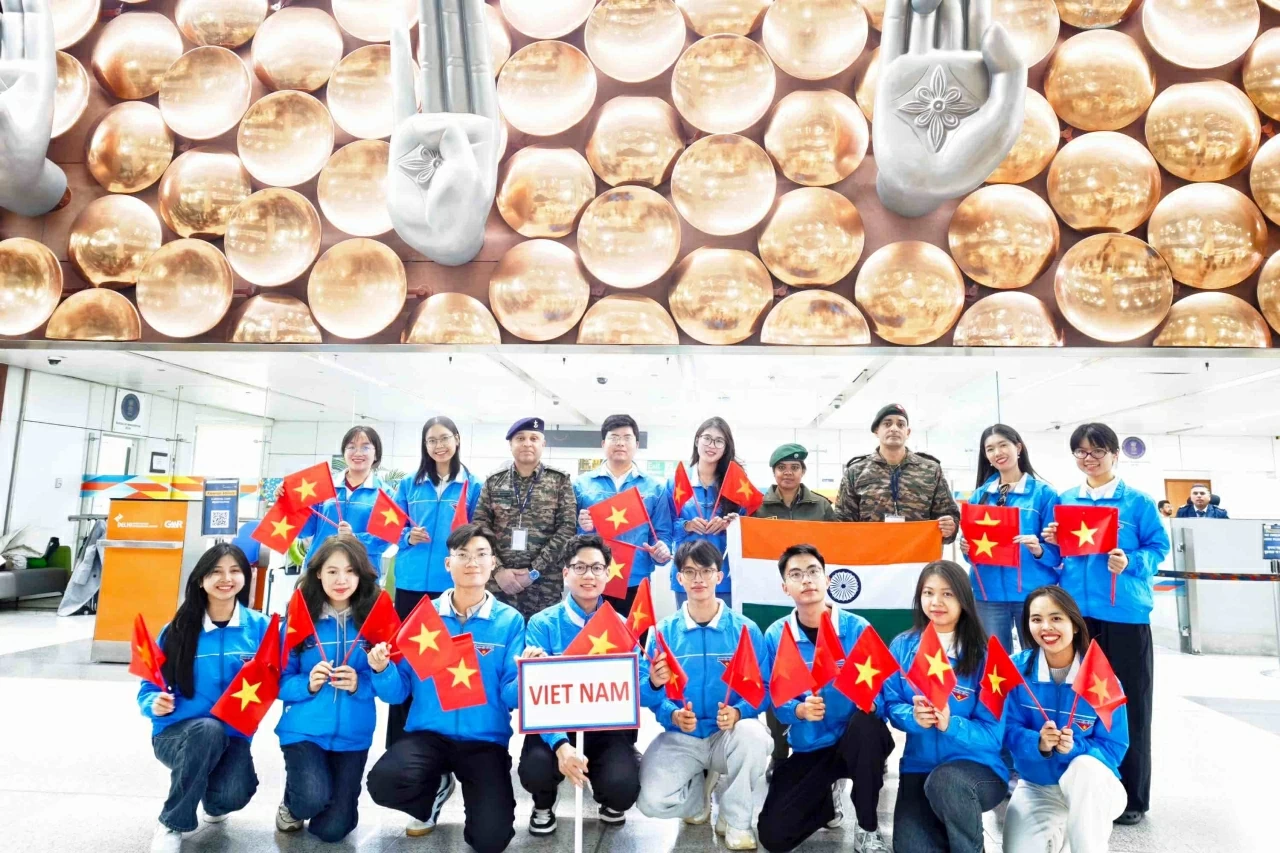 |
| Indian military officers welcoming the Vietnamese delegation at the airport. (Photo courtesy of the author) |
This is the annual exchange program held under the cooperation agreement between the Ho Chi Minh Communist Youth Union and the Indian National Cadet Corps (NCC). This year’s event is organised against the backdrop of the 10th anniversary of Vietnam-India Comprehensive Strategic Partnership (2016-2026).
| More from WVR |
 General Secretary, President To Lam's state visit to India: Elevating Comprehensive Strategic Partnership in the new era General Secretary, President To Lam's state visit to India: Elevating Comprehensive Strategic Partnership in the new era |
Every January, the NCC hosts the Republic Day Camp in New Delhi. This is a crucial event that every cadet in the world's most populous nation aspires to attend. In 2026, out of approximately two million cadets nationwide, only 2,406, including 898 females, successfully navigated the rigorous selection process to gather in the capital for the Camp.
A highly anticipated activity of the event is the NCC-YEP. This year, the program brings together nearly 200 delegates, including cadets, military trainees, and youth from 22 countries across various regions: South Asia (Bhutan, Bangladesh, Maldives, Nepal, Sri Lanka); Southeast Asia (Indonesia, Laos, Malaysia, Singapore, Thailand, Vietnam); East Asia (Mongolia); Central Asia (Kazakhstan, Kyrgyzstan); Africa (Kenya, Mozambique, Mauritius, Seychelles); Europe (United Kingdom); Latin America (Brazil); and the Pacific (Fiji).
Impressed by warm and attentive hospitality
Upon arrival at Indira Gandhi International Airport, the Vietnamese delegation was warmly welcomed by Indian military officers, including one who was fluent in Vietnamese. The airport, named after India’s first female Prime Minister, evokes historical milestones in the bilateral relationship, much like the Indira Gandhi Park in Hanoi.
We were assisted in completing immigration procedures swiftly before being transported in vehicles marked “On Army Duty”. Accompanied by escort officers, our security and convenience were guaranteed throughout the journey. Delegates stayed at high-standard hotels with well-arranged accommodations, and the diverse local cuisine offered many novel experiences.
The organizers’ attention to detail was evident, from thoughtful souvenirs to packed breakfasts provided during days with tight schedules.
Although the cold, dry weather and smog in New Delhi caused minor health issues for some members, a medical team was always available to provide timely support.
Notably, each delegation was assigned a cadet as a Liaison Officer (LO) to assist throughout the program. The Vietnamese delegation’s LO was a second-year Computer Science student - a field that attracts a vast number of young Indians. He shared that becoming an LO is a rigorous process involving five to six selection rounds, including general knowledge tests, skill assessments, and interviews.
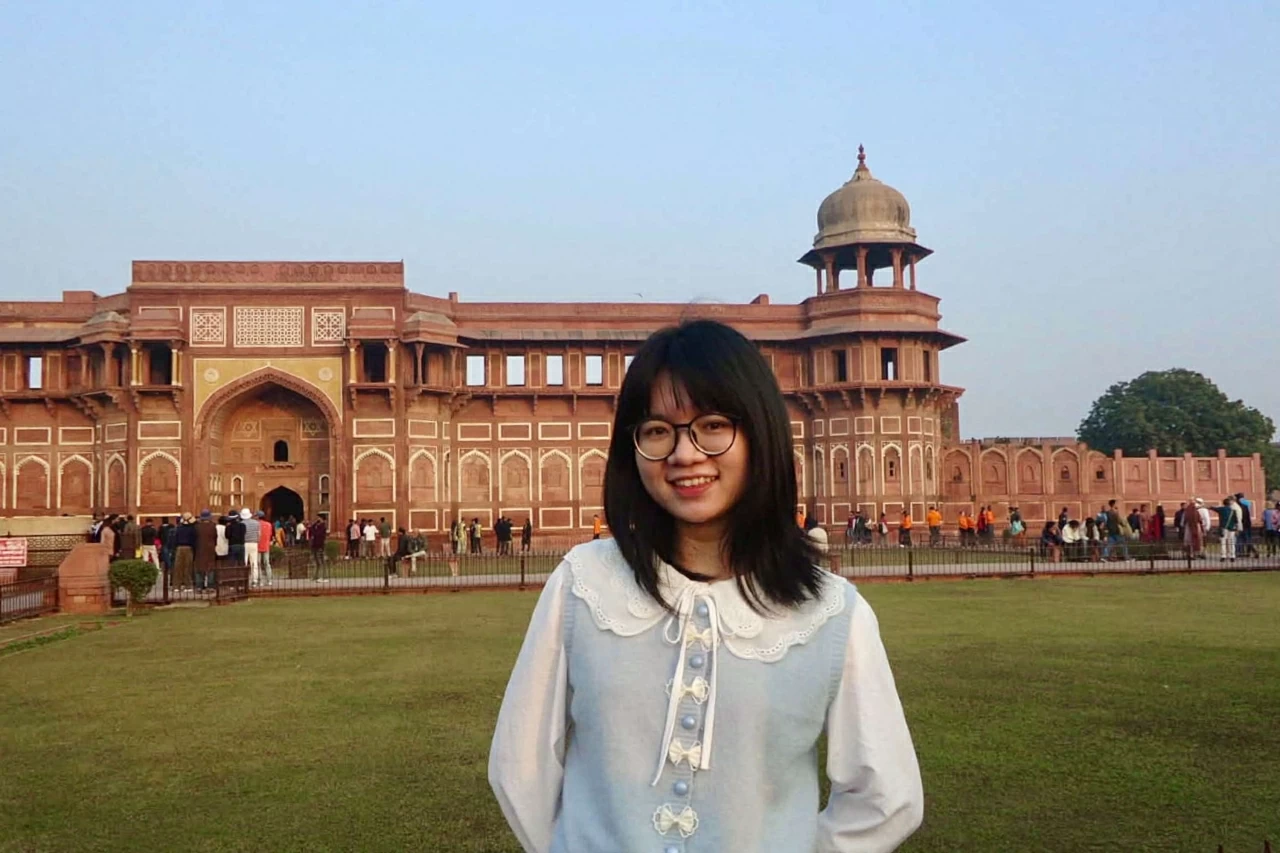 |
| Author at Agra Fortress - World Cultural Heritage recognized by UNESCO. (Photo courtesy of the author) |
A vibrant networking activity
The highlight that left the deepest impression on me was the equestrian display by the cadets. It was my first time witnessing live horse-riding performances, featuring disciplines such as show jumping and tent pegging (a sport where riders use swords or lances to pick up wooden pegs from the ground at a gallop).
In another session, international delegates attended comprehensive briefings on India, covering from its history, culture, and languages to its economic development, educational policies, and foreign relations. Through these presentations, I gained a deeper understanding of the NCC - the world’s largest uniformed youth organization.
The NCC comprises students aged 13 to 22, recruited from schools and colleges nationwide. Currently, the organization operates 17 directorates, focusing on military training, defense sports, adventure activities, and community service. Throughout the main campsite, slogans such as “Unity and Discipline” and “Nation First” are prominently displayed, underscoring the organization’s core values.
Another highlight of the program was the cultural showcases. The Vietnamese delegation, dressed in traditional ao dai, delivered a presentation, a solo vocal performance of “Hat gao lang ta” (Rice Grains of My Homeland), and a group dance to the song “Giai dieu Viet Nam minh” (Our Vietnamese Melody).
We also had the opportunity to practice yoga at the Morarji Desai National Institute of Yoga (MDNIY). As India’s premier yoga institution, MDNIY offers a wide range of academic programs, from short-term certificate courses to doctoral degrees. Under professional guidance, we practiced basic yoga postures (asanas) that harmonize physical movement, breath control, and mental discipline.
This activity brought to mind India’s active “Yoga Diplomacy” strategy. In 2014, Prime Minister Narendra Modi affirmed: “Yoga is an invaluable gift of India to the world” and since 2015, June 21 has been recognized by the United Nations as International Day of Yoga.
Furthermore, the NCC organized several educational excursions to iconic World Heritage Sites, including the Taj Mahal, Agra Fort, and the Qutub Minar complex. We also visited the Pradhanmantri Sangrahalaya (Prime Ministers’ Museum), the National Museum of India - which houses and enshrines sacred Buddhist relics and the Dilli Haat handicrafts market.
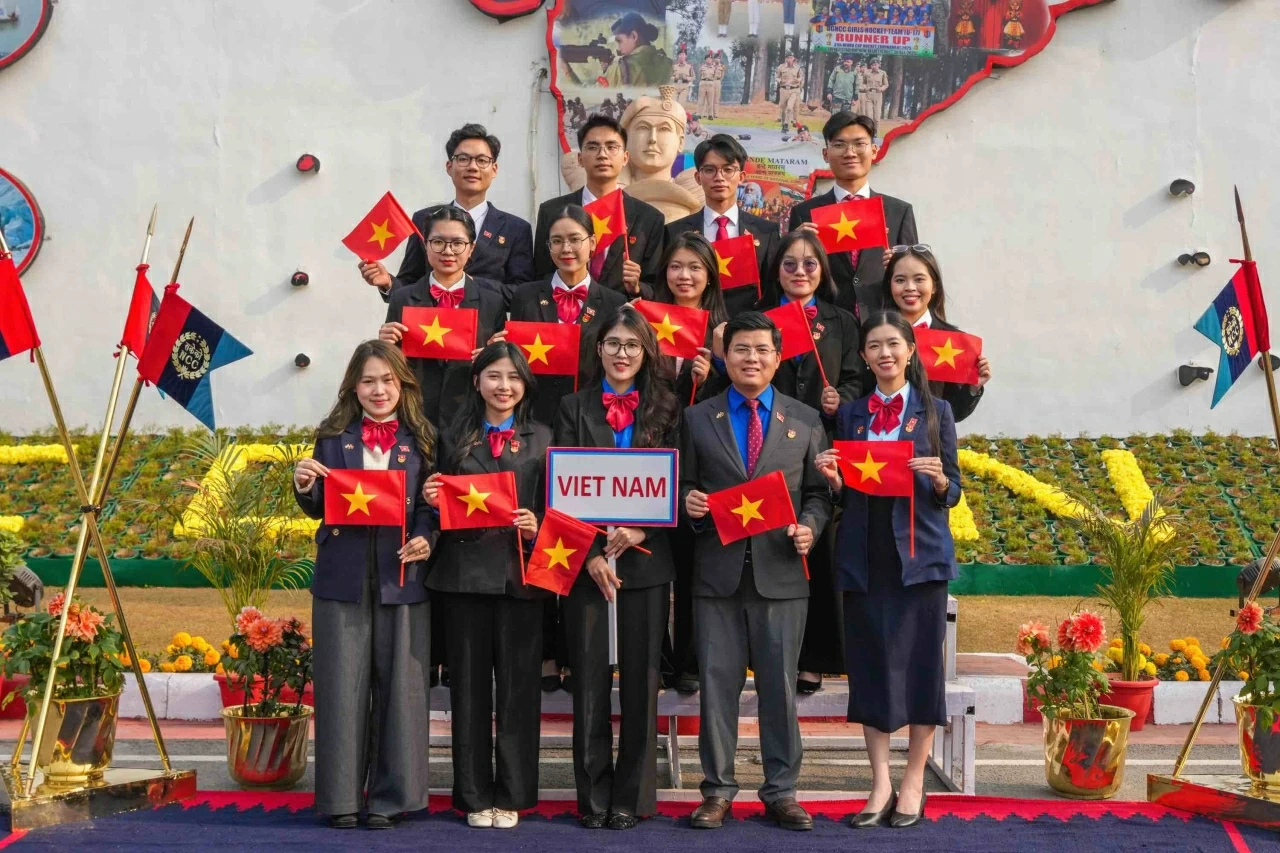 |
| The Vietnam delegation at the NCC. (Photo courtesy of the author) |
Dignified diplomatic protocols
An unforgettable experience for me was the opportunity to visit the 130-hectare Rashtrapati Bhavan, one of the world’s largest presidential estates. I had the honor of taking a photo with President Droupadi Murmu, India’s first female president hailing from a tribal community.
Security at the estate was exceptionally tight. Before entering the main complex, delegates were required to surrender all mobile phones and electronic devices, carrying only their passports and pre-issued photo ID tags.
We were also invited to a formal dinner with Indian Defense Minister Rajnath Singh - a high-level ceremonial and diplomatic event. I and three other Vietnamese delegates were seated with an Indian officer who served as our delegation’s Vietnamese interpreter. During the meal, he shared many stories about his time living in Hanoi to study the language, as well as his fond memories of the country and the Vietnamese people.
Speaking fluent Vietnamese, he asked which military branch Vietnamese youth are most interested in. I shared that many dream of becoming military pilots, a role with very high selection standards. I also mentioned that many Vietnamese military pilot trainees have been sent to India for flight training-a clear testament to the strong defense cooperation between our two nations.
The officer explained that he learned Vietnamese to meet professional requirements and to support the burgeoning relationship between the two countries. He expressed his hope to have the opportunity to return to Vietnam in the near future.
Another fascinating experience was witnessing the parade marking the 77th Republic Day of India on January 26 at the Kartavya Path boulevard. It was the first time I had ever seen such a wide array of military hardware at close range, including BrahMos and Akash missiles, Arjun tanks, and aerial displays by Rafale, Sukhoi, and MiG-29 fighter jets.
We also participated in rehearsals and attended the NCC PM Rally, the concluding event of the NCC Republic Day Camp. A highlight of this rally was the parade of international delegations saluting the Prime Minister and top Indian military generals. The Vietnamese delegation stood out among the 22 nations as we marched in our signature blue youth volunteer shirts, waving the national flag.
On the final day, the NCC hosted a lively farewell party with a DJ, providing a chance for us to exchange souvenirs. Each delegate received a commemorative medal and a certificate from the NCC, which were elegantly bound and decorated with distinctive traditional Indian motifs.
The NCC-YEP journey has broadened my international perspective and deepened my awareness of the crucial role youth play in people-to-people diplomacy. I believe the memories from this trip will be a cherished asset, empowering each of us to continue fostering the spirit of Vietnam-India friendship in the years to come.
| Conference: Promoting the Comprehensive Strategic Partnership between Vietnam and India in digital era WVR - On January 30, an international scientific conference titled “Opportunities and efforts of Vietnam and India in digital transformation” was solemnly held at the ... |

| General Secretary, President To Lam's visit to create new momentum for Vietnam–India ties: Scholar The upcoming state visit to India by General Secretary of the Communist Party of Vietnam Central Committee and State President To Lam is expected to ... |
| General Secretary and President To Lam’s visit to India: A partnership in challenging times WVR - The upcoming state visit of General Secretary and President of Vietnam To Lam to India in May 2026 marks a milestone in Asian ... |
| General Secretary, President To Lam's visit to India to shape new cooperation framework WVR - In an interview with the press, Member of the Party Central Committee, Standing Deputy Secretary of the Party Committee of the Ministry, and ... |
| General Secretary, President To Lam departs for state visit to India WVR - On May 5, General Secretary, President To Lam, along with a high-ranking Vietnamese delegation, left Hanoi for a state visit to India from ... |


